
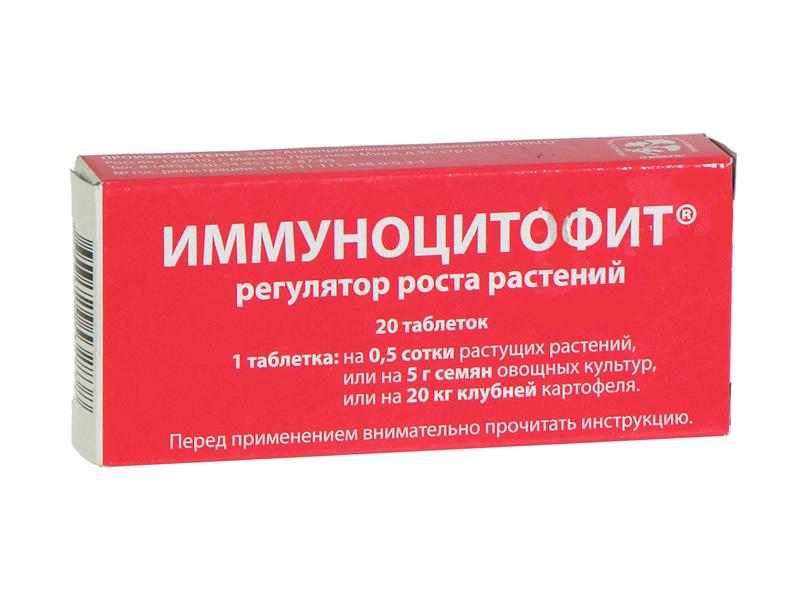
"Immunocytophyte" is a biological product that acts as a natural plant food. It increases plant resistance to various diseases, stimulates growth, and improves yields. Furthermore, its composition reduces the impact of pathogens. For the product to be effective, it is important to strictly follow the instructions and adhere to the manufacturer's recommended dosage.
What is included and how does it work?
This chemical product contains two active ingredients: ethyl alcohol, arachidonic acid, and urea. Immunocytophyte is available in blue or purple tablet form. Each blister contains 10 tablets, each weighing 3 grams. Each pack contains two blisters.
The instructions state that this chemical combats pathogens of various diseases. It helps eliminate blackleg, various types of scab, and late blight. Immunocytophyte also successfully eliminates rhizoctonia, early blight, and late blight. It is also effective against white mold and gray mold.
In addition, the product has a beneficial effect on the development of crops and increases their yield. The composition also extends the shelf life of fruits and vegetables over the winter.
Pros and cons
The main advantages of Immunocytophyte include the following:
- There is no risk of pathogens developing resistance to the active ingredients of the product. Therefore, it can be used for several years.
- No phytotoxic effects on plants.
- Minimal need for protective equipment. Immunocytophyte is considered low-risk for humans and beneficial insects.
- The substance can be used for plants in open ground and for indoor flowers.
- Compatibility in tank mixtures with many pesticides and insecticidal preparations.
- Minimal preparation time for the working solution. No special equipment is required.
- Affordable price.
- Long shelf life.
The disadvantages of this product include the following:
- Insufficiently efficient when processing old crops.
- Ineffective in treating existing diseases.
- Lack of results when using the product at the fruit filling stage.

Purpose
The product stimulates crop growth and triggers protective reactions. This immunoprotective agent increases plant systemic resistance to various types of infections, including bacterial and viral ones. It also helps stimulate biological processes and crop growth.
The composition is used to prevent the following pathologies:
- late blight;
- powdery mildew;
- gray mold;
- Alternaria;
- bacteriosis;
- blackleg;
- different types of scab;
- Rhizoctonia.
In addition to use during the growing season, the product is used to soak seeds, potato tubers, and bulbs. This procedure is performed before planting. This helps prevent the development of diseases.
"Immunocytophyte" has no phytotoxic effect on plants. It doesn't burn or cause chlorosis. Furthermore, its composition doesn't inhibit growth. Furthermore, the product is completely harmless to animals, humans, beneficial insects, and fish. Crops harvested after using the biostimulant are considered environmentally friendly.
Terms of Use
Before using the Immunocytophyte aqueous solution, prepare a concentrate. It must then be diluted with water. The exact proportions depend on the intended use and the crop variety. To prepare the concentrate, take one tablet and mix it with a tablespoon of water, which is approximately 10-15 milliliters. It is important to obtain a homogeneous mixture. It is recommended to soak the seed in the resulting concentrated solution and leave it for 3-24 hours.

When treating potato tubers or bulbs, add 140-150 milliliters of water to the concentrate per 20 kilograms of planting material. This procedure should be performed 2-3 days before planting.
To spray plants during the growing season, add 1.5 liters of water to the concentrate. The resulting solution can be used for treatment. It's important to follow this schedule:
- Seedlings: Spray on the day of planting or two days later. This helps minimize stress from transplanting seedlings into the soil.
- Cucumbers and watermelons: The first application is required when 2-4 leaves have formed. The second application is at the initial flowering stage, and the third application is at the stage of mass fruit formation.
- Potatoes – the first treatment is required at the full germination stage. The second treatment is carried out at the initial flowering stage.
- Tomatoes: Apply the first treatment at the initial stage of budding. A second treatment is carried out during the flowering of the first cluster, and a third treatment is carried out during the flowering of the third cluster.
- Cabbage: The composition is first applied when the rosette is forming. The preparation is then used during the head formation stage.
Precautionary measures
"Immunocytophyte" is classified as a hazard class 4 substance. This means it is almost completely safe for humans. However, simple safety precautions should still be followed. It is recommended to wear rubber gloves when handling the product. It is also important to avoid contact with skin or eyes.
Is compatibility possible?
It is not recommended to combine this product with other biological products, as they will inhibit each other. Also, do not combine this product with Bordeaux mixture, wood ash, or bleach. However, it can be combined with many pesticides. However, testing is necessary beforehand.
How and how long to store
The product has a shelf life of 2 years. It is recommended to store the tablets in a closed, dry, dark place.
Analogues
Partial substitutes for this product include "Epin" and "Zircon." However, there is no complete analogue.
"Immunocytophyte" is an effective product that has a beneficial effect on plants. It promotes growth, increases yields, and enhances resistance to diseases and pests. However, it is important to follow the instructions.