
- Advantages and disadvantages
- Features of the use of the substance
- Spraying and soaking the root system
- Cheap fertilizer
- Application for vegetable crops
- Healing irrigation of lush greenery
- Protection against mealybugs and scale insects in the garden
- Saturation of soil with oxygen
- Disinfection of seed material
- Safety precautions
Hydrogen peroxide is often used when caring for houseplants and vegetables. This product has a complex effect on the body and helps achieve a wide range of benefits. It effectively combats fungi and pests, enriches the soil and plants with nutrients, and promotes foliage growth. It's important to note that using hydrogen peroxide on plants requires following certain guidelines.
Advantages and disadvantages
The product has a complex effect on plants. This remedy offers numerous advantages:
- disinfection of the surface layer of soil, roots and ground;
- restoration of plant stems and roots;
- acceleration of flowering;
- destruction and prevention of rot;
- prevention of late blight development;
- insect control.
The main drawback of hydrogen peroxide is its lack of micro- and macronutrients. Therefore, if plants require these valuable nutrients, additional fertilizers must be used.
Features of the use of the substance
In order for the use of the product to produce the desired results, it is necessary to take into account the main purposes for which it is applied.
Spraying and soaking the root system
When using hydrogen peroxide on roots, it's a great substitute for organic fertilizer. No other substances are required—this solution is perfectly sufficient. Tap water, rainwater, or melted snow can be used.
Moistening the soil with hydrogen peroxide saturates the roots with nutrients, helps prevent root rot, and provides disinfection. Houseplants should be watered with the solution once every two weeks.
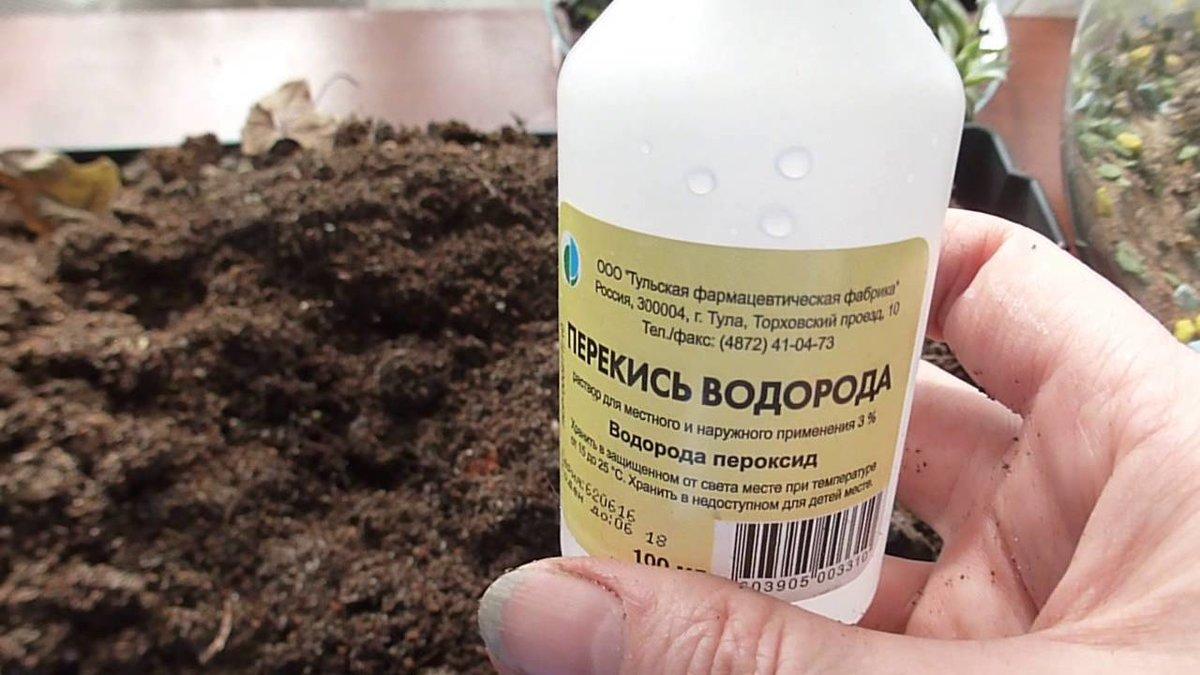
The product is also beneficial for the root system of seedlings. To do this, take 20 drops of hydrogen peroxide and mix it with 1 liter of boiled or distilled water. Water the seedlings at the roots with the resulting mixture. This procedure should be performed no more than once a week.
Cheap fertilizer
Hydrogen peroxide can be used as a base for affordable fertilizer. It helps restore wilted plants and promotes growth. Irrigating crops with this beneficial compound can significantly improve soil composition, increasing the nutrient and micronutrient content.
With systematic use of peroxide, the following results can be achieved:
- make the leaves darker;
- form new buds;
- make the branches more elastic.
To use the product as a fertilizer, take a bottle of hydrogen peroxide and mix it with 5 liters of water. Water the resulting mixture at the roots of the bushes.
Application for vegetable crops
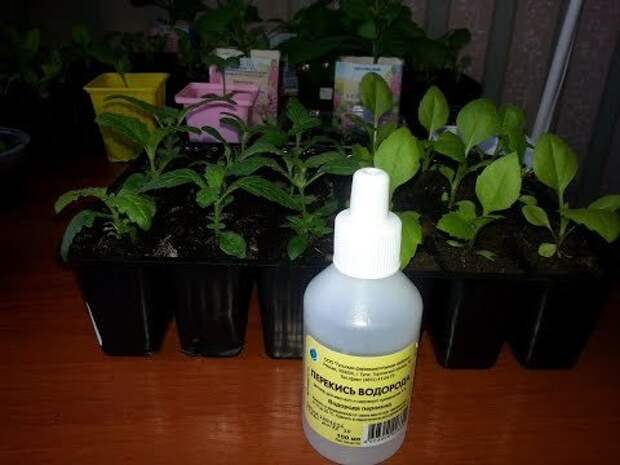
The product is ideal for watering tomatoes, peppers, and eggplants. It helps prevent fungal diseases. To use, mix 20 drops of the product with 1 liter of water. Use this solution once a week.
Healing irrigation of lush greenery
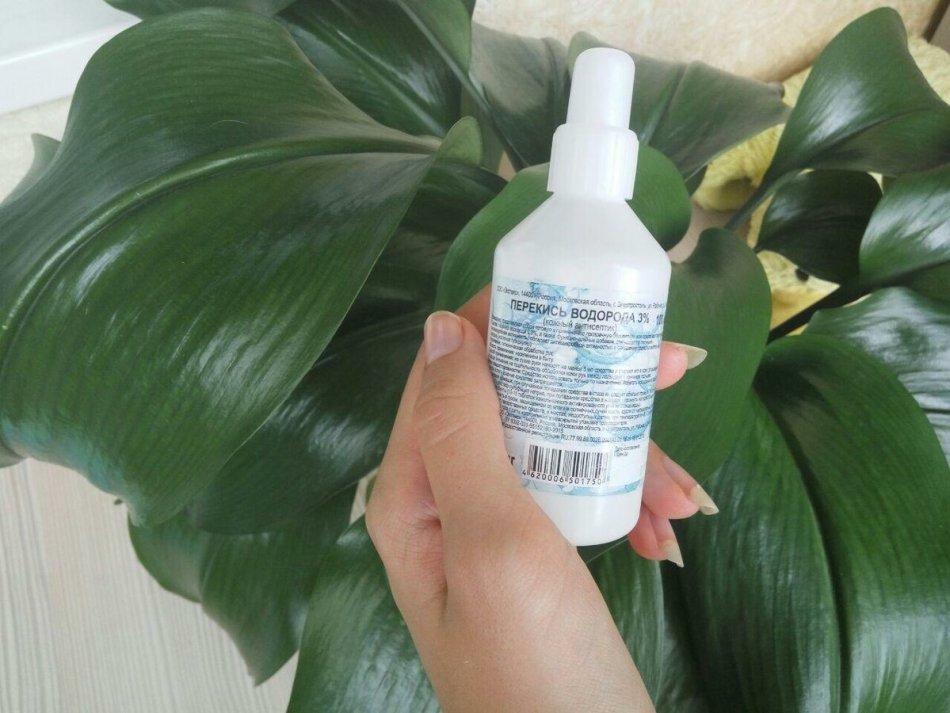
Hydrogen peroxide solution can be used not only for watering but also for spraying. When spraying, lift the leaves upward. This should be done 2-3 times a week.
Using hydrogen peroxide for irrigation helps thicken foliage, maintain turgor, stimulate the development of young shoots, and strengthen wilting stems. Furthermore, irrigation helps combat diseases such as blackleg, late blight, and root rot.
To spray crops, use a 10% hydrogen peroxide solution from a spray bottle. This should be done no more than once a week.
Protection against mealybugs and scale insects in the garden
Hydrogen peroxide is often used in gardens to protect plants from pests that damage them. It is recommended to prepare a solution. To do this, mix 2 tablespoons of alcohol and hydrogen peroxide per 1 liter of water. Use the mixture once a week until the pests disappear.
Saturation of soil with oxygen
Seeds germinate much faster in light, well-aerated soil. It also promotes accelerated development of fruit crops. To oxygenate the soil, use a solution of one bottle of hydrogen peroxide and four liters of settled water. This fertilizer should be used for watering the areas where crops will be planted.

For heavy and clayey soils, the procedure is performed twice during the season. This should be done in the spring, before planting crops, and in the fall, after harvesting.
Disinfection of seed material
The product can be used to treat seeds because it has disinfectant properties. It helps kill fungi and bacteria. Hydrogen peroxide also helps soften the seed coat and accelerate germination.
To treat the seeds, soak them in a 10% hydrogen peroxide solution for 15 minutes. Afterward, rinse the seeds with clean water and dry. To stimulate germination, mix 1 tablespoon of 3% hydrogen peroxide with 500 milliliters of water. Soak the seeds in this solution for 12 hours, changing the solution every 4 hours.
Safety precautions
Despite the product's safety, high concentrations of the liquid can cause skin burns. Furthermore, inhaling undiluted vapors poses a real health hazard. Therefore, preparation should be done in a well-ventilated area or outdoors. Wear a mask and gloves when doing this.
Do not heat or boil the mixture. Hydrogen peroxide is an extremely unstable compound that can explode when exposed to heat. Store the mixture in a cool, dark place, away from direct sunlight and heating devices.
Hydrogen peroxide is an effective product that has a complex effect on plants. To achieve the desired results, it is important to follow the instructions carefully.