
Pesticides are used for seed treatment, soil cultivation, and spraying grain storage facilities. Thanks to "Cimus Progress," a two-component fungicide, it is possible to effectively combat diseases of grain crops and sugar beets. The product's popularity is due to its rapid action, low application rates, and affordable price.
Composition and dosage form
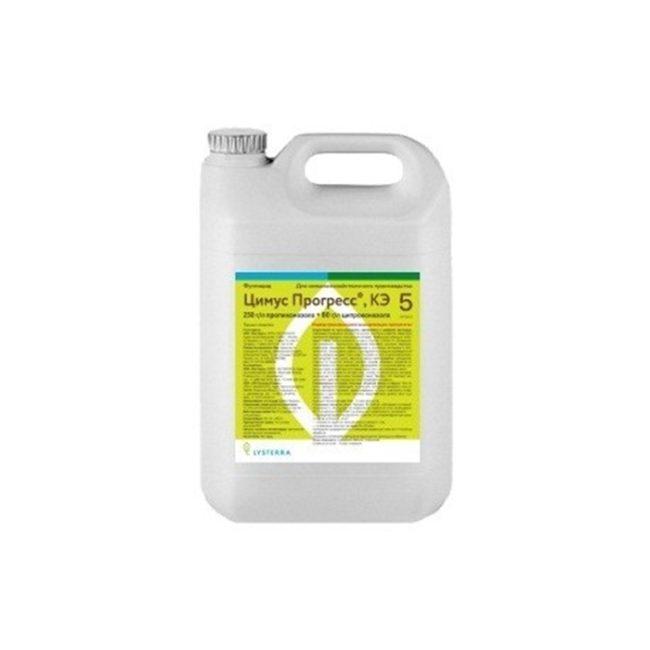
The pesticide is available as a concentrated emulsion. Its main active ingredients are:
- Propiconazole 250 g/l – used to control diseases of grain crops and grapes. It is effective against imperfect fungi, powdery mildew, spotting, and rust.
- Cyproconazole 80 g/L – exhibits specific activity against rust fungi. It is rapidly absorbed by roots and foliage after spraying.
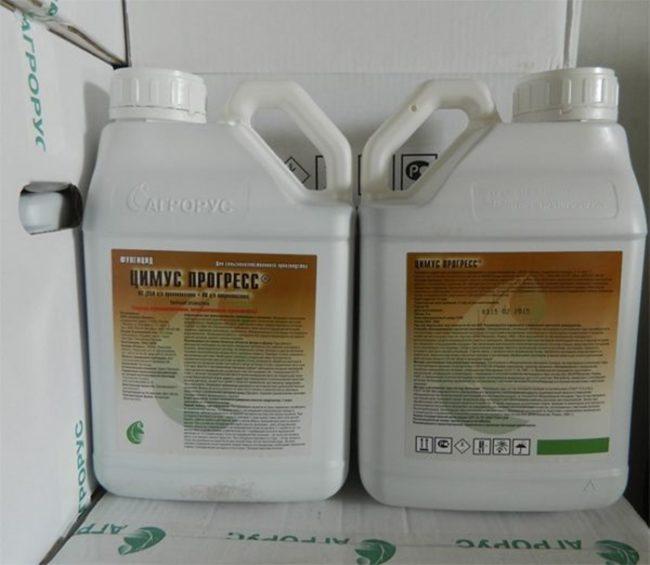
The concentrate is packaged in 5-liter plastic canisters.
Operating principle and purpose
This fungicide is designed to combat diseases of sugar beets and grain crops. The active solution is absorbed by the green mass of plants. When distributed through stems, foliage, and roots, the active ingredients disrupt mycelial growth and stop spore formation.
The fungicide preserves foliage and promotes leaf blade development. A key feature of "Cimus Progress" is its long-lasting protective effect. In addition to its therapeutic effect, the solution is also used as a preventative measure.
Calculation of consumption
This product is used for the care of grain crops. To ensure effective spraying, it is important to adhere to the manufacturer's recommended application rates:
- spring/winter wheat, spring/winter barley, winter rye, oats – 0.4-0.5 l/ha;
- sugar beet – 0.5-0.7 l/ha.
Manufacturers note that by spraying the beds, the product penetrates the plants within 1-2.5 hours after application. The systemic effect appears after 12-18 hours (weather conditions must be taken into account).

Terms of Use
When using a working solution, it is necessary to take into account the specific features of use in relation to different plant crops.
| Processing object | Type of disease | Rules of application |
| Spring/winter barley | powdery mildew, stem and dwarf rust, spotting (striped, netted, dark brown) | treatment is done during the growing season |
| Winter/spring wheat | brown rust, stem rust, yellow rust. Leaf septoria, powdery mildew | |
| Oats | red-brown spot, crown rust | |
| Sugar beet | powdery mildew, phomosis, cercospora | The first spraying is carried out when signs of the disease appear, and the second one is carried out after one and a half to two weeks. |
| Winter rye | septoria, rhynchosporium, powdery mildew, stem rust and brown rust | treatment is done during the growing season |

Precautionary measures
Spray crops in the morning and evening hours, when there is no strong wind. It is recommended to protect adjacent crops from the spray solution.
During the processing, it is prohibited to remove protective equipment, drink, smoke, or eat.

Degree of toxicity
The product is classified as hazard class 3 for humans and beneficial insects. Spraying the fungicide within the water protection zones of bodies of water is prohibited. Airborne application is permitted for large areas. When used according to the instructions, no phytotoxic effects are observed.

Is compatibility possible?
Manufacturers allow tank mixing with other insecticides, fungicides, and growth regulators for treating grain crops and sugar beets. The simultaneous use of mineral fertilizers is also permitted (provided the water temperature during irrigation is at least 10°C).
How and how long can it be stored?
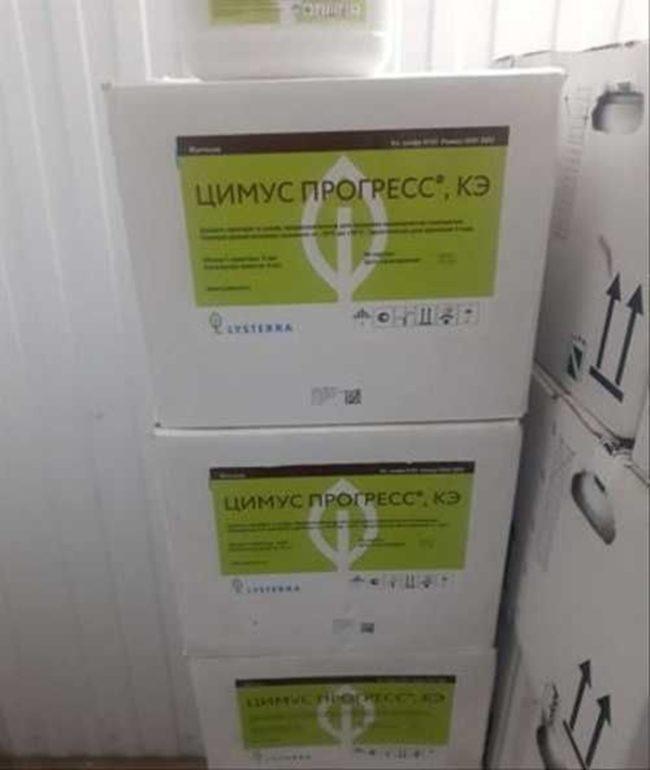
Store the product in a dry, ventilated area. Do not store the pesticide with animal feed, drinking water, or food products at the same time. It is recommended to prepare the working solution immediately before spraying crops. Store the emulsion concentrate in its original packaging. The recommended shelf life is 3 years from the date of manufacture.

Analogues
A variety of fungicides are available to combat fungal diseases. Popular products containing propiconazole or cyproconazole as active ingredients include:
- "Algo Super" is effective in combating diseases of grain crops and sugar beets. The product can be used at any stage of plant growth, and when applied to beds, the working solution is rain-resistant.
- "Broader" is used in sugar beet cultivation. It provides a long-lasting protective effect and promotes crop growth.
- The effective systemic fungicide "Tilt" effectively combats leaf, stem, and ear diseases (septoria leaf spot, rhynchosporiosis, powdery mildew, and rust). It provides an extended period of protection when used as a preventative spray. It can be used with other pesticides and mineral fertilizers.
- The systemic fungicide "Titul 390" is designed to combat diseases of grain crops and rapeseed. This treatment provides effective protection against fusarium head blight. The product's advantages include rapid plant penetration, long-lasting activity, and therapeutic and preventative effects.
The fungicide "Cimus Progress" performs both therapeutic and preventative functions. Advantages: it can be used at different stages of crop development and growth.