
Weeds are considered the main enemy of crop yields. Herbicides are highly effective in protecting crops from weeds. To reduce the harmful impact of pesticides on the environment, it is important to select the right products. When using them, adhere to application rates and follow the manufacturer's instructions.
Advantages and disadvantages
All pesticides are toxic chemicals, and their use has both positive and negative aspects. The advantages of herbicides include:
- contribute to increased crop yields;
- reduce labor costs in destroying weeds;
- long term of action;
- destruction of weeds in a short period of time;
- complete decomposition of substances after penetration into the soil.
When considering the disadvantages, it's important to pay attention to the careful handling of non-selective herbicides, which destroy all treated plants. Also, consider the potential negative impact of pesticides on beneficial soil microorganisms.
Thanks to a wide range of preparations, it will not be difficult to choose a product taking into account the cost, type of cultivated plants and type of weeds.
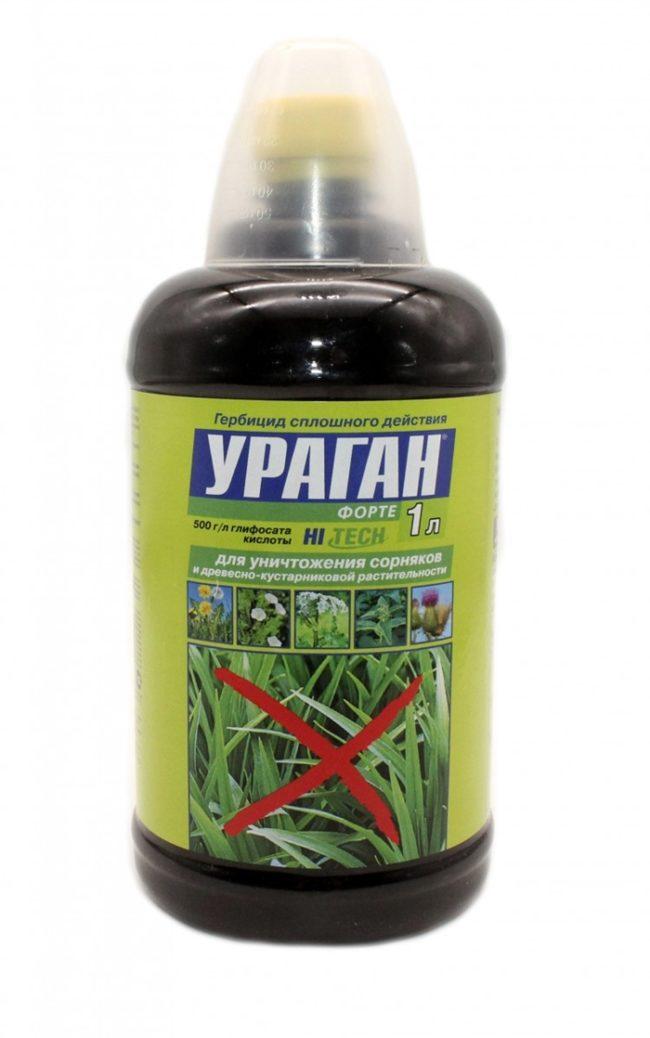
Description of the products and their application in agriculture
Chemical preparations intended for weed control can be classified according to various parameters:
- Non-selective weed control products, which completely clear the treated area of plants, are used for spraying non-agricultural areas. Selective weed control products are active against specific weeds;
- Based on their method of action on plants, they are divided into two types. Contact fertilizers act at points of direct contact, without penetrating the vascular system or roots. Systemic fertilizers, when applied to foliage, spread throughout the plant.
- According to the method of penetration, preparations are divided into soil (act on the embryos of weeds), foliar (penetrate through stems, leaves), and combined (penetrate through roots and foliage).
In order to effectively destroy parasitic plants, soil and climatic conditions, types of weeds, and types of cultivated plants are taken into account when selecting pesticides.
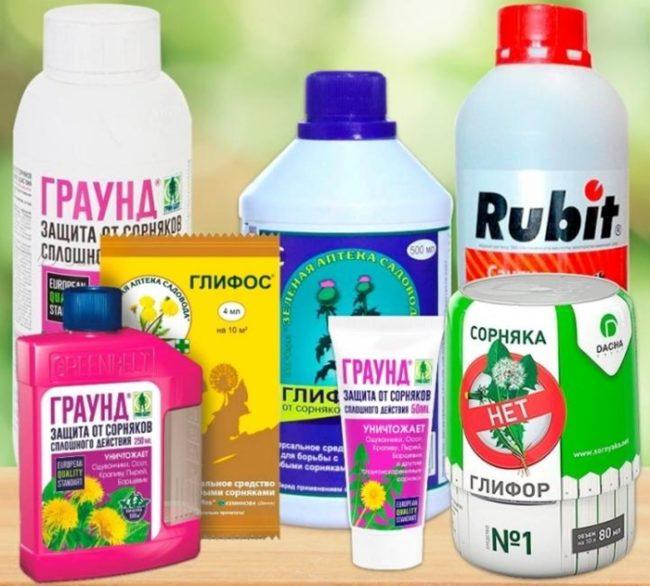
The best drugs
Among the wide range of weed control products, it is easy to select herbicides based on their performance characteristics or cost.
Expensive drugs
The selective herbicide "Callisto" is active against some perennial and annual weeds.
The preparation is a suitable base for preparing tank mixtures and stops weed growth within 1-2 days after treatment.
Galera is a post-emergence herbicide effective against sow thistle, chamomile, amaranth, and cornflower. Symptoms of complete infestation are observed 12-18 hours after application.
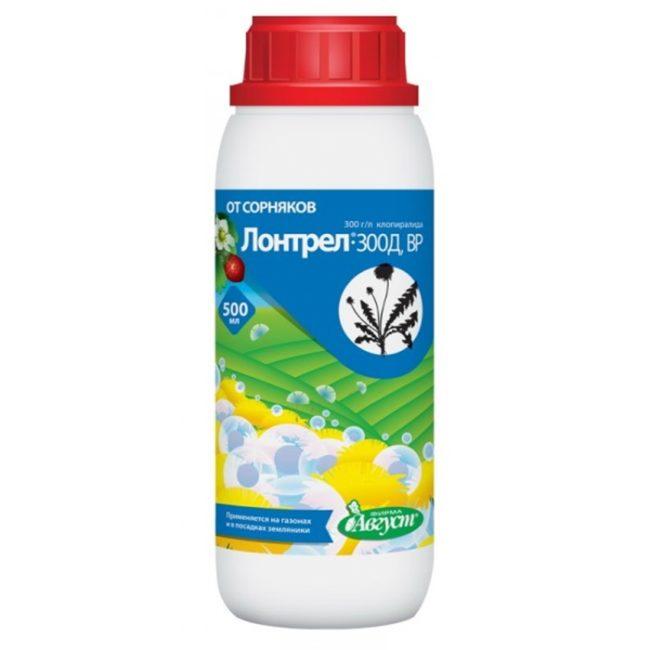
The soil pesticide "Artist" is used to protect potato crops from annual grasses and broadleaf weeds. The product has no crop rotation restrictions and provides long-term weed control.
The selective herbicide "Karibu" is used to protect sugar beet crops from dicotyledonous annual weeds. Harmful plant growth ceases within a few hours after application. Complete death occurs within 10-15 days. There are no crop rotation restrictions for this pesticide.
Budget segment
The post-emergence herbicide "Hunter" is effective in controlling annual and perennial grass weeds (wild oats, creeping wheatgrass, barnyard grass, and pigweed). It is used to treat potato, sunflower, sugar beet, and soybean crops.
Prometrin is a selective weed control product that suppresses the growth and development of annual broadleaf and grass weeds. It is used to treat corn, potatoes, carrots, and sunflowers.
The soil-applied herbicide "Cobra" is effective against annual dicotyledonous and grassy weeds. It provides long-lasting protection and offers an optimal price-to-effectiveness ratio.
To increase crop yield, it's important to select the right pesticide. To enhance the pesticide's effectiveness, the following factors are also taken into account: weather conditions, application time and rate, soil topography, weed infestation, and sprayer type.