
- The advantages and disadvantages of using tar in the garden
- Operating principle
- How to make it yourself and where to buy it
- Instructions for use
- From onion fly
- From the sprout fly
- From sea buckthorn fly
- From aphids
- From the sawfly
- From the Colorado potato beetle
- From the raspberry-strawberry weevil
- From wireworm
- From spider mites
- From codling moth
- From the mole cricket
- From the gooseberry moth
- From cabbage fly
- From cherry weevil
- From hares (mice, voles)
- Against scab and other bacterial and viral diseases
- From cabbage white butterfly
- From carrot fly and leafhopper
- From hawthorn
- From ants
- From moles (hamsters, marmots)
- Are there any downsides to using it?
Insect pests damage crops and reduce their yield. Furthermore, pests carry diseases dangerous to crops. Some gardeners and summer cottage owners prefer folk remedies to combat pests. Birch tar is effective against garden pests; the key is to prepare the mixture correctly and apply it to the area before the insect population becomes too large.
The advantages and disadvantages of using tar in the garden
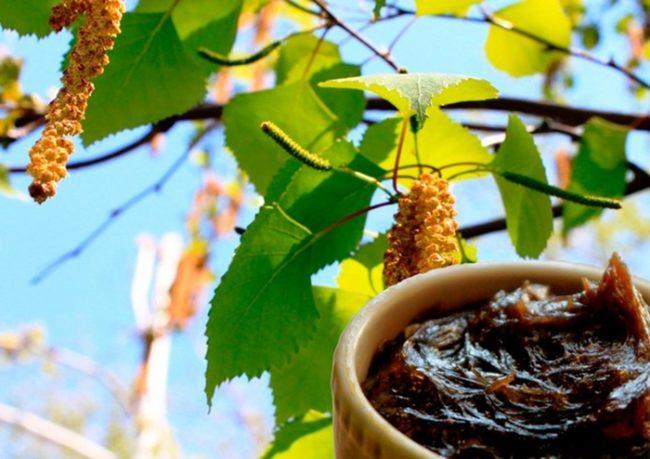
Birch tar has been used in gardens and vegetable patches since ancient times as a repellent, as its pungent odor can repel harmful insects. Tar is a substance with a complex chemical composition formed during the decomposition of wood. Birch is considered the best natural source of tar; it is produced through the pyrolysis of the tree's cork bark. Commercially available substances go by different names, such as birch tar and birch bark tar, but they are essentially the same thing.
Compared to insecticides used to repel insect pests, birch tar has a number of undeniable advantages:
- The use of a natural substance does not lead to the development of resistance in pests, so it can be used effectively for several seasons in a row.
- Tar is characterized by a broad spectrum of action and is equally effective in eliminating both insects and mammals.
- When working with a natural substance, there is no need to use complex and expensive equipment, as is necessary when using insecticidal preparations.
- Birch tar does not kill insects and mammals, but only repels them from plantings and prevents them from damaging cultivated plants.
- When working with a natural product, there is no need to use special protective equipment for the body and respiratory tract, as the substance does not have a negative effect on the human body.
- This natural substance has a long-lasting protective effect and protects plants from pests for a period ranging from one month to the entire growing season, eliminating the need for repeated treatments.
- Does not have a negative impact on cultivated plants.
- Can be used in a contactless manner.
Despite the many benefits of using birch tar as a natural pest repellent, it does have some drawbacks that should be considered before applying it to your property.

The disadvantages of birch bark tar include the following:
- Along with pests, it repels beneficial insects from the beds, which plants need for pollination.
- Birch tar should not be applied to green foliage that will be eaten or to fruits. This is because the substance accumulates in all parts of the crop, causing the harvested crop to acquire an unpleasant taste and odor.
- The natural product cannot be used in tank mixtures with insecticidal and fungicidal preparations.
- Due to its unpleasant odor, tar is not suitable for treating indoor flowers and plants planted in compact greenhouses.
- When processing, the gardener will have to deal with a strong unpleasant odor, and if tar gets on clothes, it will be impossible to wash it off.
- The substance dissolves poorly in water, so preparing the working solution takes a lot of time, and it must be used within two hours, otherwise the solution begins to separate.
- When using tar, you will need to use an adhesive to help the substance adhere to the surface of the plants—usually, simple laundry soap is used.
- The working solution sticks strongly to the parts of the sprayer nozzle, and if it is not disassemblable, you will have to use the old method and spray the crops with a broom, wetting it in a bucket with the working solution.
- Not suitable for use by people with hypersensitivity, as it may cause an allergic reaction.

Operating principle
Birch tar works by releasing an unpleasant odor that repels pests with a keen sense of smell. It's most effective against soil-dwelling pests, such as mole crickets, moles, gypsy moths, and voles.
Conventionally, the duration of tar action can be divided into three categories:
- Severe. Duration exceeds 1 month; typically, a single treatment is sufficient to eliminate the pests from the area.
- Average. Lasts 3 to 4 weeks; repeat treatment may be necessary for plants with a long growing season.
- Weak. Lasts from 2 to 3 weeks, and under unfavorable weather conditions it weakens or stops altogether.
Therefore, before using the product, it is worth finding out which pests are damaging the crop and how susceptible they are to tar.
How to make it yourself and where to buy it
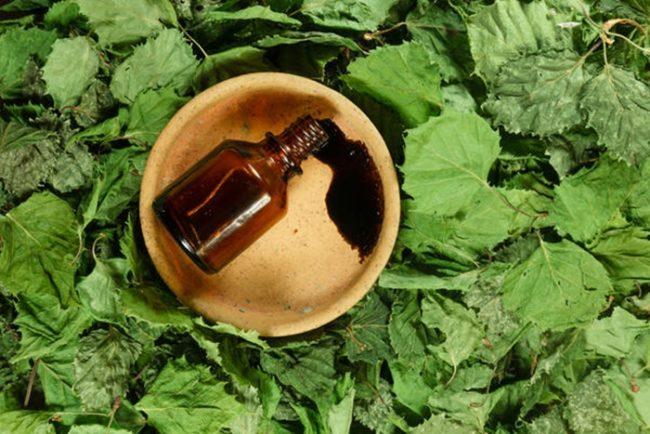
Homemade tar is the cheapest option, but also the most dangerous, as it contains the highest concentration of harmful components. Therefore, it is recommended to purchase the product from specialized retailers, where they sell the substance in varying degrees of purification.
If a gardener decides to make a repellent with their own hands, they do so by following the instructions:
- First, the birch bark is collected, carefully cutting the top layer of bark and trying not to damage the wood.
- The birch bark is rolled up and placed in a metal bucket, after first making a small hole in the center.
- To prevent ash from falling out through the hole, place a fine mesh net.
- After this, a similar, but slightly smaller, container is buried in the ground. This will serve as a container for collecting the tar.
- A bucket of birch bark is placed on top and the hearth is surrounded with stones to prevent the fire from spreading.
- They set fire to the birch bark in the upper container and wait until it burns out, after which they extinguish the remains.
- The resulting tar will flow into the lower container.
The disadvantage of making the product yourself is that you will have to collect and burn quite a lot of birch bark to obtain the amount of tar needed to treat the garden.
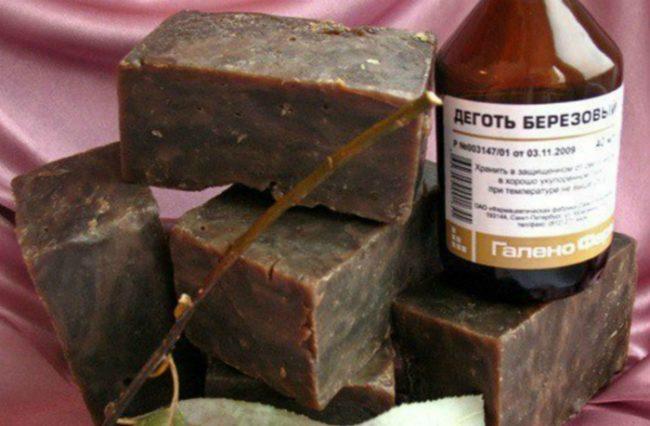
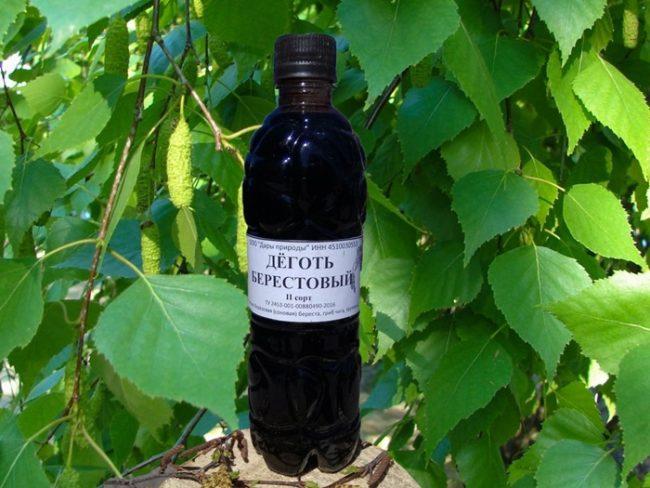
The charcoal sold in stores and pharmacies is a dark-brown, transparent substance with a distinctive odor. It is not recommended to purchase tar soap for pest control, as its concentration is low and has no effect on insects.

Instructions for use
In order for the use of a folk remedy to bring the expected result, it is necessary to carry out the treatment correctly.
From onion fly
Onion flies begin damaging your plants as soon as the first shoots emerge from the soil. To repel the pest, treat the bulbs before planting. Soak them in a tar solution consisting of a liter of water and a teaspoon of the substance for 2-3 hours.
From the sprout fly
To prevent seedling fly infestation, spray all pumpkin crops. As soon as the seedlings emerge, water them with a solution of 10 liters of water and a tablespoon of tar.
From sea buckthorn fly
To repel pests from sea buckthorn, pour undiluted tar into small containers and hang them inside the bush. The tar is periodically replaced with fresh tar.
From aphids
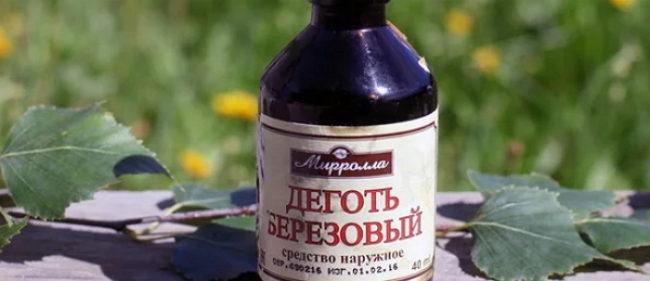
This natural substance is effective against aphids if used as soon as the pests appear on the property. To treat, prepare a solution by finely grating half a bar of tar soap and dissolving the shavings in a liter of hot water. Then, add a tablespoon of birch tar to the solution. Pour half a liter of the prepared solution into a bucket of water and mix thoroughly. Then, spray the plants. Apply two treatments, one week apart.
From the sawfly
Sawflies, an insect that damages a variety of plants, from berry bushes to fruit trees, are a common insect pest. When choosing tar as a repellent, remember that not all sawfly species respond to its scent. Prepare the solution according to these instructions:
- Take a glass of sifted wood ash and pour 5 liters of warm water over it, let the mixture sit for 24 hours.
- Afterwards, strain the solution and add 2 tablespoons of tar to it, as well as a third of a bar of soap, grated.
- Spraying is carried out at the stage of bud swelling; if necessary, repeat the treatment after 10 days.
From the Colorado potato beetle
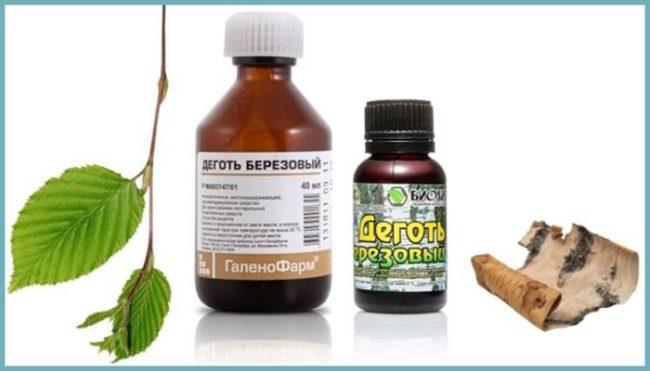
To get rid of the Colorado potato beetle, use a solution consisting of 10 liters of water, 2 tablespoons of tar, and half a bar of soap. Thoroughly wet the potato plants and the soil between the rows with this solution.
From the raspberry-strawberry weevil
To treat strawberry and raspberry bushes against weevils, use a working solution consisting of 2 tablespoons of the working ingredient, 10 liters of water, and 30 grams of finely ground laundry soap. Spraying is recommended during the budding stage, and repeat the treatment a week later.
From wireworm
Tuberous crops often suffer from wireworms, which eat the plant bulbs. Before planting, soak the planting material in a solution of two tablespoons of the solution to 10 liters of water for 40 minutes. If treating plants grown from seed, water the roots with this solution at two-week intervals, three times per season.

From spider mites
This pest reproduces especially rapidly in dry and hot weather, covering the entire foliage of plants with its web. Treatment begins as soon as the first signs of pest infestation are noticed, paying particular attention to the undersides of leaves. To prepare the solution, use 3 tablespoons of the substance, 10 liters of water, and a third of a bar of laundry soap.

From codling moth
To prevent codling moths from laying eggs, spray fruit trees with a standard solution concentration of 2 tablespoons of tar per 10 liters of liquid. This treatment is carried out at the pink bud stage and repeated after flowering.
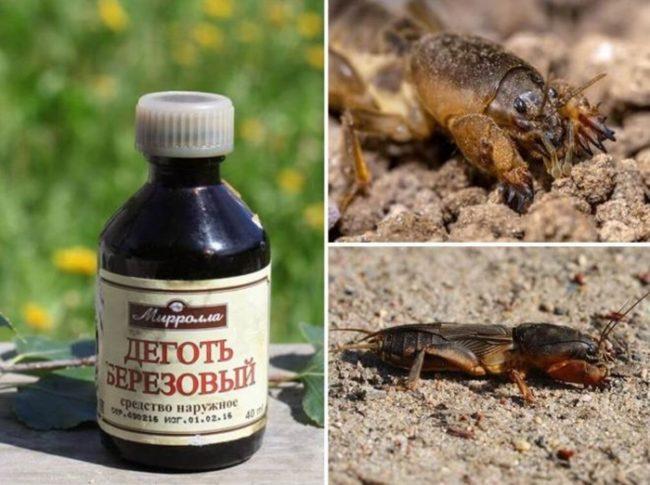
From the mole cricket
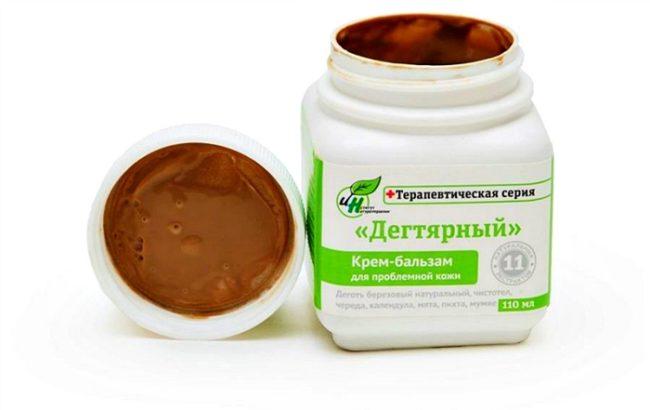
To control mole crickets, regular spraying isn't enough, as the pest moves underground. Here's a method:
- They cook millet porridge and wait until it cools.
- Add tar to the porridge (for 1 kg of millet you will need 4 tablespoons of the active substance) and mix thoroughly.
- In the garden, make shallow furrows and spread the prepared product into them, sprinkling it with soil on top.
From the gooseberry moth
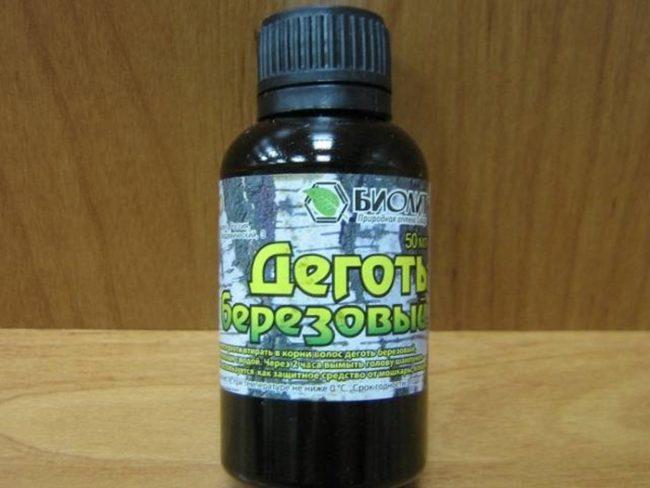
To combat this insect, spray currant and gooseberry bushes before and after flowering. Use a solution consisting of 50 ml of birch tar, 10 liters of water, and a third of a bar of laundry soap.
From cabbage fly
This pest damages crops belonging to the Brassicaceae family. To prevent the insect from laying eggs on plants and soil, prepare a solution consisting of 10 liters of water and a tablespoon of the solution. Sawdust is soaked in this solution and then used as mulch for plants. The mulch is applied in early spring, and the organic material is renewed in early August.
From cherry weevil
To repel cherry weevils, you'll need a bucket of clean water, a tablespoon of birch tar, and a third of a bar of soap for better adhesion. Spray before bud break, and repeat if necessary before flowering.
From hares (mice, voles)
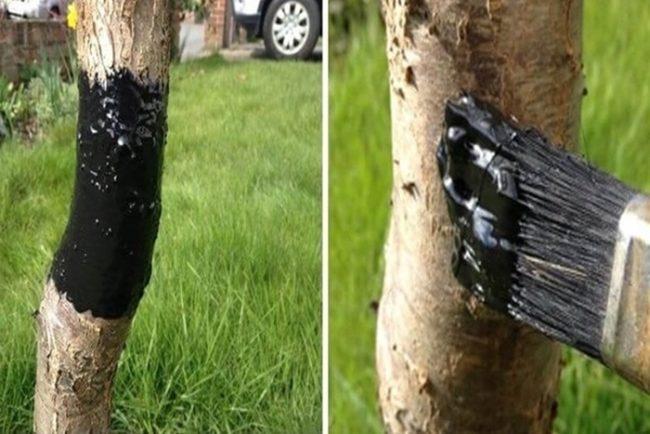
To prevent rodents from damaging the bark of trees and shrubs, use a tablespoon of tar per 10 liters of water. Apply this solution to the lower part of the trunk. To combat hares, prepare a more complex solution consisting of 1 kg of manure, 8 liters of water, 1 kg of chalk, and 3 tablespoons of tar. The whitewash should have a consistency similar to sour cream.
Against scab and other bacterial and viral diseases
To prevent bacterial and viral diseases affecting garden crops, use a solution of 2 tablespoons of tar and 10 liters of water, using laundry soap as an adhesive.
From cabbage white butterfly
To scare away such a butterfly, you need to place pegs around the garden and wrap their tops with rags soaked in undiluted birch tar.
From carrot fly and leafhopper
In July, water the spaces between rows where carrots and other root vegetables are planted, using a tablespoon of tar per 10-liter bucket of water. If necessary, repeat the procedure after two weeks.
From hawthorn
This pest affects plants of the Rosaceae family. The first treatment is carried out at the green cone stage, with subsequent treatments at two-week intervals. For every 10 liters of water, use 20 grams of tar and half a bar of soap.
From ants
You can repel ants by wrapping tree trunks with rags soaked in the undiluted substance.
From moles (hamsters, marmots)
It is recommended to begin the fight against moles in early spring, by plugging all discovered holes and passages in the ground with rags soaked in tar.
Are there any downsides to using it?
Despite the advantages of this folk remedy, it also has significant disadvantages, as described above—from an unpleasant odor to difficulties in preparing the working fluid.