
Pests cause significant damage to plants, destroying the root system, shoots, foliage, and seedlings. Timely treatment of crops with Karbofos eliminates most pests. The product is also ideal for treating plants and preventing the spread of diseases and pests. Remarkably, it can be sprayed on most crops.
What is included in the composition and existing forms of release
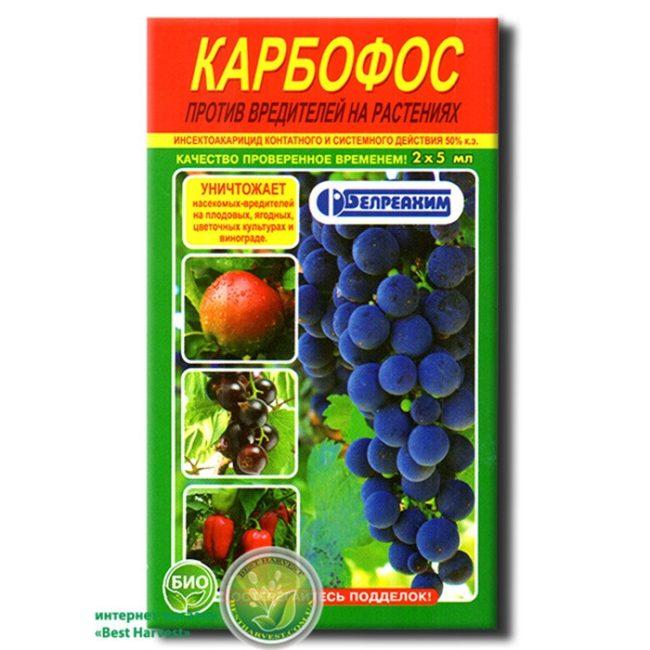
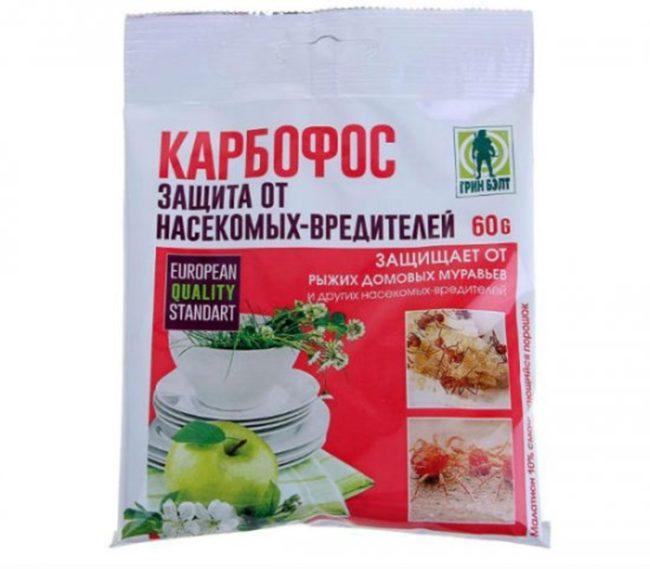
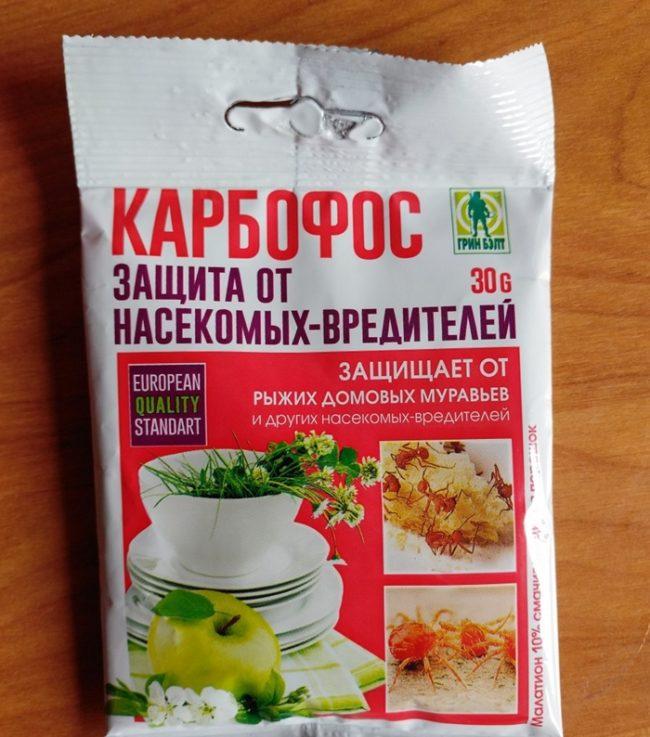
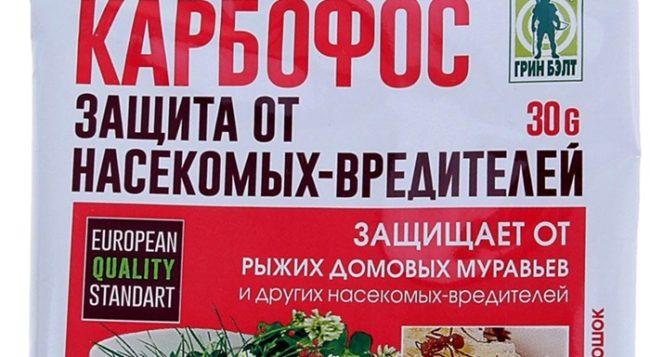
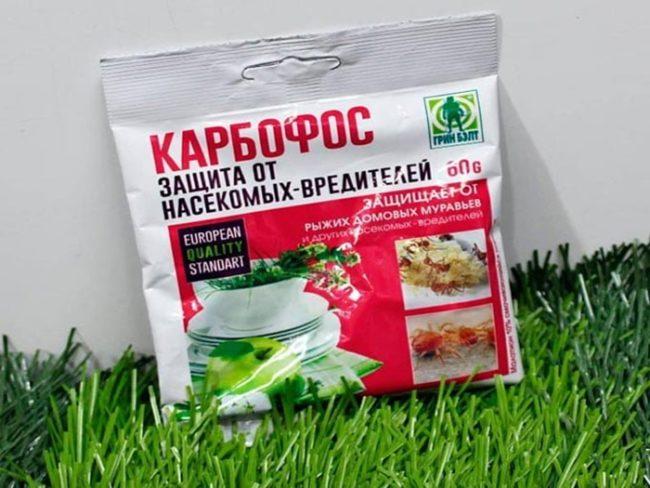
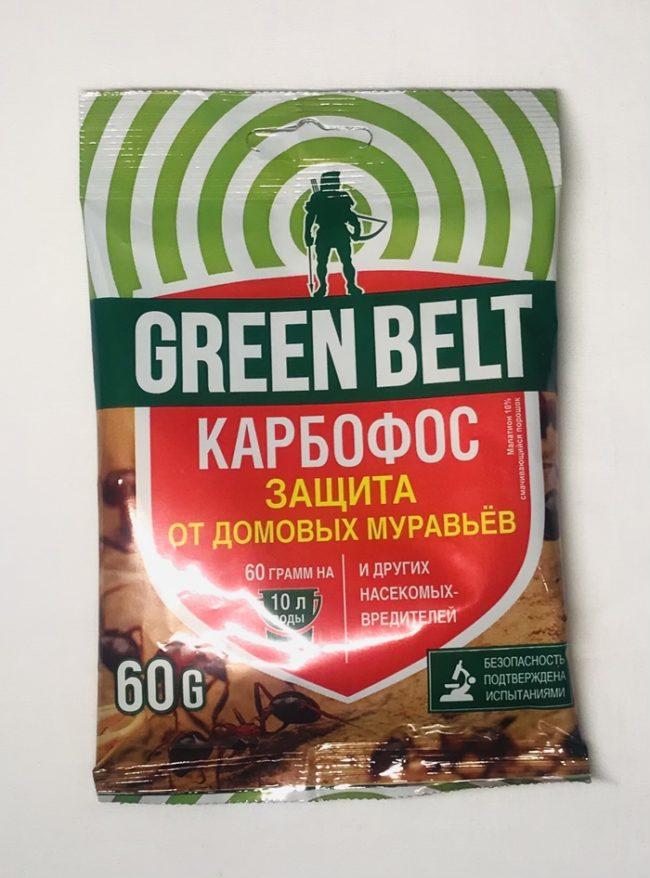
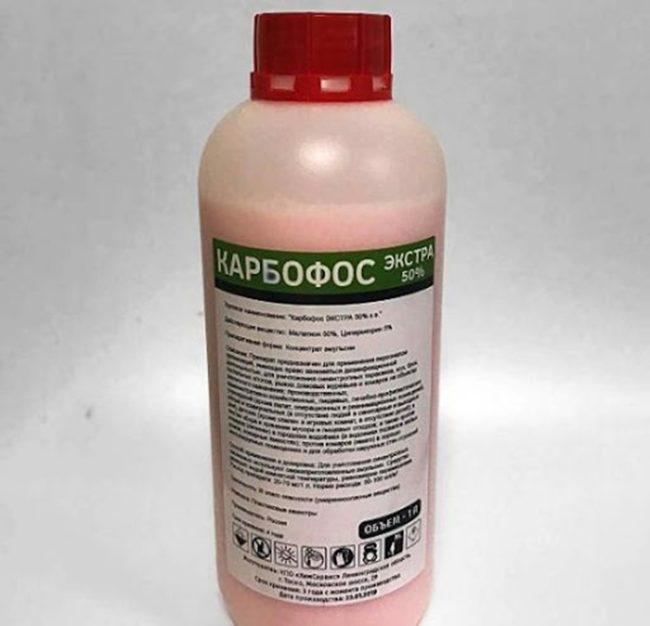
The product is available in various forms (tablets, concentrated emulsion, aqueous emulsion, and granules). The active ingredient is malathion, which is effective in killing ticks and other harmful insects in gardens and vegetable beds. In liquid form, malathion has an oily consistency and a distinctive odor.
Karbofos is a non-selective pesticide. The garden solution is recommended for use in spring to protect crops from larvae, caterpillars, and sucking insects.
Purpose and mechanism of action
The active substance malathion in the insect's body, under the influence of oxidative processes, is converted into the more toxic malaoxon, which causes paralysis and death of pests due to the disruption of the transmission of nerve impulses.
Karbofos's unique feature is its wide range of applications. In agriculture, it is used to control chewing and sucking insects and to protect grain harvests in warehouses. In garden plots, it is used to treat orchard trees and plants in vegetable beds. The product is also used for sanitary and household pest control.
Pros and cons
Like any pesticide, Karbofos has both positive and negative properties. Its advantages:
- various forms of release;
- speed of action on adult insects and larvae;
- wide range of applications;
- low toxicity.
The disadvantages include a short period of protective action and instability to water and wind.
How to use correctly
To ensure effectiveness, it is important to follow the manufacturer's recommendations for the use of Karbofos and adhere to the application rates:
| Processing object | Consumption rates | Pest type | Features of use |
| Fruit trees | 90 g/10 l of water | codling moth, cherry fly, scale insect, leaf rollers, mites, sawfly | The first treatment is during bud swelling, at the beginning of bud formation. Repeat treatment 25-30 days before harvest. |
| Berry bushes | 75 g/10 l | weevils, mites, kidney moths, aphids | in spring before flowering, again after harvesting |
| Strawberry | 60 g/8 l | mites, weevil | The first time during bud formation. Again after harvesting. |
| Tomatoes, cucumbers, peppers, cabbage | 60 g/10 l | spider mites, aphids, whiteflies, thrips | during the period of flower buds appearance |
| Grape | 60 g/8 l | mealybug, spider mite | the first time during swelling of leaf buds. Again during formation of flower buds |
The working solution is prepared immediately before use. Treatment is carried out at an air temperature of at least +15°C, in calm, dry weather.
Safety precautions
Karbofos is classified as a Class 3 pesticide, posing a hazard to humans and beneficial insects. However, when spraying crops, observe safety precautions:
- During the process of preparing the working solution and treating plants, wear personal protective equipment (rubber gloves, safety glasses, respirator, special clothing, rubber shoes);
- During spraying of crops, it is prohibited to remove personal protective equipment, drink, smoke, or eat;
- Work is carried out in calm weather, in the morning or evening hours.
After finishing work, remove protective clothing. Exposed areas of the body must be washed with soap and running water. It is also advisable to rinse your mouth.
What to do in case of poisoning
The drug does not exhibit any pronounced carcinogenic properties. However, if safety precautions are not followed, poisoning is possible. Symptoms of poisoning include shortness of breath, vomiting, diarrhea, salivation, and hypertension. First aid if dangerous symptoms appear: lavage the stomach with copious amounts of water, rinse the nose and nasopharynx with a 2% solution of baking soda, and take activated charcoal.
Storage rules and shelf life
Store the product in a designated, dry, ventilated area. Do not store pesticides, food, or animal feed in the same area. The recommended temperature range is -20°C to +35°C. The product has a shelf life of 36 months. Do not heat the product.

Is compatibility possible?
The product can be used simultaneously with fungicides, insecticides, and growth stimulants. Fertilization and crop treatment can also be combined.
Analogues
Malathion is the active ingredient in many pesticides. Several of the most popular are listed.
- The drug "Aliot" is a contact insectoacaricide and effectively combats pests of agricultural crops.
- "Alatar" protects garden crops from pests. A special ingredient in the product acts as an adhesive, allowing the solution to remain on foliage even during precipitation.
- Profilaktin is used to treat crops in early spring. This eliminates most overwintering pests. It's important to note that the product is used before bud break. Its advantage is that it's non-phytotoxic.
Karbofos is effective in killing most harmful insects. It is low-toxic and quickly eliminated from soil and plants. However, it should be noted that long-term use can cause addiction.