
Lambda-cyhalothrin is the active ingredient found in pesticides and insecticides used in agriculture. They are used to kill dangerous insects and stored-product pests. These substances are highly effective. However, they must be used strictly according to the instructions. Following safety recommendations is also crucial.
Physicochemical properties
Lambda-cyhalothrin is a colorless, crystalline substance. It is odorless and has a low melting point. It is moderately toxic and stable in light. Its physical properties include the following:
- molecular weight – 449.9;
- vapor pressure at a temperature of +20 degrees – 1.5·10-9 millimeters of mercury;
- melting temperature parameters – 49.2 degrees;
- solubility in water at temperature parameters of +20 degrees – 0.005 at pH 6.5;
- density – 1.33 grams per mole;
- solubility in most common solvents at temperature parameters of +21 degrees.
Mechanism of action
Lambda-cyhalothrin is characterized by contact action. It has an intestinal and repellent effect, but lacks fumigant or systemic properties. The active ingredient, like other pyrethroids, affects calcium metabolism in synapses. It affects sodium-potassium channels. The compound disrupts the nervous system of pests. This triggers the production of acetylcholine during the propagation of nerve impulses. Intoxication leads to damage to the motor centers and severe agitation.
The substance promotes rapid destruction of parasites. Their death occurs within at least 24 hours after treatment of a large number of parasites. The composition has a side effect on ticks, inhibiting their development and preventing their population growth.
Lambda-cyhalothrin-based products have a rapid onset of action and are highly photostable. Consequently, they provide long-lasting protection for plants.

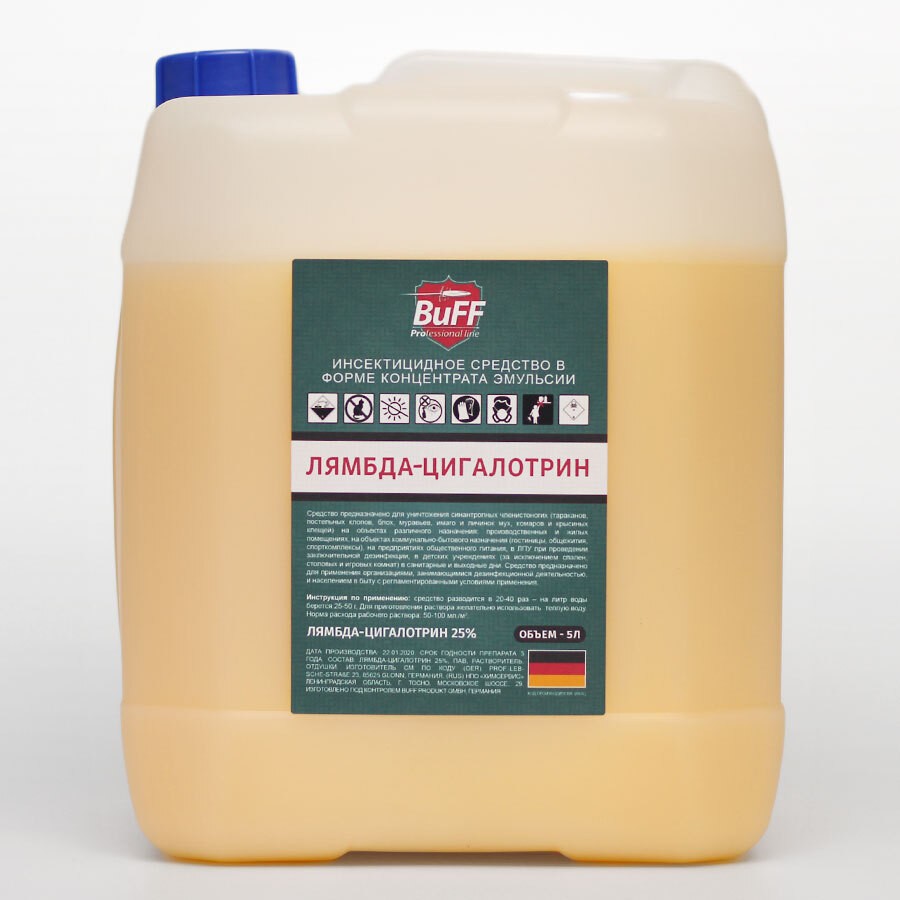
What pesticides contain it?
Lambda-cyhalothrin is present in the following insecticides:
- "Engio";
- "Ampligo";
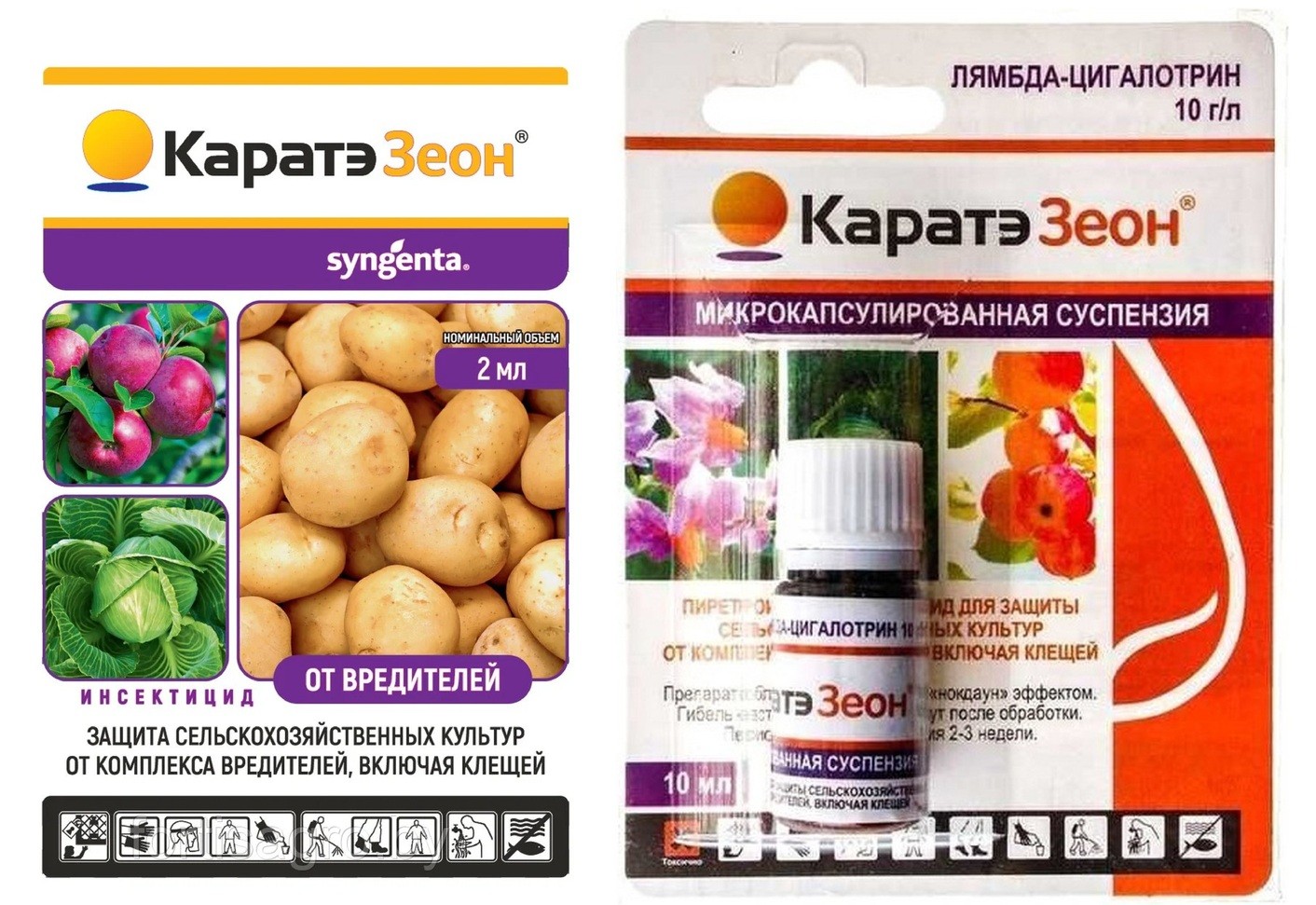
- Karate Zeon;
- "Lamdex";
- Contador Duo;
- "Kaizo".
Terms of Use
This pyrethroid insecticide is effective against a wide range of sucking and leaf-eating pests. Products based on this agent successfully control aphids, beetles, and caterpillars. They can be used on vegetable and fruit crops, winter rape, and potatoes. These products are highly effective against rice, alfalfa, and barley.
These products effectively kill or inhibit tick activity. They are also effective against black cockroaches, mosquitoes, and flies. These products have both contact and intestinal action. They also have repellent properties. Apply 5-30 grams of product per hectare.
The product is used in the form of a 5% extract concentrate, 0.8% preparation for UVO, wettable powder, and aerosols.
When using a 5% extract concentrate, the following rates of liters per 1 hectare must be observed:
- apple tree – 0.4-0.8;
- wheat, barley – 0.15-0.2;
- strawberries – 0.5;
- currants – 0.3-0.4;
- mustard, potatoes – 0.1;
- hops, cotton – 0.5;
- rapeseed – 0.1-0.15;
- alfalfa – 0.15;
- gooseberry – 0.3.
When treating fruit and vegetable crops, it's important to observe a waiting period of 20-30 days. The product can be used to control pests in stored products. When treating unoccupied warehouses, use 0.04 grams of the product per square meter. For areas adjacent to warehouses, this amount increases to 0.8.
Safety precautions
According to the World Health Organization classification, lambda-cyhalothrin is classified as moderately hazardous to humans. In the Russian Federation, its use is regulated by GOST 12.1.007-76. According to this document, the substance belongs to Class II and is considered moderately hazardous when ingested. In terms of dermal exposure, the product is considered moderately hazardous. When considering the zone of acute biocidal action, the product is considered highly hazardous and belongs to Class II.
Acute symptoms of poisoning with the active substance in humans occur immediately after exposure or within 4 hours. However, they can persist for more than 24 hours. The following symptoms occur:
- headache;
- irritation of the skin, respiratory organs, mucous membranes;
- general weakness;
- nausea;
- impaired coordination of movements.
If an overdose of the drug is ingested, in addition to the symptoms listed above, there is a risk of seizures and paralysis. Furthermore, the person may even fall into a coma.
To avoid signs of intoxication, it is recommended to use personal protective equipment and follow the instructions for use when working with lambda-cyhalothrin-based insecticides. In humans and warm-blooded animals, the effects are reversible. This is due to the rapid detoxification of all pyrethroids by enzymes.
Compatibility
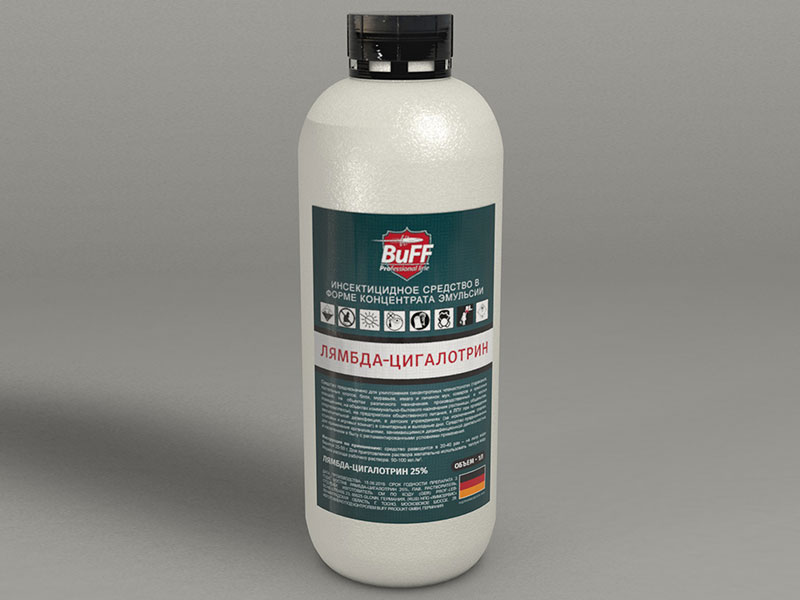
Lambda-cyhalothrin-based products are compatible with most fungicides and insecticides. They can be used in tank mixes if necessary. A compatibility test is required beforehand. To do this, mix a small amount of the products and evaluate the reaction. If there is no sediment, flocculation, increased temperature, or other undesirable symptoms, the mixture can be used.
Lamba-cyhalothrin is an active ingredient found in many insecticides. To ensure the desired results, it is important to use it correctly. It is important to strictly adhere to the dosage and follow safety precautions. When handling the substance, it is essential to wear personal protective equipment.
Related posts:
 Description of acaricides, their mode of action on plants and the best remedies
 Nitrophoska composition and instructions for use of fertilizer, errors
 The best grape varieties for growing in the Urals, planting and care rules in summer
 Descriptions of the 20 best cherry varieties for the Moscow region, their planting and care
 Methods for planting and propagating cherries at home
 Instructions for using copper sulfate in gardening, how to dilute it
 Types of pyrethroids and a list of drugs, mechanism of action and instructions
 The health benefits and harms of cherries, rules of consumption, and their effects on the body
What do pesticides have to do with insecticides? Correct the title.