
- Description of the substance and mechanism of action
- Purpose and in what cases is it used?
- Breeding rules
- For whitewashing tree trunks
- For burning
- From pests
- For feeding
- For treatment
- Instructions for use
- Safety precautions
- Is compatibility possible?
- How to store it correctly and for how long
- What to replace it with
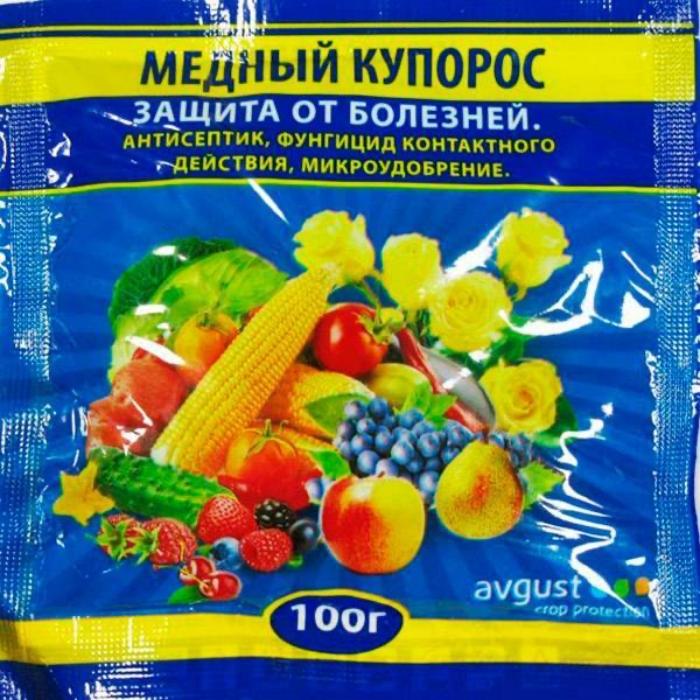
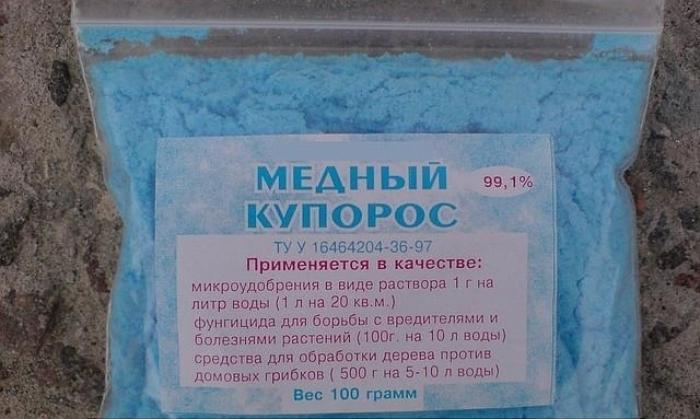
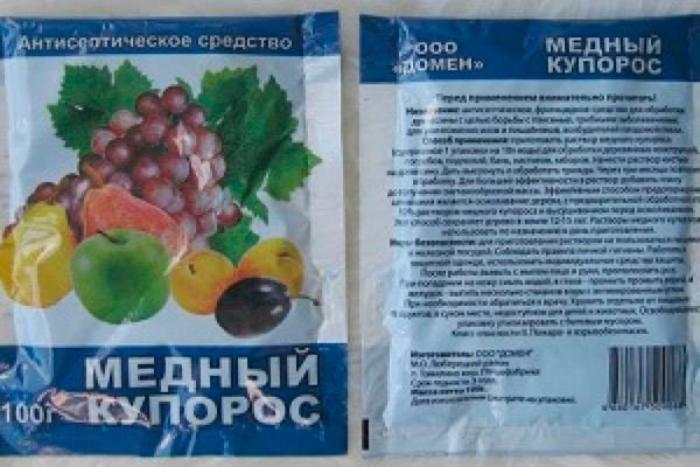
Copper sulfate is an antiseptic and fungicidal substance with a contact effect. It limits the development and spread of fungal diseases in fruit and berry plants. It is also used to treat wood, helping combat mold and rot. Copper sulfate is sometimes used in gardening as a plant nutritional supplement.
Description of the substance and mechanism of action
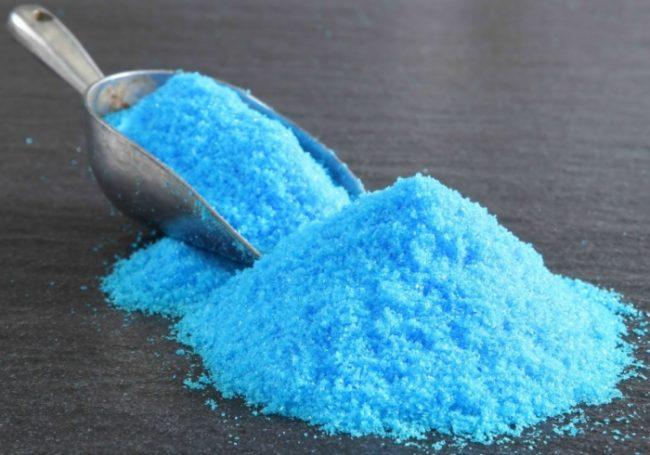
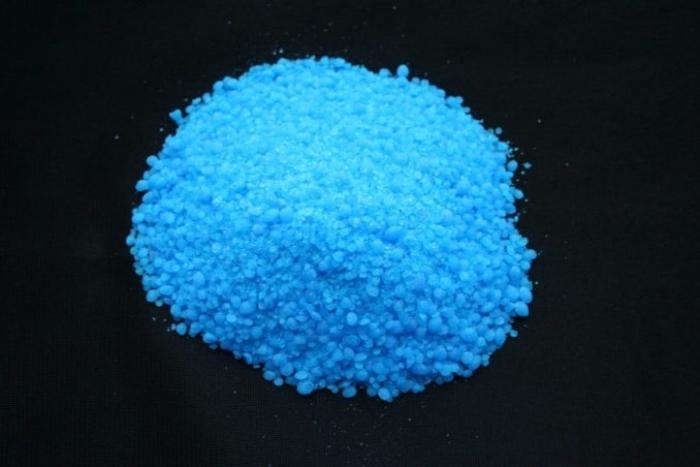
The chemical is produced as a blue powder. It is tasteless and odorless, mixes easily with water and diluted alcohol, and dissipates readily in air. It is nonflammable and nonexplosive. Its primary effect is to protect crops from fungi and viruses.
The main advantages of the product include:
- Safe when used as directed. This product is non-accumulative and does not cause side effects.
- Effective destruction of fungi and mold spores.
- No risk of pathogen resistance developing.
- Affordable price.
Purpose and in what cases is it used?
The drug is used in various areas of human activity, including the home. The composition can be used in the following cases:
- as a top dressing;
- as a source of microelements;
- as a pesticide to eliminate pathologies and pests;
- as an antiseptic to protect against rot and mold.
This common fungicide can be used on various fruit and berry crops and vegetables:
- Pome fruits – the composition helps protect apple, quince and pear trees from drying out, fruit rot, and phyllostictosis.
- Stone fruits - with systematic treatment of plums, peaches, cherries, cherries, and apricots, it is possible to avoid damage from moniliosis and commicosis.
- Berry bushes – copper sulfate helps protect currants and gooseberries from leaf spot, septoria and anthracnose.
- Roses, ornamental shrubs, and grapes—using a 1% concentration of the product provides reliable protection against downy mildew.
- Tomatoes, eggplants, strawberries, physalis, apple trees, potatoes – copper sulfate protects these crops from late blight.
Breeding rules
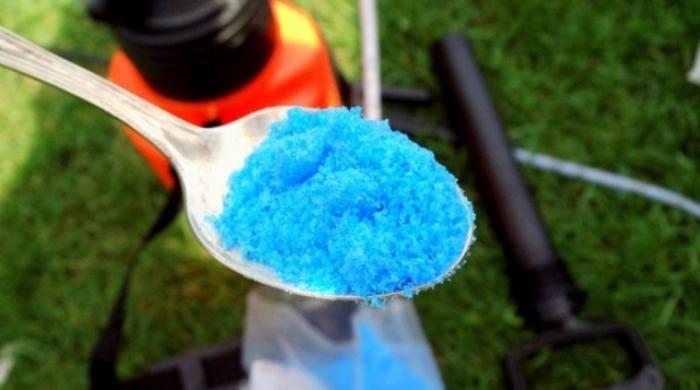
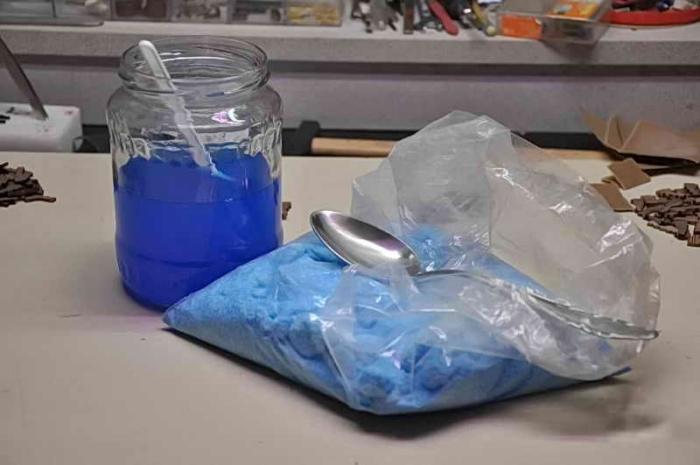
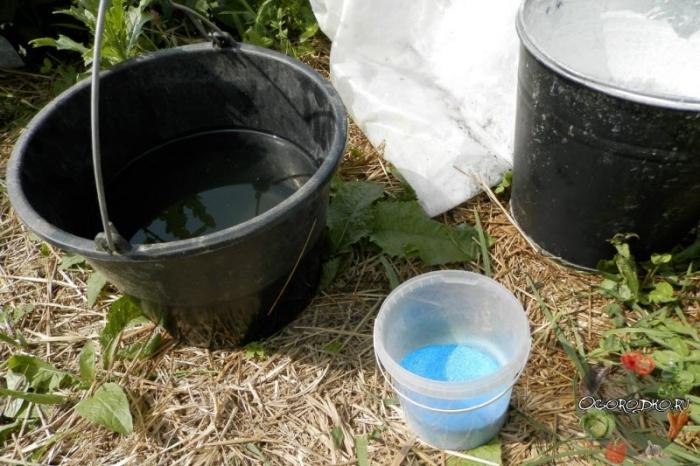
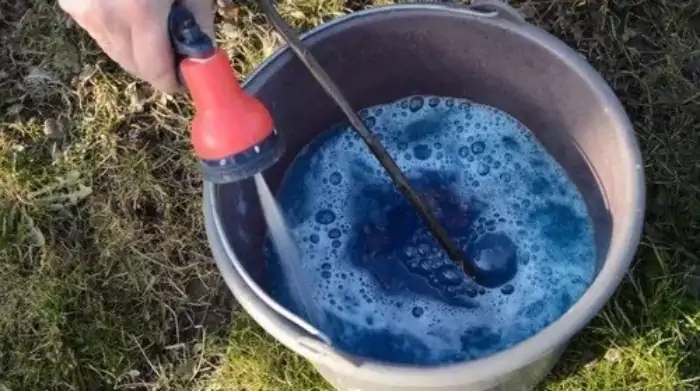
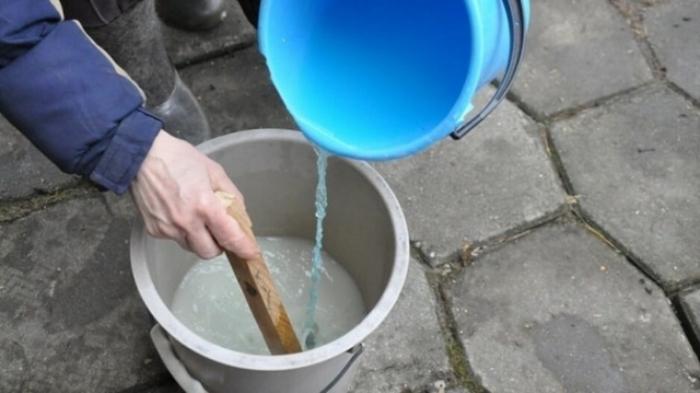
To prepare a copper sulfate-based solution, pour the powder into a glass or plastic container and mix with water until completely dissolved. The water temperature should be between 45 and 50 degrees Celsius. The solution dissolves slowly in cold water.
It is recommended to mix the powder with 1 liter of water, then add the concentrated solution to 9 liters of water. Then, let the mixture cool and strain it to remove any impurities.
For whitewashing tree trunks
The composition can be used to treat tree trunks. This method has many advantages:
- plants will not get sunburned;
- the likelihood of cracks forming due to temperature fluctuations is reduced;
- parasites and pathogens will not be able to penetrate the bark.
There are several options for preparing a whitewash mixture. It's important to remember that the solution should be fairly thick. So, to prepare the mixture, you can do the following:
- Mix 2 kilograms of lime with 250 grams of copper sulfate. You'll also need 1 kilogram of clay and 500 grams of cow manure. Mix all ingredients and add 10 liters of water.
- Mix 2 kilograms of lime and 250 grams of copper sulfate. Add 8 liters of water and 250 grams of wood glue.
It's important to note that these recipes call for the use of slaked lime. This type of solution can be purchased ready-made, but it's not always of the required quality. Therefore, experts often recommend making slaked lime at home. To do this, use 2 liters of water per 1 kilogram of slaked lime. Gradually add the mixture to the water, stirring constantly. After this, the lime can be combined with copper sulfate and other substances.
For burning
Copper sulfate can be used to disinfect large areas in the garden or vegetable patch. It's important to follow the dilution ratios. To do this, mix 500 grams of lime with 500 milliliters of water. Then, add another 4 liters of liquid.
In another container, you need to dilute copper sulfate in the same ratio.
It is also recommended to add an additional 5 liters of water. Let the mixture sit for half an hour, then combine them. To do this, carefully pour the copper sulfate into the lime. The resulting mixture is recommended to be used within 5 hours. After this time, it will lose its effectiveness.
From pests
Summer cottages often suffer from seasonal pests. These parasites weaken plants and feed on them. They can destroy or damage roots. Copper sulfate can be used to control pests. However, this isn't always advisable due to the risk of copper accumulation.
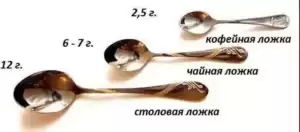
The solution concentration depends on the severity of the pest infestation. Initially, the solution should be diluted with water to obtain a 1% solution. For moderate plant infestation, a 3% solution is used. For severe pest infestations, stronger insecticides should be used.
For feeding
The plant fertilizer should be diluted to a 1% concentration. This will help provide nutrition and increase the copper content in the soil. To do this, dissolve the copper sulfate in water. Use 1 liter of liquid per 100 grams of the fertilizer.
Separately, mix 150 grams of lime and 1 liter of water. Then, add water to both containers—4 liters to each. Mix everything thoroughly and let it sit for 15 minutes. Then combine the mixtures and apply.
Less concentrated fertilizers can also be used. This is especially true if the soil contains sufficient copper. In this case, it is recommended to use 20-30 grams of copper sulfate mixed directly with water, without adding lime.
For treatment
Hot and humid weather increases the risk of fungal infections. Garden and vegetable garden plants can also suffer from rot, fusarium, and powdery mildew. Pests also frequently infest crops. To combat the disease at its early stages, prepare a 3% copper sulfate solution.
To do this, take two large containers. Plastic, glass, or enamel containers are acceptable. Place 300 grams of copper sulfate in one container and add 2 liters of water. It is recommended to place 350 grams of lime and 1.5 liters of water in the other container.
Then, add another 5 liters of clean water to each container. Strain the lime solution, then gradually add the copper sulfate and water, stirring constantly.
Instructions for use
To prevent diseases, a copper sulfate-based solution can be applied twice a season: in late fall and early spring during the green cone stage. However, fall treatment is considered more beneficial for plants. When applying it, pay special attention to the areas where skeletal branches attach to the trunk.
Depending on the age and species, one tree requires an average of 2-10 liters of the working solution. It should be applied in the morning or evening, when the air temperature is below 25-30 degrees Celsius. For spraying plants with fresh wounds, increase the concentration to 3%.
When using copper sulfate as a fertilizer, it's important to consider the copper content of the soil. If the soil contains high levels of this component, copper sulfate should not be used.
Safety precautions
To prevent harm to the body, it's important to use the substance correctly. When doing so, follow these recommendations:
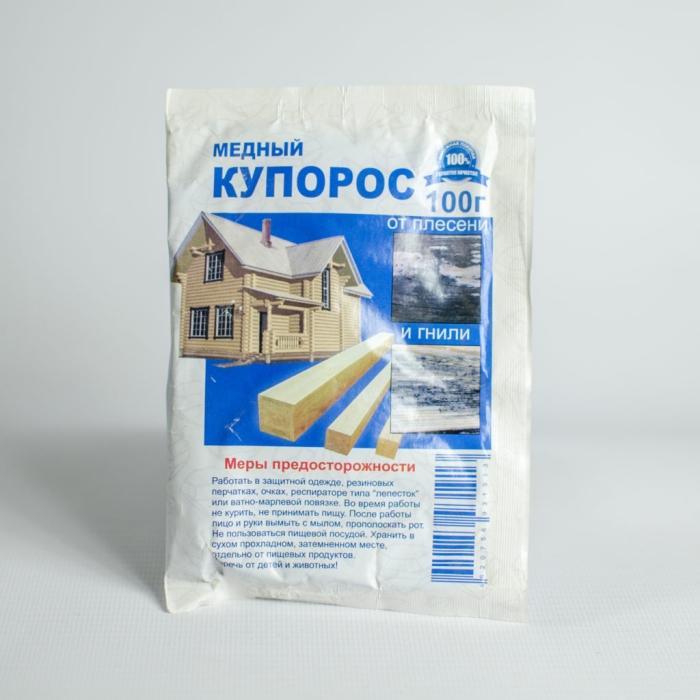
- When working with the product, use personal protective equipment. This includes wearing a special protective suit, goggles, and gloves. This protects your eyes, hands, skin, and clothing from the toxic substances.
- Preparing the solution in metal containers is prohibited. The copper present in sulfate quickly reacts with the metal, causing its destruction.
- When preparing the drug for use, it is prohibited to eat, drink or smoke.
- If the substance comes into contact with the skin, it must be washed off with plenty of clean water.
- If copper sulfate solution enters the digestive system, it immediately causes vomiting and pain. In this case, self-cleansing is prohibited. In such a situation, call an ambulance immediately.

Is compatibility possible?
The drug cannot be combined with organophosphorus insecticides and other agents that decompose in an alkaline environment.
How to store it correctly and for how long
The product must be stored in a dry place. The temperature should be between -30 and +30 degrees Celsius. Store the product separately from food, medications, and animal feed. Keep the product out of the reach of children and pets.
What to replace it with
There are many copper sulfate alternatives that can be used for similar purposes. Bordeaux mixture or Burgundy mixture can be used as a substitute. Other effective substances include Fitosporin, Kuproksat, and Gamair.
Copper sulfate is an effective remedy that can be used for both therapeutic and preventative purposes. It also helps eliminate pests. It can also be used as a fertilizer. To ensure the desired effect, it's important to strictly follow the instructions for use. Adherence to safety precautions is also crucial.