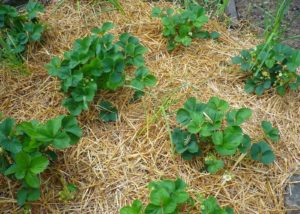
Gardeners and vegetable growers often use mineral fertilizers, pesticides, and disease and insect control products for their plants. However, many don't have scales for these applications. To accurately measure the required amount of any product, it's important to carefully examine the gram values in spoons. This will significantly simplify application and help avoid mistakes when caring for plants.
Table of grams in a tablespoon
Measuring out plant care products can be done with a variety of tools. Spoons are often used for this purpose. This cutlery is considered the most accessible. Every gardener has one and it's inexpensive.
You can also use a regular knife to measure small amounts of powdered fertilizer. Every gardener has this tool. It can measure out 1, 2, 3, or 4 grams of the product. Keep in mind that the tip of a knife holds approximately 0.5-1 gram of light powdered fertilizer or 1-2 grams of heavier fertilizer.
However, a tablespoon is considered perhaps the most popular tool for measuring 10-20 grams of substances. More precise dosages that can be determined using this device are listed in the table:
| Preparation | Weight, grams |
| Ammonium nitrate | 15 |
| Dolomite flour | 25 |
| Ferrous sulfate | 16 |
| Urea | 12 |
| Fertilizer mixtures – for the garden, for fruit trees and berry bushes | 18 |
| Potassium nitrate | 17 |
| Phosphate rock flour | 26 |
| Potassium salt | 18 |
| Slaked lime | 9 |
| Ash | 8 |
| Potassium sulfate | 21 |
| Copper sulfate | 16 |
| Potassium magnesium sulfate | 16 |
| Ammonium sulfate | 13 |
| Nitrophoska | 18 |
| Simple superphosphate | 17 |
| Superphosphate in granular form | 17 |
| Potassium chloride | 14 |
Sometimes, when preparing working solutions, it is necessary to measure out a small volume of water. In this case, it is recommended to keep in mind that a tablespoon contains 15 milliliters of liquid.
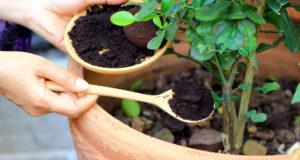
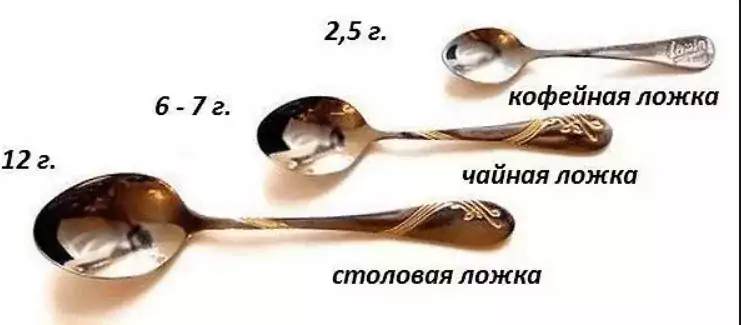
How many grams fit in a teaspoon?
Teaspoons are often used to measure out small amounts of fertilizer or medicinal powder. However, there are very specific standards and dosages that can be measured with such items. So, 1 teaspoon contains the following amounts of substances:
| Fertilizer | Weight, grams |
| Ash | 2 |
| Potassium salt | 6 |
| Dolomite flour | 8 |
| Potassium nitrate | 6 |
| Potassium magnesium sulfate | 5 |
| Ferrous sulfate | 5 |
| Nitrophoska | 6 |
| Simple superphosphate | 6 |
| Ammonium sulfate | 4 |
| Urea | 4 |
| Potassium sulfate | 7 |
| Ammonium nitrate | 5 |
| Potassium chloride | 5 |
| Copper sulfate | 5 |
| Superphosphate in granular form | 6 |
| Fertilizers – for the garden, for fruit trees and berry bushes | 6 |
| Phosphate rock flour | 9 |
If you don't have one of these types of equipment, keep in mind that 1 tablespoon contains 3 teaspoons of each product. It's also important to know that 1 teaspoon of each product contains 5 milliliters of water.
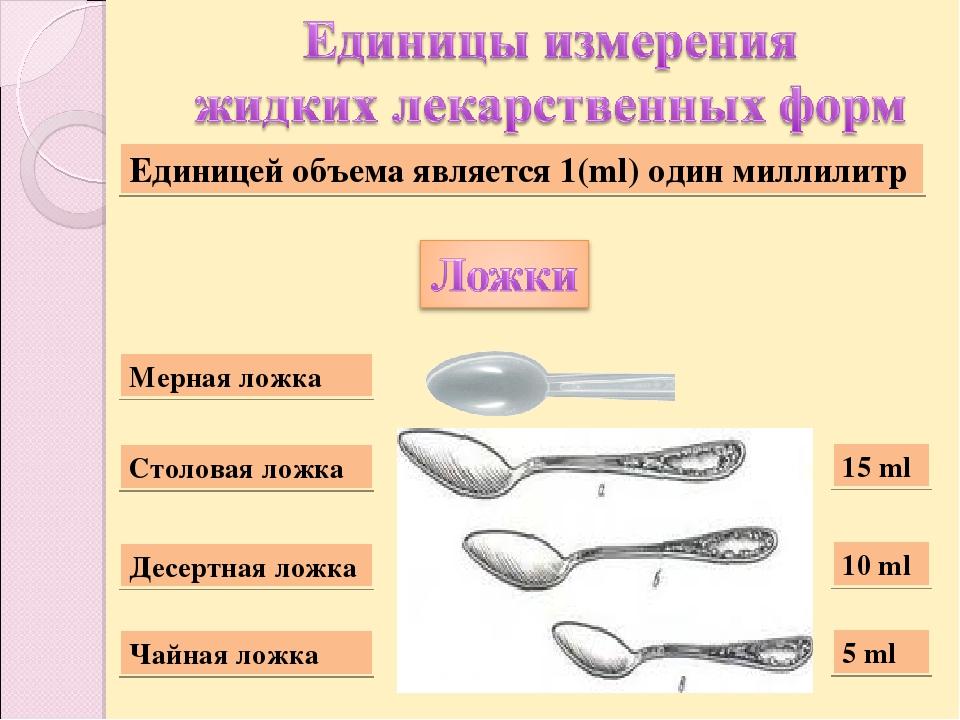
Gram of a regular dessert spoon
Dessert-type measuring devices are rarely used to measure dry ingredients. However, it's important to familiarize yourself with the gram information for powders and granules in dessert products. Experts note that it holds 2 teaspoons.
Therefore, when measuring the amount of products that you plan to use for plant care, it is worth focusing on the following information:
| Substance | Quantity, grams |
| Ammonium nitrate | 10 |
| Ash | 4 |
| Potassium salt | 12 |
| Dolomite flour | 16 |
| Potassium sulfate | 14 |
| Potassium nitrate | 12 |
| Potassium magnesium sulfate | 10 |
| Copper sulfate | 10 |
| Urea | 8 |
| Ferrous sulfate | 10 |
| Nitrophoska | 12 |
| Simple superphosphate | 12 |
| Ammonium sulfate | 8 |
| Superphosphate in granular form | 12 |
| Fertilizers – for the vegetable garden, for fruit trees and berry bushes | 12 |
| Phosphate rock flour | 18 |
| Potassium chloride | 10 |
The listed dosages are approximate. Spoons vary in shape, design, and size. This directly affects the volume and weight of the substances used. This must be taken into account when preparing working solutions and mixtures.