- What is Monopotassium Phosphate?
- Principle of action
- Strengths and weaknesses
- Abstract on the use of monophosphate for potato crops
- How to prepare a solution of potassium monophosphate
- Technology of crop spraying, timing
- Safety rules
- First aid for poisoning
- Can potassium monophosphate be combined with other compounds?
- How to store and how much
- Alternative recharges
- Consumer reviews
The use of monopotassium phosphate is a radical measure used to replenish phosphorus and potassium deficiencies caused by prolonged heavy rainfall. Crops accustomed to abundant potassium nutrition may suffer from a deficiency of these components, as rain leaches them not only from the soil but also from the above-ground parts. To ensure the desired results, it's important to familiarize yourself with the proper application methods.
What is Monopotassium Phosphate?
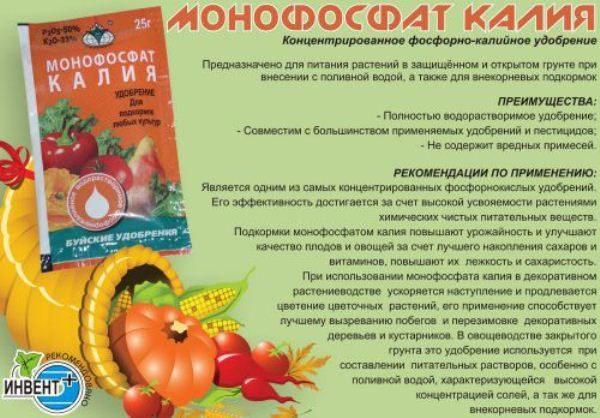
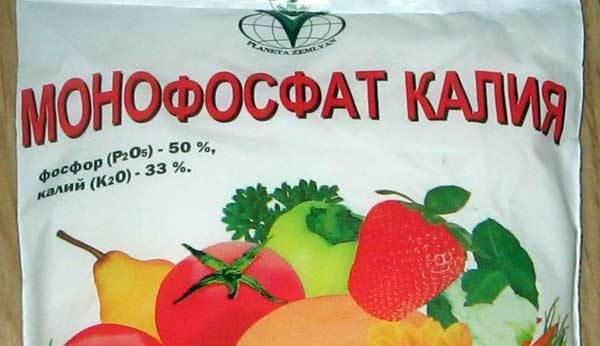
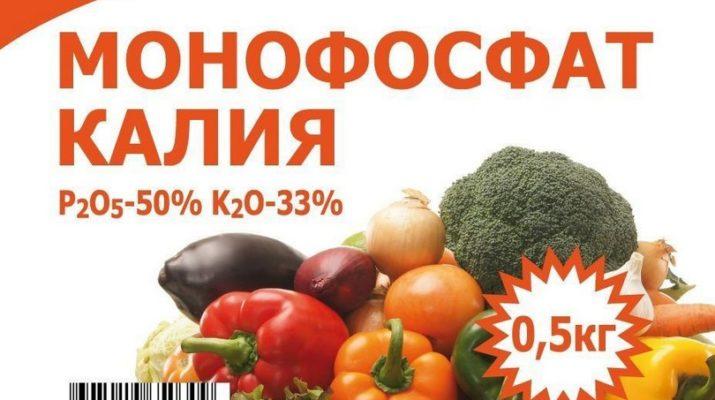
Monopotassium phosphate contains 33% potassium and 55% phosphorus. Thanks to its combined action, you can get a bountiful, delicious harvest. Minerals, especially potassium, are responsible for the taste of plants. They increase the sugar and vitamin levels. The product is available in crystalline powder and granule form and dissolves easily in water. Plants absorb it quickly. It does not contain harmful components, salts, or heavy minerals.
This composition is widely used both in the garden and at home. It increases the intensity and prolongs the flowering period. It is also suitable for growing vegetables in greenhouses.
In addition to stimulating growth and fertility, MK increases resistance to harmful bugs and diseases. The cost varies around 90 rubles, depending on the region and location of purchase.
Principle of action
When the compound dissolves in water, the main dose of orthophosphoric acid is actively delivered to plants, bypassing chemical reactions in the soil. Plants don't always fully absorb the phosphorus; it sometimes remains in the soil. Potassium interacts with the soil and subsequently nourishes it. The component doesn't accumulate in the soil, but can be retained in loamy or clayey soils.
Strengths and weaknesses
Monopotassium phosphate, like other fertilizers, has a number of positive and negative aspects. Overall, gardeners recommend using this fertilizer, which shows excellent results despite its drawbacks.
| Advantages | Negative aspects |
| Increased immunity to diseases and bugs | Relatively high cost |
| Stimulation of the formation of lateral shoots with flower stalks | Safety precautions must be observed |
| The composition is easily soluble in water and is absorbed by crops. | Disintegrates quickly |
| It is almost impossible to overfeed a plant with fertilizer. | Weeds love fertilizer |
| Monophosphate is compatible with pesticides. | |
| The substance shows high results in the prevention and control of powdery mildew and fungal infections | |
| The fertilizer does not include ballast elements. | |
| MK does not affect the acidity level of the soil
|
Abstract on the use of monophosphate for potato crops
Using the prepared solution, fertilize plants by spraying or watering. The most powerful effect is observed when applying fertilizer in the spring and when transplanting into open ground. Add 20 g of monophosphate per 10 liters of water. Allow a two-week interval between waterings or sprayings.
How to prepare a solution of potassium monophosphate
To prepare a solution of potassium monophosphate, follow these steps:
- take 10 g if you need to feed indoor plants;
- 15-20 g for vegetables grown in open soil;
- 30 g for all fruit and berry crops.
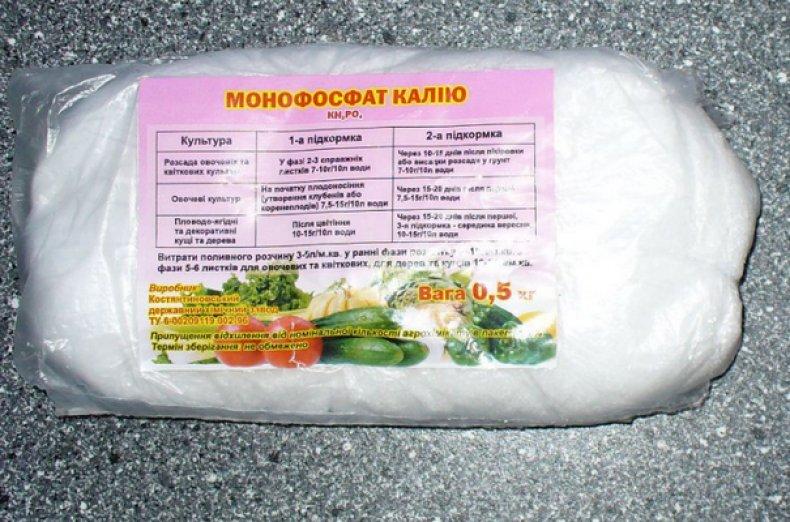
Use 10 liters of warm water, letting it settle first.
Technology of crop spraying, timing
Spray the nutrient solution before 9 a.m. or in the evening after 4 p.m. for the first time after hilling, then continue during bud formation. It's also advisable to apply foliar feeding in the fall, as this will help the plant survive the winter more easily. Apply the solution early in the morning or evening to allow the nutrients to evaporate slowly and last longer.
Spray until a damp outer film appears on the foliage, but do not allow the droplets to roll off.
Experienced gardeners advise spraying crops 2-3 times a year.
| Flowers | The first feeding occurs in the phase of 2-3 true leaves |
| 2nd – 2 weeks after planting in the ground | |
| Vegetables | 1st – at the beginning of fruiting, formation of tubers, root crops |
| 2nd – 2 weeks after the first feeding | |
| Fruit and berry crops | 1st - after flowering |
| 2nd - in 2 weeks | |
| 3rd – in mid-September |
Safety rules
When interacting with potassium monophosphate, safety precautions should be followed:
- do not allow the substance to penetrate the skin, mucous membranes, or stomach;
- water plants only while wearing protective gloves, clothing should cover hands and feet;
- protect the respiratory tract with a mask.
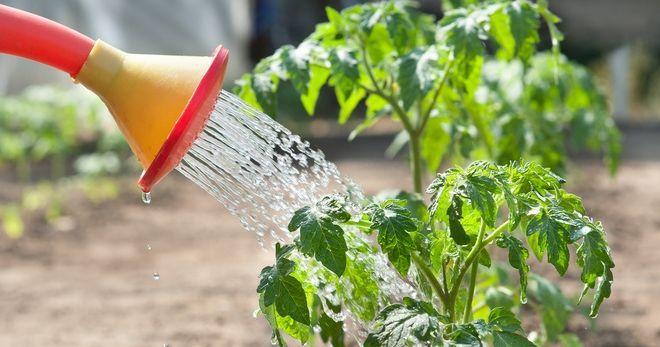
It's better to use finely knitted gloves with pimples rather than thin rubber ones. They're thicker. For added protection, wear rubber gloves over them to repel moisture.
First aid for poisoning
If the chemical has entered the stomach, induce vomiting. Rinsing the stomach will help prevent intoxication. Next, consult a doctor. You can take absorbent medications such as Sorbex, Polysorb, or activated charcoal.
If the solution comes into contact with skin or mucous membranes, rinse them with filtered water.
Can potassium monophosphate be combined with other compounds?
Fertilizer can be combined with other nutrients, such as phosphorus and nitrogen-containing compounds. It's best to wait 5 days before adding nitrogen. MK is not compatible with fertilizers containing calcium and magnesium.
How to store and how much
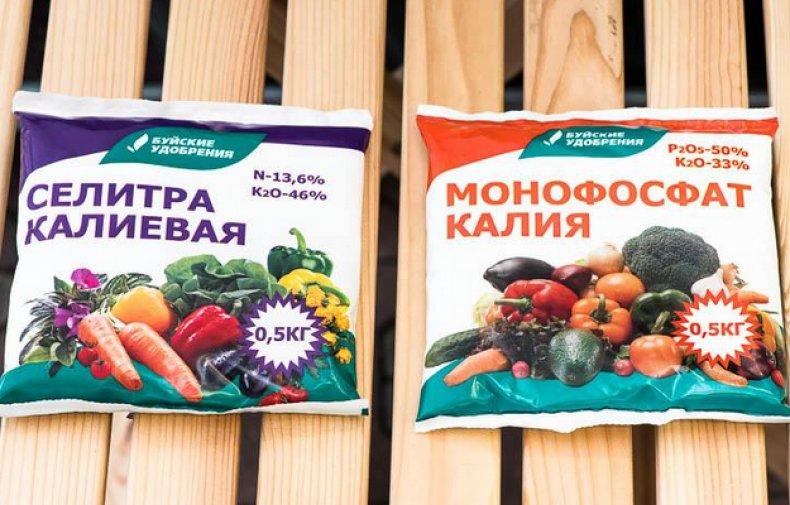
The chemical compound should be stored in an airtight container in a well-ventilated area. It can be stored outdoors, away from moisture and light. It has an unlimited shelf life. Keep the fertilizer away from children and pets. Once the product has expired, it must be disposed of. It has no beneficial properties and may even harm plants.
Alternative recharges
There are many analogs of monopotassium phosphate, listed below. They differ in price and composition, but the principle of action is similar.
- Superphosphate. This product contains 26% phosphorus, which is easily absorbed by plants. Superphosphate is available in powder and granular form. One tablespoon contains 17 g of granular fertilizer or 18 g of powder. The product is also used as a water extract. To prepare it, take 20 tablespoons of the product and dissolve them in 3 liters of boiling water. Leave the solution in a warm place for 24 hours, stirring occasionally. The extract is diluted at a rate of 150 ml per 10 liters of water.
- Diammophos. It contains 23% nitrogen and 52% phosphorus. It is the most versatile nutrient. It is often used to feed all types of crops at any time of year. This compound shows excellent results in acidic soils.
- Double superphosphate. It contains 50% phosphorus and is sold in granules. One tablespoon contains 15 g of double superphosphate. This fertilizer is a concentrated version of regular superphosphate. It is used to enrich all types of vegetable and fruit crops with nutrients, but the dosage is halved. This formula is suitable for feeding shrubs and trees.
- Phosphate meal. This fertilizer contains 30% phosphorus. One tablespoon contains 26 grams of phosphate meal. This substance is designed for fertilizing plants in highly acidic soils, as it contains phosphorus in a form difficult for crops to absorb. Acidic soil facilitates its absorption. To fertilize plants, the meal is not dissolved. It is scattered on the soil in the fall and then dug in. The effect appears within 2-3 years.
- Wood ash. Its advantage over potassium mixture is that it can be applied during autumn plowing. Ash can also be periodically added to the underbrush of seedlings, loosening the soil around the rhizomes. The combination of ash and nitrogen produces excellent results, increasing plant yields. Alternating applications of potassium mixture and ash ensures consistent, complete nutrition throughout the growing season.
- Phosphorus compost. To create this organic fertilizer, phosphorus-rich plants are added to the compost. These include wormwood, rowan berries, hawthorn, and thyme.
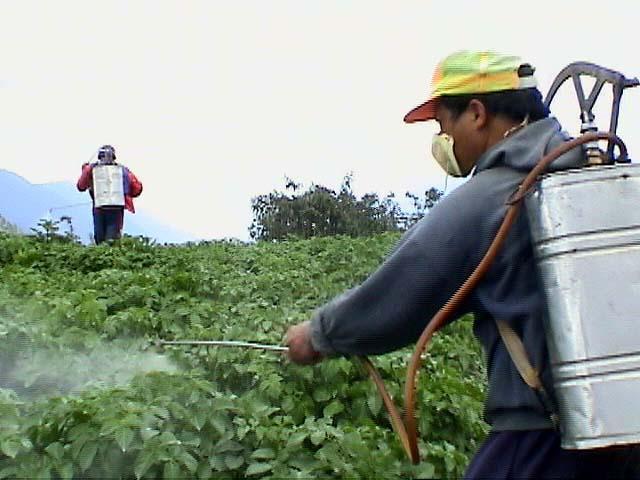
It's also important to dilute the fertilizers listed according to the instructions. Monopotassium phosphate is equally effective, but some similar fertilizers have a lesser effect on crops.
Consumer reviews
Gardeners' opinions on monopotassium phosphate are divided. Some rave about it, while others find it ineffective. However, based on the facts, when used correctly, the fertilizer produces excellent results.
Albina Vinnichenko, 60 years old, Moscow
Hello! I fertilized my potatoes with monopotassium phosphate. It improved the plant's resistance to Colorado potato beetles, and the fruits became larger and tastier. The price was quite reasonable, and I couldn't find any downsides.
Petr Romanov, 45 years old, Kyiv
Hello! I often use MK to feed vegetables. The results are average, but I combine it with other fertilizers. My tomatoes, cucumbers, and potatoes always grow to excellent quality and rarely get sick. I recommend potassium monophosphate to everyone.
Victor Ivanov, 69 years old, St. Petersburg
Hello! I learned about potassium monophosphate from a neighbor at my dacha. I decided to fertilize my cucumbers and zucchini with it. The results were immediate. I applied the fertilizer in May, and by the end of summer, the harvest was bountiful, and the fruit's appearance had improved. The price is ridiculously low for such a powerful product.
Related posts:
 Instructions for use of potassium sulfate, how it differs from sulfate
 Descriptions of potash fertilizers, which ones are best to choose, and instructions for use
 Benefits, types and application of potassium fertilizers for cucumbers, how to feed them
 Why do plants need potassium, what types are there, and what fertilizers contain it?
 Causes and treatment of eggplant pests and diseases, how to combat them at home
 What fertilizers and when to use for feeding tomatoes in a greenhouse
 Description of varieties of sowing peas and cultivation, to which family they belong
 How to propagate and grow peas, cultivation technology, and care in open ground