
Potassium fertilizers provide plants with one of the most essential nutrients. Its application is crucial for the growth of any plant. This product can be used as potassium sulfate. This substance is suitable for various soil types and for foliar application. Its compatibility with other nutrients is an additional advantage. For the product to achieve the desired effect, it is important to use it correctly.
Description of the substance
All plants require potassium fertilizer. However, it must be applied correctly. Excess potassium is just as harmful as deficiency. Therefore, it is recommended to conduct soil analysis twice a year. This helps to apply nutrients more accurately and avoid excess amounts of certain components.
Potassium deficiency can be detected in two ways: by noticing specific signs during crop development and by observing a significant drop in yield. The first method is considered preferable, as it allows for timely intervention and prevents plant death and reduced fruit production.
The main signs of potassium deficiency include the following:
- slowing down the growth processes of the green part;
- yellowing and deformation of leaves;
- the appearance of dots and spots on leaf blades;
- drying of buds;
- plant susceptibility to cold;
- short shelf life of the crop;
- deterioration of the taste of fruits.
Potassium sulfate is a concentrated fertilizer that can be used for various crops. It is suitable for both greenhouses and open ground. Potassium sulfate is also excellent for soil preparation.
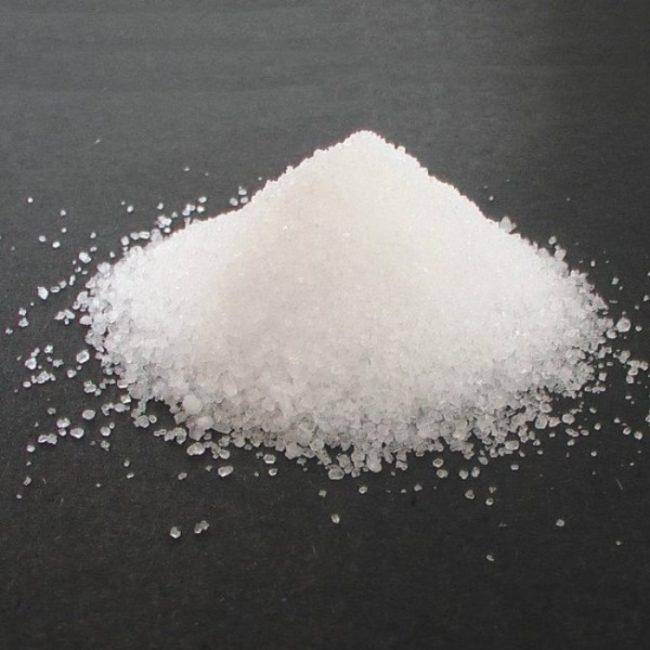
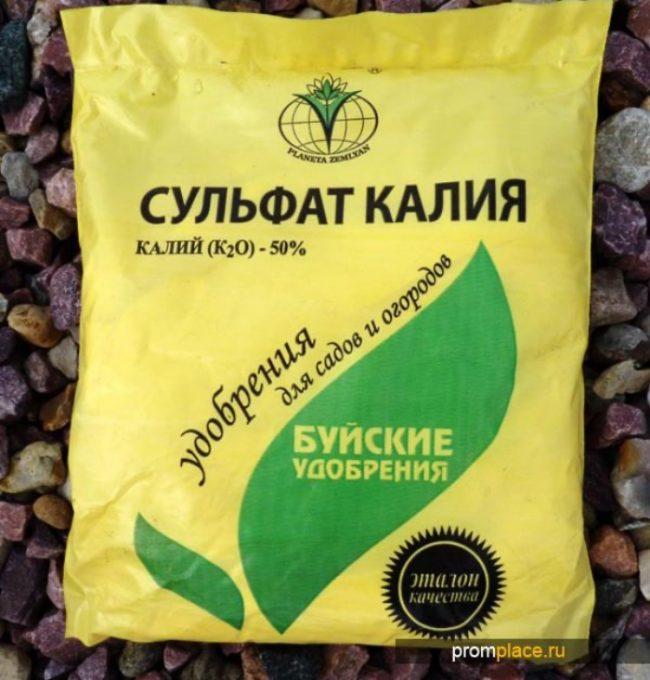
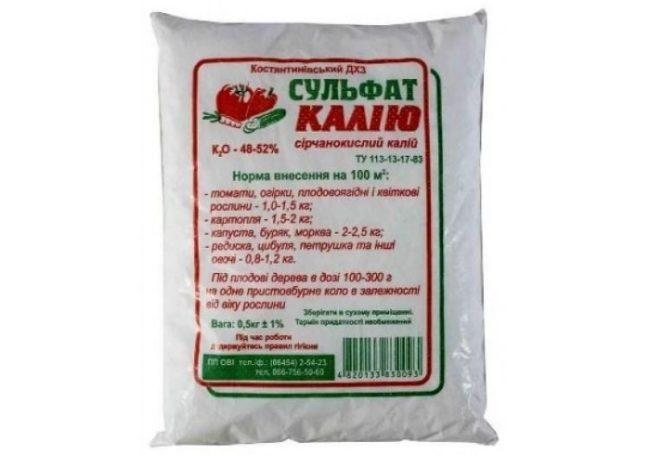
There are various methods for extracting potassium sulfate. Natural minerals are considered the primary source of this substance. These include schenite and langbeinite. This mixture can be used in dry form or as a solution. The fertilizer is easy to use. However, personal protective equipment is required when using the product.
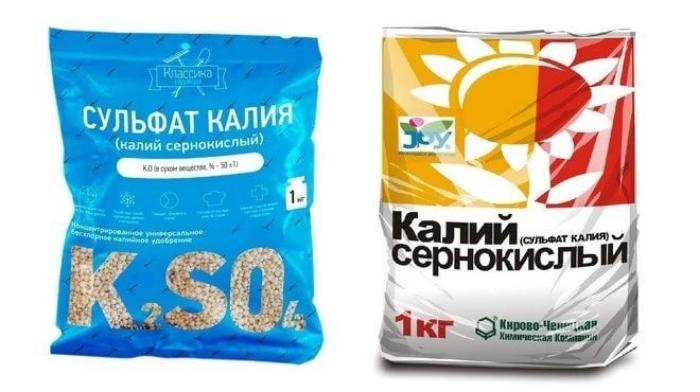
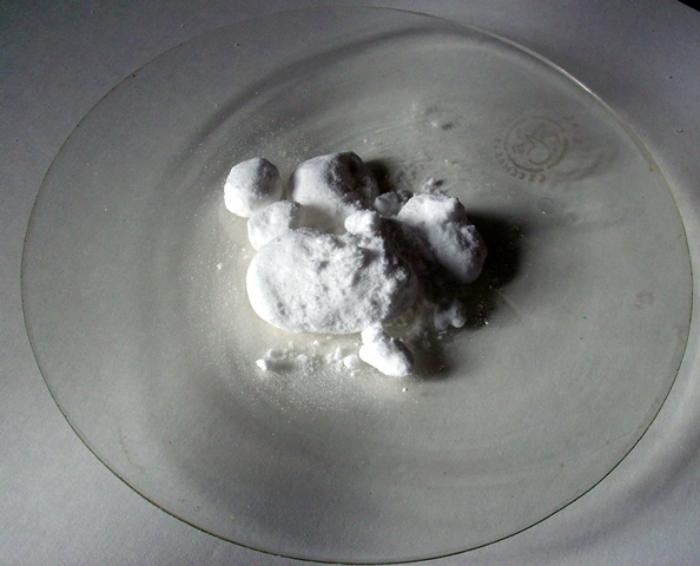
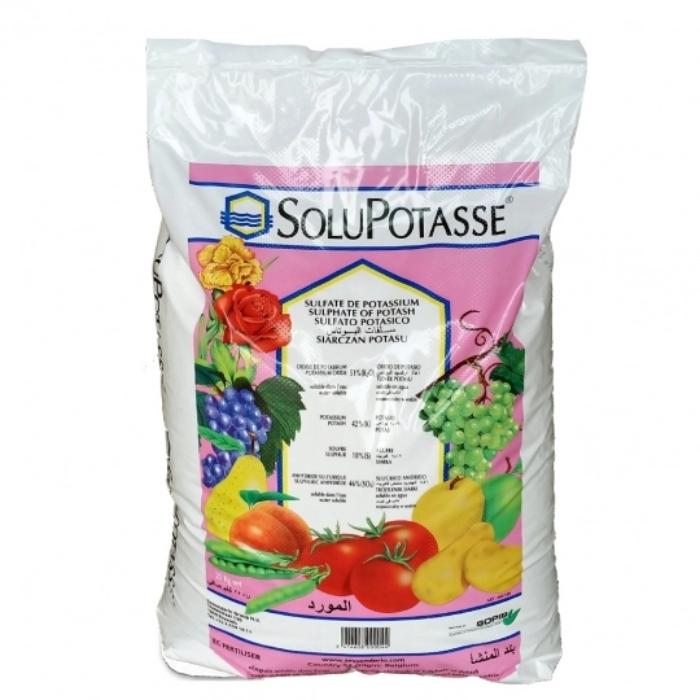
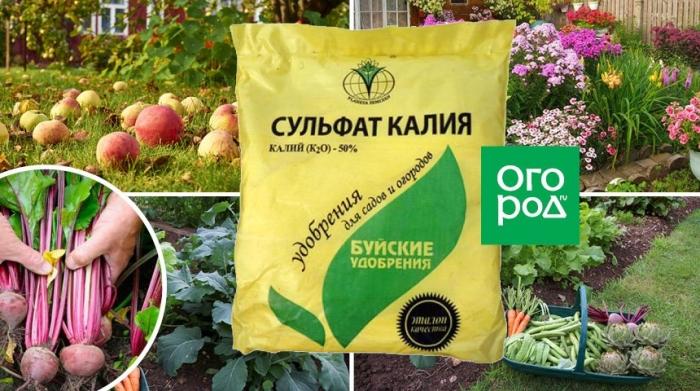
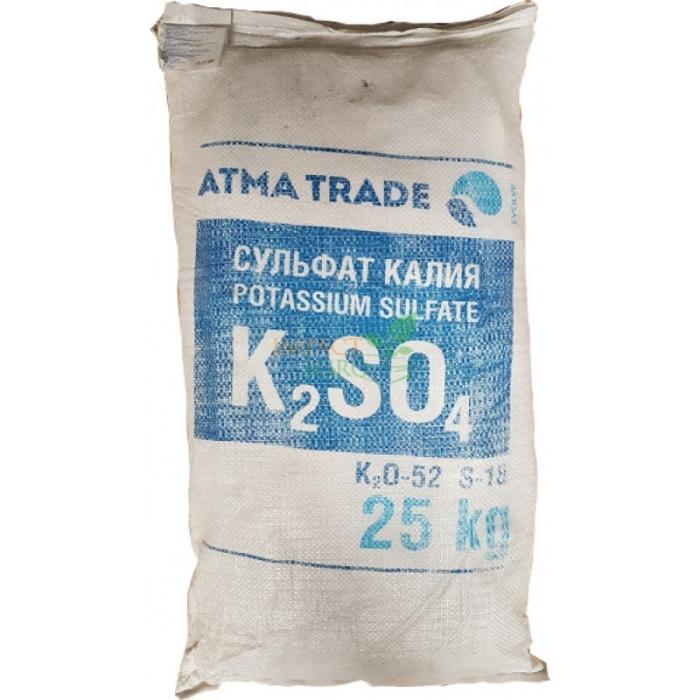
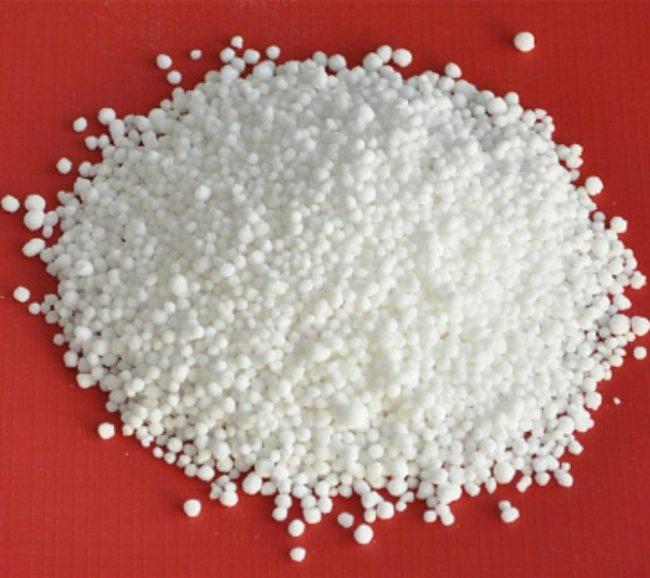
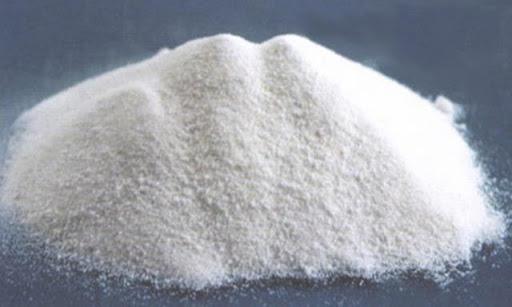
Potassium sulfate is sold as a yellow powder containing small crystals. It is potassium with an oxygen concentration of 44%. The granules mix easily with water. They also contain sodium, calcium, sulfur oxide, and iron oxide. These components promote faster crop growth and increase yields. To increase the effectiveness of the fertilizer, it should be used in combination with nitrogen and phosphorus.
Potassium sulfate is most effective in sandy, floodplain, peat, and red soils. A positive effect is observed in chernozem and loam soils. However, this applies to well-moistened soil. Calcareous soils require the most potassium, as they contain the least amount of salts.
Fertilizer helps to achieve the following effects:
- Increase sugar content and vitamin levels. This increases crop resistance to disease.
- To make plants more winter-hardy, apply fertilizer in the fall.
- Increase the yield of chlorine-sensitive crops.
- Stimulates root development and the growth of green mass. The composition also improves the transport of beneficial elements to the above-ground parts.
Features of use
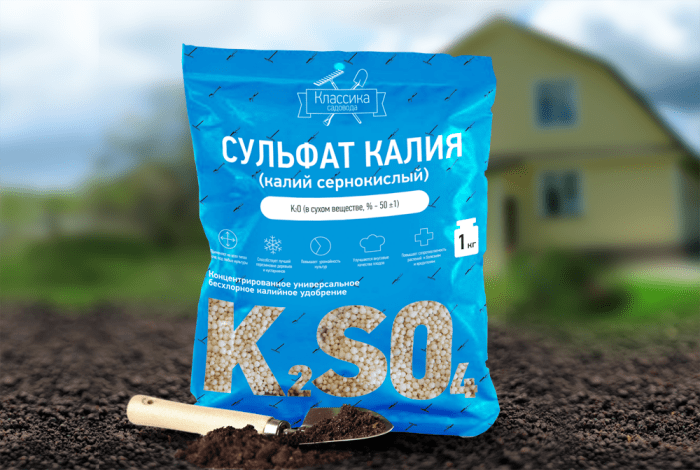
Potassium sulfate can be applied to plants in powder form or prepared as a watering solution. This solution is used to enrich the soil in greenhouses and open areas. It is also used to stimulate the growth and fruiting of garden plants.
Liquid dilution for irrigation
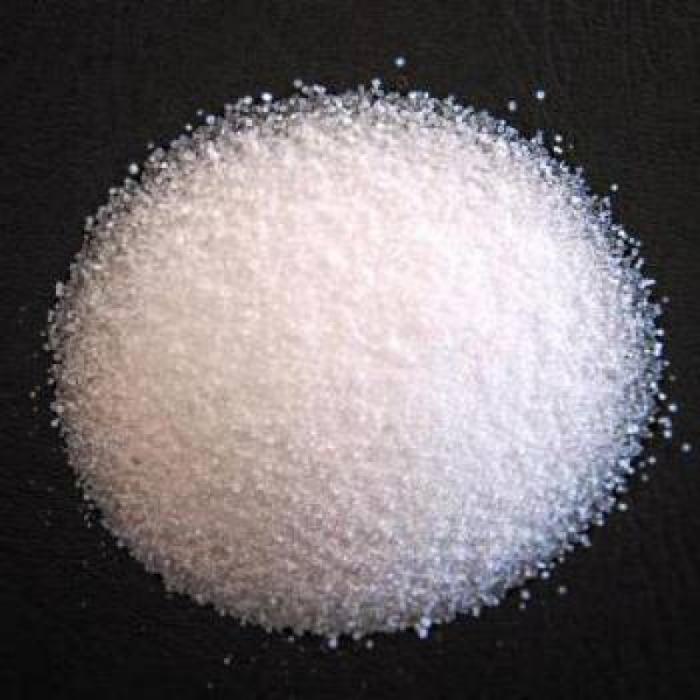
Another name for potassium sulfate is potassium sulfate. This compound can be used to fertilize crops grown in garden beds and greenhouses. According to the instructions, the application rate for root feeding is 200-400 liters per hectare. The dosage should be 20-30 grams per 10 liters of water.
The last time the product should be applied is no later than 2 weeks before harvest.
Liquid fertilizer can be used in different ways: pour the solution under the roots or add it to a drip irrigation system.
To quickly fertilize a large tree, make vertical, inclined holes up to half a meter in diameter near the roots. Add a nutrient solution to these holes. This method delivers the beneficial solution to the roots, allowing the plant to quickly absorb it.
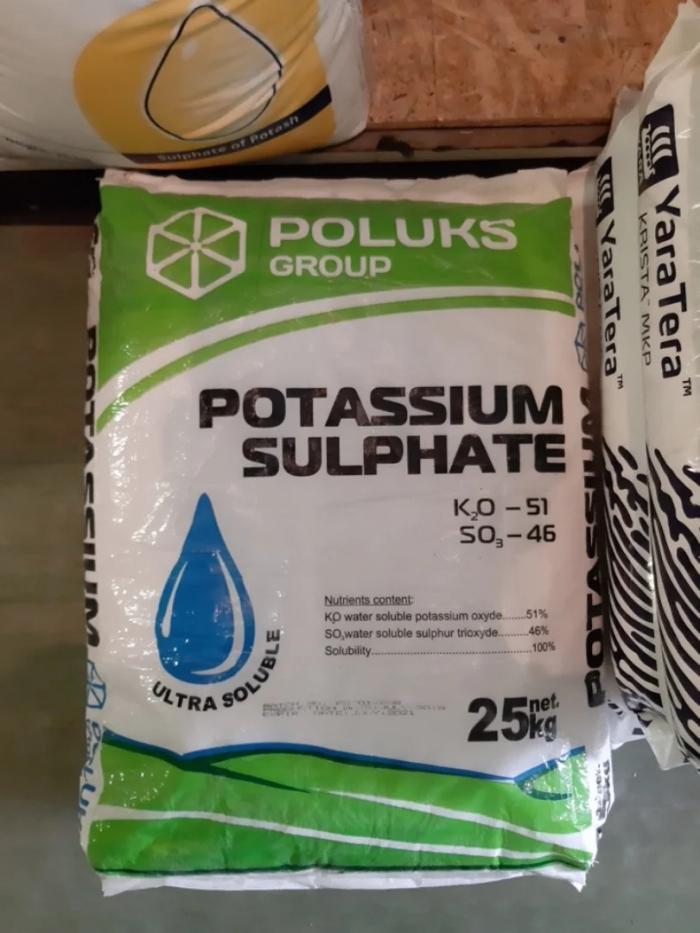
Application on different soils
The properties of the substance are affected by the soil composition. In sandy soil, the substance easily penetrates downwards, while in clay soil, it remains on top. In heavy soils, the powder should be applied to the depth of the root system. Heavy soils are best fertilized in the fall, while light soils are best fertilized in the spring. Furthermore, sulfate can be safely applied to the garden throughout the season.
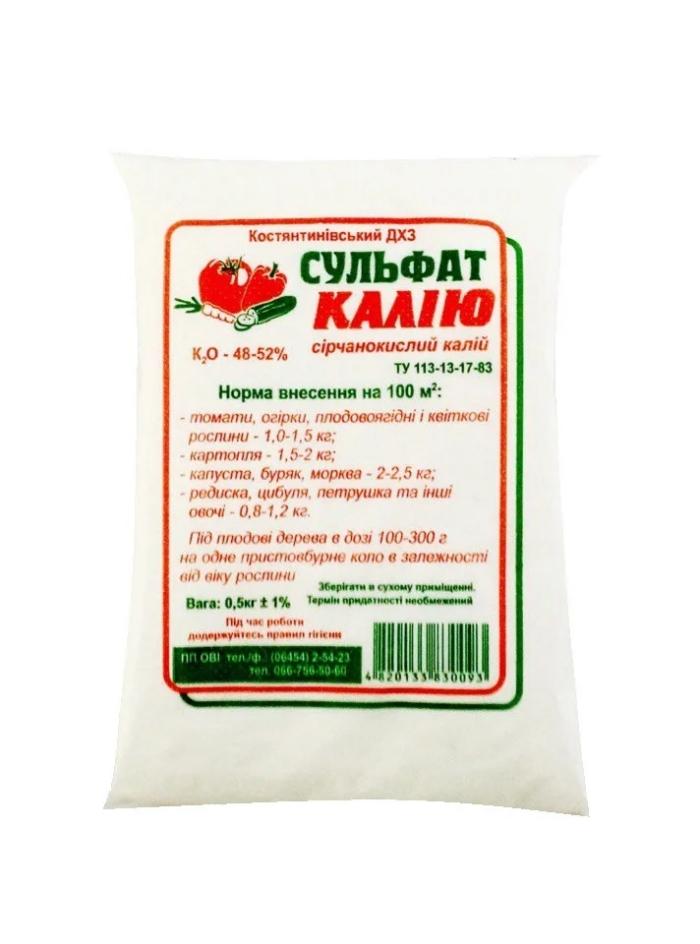
Spraying stems and leaves
Potassium sulfate is suitable for foliar application. To do this, mix it with water and spray the leaves and stems with the resulting solution. Use 1-2 grams of the substance per liter. Apply the solution until the leaf surface is completely wet. The resulting solution is clear and has virtually no sediment. It can be poured into a sprayer tank. The liquid will not clog the nozzles.
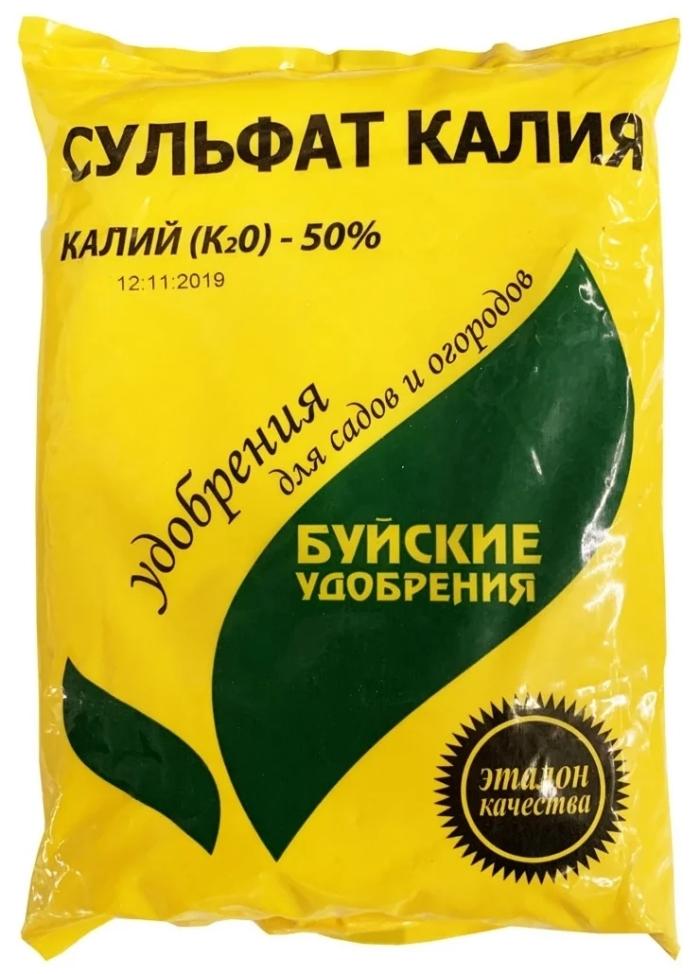
Dry application
Potassium sulfate is highly soluble. It can dissolve in the soil upon contact with water. Therefore, the powder can be applied dry. There's no need to try to dilute it with water.
The powder should be spread over the beds in spring or fall – in the holes, furrows, and planting holes. In summer, dry sulfate can be applied between the rows when growing vegetable crops. Apply 15-35 grams of the product per square meter for vegetables. Apply 150 grams of the product per mature fruit tree.
Safety precautions
Potassium sulfite must be applied in compliance with safety regulations. Therefore, it is crucial to use personal protective equipment (PPE)—a mask or respirator, goggles, and gloves. This is essential regardless of the method of application, whether the product is applied dry or dissolved.
Protective equipment helps prevent the substance from coming into contact with skin and mucous membranes. It also protects the respiratory system from toxic fumes and dust. After finishing work, wash your hands thoroughly with soap.
Is compatibility possible?
Potassium sulfate can be combined with other fertilizers. This increases their effectiveness. It's best to combine potassium sulfate with nitrogen- and phosphorus-based fertilizers. This combination not only enriches the soil with beneficial elements but also helps repel pests.
In acidic soils, potassium sulfate is best combined with lime. This helps make the fertilizer significantly more effective.
Storage rules
The product should be stored in a dry, closed area out of the reach of children and pets. It should be kept away from food. The official shelf life of the product is 5 years from the date of manufacture. However, its properties are retained for longer periods. There is no observed caking of the product. The prepared solution can also be stored.
What to replace it with
Potassium sulfate can be replaced with various potassium-containing substances, particularly potassium chloride. Non-chlorine-containing substances, such as potassium magnesium sulfate or potassium nitrate, are also acceptable alternatives. They contain varying amounts of potassium. Other components may also be present.
In private households, ash can be used instead of potassium sulfate. It will provide the soil not only with potassium but also with other nutrients. However, only ash remaining after burning wood and plant debris is permitted. Coal ash is not suitable.
Differences between potassium sulfate and potassium sulfate
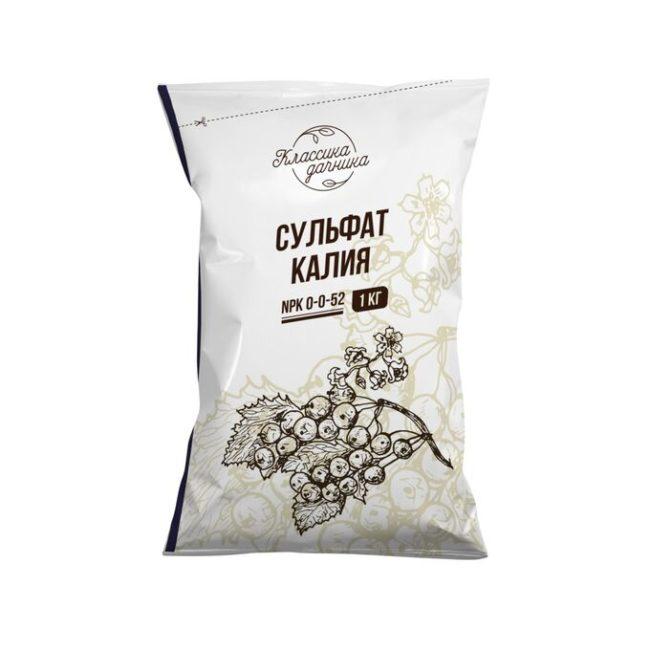
Essentially, these are different names for the same fertilizer. There's no difference between them. Therefore, the name, dosage, and application rate are the same.
Potassium sulfate is a common fertilizer that can be used in fields and on private farms. It is also suitable for growing indoor plants. It does not contain chlorine, so it can be used for all crops. It increases the vitamin and carbohydrate content of the fruits of the plants fed with it.