
- How to prepare squash caviar for the winter
- What are the benefits of vegetables?
- Selecting and preparing the main ingredient
- How to make squash caviar
- A classic recipe for finger-licking goodness
- Without sterilization
- From baked squash
- With zucchini
- With mayonnaise
- With roots
- With hot pepper
- In a multicooker
- With beets
- Expiration date of caviar
- Rules for storing blanks
Squash is a member of the pumpkin family. It contains many vitamins and beneficial microelements, which are preserved when pickled and marinated. Preparing squash caviar for the winter doesn't take much time, but it does require precise adherence to the recipe.
How to prepare squash caviar for the winter
The preparation methods for this dish generally vary depending on the type of additional ingredients. Onions and carrots are most commonly added to the appetizer.
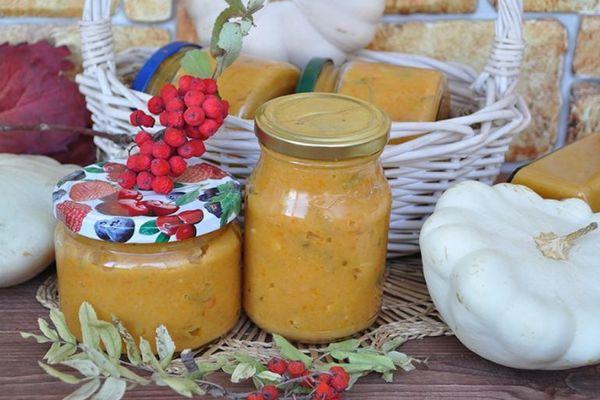 The recipe for making caviar is as follows: the vegetables are washed, peeled, and seeded, then stewed or baked. Finally, the fruits are chopped.
If the recipe calls for tomatoes, peel them first. To do this, soak the tomatoes in boiling water for 2 minutes. Once the tomatoes have cooled to a tolerable temperature, you can peel them.
What are the benefits of vegetables?
Pattypan squash (or pattypan pumpkin) is low in calories and contains a variety of micronutrients, including:
- Potassium and magnesium. These trace elements help prevent heart and vascular diseases.
- Lutein, carotene, and zeaxanthin prevent cancer and improve vision.
- Vitamins B2 and B6. The former has a positive effect on migraines, while the latter improves concentration, eliminates fatigue, and alleviates depression.
- Vitamin C. Strengthens the immune system.
Squash and other vegetable products are not recommended for consumption if you have any gastrointestinal problems or diabetes.

Selecting and preparing the main ingredient
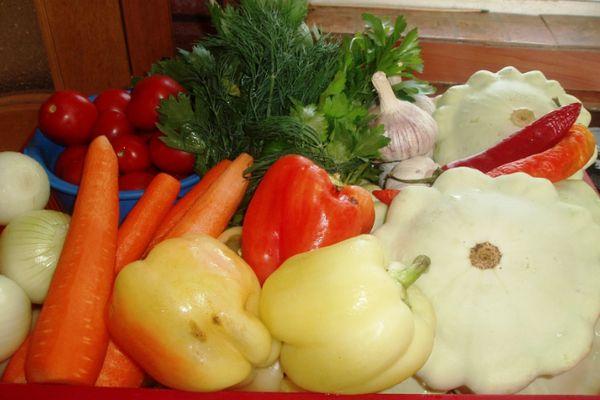
Only young squash are suitable for making caviar. These vegetables (including the skin) contain the highest concentration of beneficial micronutrients.
The size of the squash doesn't have a significant impact on the cooking process, but it's recommended to choose medium-sized squash. These vegetables are easier to work with because they contain fewer seeds.
When choosing vegetables, pay attention to the condition of the skin. Fruits with a bright color and no visible defects (dark spots or signs of incipient rot) are best for caviar.
How to make squash caviar
To prepare the caviar, you'll need a thick-walled, non-stick saucepan or frying pan. All vegetables should be thoroughly washed to remove any dirt.
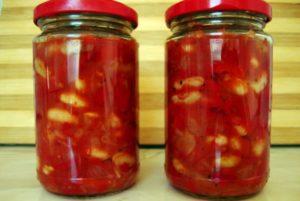
A classic recipe for finger-licking goodness
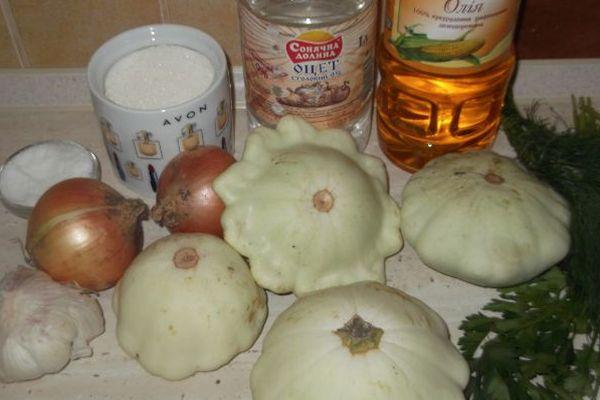
This simple recipe makes delicious caviar. You'll need two medium-sized squash squash and a carrot, as well as:
- 5 pieces of carrots;
- a clove of garlic;
- a teaspoon of sugar;
- one onion;
- salt and pepper (to taste);
- 30 milliliters of apple cider vinegar;
- 60 milliliters of sunflower oil.
The pumpkin is chopped and minced. Separately fried carrots and onions are added to the resulting mixture. The caviar is simmered over low heat for two or more hours. During this time, the minced tomatoes and peppers are added.
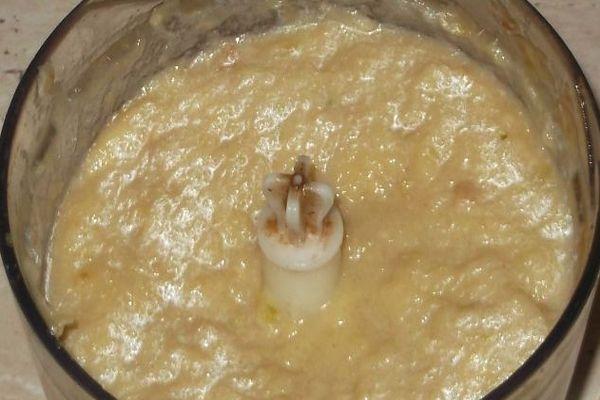
Once the caviar has cooked sufficiently, the mixture is mixed with grated garlic and salt. The mixture is simmered for another 15 minutes. Finally, the caviar is strained through a fine sieve and placed into sterilized containers.
Without sterilization
According to the recipe without sterilization, the caviar is prepared from 4.5 kilograms of squash, which are combined with:
- 1.5 kilograms of tomatoes;
- a kilogram of bell peppers, carrots and onions;
- 3 hot peppers;
- 5 cloves of garlic;
- a bunch of parsley and dill;
- 100 grams of salt;
- 75 grams of sugar;
- 50 milliliters of 5% apple cider vinegar;
- 250 milliliters of vegetable oil.
Onions, bell peppers, carrots, and squash are chopped, fried separately, and then mixed together. The vegetables are left to cook until a crust forms.
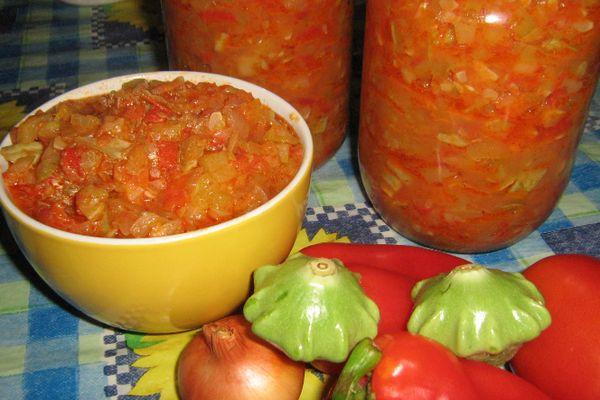
All ingredients, herbs, and crushed garlic are mixed and minced. Vinegar, sugar, and salt are added to the resulting mixture. Optionally, a tablespoon of khmeli-suneli can be added to the caviar. The mixture is brought to a boil and simmered for 5 minutes. After this, the caviar is placed in clean jars.
From baked squash
For baking, you'll need a kilogram of squash. Also prepared:
- 100 grams of tomato paste;
- salt and ground pepper (to taste);
- four onions;
- 75 milliliters of vegetable oil;
- 5 milliliters of table vinegar.
Place the peeled and sliced pumpkins on a baking sheet and bake in the oven at 180 degrees Celsius until soft. Once cooled to room temperature, grind the vegetables in a meat grinder.
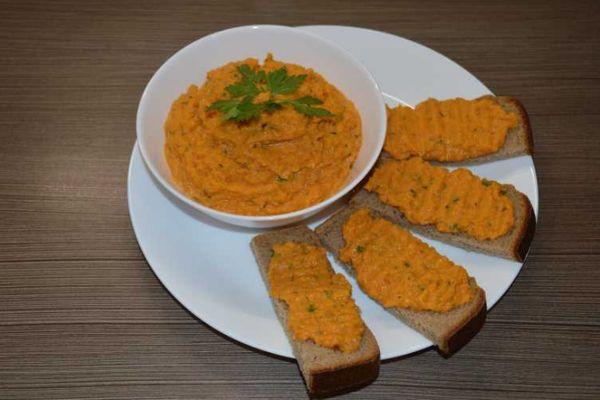
The onion is chopped and fried in a frying pan until golden brown. Then, tomato paste is added, and the vegetables are simmered for 5 minutes. The onion is mixed with the squash mixture, which is then ground again in a blender or meat grinder.
The resulting mixture is placed in a saucepan, where spices are added. The caviar is brought to a boil, mixed with vinegar, and then poured into glass containers.
With zucchini
This recipe requires preparing 4 kilograms of squash and zucchini, as well as:
- a kilogram of onions and carrots;
- 5 bell peppers;
- half a kilo of tomatoes (or 200 milliliters of tomato juice);
- 450 milliliters of sunflower oil;
- 50 grams of salt;
- 100 grams of sugar;
- 100 milliliters of vinegar;
- 75 milliliters of tomato paste.
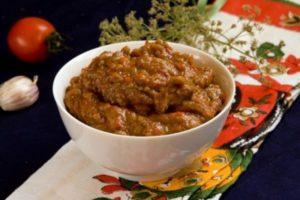
Zucchini and pumpkin are cut into strips and simmered for an hour with vegetable oil. Shredded carrots and onions are fried separately until crisp. The remaining vegetables are then chopped and mixed with the other ingredients once the zucchini has shrunk by half. The ingredients are then simmered for another hour.
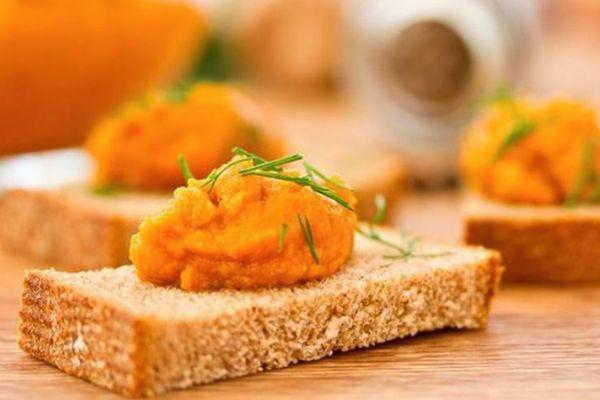
Fifteen minutes before the end of cooking, add tomato paste and vinegar. Once cooked, the caviar is placed in jars and sealed with lids.
With mayonnaise
For 250 milliliters of mayonnaise and 3 kilograms of pumpkin you will need:
- 5 cloves of garlic;
- 300 milliliters of tomato paste;
- 1.5 kilograms of onions;
- 100 grams of sugar;
- 50 grams of salt;
- 150 milliliters of sunflower oil.
The chopped onion and pumpkin are fried separately, then combined and simmered for 15 minutes. The vegetables are then ground in a meat grinder or blender. The remaining ingredients are added to the mixture. The caviar is simmered over low heat for 10 minutes. After the allotted time, the appetizer is placed in containers for storage.
With roots
According to the recipe for 2 kilograms of pumpkin you need:
- 3 medium onions;
- 2 carrots;
- 5 tomatoes;
- 20 grams of sugar and 60 grams of salt;
- 75 milliliters of 9% vinegar;
- a few cloves of garlic (to taste);
- parsley;
- 140 milliliters of sunflower oil;
- 40 grams of parsley root;
- 50 grams of celery root.
All vegetables (except garlic and tomatoes) are fried in a frying pan until crisp and mixed together. Tomatoes are added, after which the caviar is simmered for half an hour over low heat.
The roots are peeled, chopped, and mixed with salt and sugar. The resulting mixture is added to the caviar and simmered for 15 minutes.
Finally, puree the ingredients in a blender and simmer again over low heat for half an hour. About 10 minutes before the end of cooking, mix the appetizer with the herbs.
With hot pepper
Spicy caviar is made from 4.5 kilograms of pumpkin and 1.5 kilograms of ripe tomatoes. You will also need:
- a kilogram each of carrots, onions and bell peppers;
- 5 cloves of garlic;
- 3 hot peppers;
- 270 milliliters of sunflower oil;
- 65 milliliters of apple cider vinegar;
- 85 grams of sugar;
- 110 grams of salt.
The onions, squash, bell peppers, and carrots are chopped and fried separately. The tomatoes are peeled. Then, the tomatoes, hot peppers, herbs, and garlic are ground in a meat grinder.
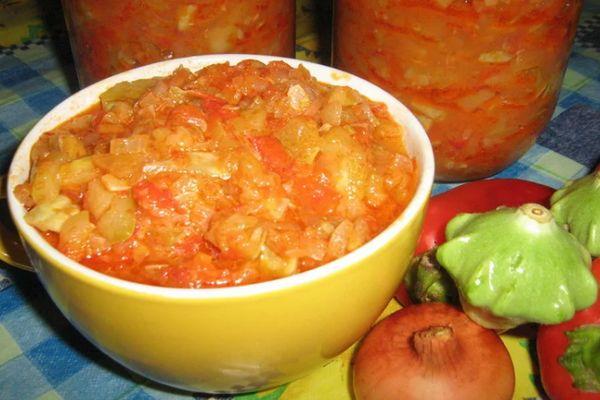
Mix all the vegetables with the remaining ingredients, bring to a boil, and simmer for 10 minutes. If desired, add hops-suneli, herbs, and ground pepper.
In a multicooker
To prepare caviar in a slow cooker, you will need 2 pumpkins and:
- 4 pieces each of bell pepper, carrot and onion;
- 10 tomatoes;
- 100 milliliters of sunflower oil;
- 60 grams of sugar;
- 30 grams of salt;
- spices and herbs (to taste).
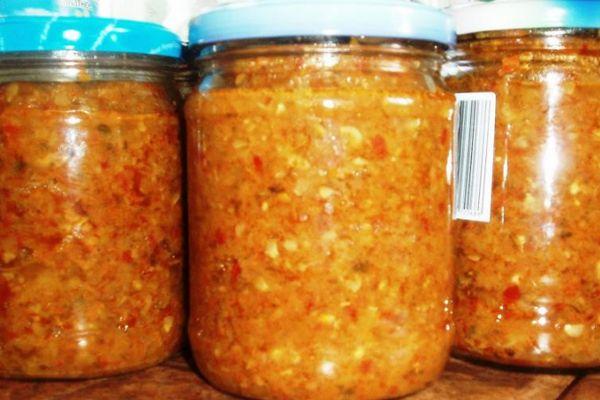
All the vegetables are chopped and placed in the multicooker. Then, spices, oil, salt, and sugar are added. The dish is cooked on the "Pilaf" setting.
After turning off the multicooker, the ingredients are chopped through a meat grinder or in a blender, and the resulting caviar is placed in jars.
With beets
For 3 kilograms of squash you will need:
- 2 tomatoes and onions;
- 2 kilograms of beets;
- half a kilo of carrots (optional);
- spices (to taste);
- 2 tablespoons of salt and sugar;
- 300 milliliters of vegetable oil.
The beets are boiled and finely grated. The carrots and onions are shredded, and the tomatoes are sliced. These vegetables are then fried separately in a frying pan.
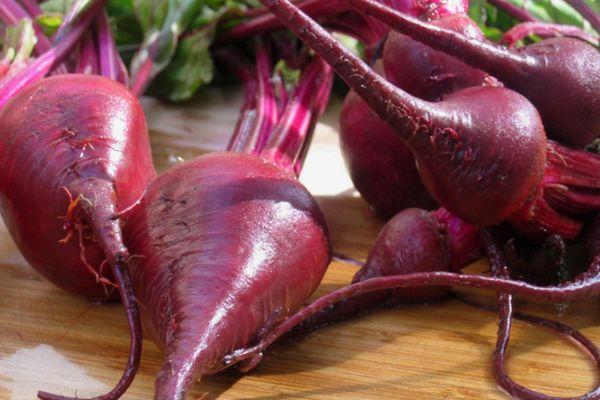
The pumpkin is chopped and mixed with the remaining ingredients. The resulting mixture is simmered for 2-4 hours. During this time, it is recommended to periodically increase and decrease the heat. If necessary, add a glass of water.
Expiration date of caviar
Squash caviar is suitable for consumption for one year, provided storage rules are followed.
Rules for storing blanks
After sealing, wait until the jars containing the caviar cool. Then, place the jars in a cool, dark place.
Related posts:
 18 Easy Carrot Caviar Recipes That Will Make Your Fingers Lick for the Winter
 TOP 10 recipes for making green tomato caviar for the winter in a slow cooker and on the stovetop
 Finger-licking zucchini and eggplant caviar recipes for the winter, with or without vinegar, in a slow cooker or on the stovetop
 Recipes for making caviar from dried, salted, and raw milk mushrooms for the winter, and storing the prepared ingredients
 Top 18 Easy Recipes for Making Vegetable Caviar for the Winter
 TOP 10 recipes for making chanterelle caviar and pâté for the winter, in a slow cooker and on the stovetop
 How to quickly and deliciously pickle squash for the winter, with jarred recipes
 24 Best Recipes for Preserving Beets for the Winter