
- Taste characteristics of the preparation
- Secrets and subtleties of cooking
- Selection and preparation of vegetables and containers
- The best zucchini recipes with citric acid
- Classic recipe for pickling vegetables
- Preserving zucchini without vinegar
- A quick recipe without sterilization
- Storage conditions and periods
Preparing delicious zucchini with citric acid for the winter is easy. This crystalline food additive is readily available and less harsh on the body than regular vinegar. Since citric acid became available over-the-counter, many home cooks have exclusively used it for preserves. Another advantage is that the ingredient has a long shelf life and doesn't spoil.
Taste characteristics of the preparation
When assessing the tasting qualities, an inexperienced zucchini lover will not even notice the difference between preparations with vinegar and a white crystalline substitute.
The preservation results are:
- sweet and sour;
- pleasant;
- crispy.
The marinade from the preparation is so pleasant that it can be drunk like compote.
Secrets and subtleties of cooking
To ensure a high-quality preserve, pay attention to the vegetable itself. Zucchini for canning is selected:
- fresh;
- elastic;
- with a color corresponding to the variety.
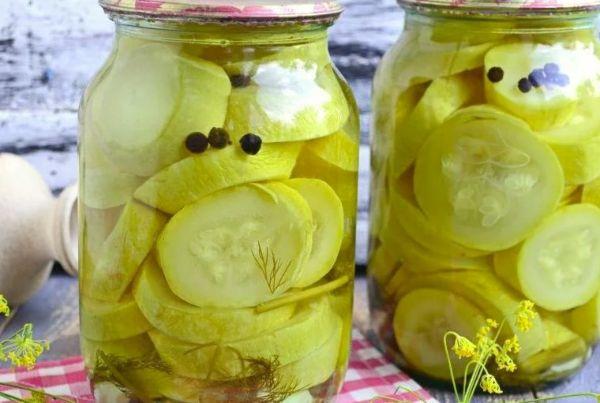
It's perfectly acceptable to place fruits of different colors in the same jar. However, keep in mind that different varieties react differently to marinade. Consequently, one fruit may be firmer, while another is softer.
Selection and preparation of vegetables and containers
When choosing a vegetable, it's best to choose a young zucchini. The seeds haven't yet formed, and the center will be firm.
If the zucchini has managed to gain weight and thickness, then it should be:
- wash;
- peel;
- remove the middle;
- cut into pieces.
Important! If the vegetable loses its turgor (becomes flabby and wrinkled), there's no point in reviving it. This zucchini can be used to make caviar, but it's not suitable for canning.
The container must be thoroughly washed. Pre-sterilization is not required for canning.
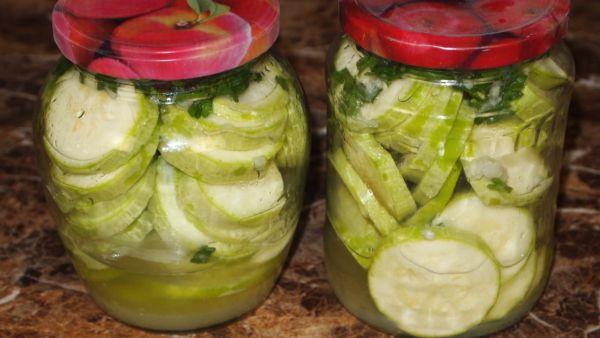
The best zucchini recipes with citric acid
Zucchini is delicious when preserved. However, upon opening a jar, an experienced cook can immediately tell whether it's canned or pickled. Let's consider both options.
Classic recipe for pickling vegetables
Pickled vegetables have a pleasant sweet and sour flavor. For a 3-liter jar, you'll need:
- zucchini - 2.5-3 kg, depending on the density of packing in the jar;
- salt - 2 tablespoons;
- sugar - 4 tablespoons;
- citric acid - 1 teaspoon;
- bay leaf - 2-3 pcs.;
- allspice and hot pepper, peas - 4-5 pcs.;
- garlic - 5-6 cloves.
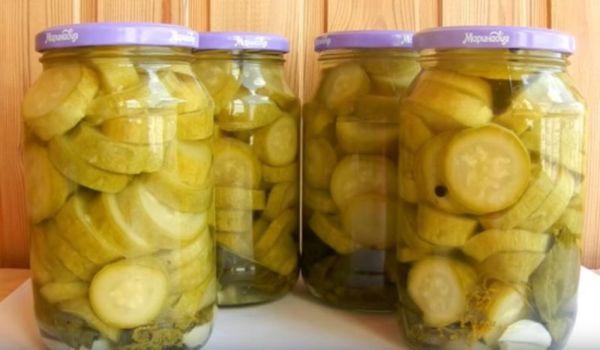
Place all ingredients in a prepared jar. Add cold water, cover with a lid, and pasteurize. To do this, fill a saucepan with water right up to the top of the jar and turn on the heat. Pasteurization of a 3-liter jar takes 15 minutes, from the moment the water in the double boiler begins to boil.
The jar is rolled up and turned over for air cooling.
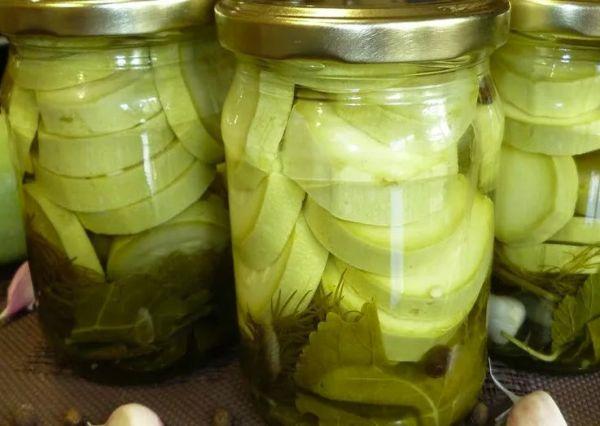
Preserving zucchini without vinegar
Canned vegetables have a more tart flavor. The only difference is the recipe. As mentioned above, reduce the sugar to 1 tablespoon.
The entire technological process is identical to marinating.
A quick recipe without sterilization
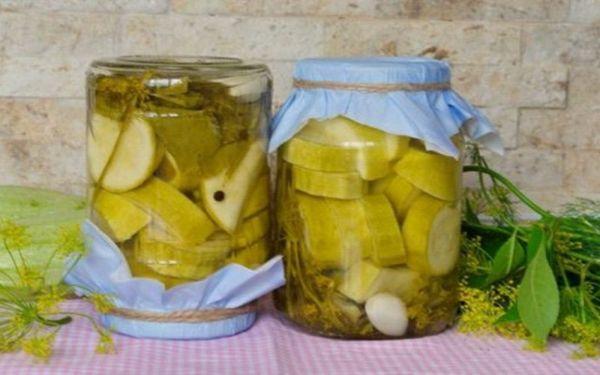
Preparing vegetables this way is much more convenient. The recipe remains the same, but the technique is as follows:
- We put vegetables into the jar.
- Pour boiling water over it and leave for 3-4 minutes.
- Drain the water into a saucepan and add all the spices and herbs according to the recipe, put it on the heat (cook the marinade).
- Pour boiling water over the vegetables in the jar again.
- We wait for the marinade to boil.
- Drain the water from the zucchini and pour boiling marinade over it.
- Roll it up and turn it over.
Storage conditions and periods
Canned and pickled zucchini Should be stored at low temperatures. Shelf life: no more than 12 months.
Related posts:
 TOP 20 simple recipes for pickled zucchini for the winter
 How to cook fried zucchini with garlic for the winter, finger-licking good recipes and without sterilization
 TOP 13 delicious recipes for spicy zucchini for the winter
 21 step-by-step recipes for making zucchini jam for the winter
 Amazing recipes for zucchini in tomato sauce for the winter, you'll lick your fingers, with and without sterilization
 11 Best Recipes for Pickling Zucchini with Garlic for the Winter
 Simple recipes for marinating zucchini in mustard dressing for the winter
 Delicious step-by-step recipes for zucchini pickled like mushrooms for the winter
