
- Cherry jelly: taste and preparation specifics
- Selecting and preparing berries
- Preparing containers
- What gelling agents can be added?
- The best jelly recipes for the winter
- Traditional method with gelatin
- A treat with pulp without thickener
- With the addition of lemon juice
- Variant of the blank with Zhelfix
- A quick recipe without cooking
- Making jelly from felt cherry varieties
- Jelly with seeds in a slow cooker
- Jelly-like jam made from frozen cherries
- Cherry Juice Recipe
- Cherries in jelly without gelatin with red currants
- With pectin
- With a spicy taste
- Shelf life and storage conditions for the dish
Almost every housewife makes preserves for the winter. When fruits and vegetables are no longer in season, preserves always fly off the holiday table. You can prepare not only vegetables but also a delicious dessert, perfect for when guests are about to arrive for tea. A simple recipe for cherry jelly for the winter will keep the berries delicious and fresh. This dish will appeal not only to those with a sweet tooth, but also to those who appreciate the true taste of fresh berries.
Cherry jelly: taste and preparation specifics
Any jelly is a dense and delicate product. The main factors that determine its flavor are the cherries themselves and the amount of sugar added to the mixture. A simple recipe for cherry jelly for the winter Some housewives add lemon juice and berries.
Cherries must be thoroughly washed, pitted or kept whole. The berries are boiled until the desired thickening is achieved and poured into the container, after which the lid is rolled up.
Selecting and preparing berries
When choosing ingredients for making cherry jelly, consider their appearance and taste. Choose ripe, large, worm-free berries.
If a berry has been eaten by a worm, it is definitely not suitable for cooking. You should also discard berries that are scratched or crushed.
Select only fresh, whole cherries and taste them before cooking. Avoid sour cherries, as their flavor will be difficult to remove. Therefore, the dish may turn out slightly tart or even bitter.
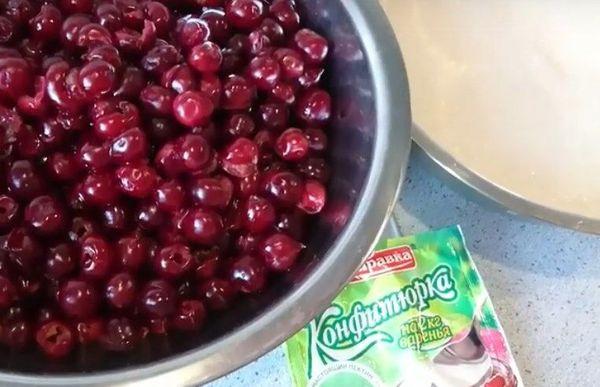
Before cooking, rinse the berries thoroughly under cold water. A colander is best. After washing, transfer them to paper towels and pat dry. Meanwhile, check for any remaining bugs or caterpillars on the berries. They are easily visible on white paper towels.
Preparing containers
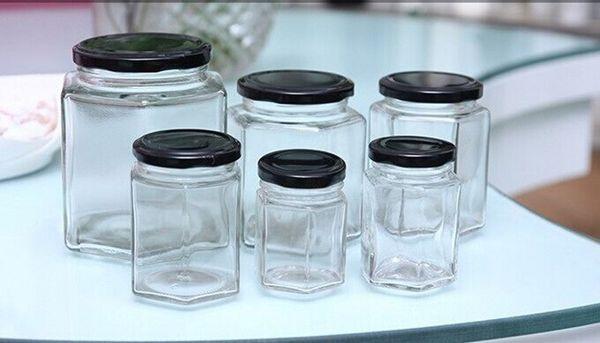
The jar and lid are crucial for preserving and preserving freshness. Small jars are recommended if the dish is being prepared experimentally, while larger ones are used for preserving for the whole family, using a tried-and-true recipe.
The jars must be sterilized beforehand. This can be done in the microwave by heating them, or in the oven. You can also sterilize the jars with steam using a steamer attachment or directly in a large saucepan.
Place the lids in a separate saucepan. Add water and boil for about 15 minutes. Make sure there are no chips on the jars or lids themselves, as this could compromise the seal of the finished cherry jelly.
What gelling agents can be added?
To give the dish its shape and structure, cherry jelly-forming ingredients are added. These ingredients help create the dish's thickness and shape. Commonly used ingredients include:
- agar-agar;
- gelatin;
- pectin.
Agar-agar is used to make marmalade, marshmallows, and preserves. Gelatin is used to make jellies. Pectin is needed to make kissels and yogurts.
The best jelly recipes for the winter
You can select the best recipe by trying several different versions of berry jelly. It's important to remember that the dish must retain its original appearance, which means preservatives and proper preparation, including sterilization of the jars and ingredients, are essential.
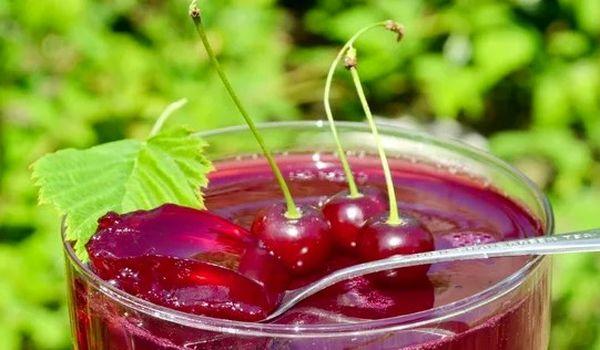
Traditional method with gelatin
This method is the most common. It's the first choice for those who want to prepare berries themselves.
You will need:
- sugar - 1 glass;
- water - 0.6 l;
- gelatin - 40 g;
- berries - 400 g.
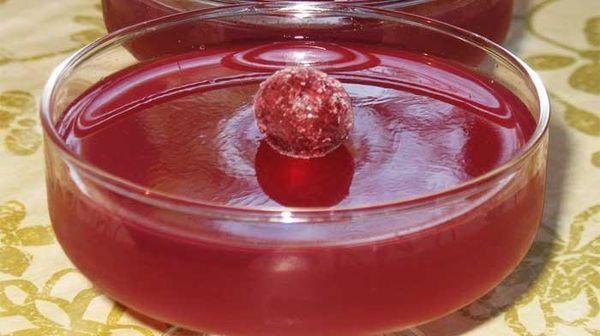
Pour water into a saucepan, bring to a boil, and add the berries. Dissolve the gelatin according to the package directions. Once the water returns to a boil, add the sugar and gelatin. Bring the mixture to a boil and remove from the heat. Pour into individual molds. This dish can be eaten immediately or placed in a container and sealed.
Sometimes a second version of this preparation is used. The berries are cooked with sugar in a large bowl or saucepan until they boil. Meanwhile, the gelatin is dissolved in another container and heated. Then all the ingredients are combined and cooked until they boil. Pour into the container and seal the lid.
A treat with pulp without thickener
This dish is unique in that it doesn't contain any thickener. You'll need:
- sugar - 1 to 1 ratio for cooked cherries;
- cherry;
- water.
Place the berries in a saucepan. Add enough water to cover the berries. Bring to a boil and simmer for about an hour, skimming off any foam. Using a slotted spoon, remove only the berries and puree. Mix the resulting puree with sugar in a 1:1 ratio. Bring to a boil and simmer for 15 minutes, skimming off any foam. Divide the mixture into jars and seal.
With the addition of lemon juice
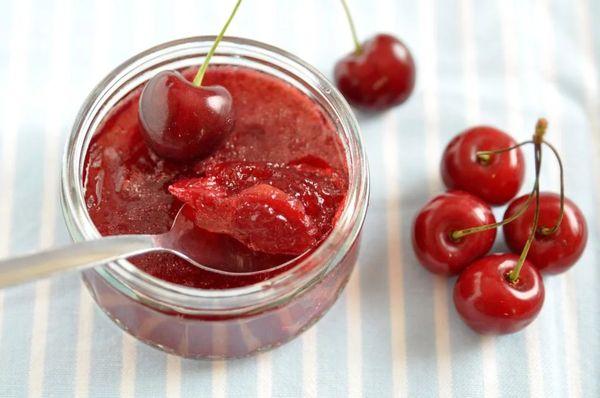
Lemon juice is used in this version to add a tart flavor. Only lemon juice is added to the standard ingredients. It's added after cooking, when the sugar has dissolved and the berries have released all their juice. After adding the lemon juice, cook the dish until a jelly forms. It should be slightly thick. The finished dish is then divided into containers and the lids are sealed.
Variant of the blank with Zhelfix
This dish is distinguished by its texture. The fruits are usually blended until smooth. You will need:
- cherries - 500 g;
- sugar - 500 g;
- Zhelfix - 0.5 sachet.
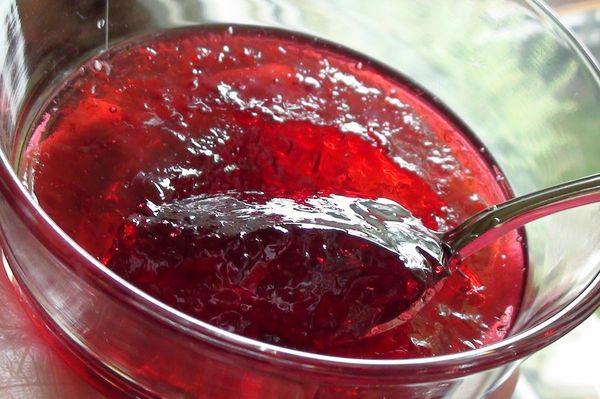
Puree the berries using a blender. Mix Zhelfix with a tablespoon of sugar and add to the cherries. Stir and place on the stove. Bring the mixture to a boil and add all the sugar. Cook for about 5 minutes. Skim off any foam. The finished dish is ready to form into pieces.
A quick recipe without cooking
This recipe is simple and quick to prepare. You will need:
- cherry - 1 part;
- water - 0.5 from fruits.
Puree the cherries using a blender. Add sugar to the mixture. Blend until the sugar dissolves and a smooth puree is obtained. Pour the mixture into containers and seal.
Making jelly from felt cherry varieties
This cherry is more tender and sweet. Therefore, preserves are made immediately after the berries are picked, washed, and dried. You can prepare it using any recipe. Simply boil it with sugar, pour it into jars, and seal the jars.
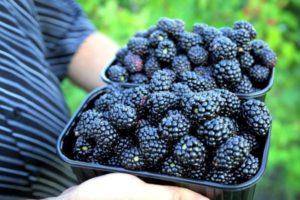
Jelly with seeds in a slow cooker
The recipe differs in that it uses regular berries. Cook using either method, choosing the appropriate settings. Turn off the multicooker when the jelly thickens. Pour the dish into a container.
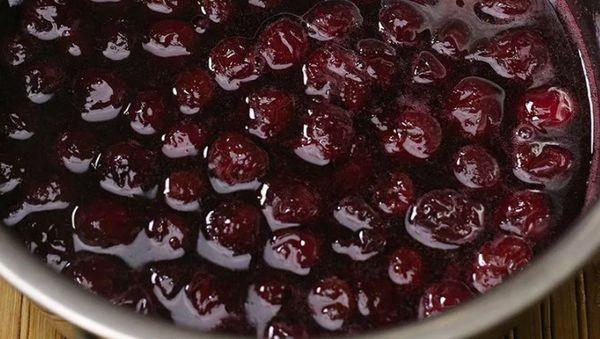
Jelly-like jam made from frozen cherries
To make cherry jam, the cherries are first defrosted, then cooked with sugar until thickened. The finished dish is then left to steep.
Cherry Juice Recipe
For this recipe, you need to remove all the pits from the cherries and make the juice. Dissolve the gelatin, mix with sugar and juice. Allow the jelly to set, or pour it into jars, seal them, and store in the refrigerator.
Cherries in jelly without gelatin with red currants
The recipe differs only in that the cherries and currants should be cooked in the same container. They are cooked together with the sugar, removing the film that appears. Canned cherries should be stored in the refrigerator, covered.
With pectin
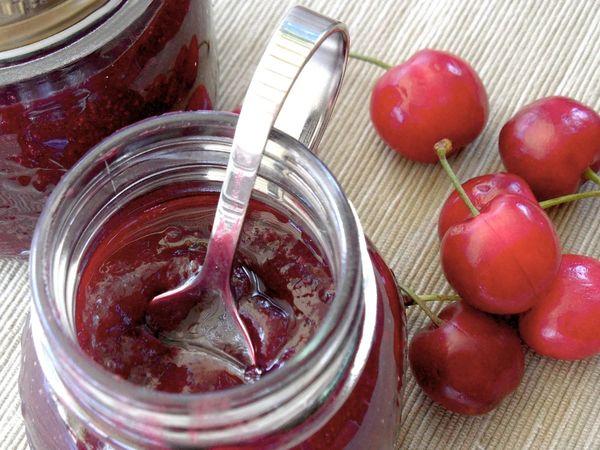
You can make jelly using any recipe. Simply add dissolved pectin to the fruit while it's cooking in sugar. Cook until it thickens.
With a spicy taste
You can create a piquant cherry flavor by adding berries or spices to taste. Blackcurrants, cinnamon, and raspberries are all good options.
Shelf life and storage conditions for the dish
Any prepared dish retains its flavor best in the refrigerator. Unpasteurized versions should be stored for about 6 months, pasteurized versions can be stored for 12 months, and homemade versions last for about 12 hours.
Opened jelly can be stored for several days only in the refrigerator.
Related posts:
 How to make gooseberry jelly for the winter at home: simple recipes
 15 step-by-step recipes for making redcurrant jelly at home for the winter
 11 Best Recipes for Cherry Jelly with Gelatin for the Winter
 TOP 13 recipes for making blackcurrant jelly from five minutes for the winter
 How to make blackberry jelly for the winter without gelatin: simple homemade recipes
 Simple recipes for making sea buckthorn jelly for the winter, with or without cooking, with or without gelatin
 Simple recipes for making pitted plum jelly for the winter
 Simple recipes for raspberry jelly with and without cooking for the winter, with seeds and "Five-Minute"