
Growing green manure crops is an environmentally friendly way to improve soil fertility without the use of mineral fertilizers. This technology is used in both agriculture and private farming, and it yields good results in all cases. Let's look at the advantages and disadvantages of buckwheat as a green manure crop, how to sow it correctly, grow it, when to mow the green manure, and how to do it.
Advantages and disadvantages
Buckwheat grows quickly, producing green mass quickly. The plant needs to be buried, so it benefits subsequent crops and the soil. The roots remain in the soil and loosen it, even in heavy soil, lifting nutrients to the upper layers, preventing leaching and erosion. The nutrients remain in the green mass, which rots in the soil, making the minerals available to plants.
Buckwheat acts as a natural green fertilizer, affordable and effective.
In summer, greens protect plants from overheating, prevent the soil from drying out and cracking, and improve its health. Soil structure and air and water exchange are improved. Pest and pathogen activity are suppressed, and root debris provides food for worms and beneficial microorganisms. Buckwheat, when planted densely, inhibits weed growth. Its only drawback is its expensive seeds, so using green manure over large areas can be quite expensive.
Predecessor cultures
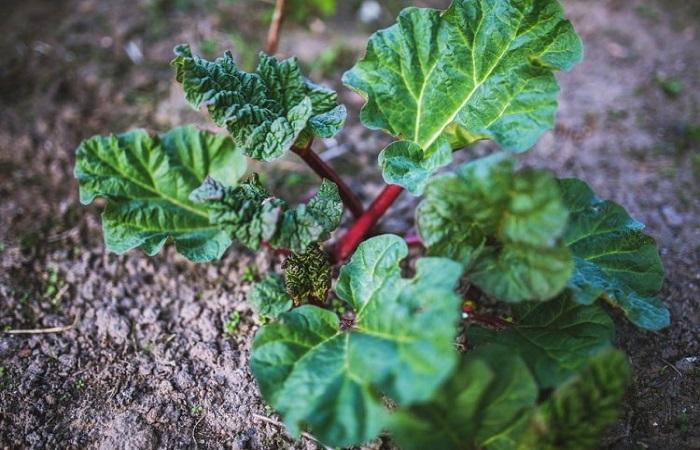
Buckwheat can be sown as a green manure after winter crops, row crops, and legumes. The plant itself is suitable for all crops. It is not recommended to sow it under acid-loving crops such as rhubarb, sorrel, and spinach, as it reduces soil acidity. Buckwheat adds phosphorus and potassium to the soil and can be planted before grains, vegetables, root crops, potatoes, berries, and fruit crops. Green manure reduces the risk of root rot.
Take a look Also
How to plant correctly
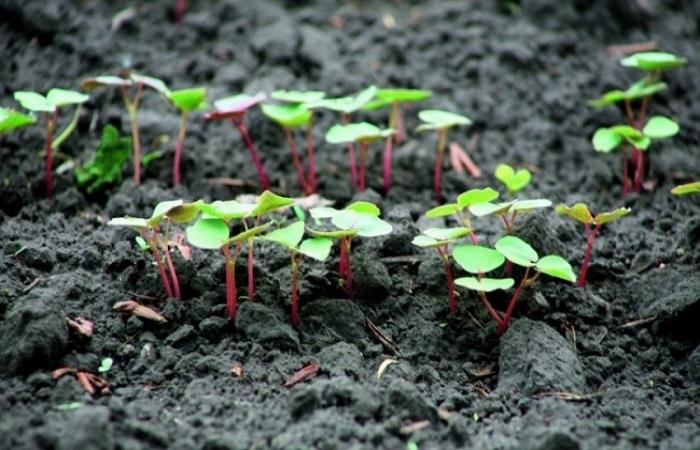
Buckwheat, unlike cereals and brassicas, is not a cold-hardy plant, so it shouldn't be sown too early in the spring before the soil has warmed up and the weather has settled. On average, it can be sown in early to mid-May. The seeds germinate and develop quickly, so late sowing compensates for this. In the fall, sow according to weather conditions, after harvesting, so that the greens can be mown and incorporated into the soil at least two weeks before the onset of cold weather. This time is required for the plants to begin to decompose.
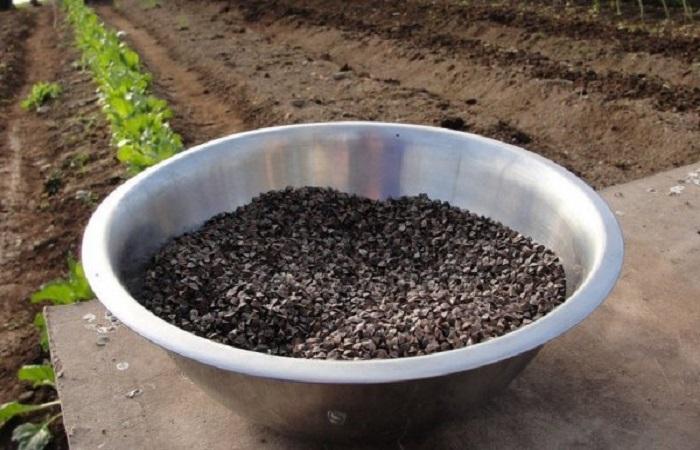
Seed sowing pattern: rows with 10-15 cm spacing. Broadcast sowing is also possible. The seeding depth is generally 4-5 cm; slightly deeper sowing is possible in light soils. Rows can be made with a flat-bed hoe and then rolled with a rake after sowing.
Growing
The key to buckwheat grown as a green manure is adequate moisture. If it rains, no additional watering is required. During dry periods, watering the area once a week will be necessary. The soil should be moderately moist, but not wet. Fertilizing or cultivating the plants is not necessary; the nutrients in the soil are sufficient. To achieve this, prepare the area before sowing the seeds: dig it, add manure and ash or mineral fertilizer, and level it.
Mowing times and how to do it
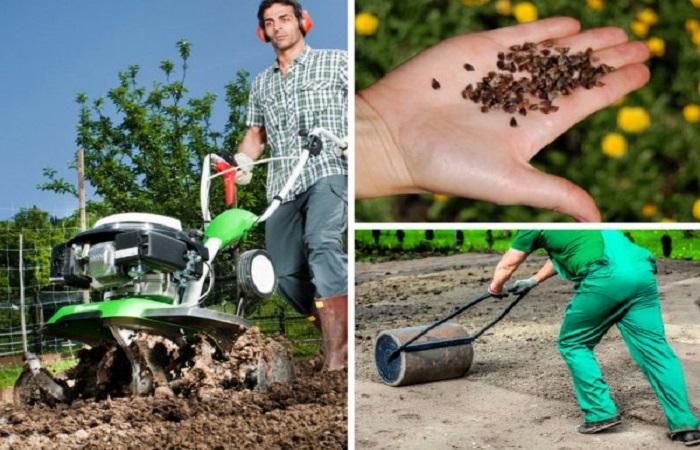
Buckwheat is mown during the early flowering period. At this time, its growth slows, but it remains young and flexible. How to mow: trim the roots with a flat-bottomed cutter to a depth of 5-10 cm, then mix the mass with the soil to a depth of 15 cm. This will become compost. Some plants can be left on the surface to retain moisture.

Crops can be planted after buckwheat 2-3 weeks after mowing. The soil will be prepared, the greens will have partially decomposed, and the rest will be processed later.
If harvesting buckwheat in the fall, the mass should be incorporated into the soil and the area watered with an EM solution to promote decomposition of the residue. With the help of microorganisms, the plant residue will be converted into high-quality humus by spring.
Growing buckwheat as a green manure helps improve soil fertility, enriching it with nutrients and minerals in a form that is easily absorbed by plants. Green manure is no less nutritious than fertilizers, but much more beneficial. It doesn't harm the soil or add nitrates to the fruit.
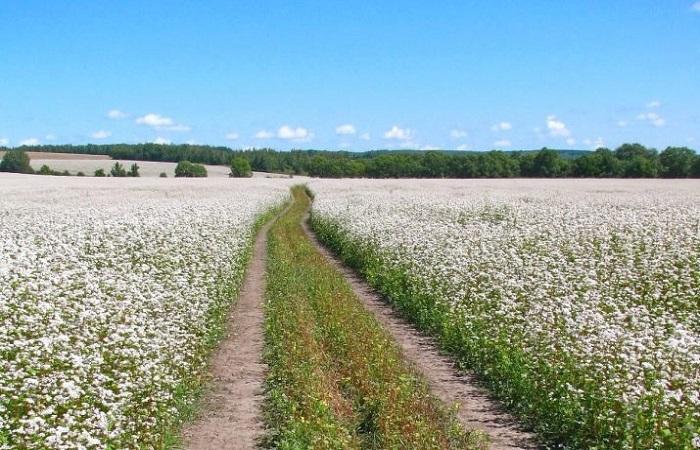
Buckwheat can be sown under all crops except sorrel, which belongs to the same family, to prevent the plants from transmitting common diseases. The plant is easy to care for, grows quickly, and requires no fertilizer during its growth. It can be mown with a standard flat-cutting tool, which is readily available in any farm.