
- Description of slaked lime
- What are the similarities and differences between slaked lime and quicklime?
- Benefits of application to the garden and vegetable garden
- Purpose of the substance
- Dosage for application
- Instructions for use
- Soil cultivation in a greenhouse
- As a whitewash
- With fertilizers
- Safety precautions
- What should a burn victim do?
To improve soil quality, increase crop yields and productivity, and protect plants from diseases and pests, it's necessary to purchase a variety of fertilizers and preparations. However, plant care costs can be significantly reduced by using specially prepared lime. Slaked lime, also known as pushonka, is used to improve soil fertility and plant care.
Description of slaked lime
Slaked lime is made from ordinary chalk, which is extracted from carbonate or limestone rock by burning at high temperatures. The lime is then slaked with water to obtain the desired composition and action. During slaking, the lime releases a large amount of steam, earning it another name, "dust."
The product is widely used in various areas of agriculture and horticulture:
- for the production of fertilizers;
- to eliminate increased soil acidity and saturate it with organic and biologically active elements;
- Hydrated or slaked lime helps soften water, which is used for watering garden and vegetable plants and preparing various building solutions;
- The product is ideal for treating crops against fungal, viral, and bacterial infections, and is also used to protect them from harmful insects.
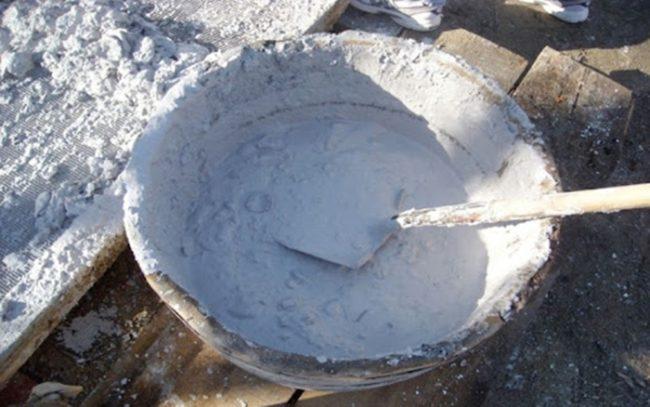
You can prepare fluff lime yourself, using regular powdered or lump lime.
To prepare the nutrient solution, use an enamel container and cold water. Contact with any other metal will cause oxidation, and hot water will turn the powder into hard crystals.
- The lumpy or powdery substance is poured into a prepared container.
- Next, the material is poured with cold water. For every 1 kg of lime, 1 liter of liquid is required.
- Water is added in small portions, constantly stirring the mixture until the steam stops being released.
When choosing a container, it is necessary to take into account that after processing the mixture increases in size by at least 2 times.
Important! If all the water has been used up and steam is still being released, add a small amount of liquid to the mixture.
What are the similarities and differences between slaked lime and quicklime?
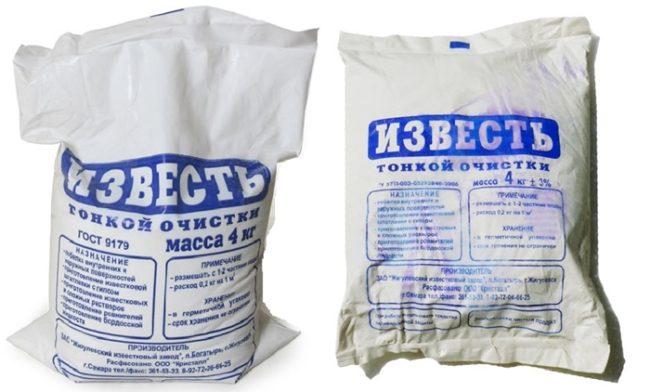
Lime that hasn't undergone the slaking process is not used in agriculture. Calcium hydroxide is used in construction; it dissolves well in water, making it suitable for preparing various materials and mortars. This useful element has also found application in the food industry as an additive to various food products. It is available in granular form.
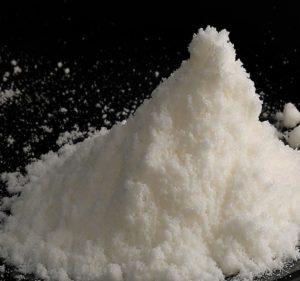
Calcium oxide, or slaked lime, is insoluble in liquid and has the ability to generate heat. The fertilizer is sold as a powder packaged in polyethylene bags.
Important! Lime is highly hygroscopic and quickly absorbs moisture from the air, which must be taken into account when using and storing the material.
Benefits of application to the garden and vegetable garden
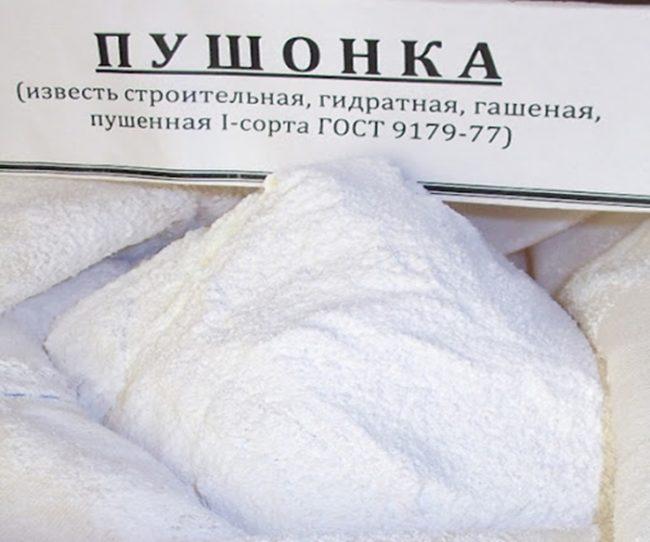
To increase soil fertility and obtain a high-quality and abundant harvest of vegetables, berries, and fruit crops every year, fluff is used for soil and plant care.
- The product reduces soil acidity. Liming is carried out in early spring or late fall. If soil preparation is required for seedlings, liming should be scheduled 3-5 months before transplanting.
- Timely use of pollen strengthens plant immunity and protects crops from the spread of diseases and harmful insects.
- Slaked lime is used in conjunction with nitrogen-containing fertilizers. In this case, the slaked lime helps retain nutrients and beneficial substances in the soil.
- Thanks to its rich mineral composition, calcium oxide activates the growth of rhizomes and above-ground parts of plants.
- When used in combination with organic matter, slaked chalk promotes the rapid decomposition of substances required for the growth and development of garden and vegetable crops.
Important! It's important to remember that there are crop varieties that prefer to grow in acidic soil.
For such plants, a plot of land is left that is not treated with calcium oxide.
Purpose of the substance
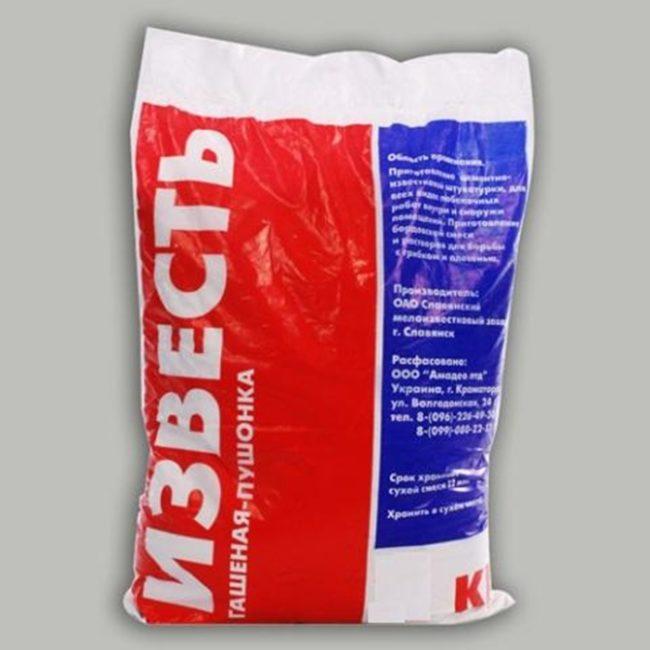
Slaked lime is intended for a wide range of applications in agriculture and horticulture. This versatile substance improves the quality and composition of soil, increasing its fertility. Slaked lime also has antiseptic and antifungal properties, protects various crops from the spread of pathogens and pests, and aids in weed control.
The main indications for the use of calcium oxide in the garden:
- preventive and therapeutic treatment of plantings against fungi, viruses and harmful parasites;
- Lime scattered over the area copes well with weeds, burning their root system and above-ground parts;
- In spring and autumn, slaked chalk is used to whitewash fruit trees and shrubs;
- When it gets into the soil, the fluff saturates it with nutrients and useful substances that plants need for proper growth and development;
- The product is used to neutralize soil acidity.
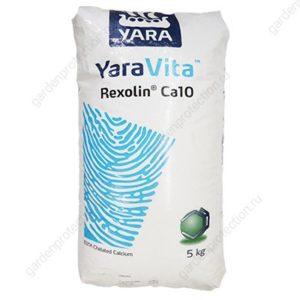
Also, pollen is added to various fertilizers, mixed with compost, and used as a separate fertilizer for vegetable and fruit crops.
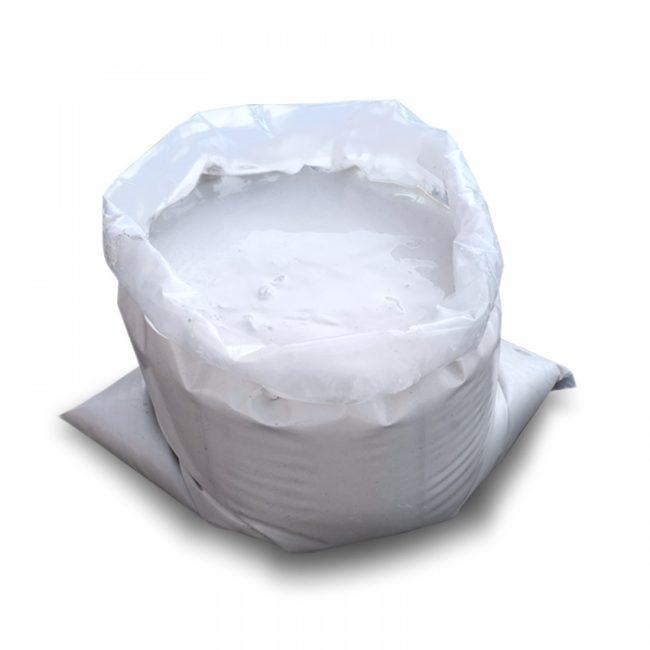
Dosage for application
The consumption of the preparation directly depends on the composition and quality of the soil.
To reduce soil acidity, lime is used in dry form, mixing it with powder.
- Soil with a pH of 4 or lower is considered highly acidic and unsuitable for growing most crops. If the soil is predominantly clayey or loamy, use 600 to 900 grams of lime per square meter. Sandy soil with the same pH should be amended with up to 500 grams of lime per square meter of plantings.
- For a pH of 4 to 4.5, add up to 800 g of calcium oxide to heavy soil, and up to 400 g of the substance per 1 sq. m to sandy soil.
- Soil acidity with a pH of up to 5 can be corrected by adding up to 700 g of the preparation to loam, and up to 300 g of fluff to sandy soil.
- If the pH is between 5 and 5.5, add up to 600 g of slaked lime to clay soil. Sandy and sandy loam soils with this pH do not require liming.
The powder is scattered over the surface of the plot and then incorporated into the soil to a depth of 15-20 cm. If the soil in the garden plot is highly acidic, liming should be carried out once every 2-3 years. Otherwise, liming once every 5 years is sufficient.
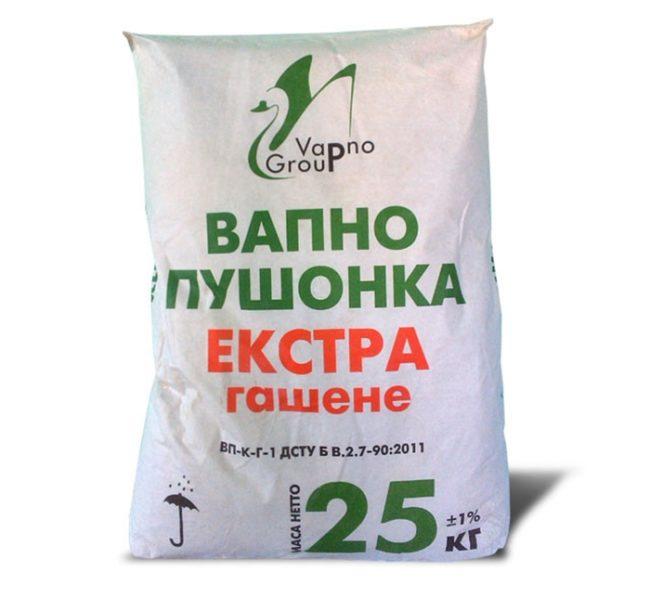
To remove weeds, sprinkle dry calcium oxide on the soil surface at a rate of 200 g per square meter of land. To control harmful insects and their larvae, apply up to 500 g of lime per square meter of garden or farm plot area.
Tip! Slaked chalk can be mixed with various fertilizers and supplements, with the exception of nitrogen-containing preparations and dolomite flour.
Instructions for use
To get the maximum benefit from using the fluff, you must strictly follow the instructions for using the natural product.
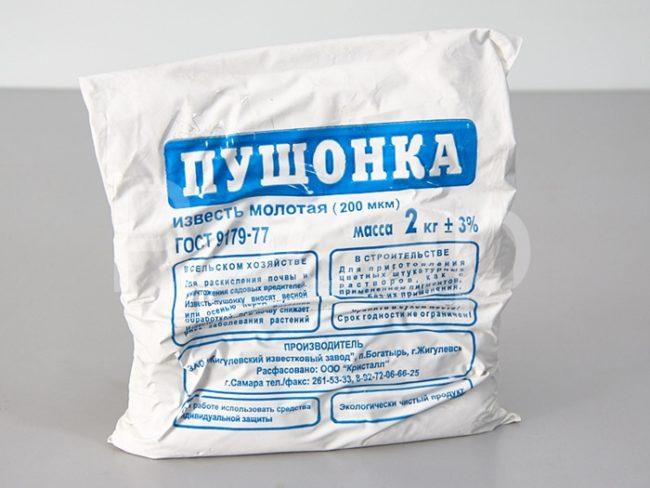
Soil cultivation in a greenhouse
Soil treatment with duster in greenhouse conditions is carried out in the fall, after harvesting.
- Determine the acidity level of the soil in the greenhouse.
- Prepare the product for use by quenching it with cold water. This procedure is performed 2-3 days before use.
- Based on the quality of the soil, it is necessary to sprinkle the soil in the greenhouse with the preparation and dig it up thoroughly.
Greenhouse plants are constantly kept in a closed space, and the soil quickly becomes depleted. Applying slaked lime will help restore soil fertility and quality.
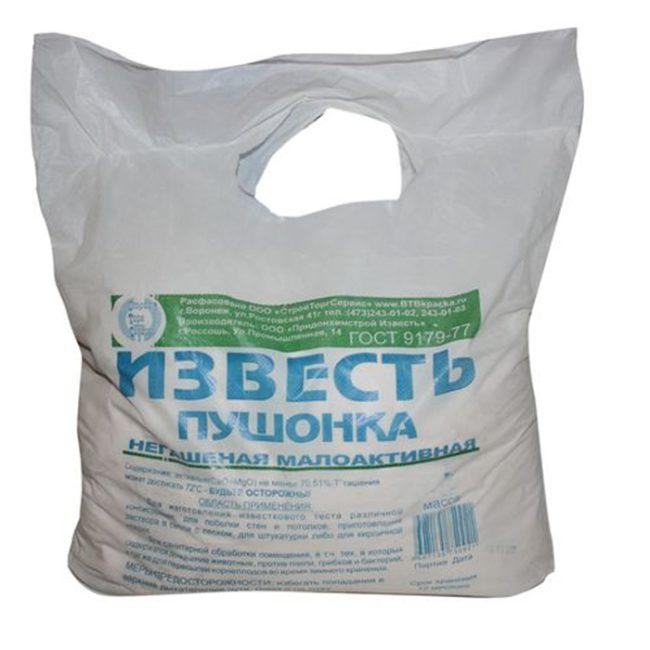
As a whitewash
Garden whitewashing protects fruit trees and shrubs from overheating, frost, pests, rodents, and mechanical damage to the bark. Whitewashing is carried out in spring or fall.
To prepare a solution, you'll need 3 liters of cold water and 100 grams of flour-based glue per 1 kg of powder. Lime mortar doesn't adhere well to wood surfaces, but glue holds it there. Instead of glue, you can add cow dung or clay to the whitewash.
Important! After preparation, add 200 g of copper sulfate to the lime solution.
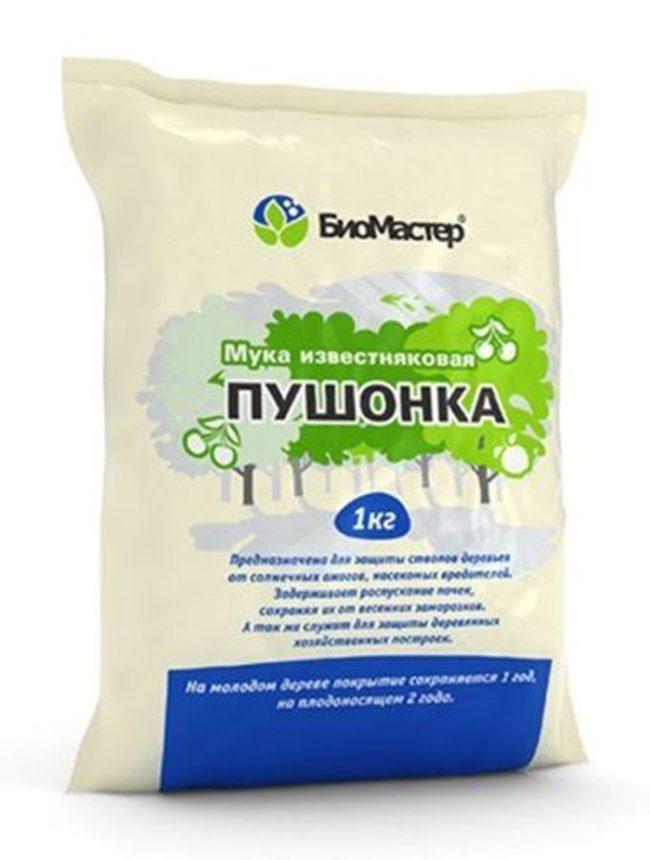
With fertilizers
Calcium oxide can be used in gardening alongside organic and mineral fertilizers. To achieve this, lime is added to the soil along with various fertilizers. The exception is dolomite flour and fertilizers that already contain limestone.
To improve the compost composition, lime is added to the compost bin. During fermentation, organic matter produces large amounts of acids and an unpleasant odor, and lime neutralizes these acids.
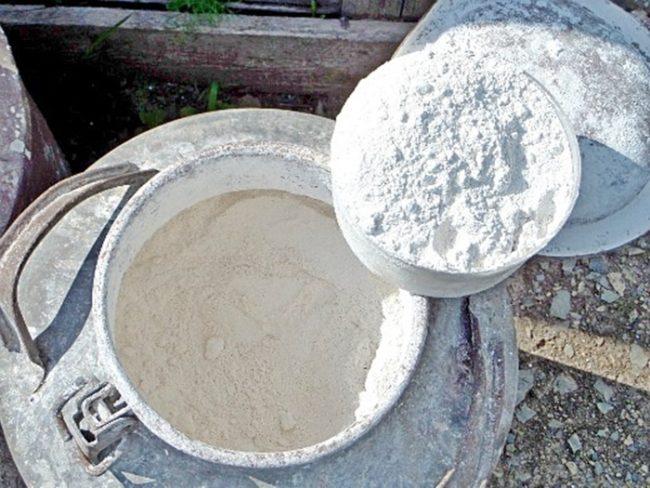
Safety precautions
The ready-to-use product is completely safe for humans, plants, and animals. However, to avoid burns, certain precautions should be taken when preparing slaked lime:
- clothing should completely cover the skin;
- protective gloves are used for hands;
- the respiratory and visual organs are covered with glasses, a mask or a respirator;
- hair is tucked under a headdress.
During lime slaking, small children and pets should not be present on the site.
Important! Do not consume food, drink, or smoke near the container where the chemical process is taking place.
What should a burn victim do?
If lime comes into contact with the skin while slaking, a person will suffer a severe chemical burn. The affected area must be thoroughly cleaned of any excess lime and an antiseptic ointment applied. After administering first aid, seek medical attention.