
Compost is a natural fertilizer considered environmentally friendly. While it's entirely possible to make it yourself, it requires the construction of a special structure. You can use readily available materials for this purpose. Building a composter yourself has its own set of considerations. It's important to ensure adequate oxygen supply to the organic matter and maintain a moisture content of at least 55%.
Types of composters
Garden composters for summer cottages are becoming increasingly popular. They don't require a large financial investment and can be quickly made from readily available materials. The most common types of these containers include the following:
- a regular wooden box;
- a plastic container in the shape of a tank with holes into which oxygen can enter;
- a thermal composter that helps retain heat and carry out chemical processes all year round.
It's entirely possible to build and install a wooden box or compost bin yourself at your dacha. However, it's important to determine its purpose and identify key design requirements.
Dimensions and necessary drawings
For proper composting, it's important that the bin be of equal height, length, and width. For a small garden plot, a composter measuring 1 x 1 x 1 meter is usually sufficient. It should be placed on a level, flood-proof surface. The structure should be at least 10 meters from buildings and water sources.
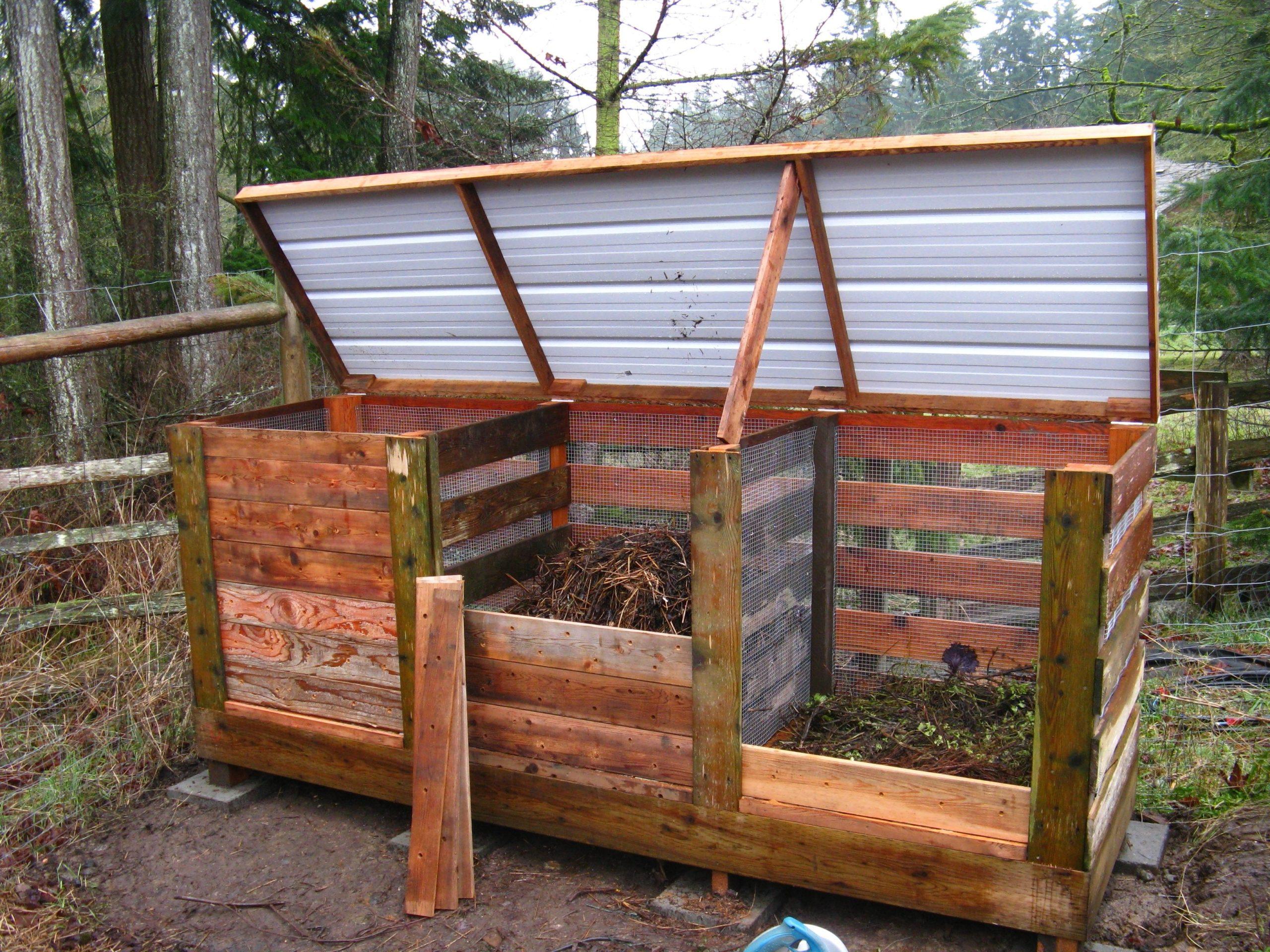
Since compost takes a long time to mature, the bin should be made of three identical sections. The first section should contain fresh compost, the second section should contain last year's compost, and the third section should contain fully rotted compost.
The boards should be placed loosely, leaving space between them. This will help remove excess moisture and allow airflow. The structure should have a hinged lid. This will protect the contents from precipitation and prevent animals from getting inside.
Strength and durability are also key requirements. When constructing a structure from planks, they must be treated with a preservative. This will help extend their service life. This is crucial, as wood is susceptible to moisture, temperature fluctuations, and bacterial growth. Other materials can be left untreated.
What materials and tools will be needed?
The following materials can be used to make containers:
- wooden boards;
- plastic barrels;
- fruit boxes;
- pallets;
- slats;
- polyethylene;
- plastic;
- metal corners;
- chain-link fencing;
- plywood;
- slate.
To choose the right materials, you need to decide what kind of compost you'll be using and for what purpose. You'll need a hammer, shovel, and hacksaw. You'll also need a screwdriver and a tape measure.
DIY instructions
To build a composter yourself, you need to gather the necessary tools and materials. Typically, such a structure is made from scrap materials.
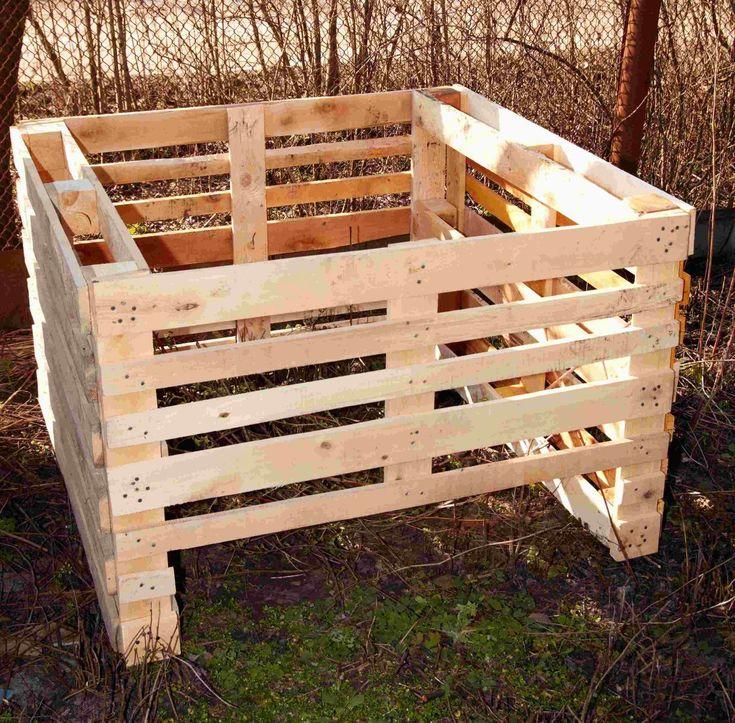
Pallet box
Building a pallet composter is easy. However, choosing the right location is crucial to prevent the compost from drying out in the sun.
To obtain a high-quality design, you need to do the following:
- Loosen the soil at the installation site. This will ensure easy access for worms and microorganisms from the soil to process waste.
- Take four solid pallets. They should be 120 x 100 centimeters in size and 3-14 centimeters thick.
- Stack the pallets into a cube shape, placing the long end horizontally on the ground.
- Fasten together using nails, screws, metal plates.
- Attach to installed posts.
- Make cuts using a jigsaw.
- Assemble the structure. The boards should be placed vertically, with one side at an angle.
- Seal the seams with mounting glue.
- Put up the box.
- Apply antifungal solution for long lasting service life.
- Attach the lid.
Made of slate
To construct the structure, the slate must be dug into the ground or secured with horizontal boards. It can also be nailed to four corner blocks. Leave 2-3 centimeter gaps between the sheets.
It's recommended to place this type of composter in a shady spot in the garden. This material gets very hot in the sun, leading to an increase in the temperature of the structure.
Made of concrete
This type of composter is made of monolithic concrete. Cinder blocks or a well ring can also be used for this purpose. Typically, the structure is buried halfway into the ground or up to the top level. However, it can also be placed directly on the ground. The composter should be covered with a wooden lid.
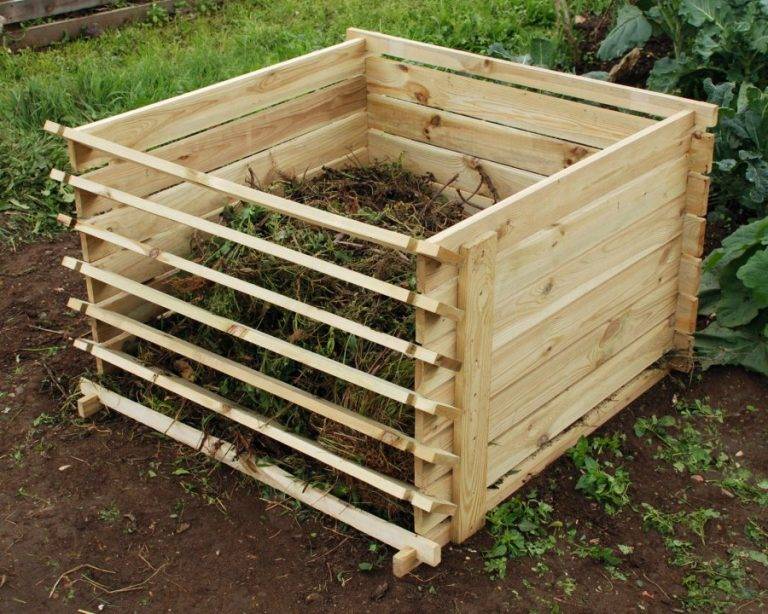
From wooden planks
Wood is considered the most readily available and easily processed material. To make a garden composter, 2-3 sections are sufficient. You'll need the following:
- edged boards 3 centimeters thick and 9-10 centimeters wide;
- bars 5 centimeters thick and 120 centimeters long;
- screws;
- nails;
- fine mesh;
- impregnation for preventing wood rot;
- handle and hinges;
- oil or enamel paint;
- dry branches for drainage;
- latches.
To make a wooden composter, you will need to do the following:
- Dig supports into the ground to a height of up to 0.2 meters.
- Nail the boards. Leave gaps between them.
- Make a bottom out of slate.
- Attach the door.
From wooden boxes
To make a composter from bins, you need to disassemble them into planks. After that, follow these steps:
- Make two partitions. They will help divide the box into three sections.
- Hang the lower part of the front wall of the drawer on the hinges.
- Make a lid from two slopes.
- Screw self-tapping screws and galvanized brackets to the side posts.
- Attach the lower and upper parts of the front wall to the hinges.
- Assemble the floor or bottom of the box.
- Attach wooden blocks and supports.
- Line the bottom with wire mesh. This will improve ventilation and protect the compost from rodents.
How to use correctly
To ensure successful use of compost, it is important to follow these guidelines:
- Weeds should be stored separately. A separate bin should be provided in the composter for this purpose.
- The finer the raw materials used, the faster the compost will be ready. Therefore, plants need to be shredded beforehand.
- You can fill the bins not only with garden crops but also with food scraps from fruits and vegetables. These contain a lot of starch, which will speed up the composting process.
- You can water the mass with warm water. However, a special herbal infusion is much more effective.
Building a composter yourself has a number of unique features. This structure can be made from a variety of readily available materials. To ensure high-quality and safe fertilizer, it's important to follow the basic operating instructions.
https://www.youtube.com/watch?v=Jq_0O7i6PcE