
Various green manures help make the soil more nutritious and fertile. They act as a type of fertilizer that significantly increases crop yields. Growing alfalfa as a green manure has many advantages. It enriches the soil with nitrogen, which positively impacts the development of crops. However, planting and caring for alfalfa requires a number of considerations.
Varieties and existing cultivars of the plant
Today, many species and varieties of alfalfa are known.
In this case, the following are usually used as green manure:
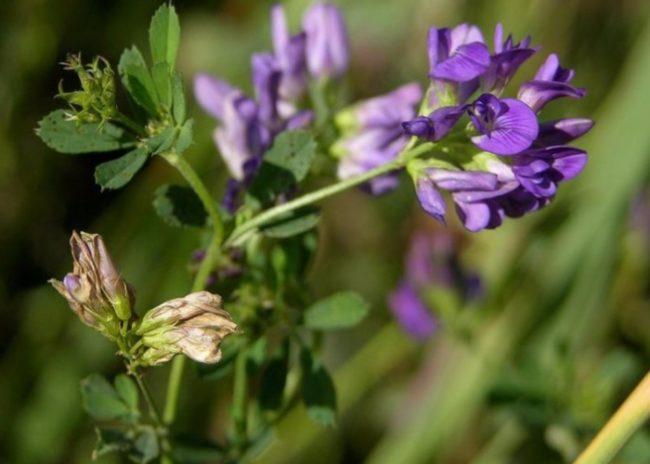
- Blue sown pea is considered the most common plant. It is a perennial with purple flowers that form dense clusters. The plant is characterized by a robust root system. The stems reach 30-80 centimeters. After flowering, spiral-shaped pods appear on the bushes.
- Hops can be an annual or perennial. The plant is characterized by creeping or ascending stems with numerous leaves. Inflorescences contain 10-30 small yellow flowers. The fruits are single-seeded beans. In nature, the plant occurs as a weed, growing in fields, meadows, and mountainous areas.
- Yellow sickle-shaped lily is a perennial with erect or prostrate stems, reaching 60 centimeters in height. Yellow flowers form dense clusters. After flowering, sickle-shaped, multi-seeded pods appear on the bushes. They are 10-15 millimeters long.


Advantages and disadvantages as green manure
Using alfalfa as a green manure has many advantages:
- Nitrogen enrichment of the soil. This feature is typical for all legumes.
- A well-developed root system ensures adequate water and air circulation.
- Undemanding in terms of growing conditions, the grass easily tolerates low temperatures and drought.
- The ability to alkalize soil. This property is considered one of the most valuable.
However, alfalfa also has some disadvantages:
- The high cost of seeds is due to the popularity of green manure.
- Growing difficulties occur during the first month after planting. During this period, the plant requires sufficient moisture and light.
- Liming is essential when planting in saline or highly acidic soil. Otherwise, alfalfa will not produce sufficient foliage.

How to sow and care properly
Alfalfa can be sown after winter forage, potatoes, and corn. After this green manure, it is recommended to plant cereals, cabbage, tomatoes, radishes, and radishes. In the fall, it is recommended to plant alfalfa after deep plowing to a depth of 30 centimeters. In the spring, the plant can be sown immediately after harrowing with a roller. It is recommended to embed the seeds into the soil to a maximum depth of 2 centimeters.
Since alfalfa has a perennial effect, it is recommended to plant it in the most neglected areas for two years. This will help maximize the investment.
To ensure better germination of alfalfa, the seed coat should be broken by hand and thoroughly dried. If the shoots emerge normally, there's no need to overwater them. The plant usually receives enough moisture from precipitation. Excessive watering can impair germination.

When is it better to grow – in spring or autumn?
The plant is most often planted in mid-March, immediately after the snow melts. At this time, the soil is abundantly moist, which positively affects seed germination.
Agronomists also note that alfalfa can be planted in the fall—in September or October. In this case, the first shoots should appear in early May. Overwintered crops will undergo natural stratification. This will increase the plants' resistance to diseases and pests.


When and how to mow correctly
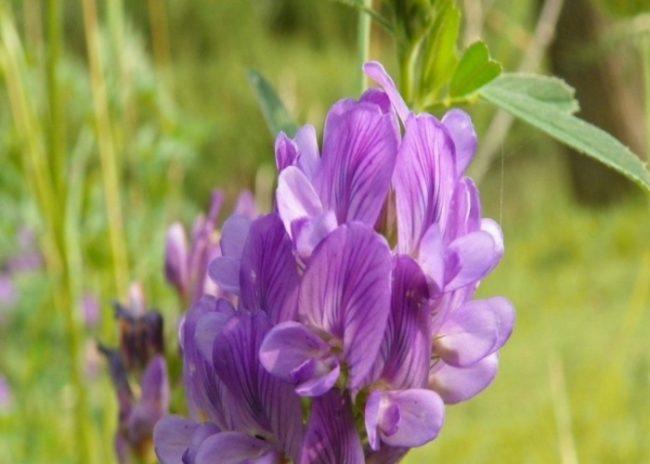
It's recommended to mow alfalfa during the most active flowering stage, 55-60 days after planting. The mown grass should be left in the beds to rot naturally. It's also perfectly acceptable to immediately compost the grass.
If there is a large amount of grass, some of it can be used as livestock feed. After one month, it is recommended to mow the formed afterglow, but it is important to avoid woody stems.
When planting alfalfa in the spring, mow it during flowering, when at least a small portion has formed leaves and buds. Avoid mowing during rainy weather; it's recommended to do this on sunny days.

It's important to remember not to mow the plant too low. Otherwise, young shoots will simply die. If the buds haven't fully opened, mow them down to about 5 centimeters. If the flowers are fully open, mow them down to 10 centimeters.
Mowing green manure too frequently is not recommended. This will severely weaken the plants and lead to their eventual death. If the alfalfa appears excessively weak, it is recommended to postpone mowing.


How to incorporate into the soil after mowing
After mowing the bushes immediately after planting, it's best to let them grow in the beds for another year. This will ensure the soil receives the maximum amount of nitrogen. If the green manure is grown in a small area, one year is sufficient. After the final mowing, the green manure should be left on the surface of the soil and work should be continued after rainfall or heavy watering.
During this time, the mown grass will settle and turn yellow. After the soil dries, the area should be dug up to the depth of a spade. This is recommended in the fall. Over the winter, the grass residue will decompose and turn into high-quality fertilizer.
Alfalfa is a beneficial green manure that enriches the soil with valuable nutrients and improves its structure. This helps improve crop development and increase yields.