
Potassium permanganate, or potassium permanganate, is considered a powerful antiseptic. Gardeners and vegetable growers use an aqueous solution of potassium permanganate to fertilize plants, disinfect soil, and combat diseases and harmful insects. When used correctly, this natural substance is completely safe for plants and is used to treat seeds and seedling roots. Let's explore other uses of potassium permanganate in the garden.
Description and composition, operating principle
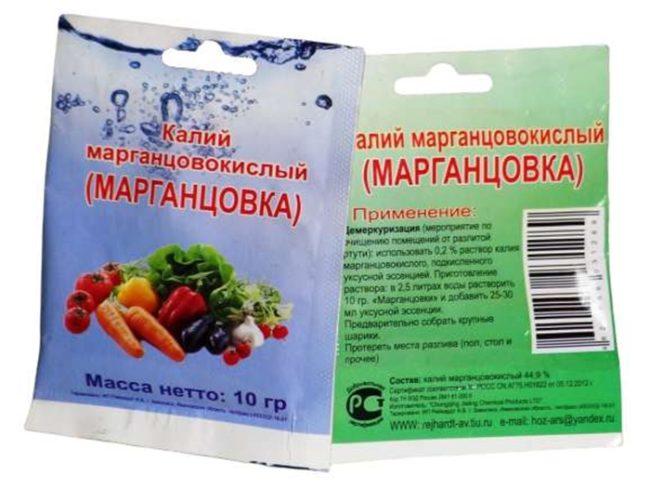
Potassium permanganate is essentially a salt of manganic acid. It is obtained from the ore of the same name, which is specially oxidized to produce potassium permanganate. It is sold commercially as a fine, crystalline powder of violet or dark violet color.
Manganese salt dissolves well in liquids and is a strong oxidizing agent, which is why it is successfully used as an antifungal and antiseptic agent.
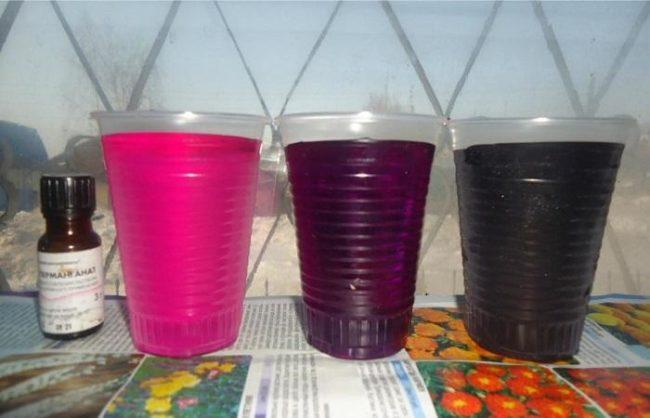
An aqueous solution is prepared based on its intended use. When manganese is added to the liquid, it turns a light to dark pink color. Potassium permanganate is available at pharmacies or specialized garden centers.
Important! This chemical compound contains oxygen, manganese, and potassium, making it suitable for use as a mineral fertilizer for garden, indoor, and vegetable crops.
Purpose
Gardeners and vegetable growers try to minimize the use of harmful chemicals in their gardens, so they use potassium permanganate to treat soil and plants.
Potassium permanganate is characterized by the following properties:
- disinfects the soil, saturates it with nutrients and vitamins;
- used for treating seeds, tubers, bulbs and rhizomes of seedlings before planting in the soil;
- used for disinfection of greenhouses, garden equipment, cellars and basements;
- helps to cope with fungal and viral infections of garden and vegetable crops;
- has insecticidal properties and is used to control harmful insects.
Important! As a fertilizer, this substance activates chlorophyll production and accelerates the fruiting and ripening process of vegetables, fruits, and berries.
Dosage and instructions for use
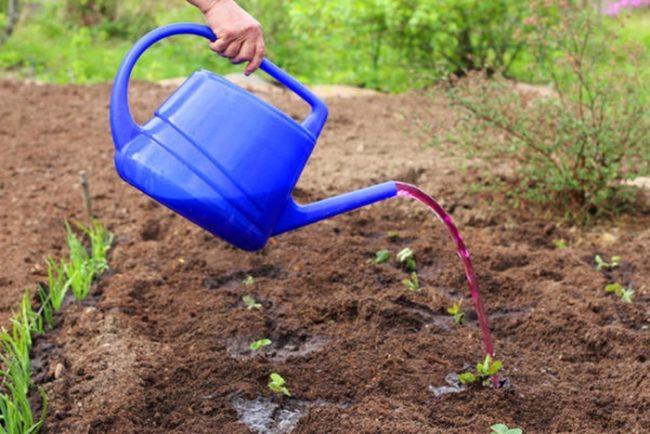
When preparing the working solution, it is essential to strictly adhere to the dosage and instructions for use. Excessive manganese levels negatively impact the taste and marketability of ripening fruits, and can cause severe burns on both the rhizomes and the above-ground parts of plants.

When potassium permanganate accumulates in excess in the soil, it suppresses other mineral elements, destroys beneficial bacteria, and increases soil acidity, which ultimately leads to a halt in plant development and subsequent death.
For seeds and seedlings
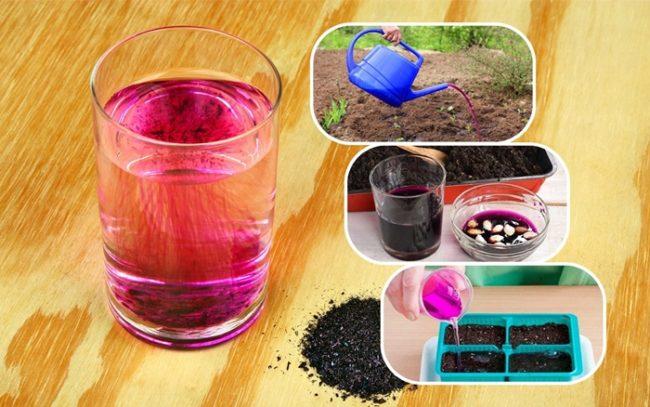
Liquid fertilizer based on a natural chemical compound is used to treat planting material.
To treat seeds, bulbs, or tubers, prepare a one-percent, pale pink solution. Place the seeds in the solution and let them sit for 20-30 minutes. After this time, rinse the seeds under running water, dry them, and use them for sowing.
To treat the roots of seedlings, saplings and cuttings, use a solution of the same concentration.
Important! Exceeding the potassium permanganate dosage increases the risk of burning the planting material.
In the greenhouse
The enclosed space of greenhouses creates its own microclimate and high humidity. These conditions favor the development of pathogenic bacteria, fungal spores, and various viruses. To prevent the spread of infection to crops, the soil and the room are treated with a concentrated solution of potassium permanganate. These treatments are scheduled for early spring, before planting, or late fall, after harvest.
- greenhouse walls, wooden or metal structures are wiped or sprayed with a spray bottle;
- The soil is abundantly moistened and watered with a concentrated burgundy-colored solution.
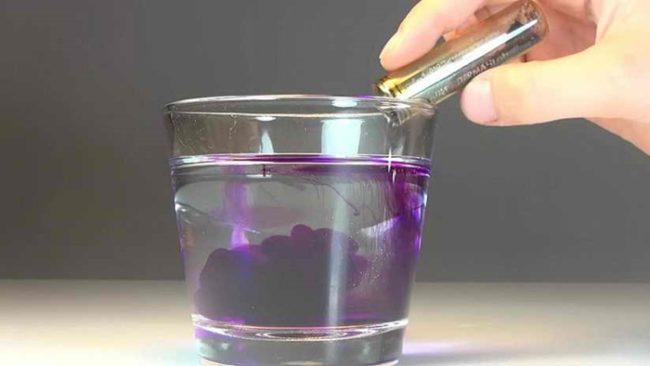
Soil disinfection
To disinfect the soil, prepare a two percent solution of potassium permanganate.
- The product is used during planting, pouring 1 liter of the preparation into each hole.
- This measure helps protect garden and vegetable crops from the proliferation of pathogenic bacteria, most fungal and viral infections, and attacks by harmful parasites.
- Planting work begins after the soil has dried.
- The same solution is used to treat the soil around trees, shrubs, flower beds and greenhouses.
- The land is first cleared of foreign materials and weeds.
Tip! To achieve maximum effect, warm the manganese solution to 70-75 degrees Celsius before use.
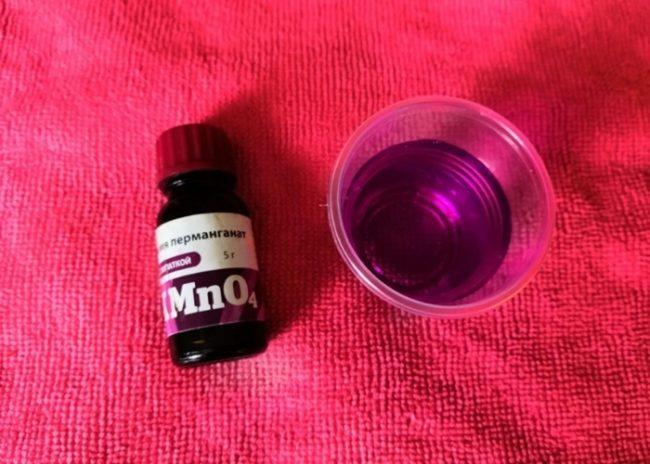
For indoor plants
Indoor plants grow and develop in a limited space, so they require additional nutrition and care.
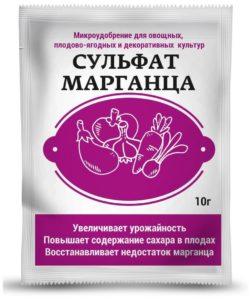
If there's a manganese deficiency in the soil, indoor plants wilt, become more susceptible to disease, and stop blooming. A change in foliage color and the appearance of bright green veins on the leaves signal the need for fertilization.
To replenish mineral deficiencies, prepare a solution of manganese and boric acid. To do this, dissolve 3 grams of potassium permanganate and boric acid in a bucket of settled water. The resulting solution is used for spraying and watering indoor and ornamental plants.
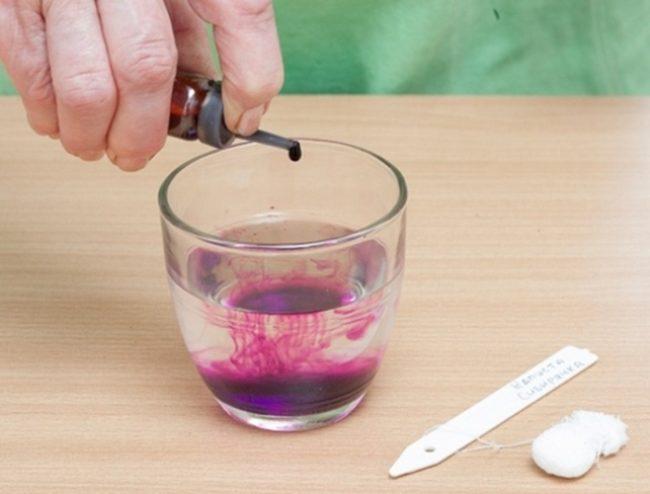
Processing of beds
Most garden and vegetable crops prefer to grow, develop, and bear fruit in fertile soil rich in beneficial and nutritious substances. A deficiency of potassium permanganate in the soil significantly reduces plant immunity and resistance to various diseases and weather changes.
To avoid crop loss and stimulate flowering of ornamental crops, beds and plantings are treated with a one-percent or three-percent solution of manganese.
Soil cultivation in the garden and vegetable garden is carried out in early spring, 2-3 weeks before the start of the growing season.
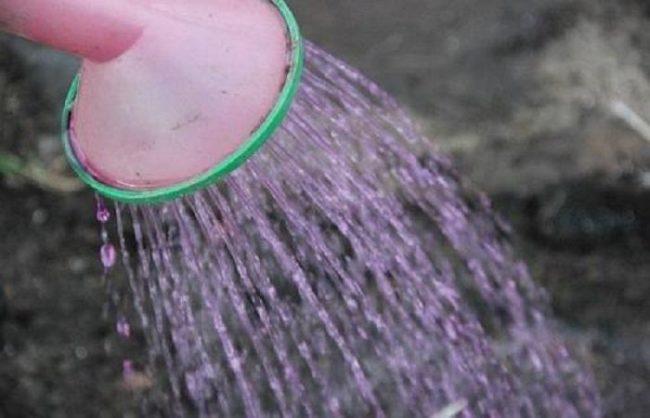
A solution for watering fruit trees and shrubs is prepared at a rate of 10 grams of manganese per bucket of water. For vegetable crops and garden strawberries, the fertilizer is prepared at a rate of 5 grams per 10 liters of liquid.
Tip! To treat plantings for diseases and pests, dilute 1-2 teaspoons of the solution in a bucket of water. Spray the affected plants with the resulting solution.
Safety precautions
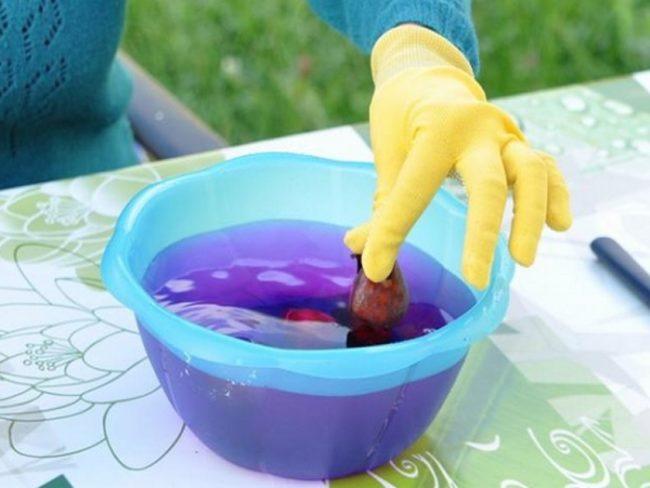
To avoid burns and poisoning, work with potassium permanganate should be done wearing protective glasses, a mask, and gloves.
After the event, wash your clothes and take a shower. If the dry powder is ingested, seek immediate medical attention. Also, be aware that the substance is highly flammable.
How to store it correctly and for how long
Store the medication in a cool, dark place, out of the reach of children and animals. Do not place the glass bottle containing potassium permanganate near food, metal items, or other chemicals. This will ensure an unlimited shelf life.