
Herbicides are a proven and effective way to increase crop yields and clear fields of weeds. Herbicides are widely used in industrial plant cultivation and in home gardens. Herbicides that affect all types of vegetation in a given area are called non-selective herbicides. Let's look at the main properties of these products and review the rankings of the best herbicides.
What are non-selective herbicides?
Herbicides are divided into two broad groups based on their mode of action. Selective herbicides kill specific weed species and are used when an area is infested with one or related plants.
Non-selective herbicides suppress the growth of all types of vegetation, including agricultural crops, and are therefore called non-selective herbicides. This group of substances acts on the above-ground parts of the plant during the growing season, penetrating and killing weeds by disrupting their cellular structures. These products act by contact.
A special group of soil-applied herbicides stands out due to their significant advantage: they penetrate the roots from the soil, preventing the underground growth of weeds from surviving. By applying non-selective herbicides, areas remain free of all plant species, which wither and die before your eyes within 1-2 weeks.
Advantages and disadvantages
Non-selective herbicides are a powerful means of eliminating unwanted flora. The advantages of these products include:
- The area is completely cleared of vegetation. This is used to clear construction sites, roadsides, and railway tracks.
- Herbicides clear fields of early weeds before crops emerge.
- When sprayed after harvesting, herbicides prevent new generations of weeds from emerging and going into winter.
- Sometimes they are used as desiccants – preparations that accelerate the ripening of fruits and the drying out of the no longer needed above-ground parts.
Disadvantages of non-selective drugs:
- negative impact on cultivated plants – high-quality protection of beneficial flora is required;
- rapid adaptation of weeds to chemicals, which reduces the effectiveness of treatment.
Non-selective herbicides are suitable for treating industrial areas with seasonal vegetation. Gardeners typically use them to remove grass along fences and in vacant lots.
Varieties
Herbicides are classified by several criteria, including their method of action and application, and their intended target (for grasses, shrubs, or trees). When choosing a weed control product, it's important to understand how it works and what results to expect.
Contact
These products, when applied to the surface of plants, adhere well to stems and foliage, quickly penetrate the skin, and suppress growth points. Contact products are resistant to external influences such as sun, precipitation, and wind. The downside is that they don't reach the underground parts, so weeds with strong root systems quickly sprout new shoots.
Systemic
Systemic herbicides have high penetrating power—once applied to a plant, the product begins to circulate throughout its entire structure. Soil application of systemic herbicides is particularly effective; they are absorbed by the roots along with moisture, killing the entire plant.
Rating of herbicidal preparations for weed control
The number of herbicides produced is enormous; let's highlight popular and proven weed control products.
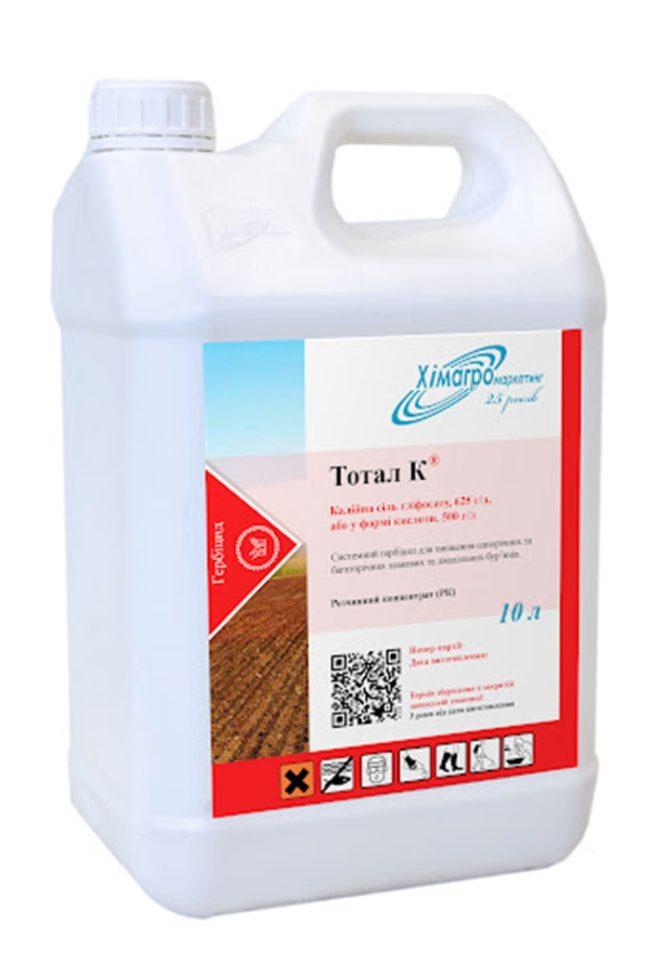
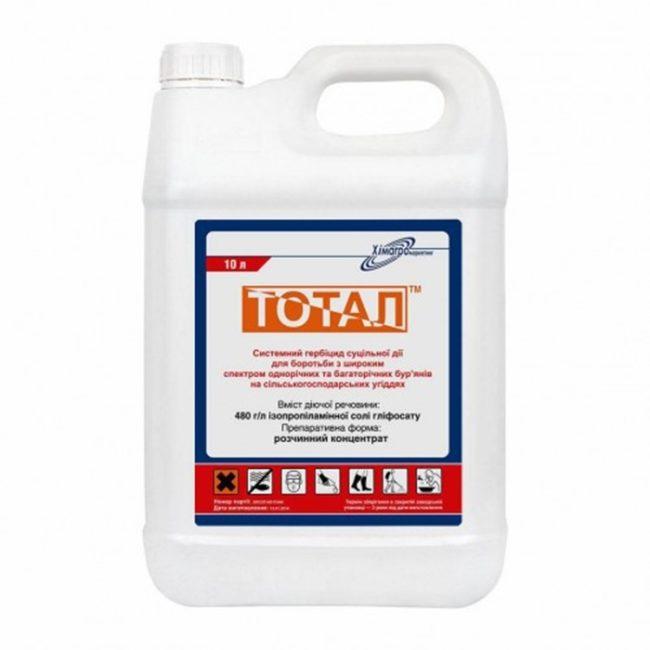
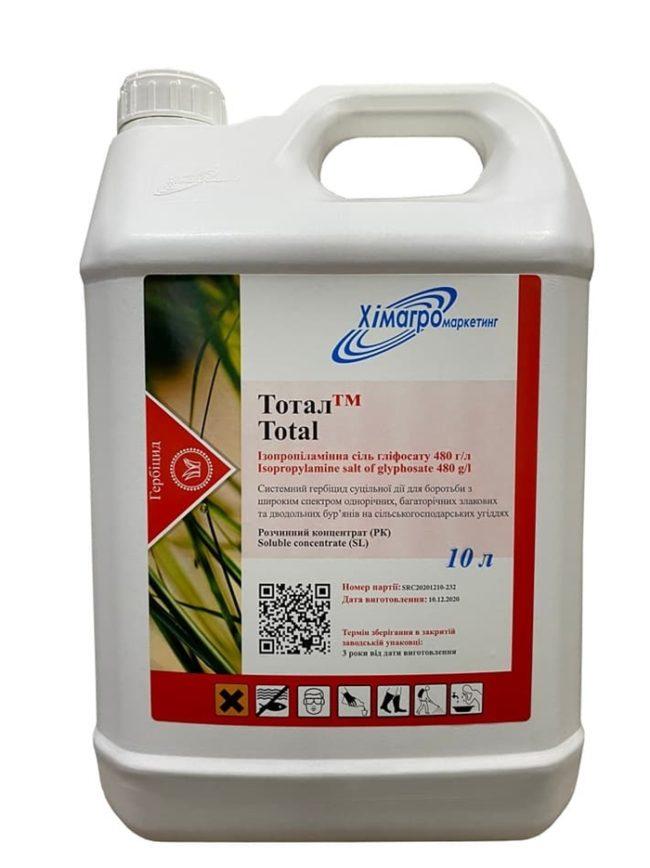
Total
The glyphosate-based product is available in two strengths: 360 and 480 grams per liter. Canisters are available in 10 and 20 liter sizes.
Quickly removes weeds, the area is cleared within 2 weeks.
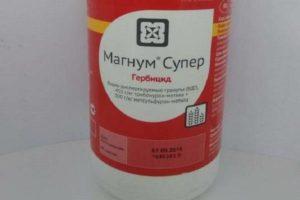
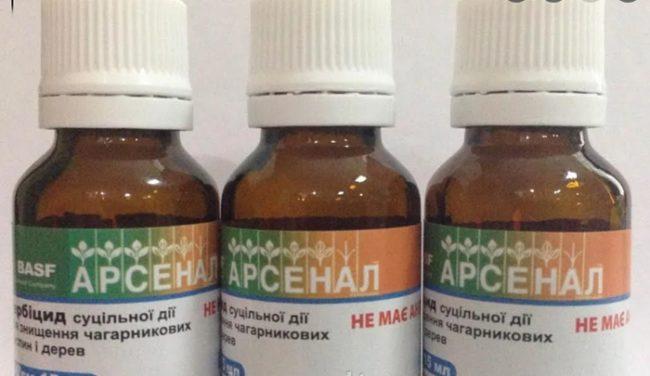
"Arsenal"
Contains imazapyr, which has contact and systemic action. Supplied in 10-liter canisters, it kills even difficult-to-kill weeds, such as ragweed and hogweed. The herbicide is used to clear non-agricultural land.
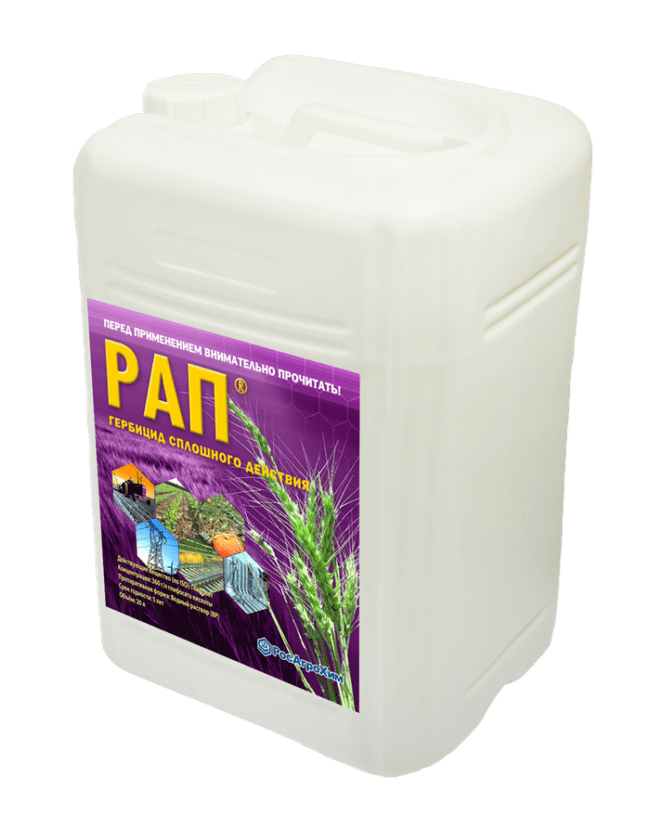
Rap
The product is highly effective against grass weeds such as couch grass and wild oats. It belongs to the glyphosate group. It can be combined with other herbicides when treating fields. It is available as an aqueous solution in 20-liter canisters.
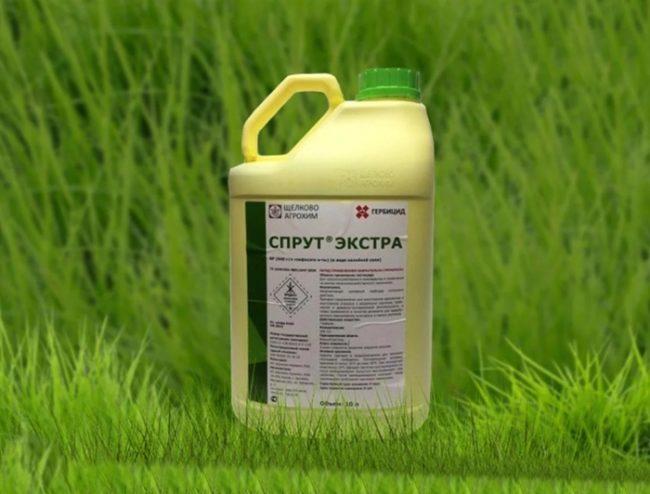
"Octopus"
Glyphosate herbicide is available in 5- and 10-liter canisters. It destroys annual and perennial weeds and shrubs. Potassium salt is quickly absorbed by all parts of plants. It has no negative impact on the soil and decomposes quickly.
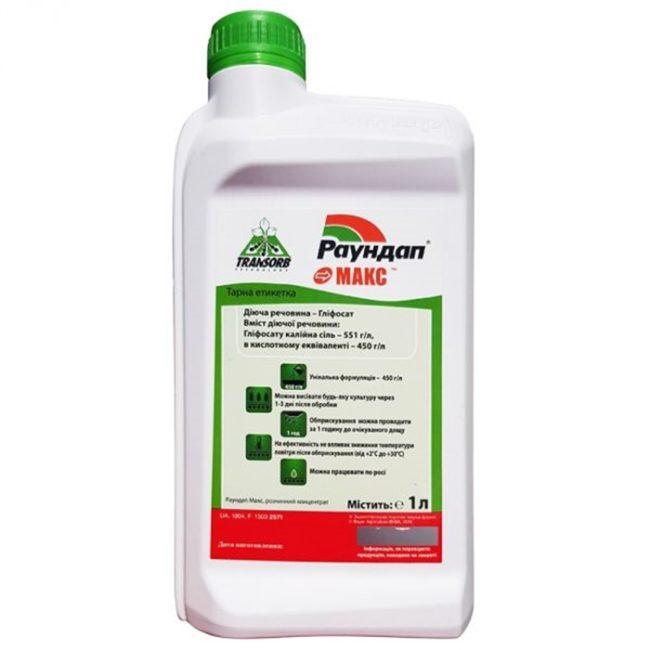
Roundup
This herbicide and desiccant is available in one-liter canisters. It removes all types of vegetation, acting both contact and systemically. It belongs to the glyphosate group.
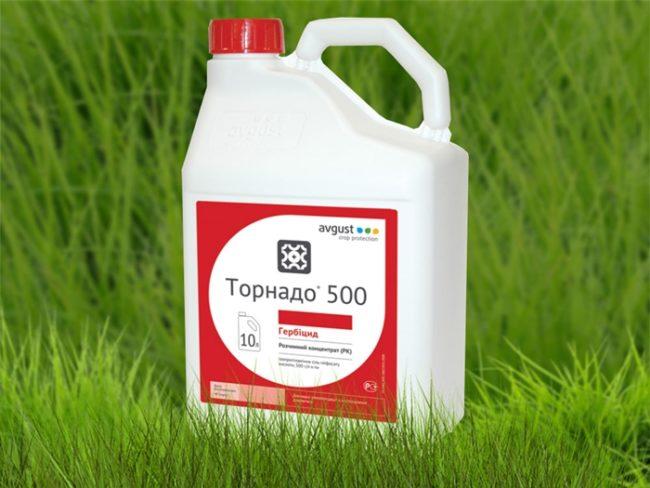
"Tornado"
An aqueous glyphosate solution. Registered for removing unwanted vegetation in agriculture and forestry. Available in 10-liter canisters and small bottles.
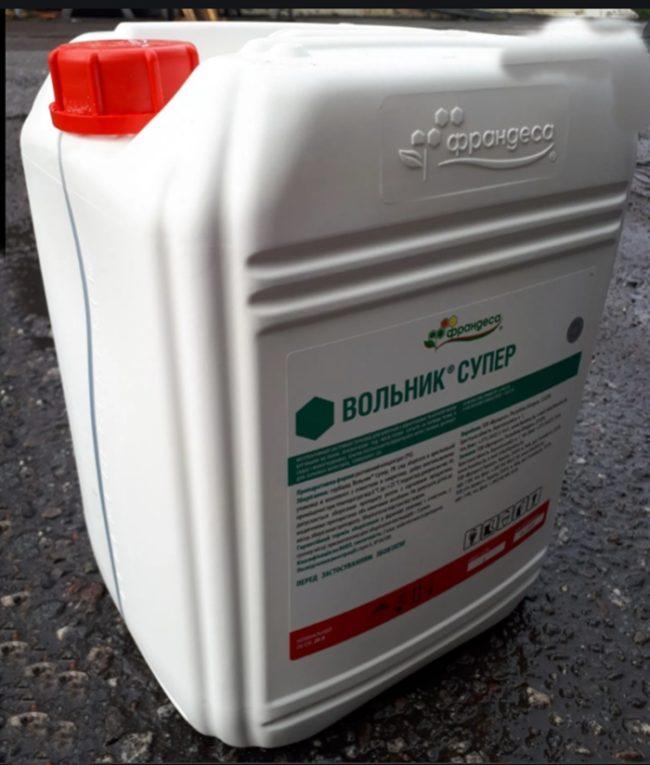
"Glyphosate Wolnik"
A product with a high glyphosate concentration (540 grams per liter), reducing consumption. It is low-volatile and odorless. It is used when reclaiming fallow lands and for aerial application. Available in 20-liter canisters.
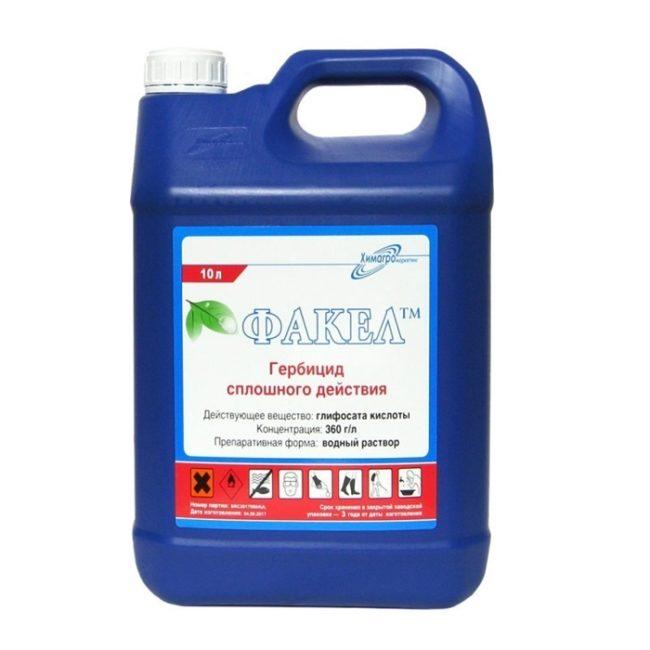
"Torch"
Glyphosate group. Among the least toxic herbicides, safe for animals. Rapidly decomposes in soil. Effective against hydrophytic weeds.
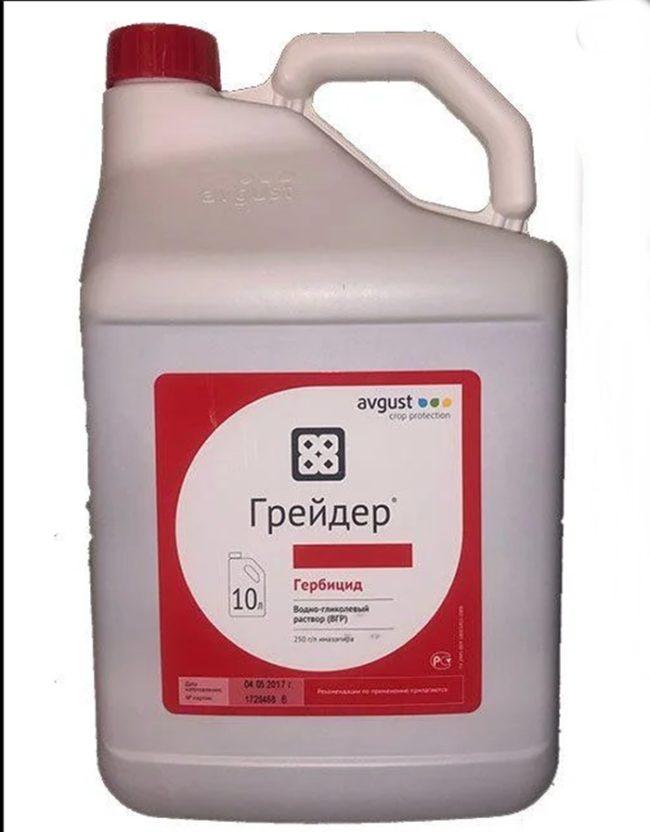
"Grader"
The active ingredient is imazapyr (250 grams per liter). It is used on non-agricultural sites. It is rapidly absorbed by plants and does not migrate in the soil.
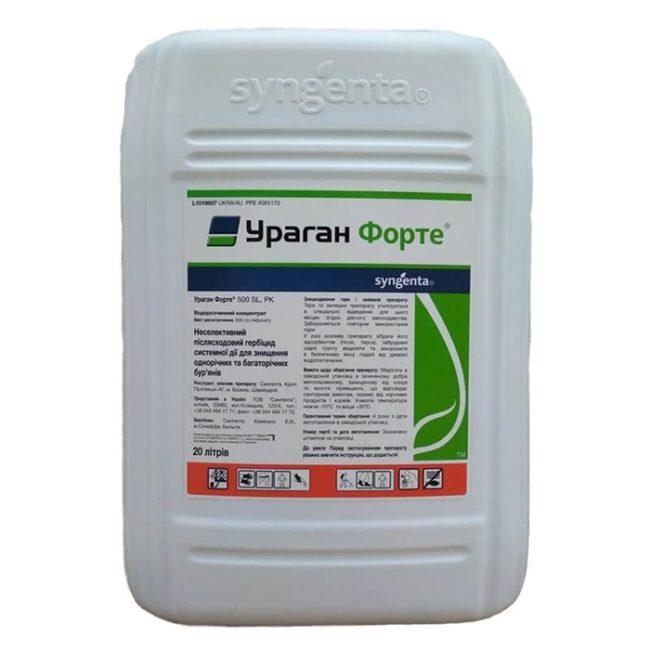
Hurricane Forte
A concentrated glyphosate formulation (500 grams per liter). Approved for use in gardens, orchards, and vineyards. A single treatment is required for complete weed control.
Rules for choosing the best product
Forty non-selective herbicides are available for professional farmers and home gardeners. When choosing a product for a specific area, it's important to find one that will cause the least damage to the soil and crops. It's also a good idea to familiarize yourself with the weed composition of the area. These products have consistent herbicidal activity against the weed groups specified in the instructions, and the manufacturer's recommendations should always be followed.
For areas with green spaces, choose a product with low phytotoxicity to avoid losing the plants. Systemic products are believed to be more harmful to beneficial flora than contact ones.
Important: agronomists recommend a comprehensive approach to weed control, using mechanical methods (weeding, mulching, and covering with film) along with herbicides.

Safety precautions
Most approved herbicides belong to hazard class 3 and are used according to the instructions. Safety precautions for spraying these products require:
- Use the medications in the dosages specified by the manufacturer – increasing the concentration will not improve the result.
- Treatment is carried out in calm, dry weather within the temperature range specified in the instructions.
- When working, wear protective clothing—a mask, gloves, goggles, and hair covering. After spraying, wash your clothes with detergent and take a shower.
- Cultivated crops on the site are carefully covered. Low-power sprayers with a weak stream are used to apply herbicides.
After spraying herbicides, do not work on the area for the period specified in the instructions. Dead weeds are collected and burned.
Non-selective herbicides have a wide range of applications, but they should be used with caution in areas with cultivated vegetation. When used correctly, they will clear the soil of weeds and allow the area to be repopulated with healthy and attractive crops.