
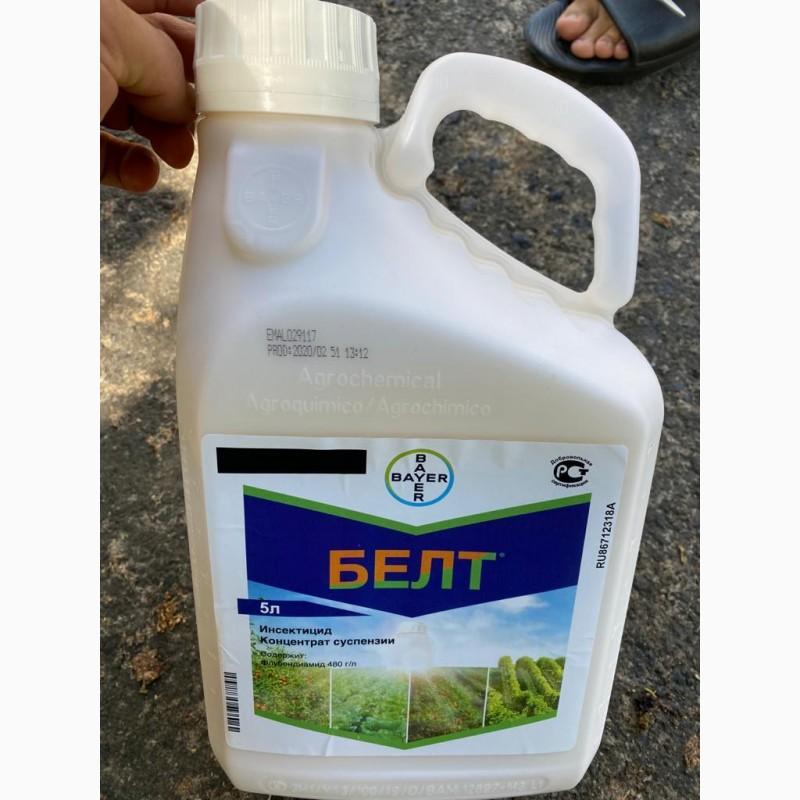
"Beltom" is an insecticide with a contact and stomach effect. It can be used to control the caterpillars of lepidopteran pests, thereby protecting vegetable and fruit plants. The product contains an active ingredient belonging to a new chemical class. It acts quickly and provides a long-lasting protective effect.
Composition and release form
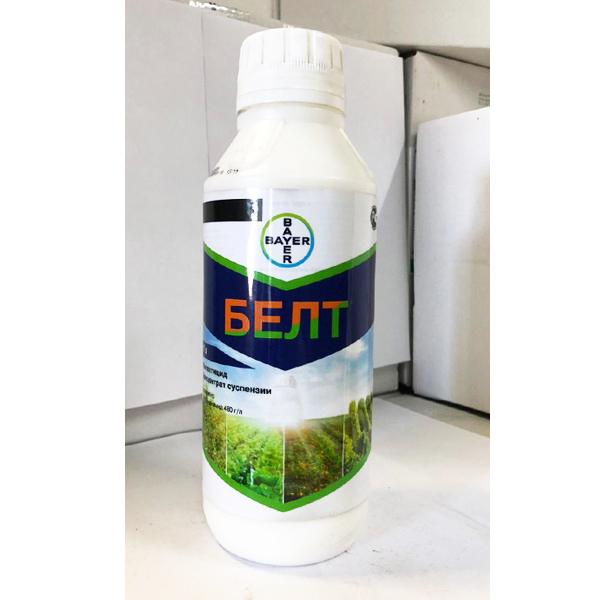
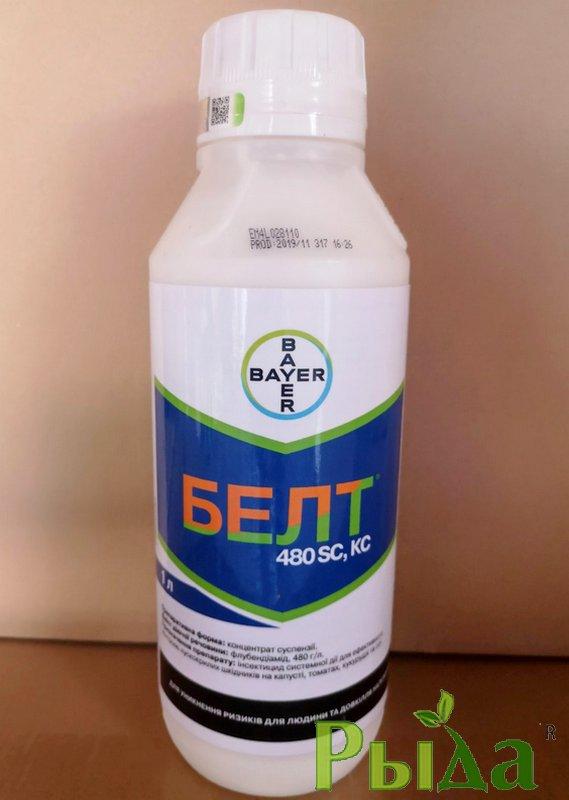
The drug is a single-component product available as a highly concentrated suspension. Its active ingredient is flubendiamide, a member of the phthalic acid diamide class. One liter of Belt contains 480 grams of the active ingredient.
The product has a systemic effect and is classified as an intestinal and contact insecticide. It is available in 1-liter plastic containers. Instructions for use, including instructions for use, are included, describing the product's properties, application guidelines, and safety precautions.
Operating principle and purpose
The insecticide's mechanism of action is linked to its composition. It contains a high concentration of a new substance, flubendiamide. This agent belongs to the chemical class of phthalic acid diamides. It activates ryanodine receptors and regulates the muscle and nerve activity of pests.
Ryanodine receptors regulate intracellular calcium channels, which control muscle contractions in pests. However, after exposure to flubendiamide, the ryanodine receptor remains open, causing an uncontrolled release of calcium ions.
As a result, the insect's feeding immediately stops and paralysis occurs, resulting in the death of the pest. The effect of the treatment can be seen within 1-2 hours after spraying the plants. It takes approximately 2 days for the area to be completely cleared of the pests.
The product can be used to control caterpillars on fruit trees, tomatoes, grapes, cabbage, and eggplant. The product penetrates the pest's body through direct contact or by ingesting treated plant fragments.
By using Belta you can get rid of the following parasites:
- leaf rollers;
- codling moths;
- cabbage moth;
- cotton bollworm;
- tomato leaf miner;
- white butterfly;
- cabbage moth;
- grape leaf roller.
When the instructions are strictly followed, the product is not phytotoxic. Therefore, experts strongly recommend against increasing its concentration. The product can be used in a wide temperature range—from 15 to 40 degrees Celsius—without reducing its effectiveness. Furthermore, the product is resistant to washout by precipitation.
The Belt insecticide has the following advantages:
- high efficiency;
- intestinal-contact mechanism of action;
- long-lasting protective effect and short waiting period;
- resistance to precipitation;
- absence of development of resistance and phytotoxicity;
- reducing the number of parasites in the next season;
- possibility of use for the production of tank mixtures with other substances.
Rules for using the insecticide "Belt"
When treating plants, use only fresh working solution, which should be stored for no more than 24 hours. Spraying should be done in dry, windless weather. Work should be performed early in the morning or after sunset.
To make a working solution, it's recommended to mix one-third of the required volume of liquid with the required amount of emulsion. Stir the mixture constantly. Then add the remaining water and mix thoroughly again.
The dosages of the drug are given in the table:
| Amount of concentrate, milliliters | Cultures | Pests | Working solution consumption, liters per 1 hectare | Protection period (number of treatments) |
| 300-400 | Fruit trees | Codling moths and leaf rollers | 600-1200 | 21 days (2) |
| 300-400 | Vineyards | Grape leaf roller, cotton bollworm | 500-1000 | 21 days (2) |
| 100-150 | Tomatoes | Cotton bollworm, tomato leaf miner | 200-400 | 7 days (3) |
| 100-150 | White cabbage | Cabbage scoops, moths, whites | 200-400 | 7 days (3) |
Apple trees are recommended to be treated for the first time when the ovary reaches 1-15 centimeters in size. The second application is done during the fruit ripening stage. Grapes are recommended to be treated when the bunches close, and the second application is done during the ripening stage. Cabbage should be sprayed during head formation, and then again after three weeks. Tomatoes should be treated during flowering and fruit ripening.
Precautionary measures
The insecticide is classified as hazard class 3 for humans, meaning it is moderately toxic. The working solution should be prepared in special areas located away from living spaces. Plants should be treated in protective suits. Eating, drinking, and smoking are prohibited while handling the product.
Compatibility
Belt is suitable for tank mixing. It can be mixed with many insecticides and pesticides. However, compatibility testing is required before use.
Storage terms and conditions
It is recommended to store the substance in designated, ventilated warehouses. It should be kept in sealed, original packaging. Such areas should be located away from residential buildings and agricultural structures. The product can be used for three years from the date of manufacture.
Analogues
There are no exact analogues of the active substance.
Belt is an effective insecticide that helps quickly eliminate parasites. To ensure the desired effect, it's important to use it correctly.