
You can diversify traditional canned cucumbers with other vegetables. Tomatoes, cabbage, and bell peppers are all suitable for assorted varieties. But there are also many recipes for cucumbers and zucchini for the winter. These vegetables are similar in structure and growth habits. When cucumbers and zucchini are planted next to each other, cross-pollination occurs, resulting in strange hybrids. Cucumbers and zucchini combine beautifully in a single jar, complementing each other perfectly.
Secrets to pickling cucumbers and zucchini for the winter
Cucumber harvests are often limited, so zucchini is often substituted. Pickled, they're just as tasty and healthy, and perfectly suitable for canned consumption. They can be added to salads and vinaigrettes. They complement any side dish.
Zucchini and cucumbers should be pickled young, so that the seeds are still immature, small, and tender. It's best to place the chopped fruit in jars to ensure they marinate better.
Jars of pickled vegetables often explode, so it's important to be especially careful when sterilizing containers. Pickled vegetables will last longer if you choose the right ingredients for the pickle. Fruits should be undamaged, unrotted, and thoroughly washed before placing in the jars.
Spices and aromatic herbs are always added to marinades to enhance the flavor of vegetables. Both cucumbers and zucchini are acid-free and bland, while garlic, parsley, and dill help improve their quality.
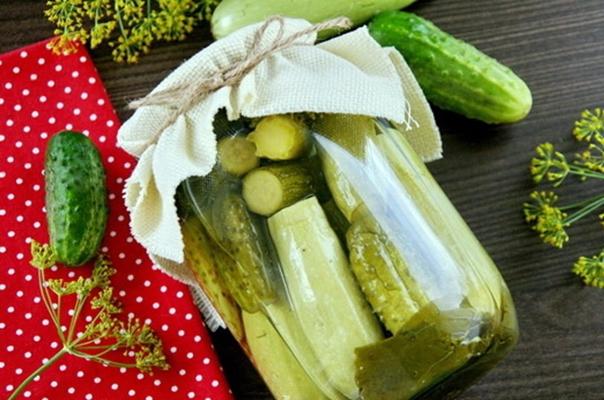
Requirements for the selection of main ingredients
Canning any type of vegetable is not recommended. There are special types of cucumbers for pickling. They should be:
- with a dense, tough skin;
- up to 10 centimeters in size;
- with black spikes;
- covered with dark or light green skin.
Thanks to the black spines, the surface of cucumbers is porous, which helps the brine penetrate the fruit faster.
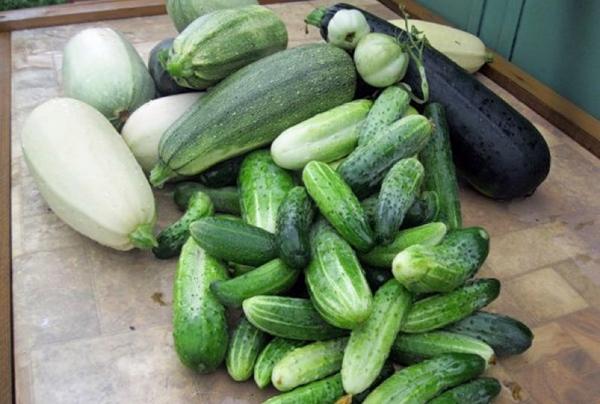
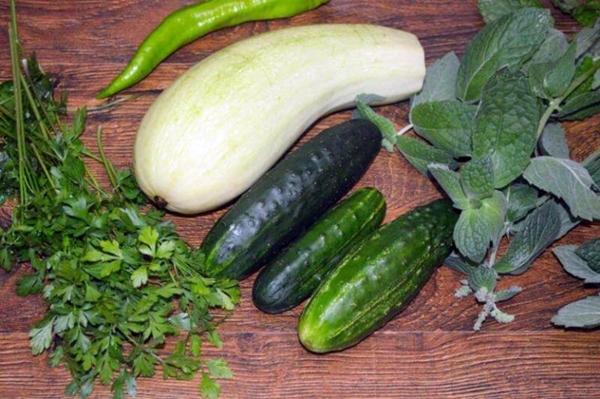
For pickling, select small zucchini with unripe seeds. The skin should be thin and tender. Zucchini is best for pickling. It doesn't grow to enormous sizes and is similar in appearance to cucumbers. White-skinned zucchini can also be used, but only if it's 20 centimeters (8 inches) in size. The quality of zucchini is determined by the whiteness and density of the flesh. It should be shiny and firm.

The benefits of combining cucumbers and zucchini are enormous. Zucchini is rich in ascorbic acid, a mineral essential for the body. Therefore, this vegetable combination is beneficial for those with weakened immune systems. And in early spring, pickled vegetables are a great source of vitamins and minerals.
Sterilization of jars
To ensure successful canning of cucumbers and zucchini, you need to properly prepare the jars for the pickled product. In addition to thoroughly washing the jars, they also need to be sterilized. This should be done immediately before processing the vegetables.
In boiling water
The simplest sterilization method is to boil the jars. To do this, take a large enamel saucepan and fill it halfway with warm water. Place the canning jars in the saucepan, neck down. Place the saucepan on the stove and bring the water to a boil. Boiling time for glass containers should be at least 10-15 minutes.
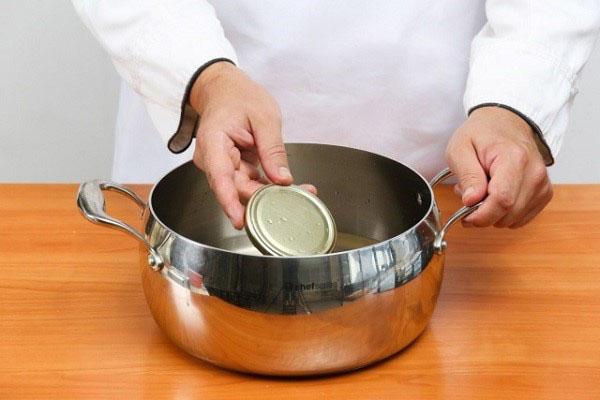
After the time has elapsed, remove the jars from the pan with a towel and place them upside down on a sterile towel. Allow the moisture to drain completely.
Another method involves filling the jars one-third full with boiling water. Pour it in a thin stream, spoonful at a time, into the jars, which have been thoroughly rinsed with baking soda. This will prevent the jars from bursting from sudden temperature changes. Then, cover the jars with a lid and let them sit for 10 minutes. After scalding the sides of the jars, drain the water and turn the jars upside down on a towel.
Ferry
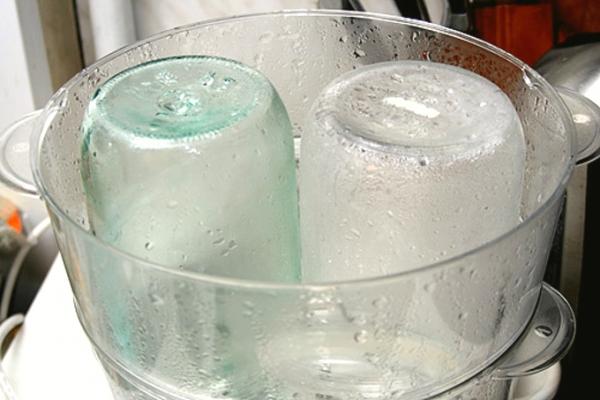
Steaming is carried out using a saucepan and a colander or mesh lid. A kettle will also work.
Bring the water in a saucepan to a boil and place a rack with glass jars on top. Steam the jars according to their volume:
- half a liter - 5 minutes;
- up to 1 liter - 8 minutes;
- 2-liter - 10;
- 3 liters - 15 minutes.
The sterilization container is also placed over the opening of the kettle where the water is boiling. Small ones are placed over the spout.
In the oven
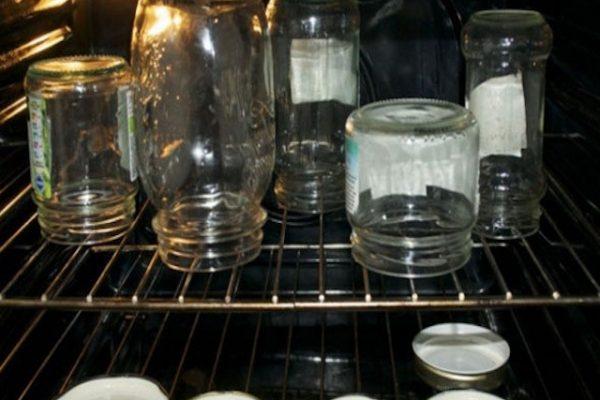
You can sterilize several jars at once in the oven. Place the jars upside down on a clean baking sheet and turn on the oven at 150 degrees Celsius. Leave the jars in the oven for 5 to 25 minutes, depending on their volume. After sterilizing, turn off the oven and open the door to allow the jars to cool slightly. Carefully remove them and begin filling them with vegetables.
How to pickle zucchini and cucumbers in one jar
Preserving cucumbers and zucchini in a single jar is done in the usual way. Whether or not the mixture needs to be sterilized depends on the recipe chosen.
Classic recipe
For pickling, take 2 or 3 small zucchini and half a kilogram of cucumbers. You can't pickle vegetables without:
- bay leaf;
- 50 grams of sugar;
- salt - 100 grams;
- 2 heads of garlic;
- vinegar in 80 milliliters;
- umbrella of dill;
- horseradish leaf.
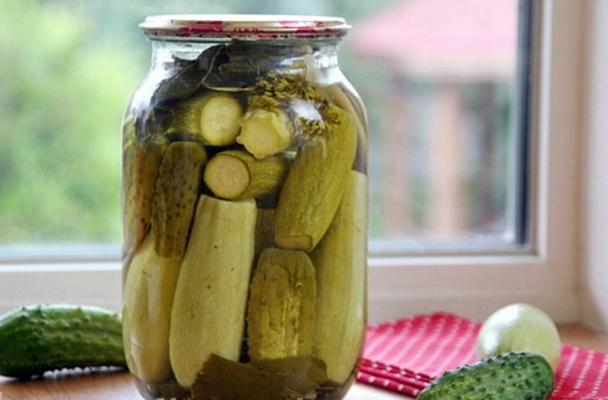
All ingredients are calculated for a 3-liter jar. 1.5 liters of water is enough for the marinade.
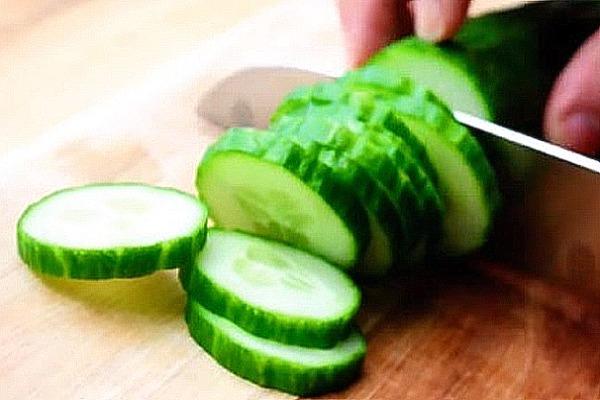
Canning begins with preparing the cucumbers and zucchini. Wash them thoroughly. Then, begin slicing the vegetables into rounds or strips. Use a stainless steel knife for this. The pieces are placed in a liter or two-liter jar. It's important to leave as little space as possible in the jar after placing the cucumbers and zucchini slices. Be sure to add aromatic herbs and spices along with the vegetables.
If you're using bunches of celery or parsley, skip the dill. This aromatic herb alone is enough to add a touch of sophistication to the canned vegetables. Garlic adds a piquant, sharp flavor to the marinade. Onion lovers can add onion rings or chopped green onions. Then pour boiling water over the mixture and let it sit for 10 minutes, covered with lids.
Delicious preserves are created by adding blackcurrant leaves, mustard seeds, and black peppercorns to the marinade. Sliced carrots add a distinctive flavor to the pickled vegetables. Crispy cucumbers are made with horseradish leaves or pieces of spicy food.
Pour the hot marinade over the prepared vegetables in the jar, adding 9% table vinegar.
To better preserve the prepared food, place the jars with the vegetable mixture in a sterilizer.
Without sterilization
You can pickle vegetables in a simpler way. Place the following in pre-sterilized jars:
- peeled and cut into circles or sticks zucchini, 2 is enough;
- cucumber slices - 0.5 kilograms;
- dill umbrellas;
- 3 allspice peas;
- carrot sticks - 100 grams;
- mustard seeds.
Take a look Also
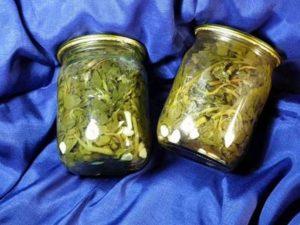
If you want to add a spicy kick, add strips of horseradish root. Prepare the marinade by adding 60 grams of salt and 70 grams of sugar per liter jar. Add the vinegar after removing the marinade from the heat. It's best to first soak the ingredients in boiling water for 5-10 minutes. This will ensure the cucumbers and zucchini retain their vibrant green skin. Only then, after draining the water, can you use the boiling marinade. Roll up the jars and wrap them until they cool completely.
Expiration date and storage rules for preparations
Canned cucumbers and zucchini don't keep for long. They should be consumed within the winter. To preserve them until spring, it's best to store the jars in a cool basement or cellar where the temperature stays between 8-10 degrees Celsius. It can be cooler, but not below 0 degrees Celsius. Humidity is also important for preserving the preserves; 70-75% is ideal.
Housewives need to constantly monitor the condition of the preparations. Avoid vegetables stored in containers with bulging lids. The product is also spoiled if the brine has become cloudy. Such canned goods can easily cause poisoning.
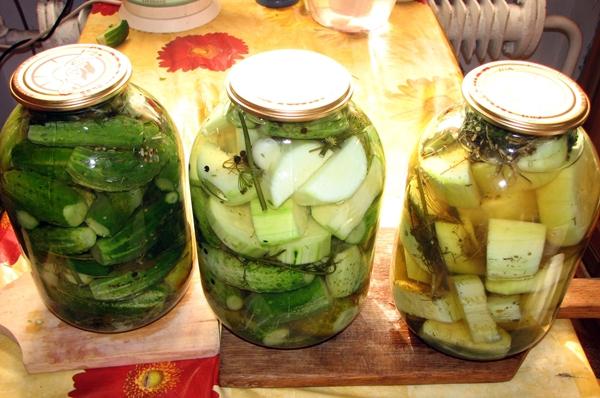
Rusty lids on jars of cucumbers and zucchini are a sign of high humidity in the storage area. The vegetables are still edible, but their flavor will be substandard. Zucchini and cucumbers become flabby and bland with prolonged storage, despite the spices in the marinade.
Related posts:
 How to cook fried zucchini with garlic for the winter, finger-licking good recipes and without sterilization
 TOP 20 simple recipes for pickled zucchini for the winter
 Amazing recipes for zucchini in tomato sauce for the winter, you'll lick your fingers, with and without sterilization
 Delicious step-by-step recipes for zucchini pickled like mushrooms for the winter
 TOP 13 delicious recipes for spicy zucchini for the winter
 6 recipes for canned zucchini with chili ketchup for the winter with and without sterilization
 Step-by-step recipes for pickled zucchini "like milk mushrooms" for the winter in jars
 How to properly plant cucumber seedlings in a greenhouse and care instructions