
- Suitable varieties
- When can cucumber seedlings be planted in a greenhouse?
- Greenhouse preparation
- Preparing seedlings
- How to properly plant cucumbers in a greenhouse
- Into the greenhouse beds
- Into the "warm" beds
- In pots
- In banks
- Into the pie
- Further care
- Top dressing
- Watering
- Loosening the soil
- Ventilation of the greenhouse
- Garter
- Temperature conditions
- Diseases and parasites
People always want to try vegetables and greens early, especially those living in northern regions. That's why they try to plant cucumber seedlings in a greenhouse to get the first fruits in early summer. Preparing the greenhouse, seedlings, and proper vegetable care are essential for this.
Suitable varieties
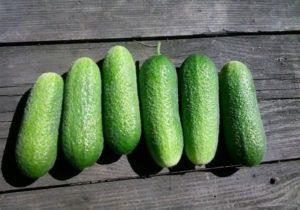
For indoor growing, self-pollinating cucumber hybrids are recommended. Parthenocarpic varieties, which produce only female flowers, are ideal. Planting these varieties will eliminate the need for pollination of cucumber flowers.
The following are grown under film coverings:
- The super-early Suomi F vegetable ripens 38 days after germination. The fruits are pimply, dark green with light stripes. They grow to 4-6 centimeters long. They have crisp, non-bitter flesh.
- The parthenocarpic Valaam cucumber thrives in cool climates. Its robust stem has few shoots, and 5-6 cucumbers form at a single node. They have large bumps and a waxy coating. It is prized for its versatility.
- The Orpheus variety produces finely tuberculated fruits, 12 centimeters long, weighing 110 grams. The growing season for this vegetable plant is 36-38 days.
- The fruits of the Amur variety are excellent for transportability, marketability, and superior flavor. This hybrid tolerates heat and temperature fluctuations.
- An early-ripening variety, Emerald is prized for its vigorous, medium-climbing stems. These cucumbers thrive in cool climates. The long, 16-centimeter cucumbers are suitable for fresh eating and canning.
- The long-bearing Romance variety delights with its excellent-tasting cucumbers. The dark green fruits are covered with white hairs.
- Alex gherkins yield up to 25 kilograms per square meter. Besides its high yields, this variety is suitable for pickling, marinating, and eating fresh.
All cucumber hybrids for greenhouses should be planted using seedlings grown at home.
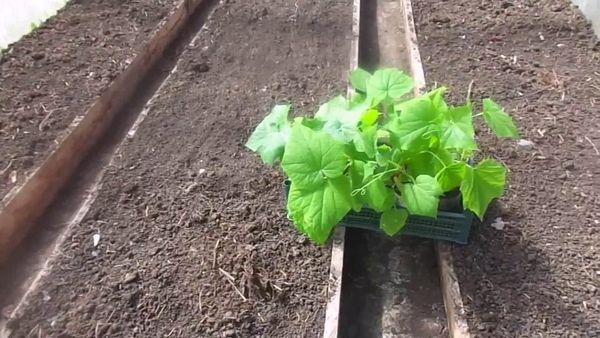
When can cucumber seedlings be planted in a greenhouse?
Cucumbers are one of the main crops grown in a greenhouse. They can be planted to produce fresh vegetables in late fall, winter, and early spring. However, this requires that the greenhouse be heated and the air temperature maintained at 20-25°C (68-77°F). Slight fluctuations of up to 5°C (5°F) are acceptable. Humidity should be maintained at 70-80%.
While cucumber seedlings for the fall and winter season are sown in the first ten days of July, for winter, they are sown between January 10th and 15th. For spring harvests, seedlings are prepared starting in late March.
Vegetable seedlings are transplanted to a permanent location at 25-30 days of age. They are planted in a regular greenhouse in April-May.
Greenhouse preparation
Greenhouses are designed for growing early vegetables and their seedlings. Due to sufficient sunlight, abundant carbon dioxide supply, and constant warming of the soil from below, conditions for vegetable crop development in greenhouses are favorable.
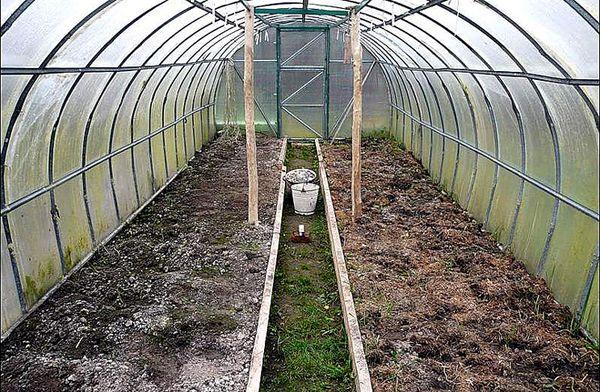
Before transplanting the seedlings, prepare an unheated greenhouse by filling it with manure. The organic material is heated 7-15 days before transplanting the cucumber seedlings. To do this, stack the manure in piles 1.5 meters high and 3 meters wide. Dig holes and fill them with hot water. Mix the manure to ensure heat reaches all layers. Then, fill the greenhouse along the walls with it. After 3-4 days, when the layers have settled, add soil. To prevent fungal growth, dust the manure with wood ash or slaked lime to a thickness of 3 millimeters.
The room's structures must be disinfected. They are treated with a solution of bleach or copper sulfate, and then bleached.
Preparing seedlings
Cucumber seedlings begin to be prepared a month before planting in the greenhouse. There are several methods for preparing seedlings, including sowing the vegetable in:
- wooden boxes measuring 50 x 30 x 70 centimeters;
- a peat pot or cup;
- sods.
Fill the boxes with a mixture of 2 parts turf and 1 part compost. Make 0.5-centimeter-deep furrows in the soil surface and scatter the cucumber seeds in them. Sprinkle the top with 8 millimeters of sand. This will prevent a hard crust from forming on the soil surface, preventing the seedlings from becoming infected with blackleg.
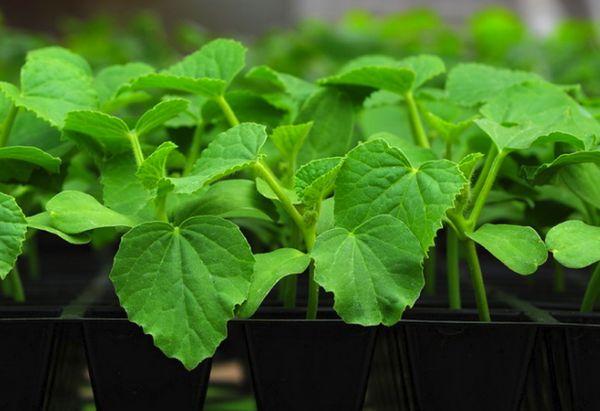
Add ammonium nitrate (8 grams), superphosphate (12 grams), and potassium salt (5 grams) to the pot with the nutrient mixture.
Growing cucumber seedlings in turf is an interesting option. They are harvested in areas where legumes and cereals were grown. The top layer is cut to dimensions of 8 x 7 x 8 centimeters. Turning the turf upside down, make a depression in the ground, place the cucumber seeds, and cover with soil.
Sprouted cucumber seeds should be sown in a cup and turf. Use damp moss, a napkin, or sawdust. The air temperature for germination should be 20-25 degrees Celsius. Once the sprouts appear, reduce the temperature to 18 degrees Celsius. Transplant the cucumber seedlings when one or two true leaves appear. Individual containers or a greenhouse are suitable for this procedure.
How to properly plant cucumbers in a greenhouse
Cucumbers are ready for transplanting into a greenhouse when the stems have 5-6 leaves, tendrils, and a strong stem. Now it's time to decide on a planting method. This depends on the greenhouse size, type of structure, and growing conditions.
Into the greenhouse beds
The beds are prepared in the greenhouse in advance. The soil should be nutritious, disinfected with a potassium permanganate solution or boiling water. After the preliminary work, the soil should warm up and become saturated with beneficial microorganisms.
It's best to plant seedlings in peat pots. Use a staggered arrangement. Ideally, place seven plants per bed. After transplanting, water the cucumbers with room-temperature water and cover them with plastic wrap on arches. Then, stop watering for a week. After 14 days, you can fertilize the seedlings with mullein diluted 1:20, and remove the cover.
Into the "warm" beds
If the polycarbonate greenhouse is unheated, you can speed up cucumber growth by creating "warm" beds. Layers of manure are added to the trenches 15 days in advance, and they are watered with hot water. An EM preparation can be sprinkled on top to promote decomposition. Then, cover the beds with plastic wrap. After 6-7 days, prepare the trenches, filling them at the bottom with compost or humus, then with nutrient-rich soil. Water them and cover them again with plastic wrap.
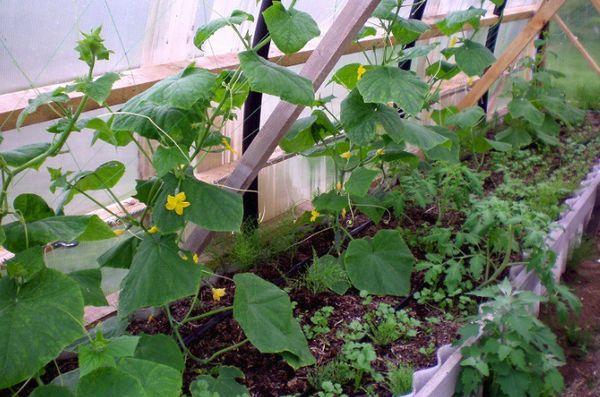
Cucumbers should be planted in prepared warm beds either with sprouted seeds or seedlings.
In pots
Small containers are suitable for growing vegetables. You can plant cucumber seeds in paper cups or eggshell halves. Seedling development will be successful when the roots are nourished by a highly organic medium. This is achieved by mixing sawdust with peat moss at a ratio of 1:3, adding vermicompost.
Before planting in the greenhouse, lightly crush eggshells and paper cups. Water the cucumbers generously to promote root growth. Mulch the moist soil with peat, humus, or dry soil.
In banks
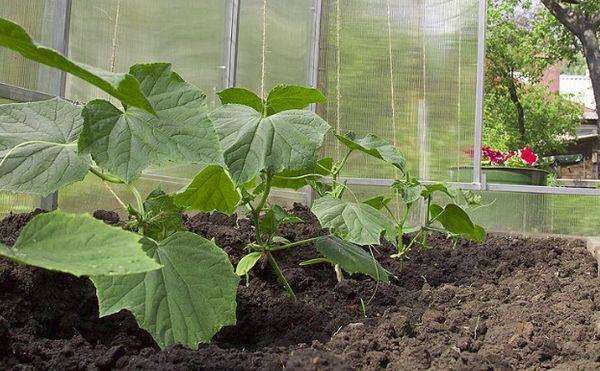
The time it takes for cucumbers to emerge is reduced by planting the seedlings in jars. These are 5-liter plastic bottles with the bottom and top cut off. The containers are dug in 5 centimeters and filled with fertile soil mixture. Plant the cucumbers after the soil has warmed up. A trellis is installed nearby.
Into the pie
If your greenhouse is small, you can use the "pie" method of planting cucumbers. To prepare the layers, dry potato peelings and mince them. Before planting, soak the peelings in water. Pour some of the mixture into the hole, covering it with soil. Repeat the process twice.
All that remains is to make holes and place cucumber seedlings there.
Further care
Once the cucumber seedlings have been transplanted, they need to be properly cared for, especially since cucumbers don't transplant well. It's best to water and fertilize the plants regularly. For successful fruiting, vegetable plants require appropriate temperatures and humidity.
Top dressing
Cucumber plants require adequate nutrition, which they obtain from the soil. This can lead to depletion of the greenhouse soil. Fertilizer application instructions are as follows:
- The first time, water the cucumber bushes with a solution of mullein and mineral fertilizer. To avoid burning the leaves and roots, the organic matter concentration should not exceed 1:8.
- Every week, water the beds with mineral fertilizer, taking 15 grams of ammonium nitrate, 40 grams of superphosphate, and 10 grams of potassium chloride per bucket of water.
- During the period of cucumber appearance, the concentration of minerals doubles.
- It's helpful to regularly apply foliar fertilizer to cucumber plants during cloudy weather. A suitable solution is "Kemira," 5 grams per liter of water.
Fertilizers will speed up the appearance of green fruits and improve the quality of the fruit.
Watering
Water the plants in the greenhouse generously, 2-3 times a week. It is necessary to maintain high humidity in the room by spraying cucumbers in the morning or evening. When cucumbers begin to bloom, watering is reduced. This results in more female flowers appearing.
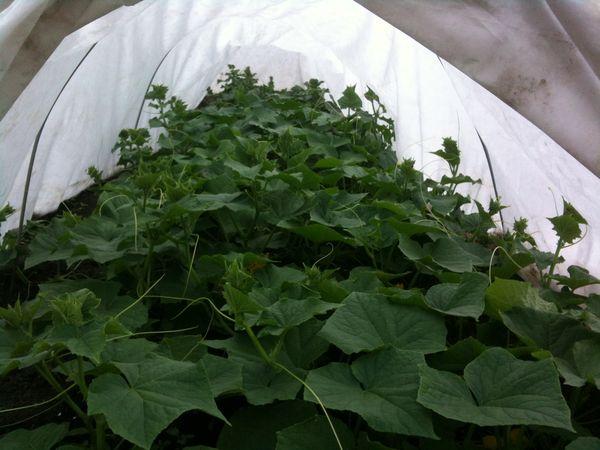
It's best to water the plants in furrows. To do this, hill the plants along the rows, creating a ridged surface. This type of watering prevents the cucumber roots from rotting.
To moisten cucumbers, warm the water to 25 degrees Celsius. Soak it so that the entire soil layer of the bed is moist. One bucket of water is required per square meter of shelf space.
Loosening the soil
After planting cucumbers, loosen the soil weekly. After three times, check the soil's permeability. If water remains on the surface, loosening is necessary.
Loosen the soil carefully, to a depth of 3-4 centimeters. For larger plants, you can poke holes in the soil with a pitchfork, 5-6 per square meter of the bed.
When white bumps appear on the cucumber stems, they are hilled up. This creates a new root system for the plant.

Ventilation of the greenhouse
Relative humidity in greenhouses should be maintained at 80-90%. To increase air exchange, ventilate the greenhouse during cloudy weather. This can be done by opening windows and doors. This will reduce the air temperature. After all, at 30°C (86°F) temperatures, pollen will be infertile, and cucumber flowers will fall off. This will lead to reduced fruiting.
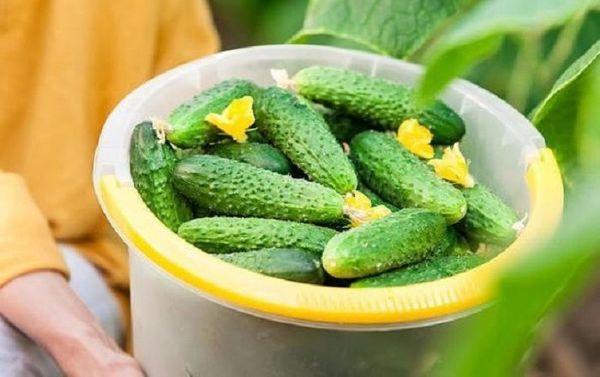
Increasing the carbon dioxide level indoors accelerates the ripening of cucumbers. It's a good idea to place barrels filled with mullein in the greenhouse with cucumbers, or to spread it between the rows.
Garter
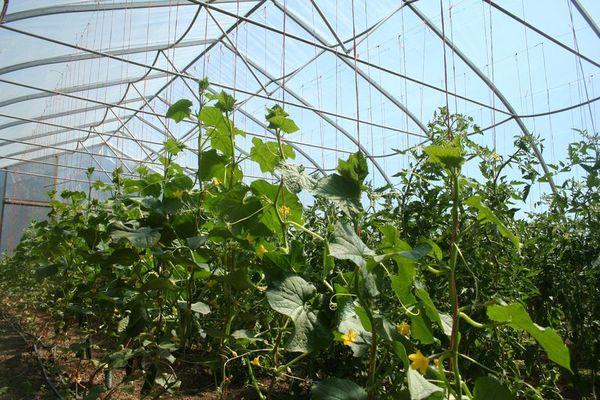
Plant vines need to be positioned vertically. Therefore, staking is essential. This is done by stretching a cord or wire at a height of 1.5 meters. Mesh nets are installed along the walls of the room. Cucumber vines are raised onto these nets, pinching the tops of the stems above the top cluster. Two to three leaves should remain above the top cluster to ensure adequate nutrition for the fruit.
Temperature conditions
This heat-loving crop requires high air temperatures, but no more than 29 degrees Celsius. The greenhouse must be kept warm at all times. Otherwise, fluctuations between hot and cool temperatures will cause the cucumbers to stop growing. Therefore, it's important to monitor the temperature regularly. Only a stable temperature will help the cucumbers produce fruit on time.
Diseases and parasites
Greenhouse plants are more susceptible to disease than cucumbers grown outdoors. Stuffy indoor conditions lead to the development of fungal infections, including anthracnose, downy mildew, and various rots.
The development of diseases can be determined by brown or white spots on the leaves and rotting of cucumber fruits. As the disease spreads, parts of the plant begin to dry out and the ovaries fall off. If any problems are detected, the affected cucumbers should be sprayed with:
- anthracnose - 0.4% copper oxychloride solution;
- powdery mildew - with sulfur-containing preparations;
- false mildew - "Fitosporin";
- gray or white rot - insecticides "Skor", "Hom".
Melon aphids are a pest that can be dangerous to cucumbers. They appear in midsummer, devastating the vegetable crop. They can be controlled by treating them with an infusion of red pepper and tobacco dust. Inta-Vir is a suitable pesticide.
Spider mites are detected on greenhouse plants by their fine webbing. They are controlled with Fitoverm.
To prevent diseases and pests, cucumber seedlings should be treated with Bordeaux mixture. When the spring weather warms, apply the first treatment, then two more, spaced 14 days apart.
Related posts:
 Description of unusual methods for planting and growing cucumbers
 Description of the best varieties of Chinese cucumbers, planting, growing and care
 How to properly plant cucumbers in open ground with seeds, and at what depth
 How to care for cucumbers in open ground from planting to harvesting
 TOP 30 best determinate cucumber varieties with descriptions
 Description of the best varieties of bee-pollinated cucumbers, rules for their formation and care
 How to plant cucumbers in open ground under film: timing and cultivation technology
 Why do cucumber leaves curl inward and what to do about it?
First, you need to decide on a cucumber variety. I only grow 'Orpheus' in my greenhouse. I've never encountered any diseases, and the fruits are juicy and flavorful. There aren't many similar varieties.