
- Determinancy as a property of a cucumber
- Advantages and disadvantages of cucumbers with limited vine growth
- What to consider when choosing determinate varieties
- Types of pollination
- Hybrids
- Ripening time
- Varieties and descriptions of hybrids of bush and short-stemmed cucumbers
- Shorty
- Microsha
- Baby
- Bush gift
- Bushy
- Hector F1
- Baby F1
- Buyan F1
- Grasshopper F1
- Chistye Prudy F1
- Cappuccino F1
- Climbing varieties
- F1 Idol
- Mizer
- Vyazovets
- Juventus F1
- Masha F1
- Wizard
- Hope
- F1 debut
- Strongman F1
- Dimka F1
- Vigora F1
- Cucumber crops without lateral shoots
- Artel
- Arshin
- Recommendations and tips for planting and growing
When choosing cucumber varieties, gardeners focus on taste, ripening time, and pollination requirements. Important characteristics of cucumbers include stem length and branching, which influence care and growing practices. Let's look at the advantages and benefits of determinate cucumber varieties, as well as some planting and care recommendations.
Determinancy as a property of a cucumber
Determinate means limited, translated from Latin. Determinate plants stop growing during development; the stem tends to grow only to a certain length. The vines of many popular (indeterminate) cucumber varieties stretch all summer, then stop growing for a while, then continue to grow longer.
Determination is a characteristic of cucumber varieties. Growth restrictions can affect different parts of the plant. Types of determinate cucumbers:
- bush;
- with one stem - the cucumber grows with one stem, practically without producing lateral shoots.
- Climbing - after reaching a certain length, the main stem no longer grows, only lateral shoots develop.
When purchasing cucumber seeds, consider how the stem will develop to ensure efficient planting and care, and to maximize yield.
Advantages and disadvantages of cucumbers with limited vine growth
Determinate cucumber varieties have many supporters and detractors. To determine whether these varieties are worth planting, let's look at the key characteristics of cucumbers with limited growth.
Advantages of determinate cucumber varieties:
- small size of the bush, which makes care much easier;
- ease of growing in a limited area of a summer cottage;
- simultaneous ripening, which is useful for preparations;
- high quality cucumbers - do not turn yellow, do not overgrow, tasty, fragrant, stored for a long time;
- cucumbers are good in any form;
- short growing season - due to this they rarely get sick, they simply don’t have time to get infected.
The life cycle of many determinate varieties is short; all fruits ripen within 2-3 weeks. The bush can be removed, freeing up space for greens or other crops. Many gardeners plant determinate varieties to prepare fruit during the abundant fruiting season.
Note: these cucumbers do not require staking, trellis building, or frequent, regular disease and pest control measures.
As we know, disadvantages are an extension of advantages. This is precisely the case with determinate varieties. The disadvantages include:
- lower yield than indeterminate brothers;
- rapid dying of the bush, short lifespan and fruiting period.
Any agriculturalist will tell you that when the ovaries are growing vigorously, plants require abundant, regular feeding, so constant and meticulous care during the growing season is required.
What to consider when choosing determinate varieties
When choosing short-stemmed cucumbers, consider the main characteristics of garden crops:
- hybrids or varieties;
- in what time frame can the harvest be obtained;
- The most important property of any plant is the method of pollination.
These characteristics help select varieties for greenhouses and open ground, as well as for convenient cultivation on balconies and in apartments.
Types of pollination
Bee-pollinated varieties are planted outdoors; if you plant these cucumbers in a greenhouse, you may not get a harvest. If varieties can be grown both outdoors and in a greenhouse, this is indicated on the packaging.
Note: Parthenocarpic species are suitable for any type of planting; they are convenient and do not require additional pollination efforts.
Hybrids
It's impossible to obtain seeds from hybrids. Gardeners who like to prepare their own seeds should avoid the "F1" label on the packages. This indicates a first-generation hybrid. Hybrid cucumbers have small seeds that are barely noticeable when eaten, and the plants are more resistant to diseases and pests.
Ripening time
Most determinate varieties ripen quickly and yield fruit quickly. Varieties are categorized according to the standard classification: early-ripening, mid-season, and late-ripening.
Varieties and descriptions of hybrids of bush and short-stemmed cucumbers
Let's look at the most popular cucumber varieties that have received positive reviews from gardeners. These include bush varieties and those with limited stem growth.
Shorty
This variety is suitable for outdoor cultivation and is insect-pollinated. It ripens in 40-45 days. The vines do not grow more than 35-40 centimeters. The cucumbers are medium-sized (9-10 centimeters), with thin, delicate skin and a sweet flavor. The fruits grow simultaneously within the node. The cucumbers are eaten fresh and for preserves.
Microsha
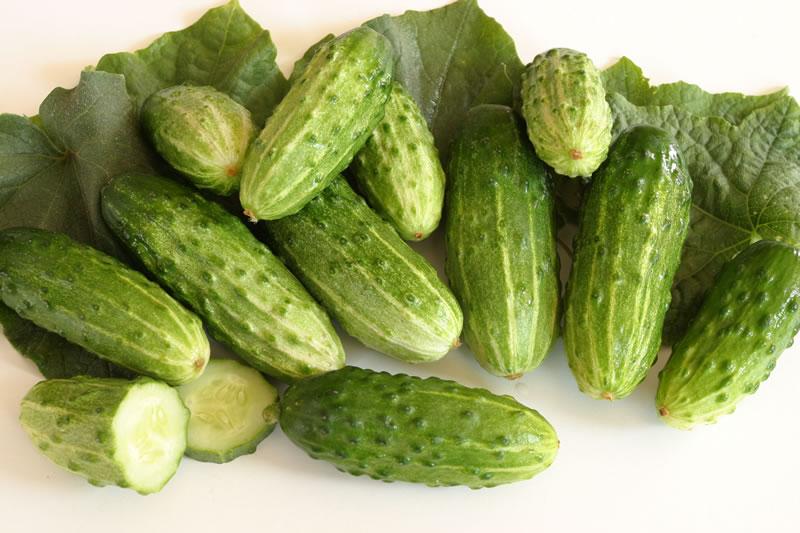
This variety is grown outdoors and pollinated by bees. It takes 46-50 days for fruit to appear. The cucumbers are ovoid and elongated, weighing 90-110 grams and having numerous tubercles and dark pubescence. They do not overgrow or turn yellow if harvested late. They can be used in any form.
Baby
This bush variety contains up to 6 ovaries per node; when grown outdoors, the vines don't grow longer than 30-50 centimeters. Up to 60 cucumbers are harvested per bush, with the entire crop being harvested within 2-3 weeks. The cucumbers are brightly colored, with whitish stripes, and are bumpy. When overripe, the skin becomes rough. They store well (up to 10 days) without losing the quality of the cucumbers.
Bush gift
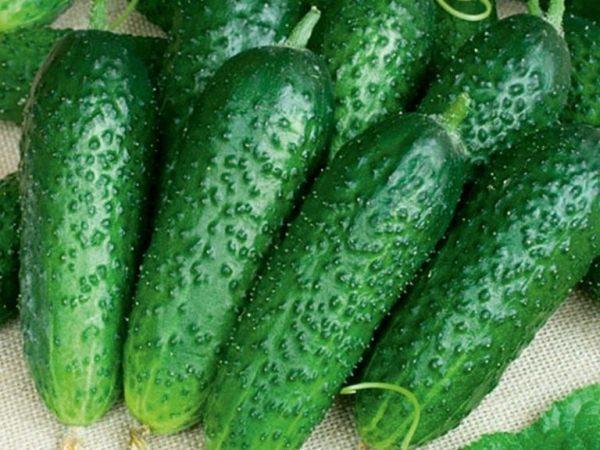
The cucumbers are round-elongated, with a few tubercles. They ripen in 47-53 days. They ripen evenly and do not turn yellow on the bush. They weigh up to 100 grams and are no more than 12 centimeters long. They have excellent flavor, and the flesh is dense and fragrant.
Bushy
This variety was registered back in 1980 and has remained popular with gardeners ever since. It's suitable for open ground cultivation and is bee-pollinated. The cucumbers are slightly elongated (up to 12 centimeters) with small longitudinal ribs, keeping well and transporting well. They have a crisp, slightly sweet taste. This crispness is retained in preserves, making them prized by gardeners.
Hector F1
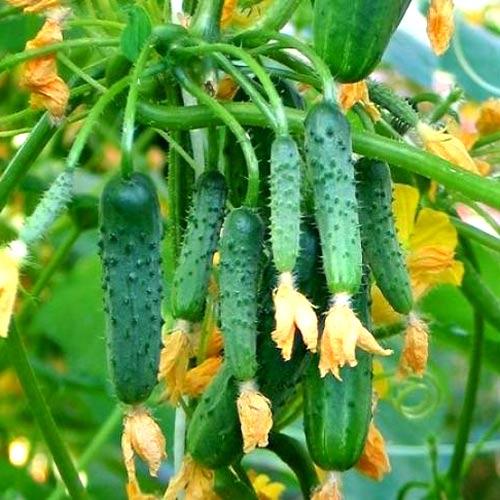
A Dutch-bred hybrid. Beautiful, dark-hued cucumbers are firm and smooth when cut. Productive – up to 4-7 kilograms per square meter. Ultra-early – ready in 30-35 days. Hector plants tolerate low temperatures well and are not susceptible to frost damage.
Baby F1
Small, wonderfully tasty cucumbers, without bitterness. Very fragrant and sweet. A parthenocarpic hybrid, the ovaries are clustered 3-4 per node. The cucumbers are small – 60-90 grams, 8-9 centimeters long. Suitable for planting in greenhouses and open-air. The first cucumbers are harvested after 40-50 days. The young cucumbers can be eaten in any way.
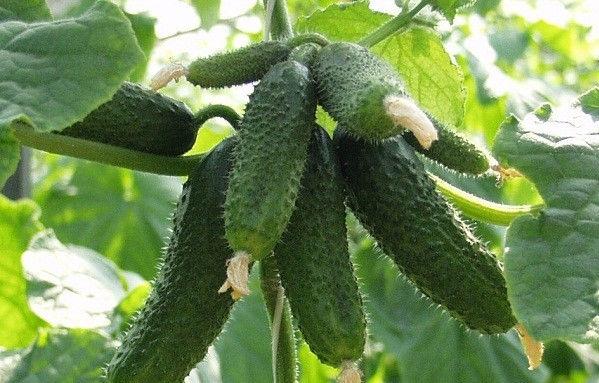
Buyan F1
A hybrid bred in the Moscow region, it ripens in 45 days. Suitable for greenhouse cultivation and open-ground planting. Buyan cucumbers are clustered in nodes of 3-7. The fruits are a distinct green color with lighter tips. The yield per square meter is 9-12 kilograms. The cucumbers are not bitter and have a pleasant, delicate aroma.
Grasshopper F1
A parthenocarpic hybrid with a short maturation period of 40 days. Nodes contain 2-6 ovaries. Kuznechik hybrid cucumbers must be harvested promptly; when overgrown, hollows form and the central part dries out. They are used fresh and for preserves.The fruits are slightly elongated, up to 15 centimeters long, weighing 90-110 grams. The surface is ribbed, with white stripes.

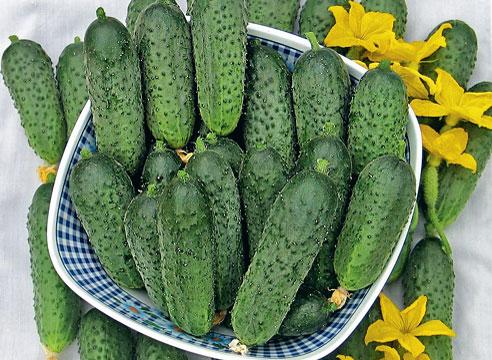
Chistye Prudy F1
The fruits grow to 10-12 centimeters, are smooth, uniform in shape and size, and have a sparsely bumpy surface. The Chistye Prudy hybrid tolerates shade well. The flavor is sweet, with a distinct cucumber aroma.
Cappuccino F1
The hybrid is grown in greenhouses and open ground. Cappuccino is enjoyed fresh and pickled. The cucumbers are 10-12 centimeters long, juicy and crisp in any form.
Climbing varieties
Many gardeners prefer this particular type of determinate cucumber—the stems twine but don't grow particularly long. Descriptions of these hybrid varieties indicate that they are especially good when harvested as pickles (3-5 centimeters) and gherkins (4-8 centimeters).
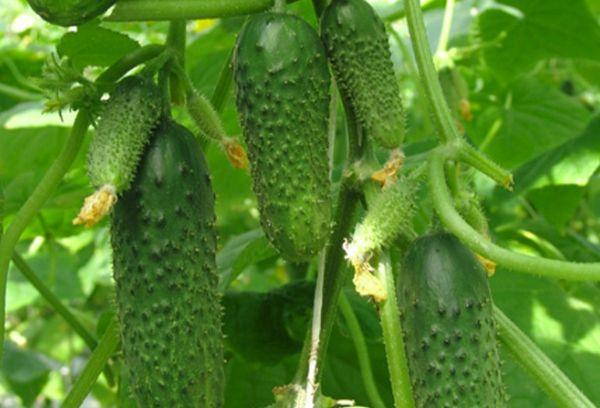
F1 Idol
A high-yielding hybrid resistant to most diseases. The cucumbers are short (10 centimeters), with large bumps and a pubescent texture. They retain their firmness and crispness when preserved.
Mizer
These small cucumbers grow no more than 8 centimeters tall and are round in shape. The cucumbers are densely covered with small bumps and are dark green in color, with white stripes at the tip. They ripen evenly.
Vyazovets
A bee-pollinated cucumber variety. Popular with gardeners who enjoy growing their own seeds. It's versatile. The cucumbers are dark, sparsely ridged, and up to 15 centimeters in size.
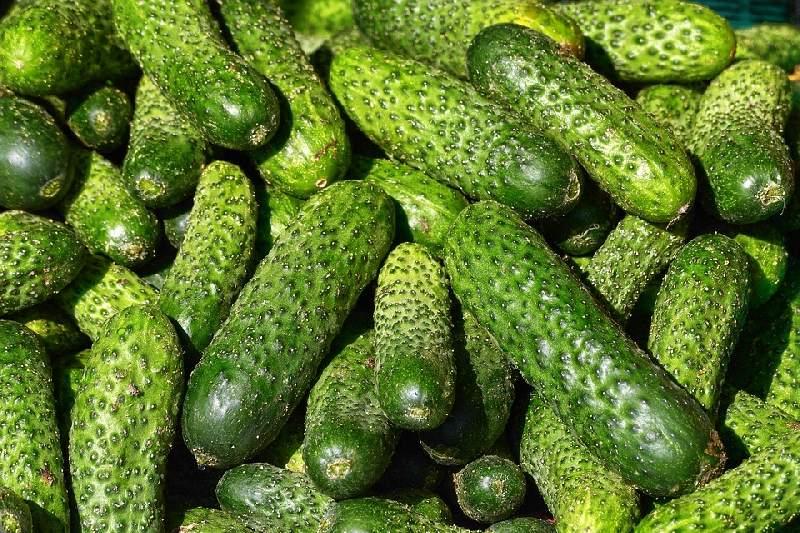
Juventus F1
The stem grows up to 1.5 meters. The fruits are elongated – 22-24 centimeters long, 4-4.5 centimeters in diameter, and weigh up to 260 grams. The cucumbers have excellent flavor, with no bitterness.
Masha F1
An early hybrid, self-pollinating. Up to 7 ovaries per node, yielding 10 kilograms per square meter. Grows well in greenhouses and open ground. The bumps are dense, covered with white fluff. If not picked in time, the flavor deteriorates, and the skin becomes rough. Cucumbers can be preserved for future use in any way, and are also delicious fresh.
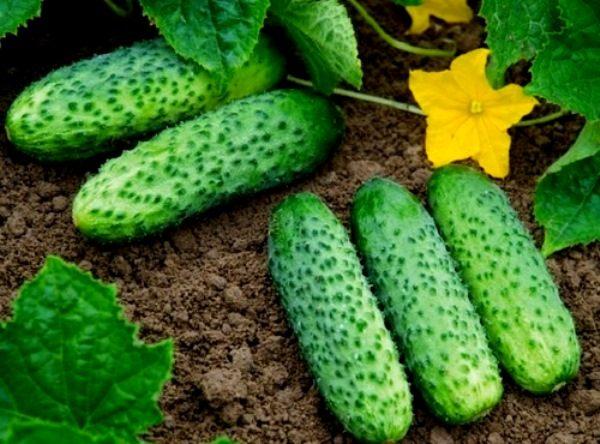
Wizard
These cucumbers have limited stem growth, are highly productive, and are grown commercially. They boast excellent flavor and are mid-season. The cucumbers are 7-10 centimeters long, sweet, and crisp.
Hope
An ultra-early cucumber variety with cylindrical fruits weighing 80-95 grams. Ovaries are produced in clusters of 3-7. Excellent flavor and the ability to be canned and pickled make the Nadezhda variety a popular and beloved variety among gardeners.

F1 debut
A hybrid with a limited-growth, short-vine stem. The cucumbers are bright green, with light stripes running from tip to center. The bumps are infrequent and unnoticeable. This high-yielding hybrid is grown in greenhouses, tunnels, and open-air systems.
Strongman F1
The cucumbers are cylindrical, 8-11 centimeters in diameter. The ovaries are arranged in nodes of 5-7. This hybrid is considered early maturing and tolerates all weather conditions without affecting yield. The cucumbers are used fresh and for preserves.
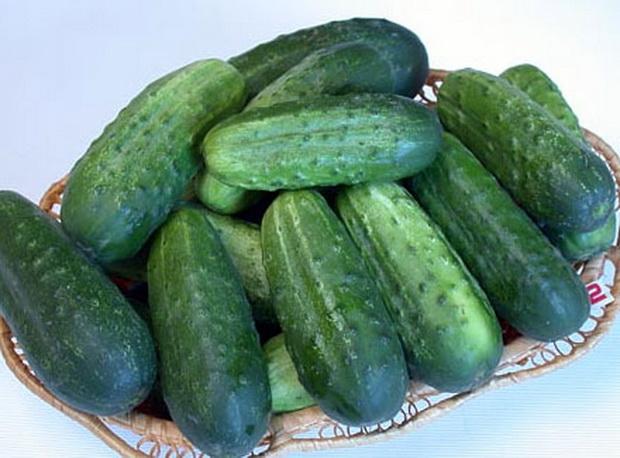
Dimka F1
Short cucumbers (7-9 centimeters) grow evenly, with all the fruits being the same size and appearance. They don't turn yellow or become overgrown if harvested late. The flavor is crisp, juicy, and free of bitterness.
Vigora F1
The first wave of fruiting occurs early, and the cucumbers continue to ripen until late autumn. The total yield is 10-12 kilograms per square meter. The cucumbers are 10-12 centimeters in size, firm, with small bumps, and weigh less than 100 grams.
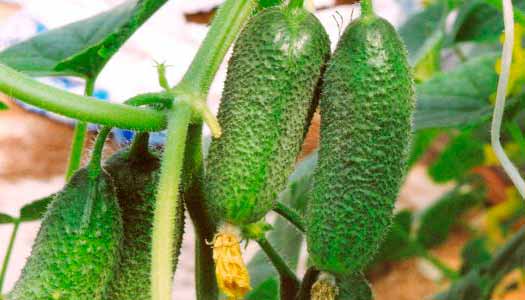
Cucumber crops without lateral shoots
Another type of determinate cucumber is a single-stemmed bush with no lateral branches. At the end of the season, they often form clusters of ovaries, growing in a bouquet, that is, an organized group of cucumbers.
Artel
This parthenocarpic variety produces its first cucumbers in 40-43 days. If there are many cucumbers, the stem does not grow more than 1 meter. Sometimes it stretches up to 1.5-2 meters and produces lateral shoots. Three to four ovaries are present at the nodes. Cucumbers are 9-12 centimeters in size, with small, frequent tubercles. Most of the fruit appears in the first 90 days of fruiting.
Arshin
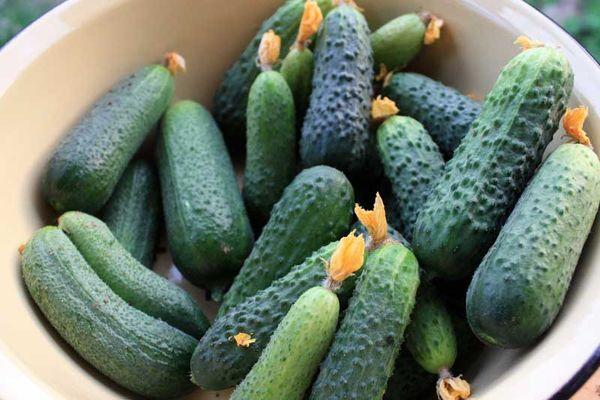
The fruits grow on a single stem, which often does not exceed 70-90 centimeters. The cucumbers are uniform—9-11 centimeters tall, weighing 90-120 grams, with infrequent bumps and white stripes on the surface.
Recommendations and tips for planting and growing
Determinate cucumber varieties are popular with gardeners, especially in regions with short summers. A quick harvest eliminates the need to spend until late autumn tending to the vines, building trellises, and shaping the stems. During colder weather, it's convenient to cover the small cucumber plant with a covering material.
Pre-planting soil preparation is essential for a good harvest. Determinate cucumber plants are planted closer together, so soil fertility improvement measures are taken.
Landing features:
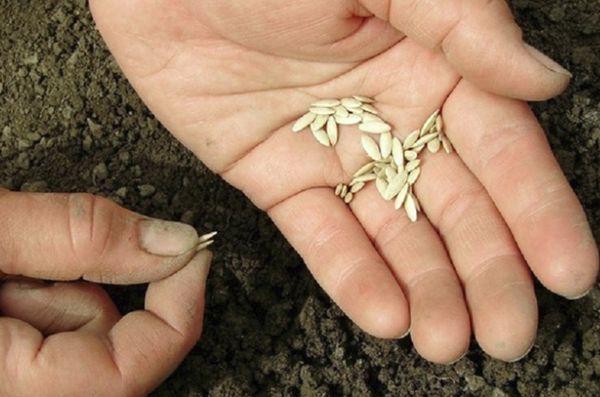
- soil preparation in autumn – adding manure, lightening with peat, treating with fungicides;
- sowing with seeds or pre-grown seedlings at a soil temperature of 18° and above;
- planting pattern: 30-35 centimeters between neighboring plants, 60 centimeters between rows;
- Wood ash is added to the holes.
At planting cucumber seedlings in open ground Provide warmth by creating a greenhouse. Covering also helps conserve moisture and reduce the need for watering.

Care for determinate cucumber varieties is normal:
- watering as it dries, with warm water in the morning and evening, it is better to use settled water;
- Excess moisture is harmful; stop watering during rainy periods;
- loosen the beds, trying not to damage the roots;
- Mulching retains moisture;
- Weeding is an essential part of care, as weeds spread diseases.
Determinate cucumber varieties are characterized by uniform ovary formation and cucumber growth. Fertilizing is a necessary part of care. During the green growth phase, 2-3 weeks after planting, apply nitrogen fertilizer (manure), followed by 2-3 additional applications of phosphorus, potassium, and complex fertilizers.
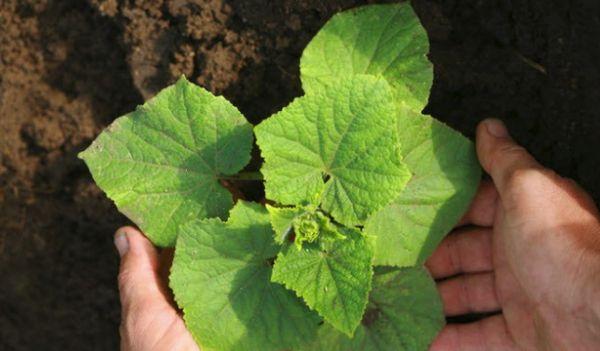
Growth stimulants (Bigus, Baikal EM-1, Zircon) and natural fertilizers such as yeast and bread ensure healthy cucumber development. Growth stimulants boost the immunity of cucumber plants and protect them from pests and diseases. Although most determinate cucumber varieties are less susceptible to fungal diseases, gardeners treat their plants with fungicides as a preventative measure.
Cucumbers should be picked from the bushes immediately upon reaching ripeness to give the plant strength to grow the remaining ovaries.
Determinate varieties are popular with gardeners with small plots and those who don't have the time or energy to construct trellises or support long vines. Most cucumber varieties and hybrids are indeterminate. However, finding a good variety is easy among cucumbers with short stems. Many gardeners have been growing bush and other short-stemmed cucumbers for many years and are satisfied with the results.
Related posts:
 TOP 30 best varieties of cold-resistant cucumbers with descriptions and characteristics
 Top 50 Best Cucumber Varieties for Polycarbonate Greenhouses with Descriptions
 Description of the best varieties of pickling and barrel cucumbers for greenhouses and open ground
 Description of the best early-ripening cucumber varieties for open ground and greenhouses
 When to plant cucumbers in open ground in Siberia, how to grow them, and the best varieties
 Description of the best, most productive and new varieties of cucumbers for 2025
 35 Best Powdery Mildew-Resistant Cucumber Varieties with Descriptions
 TOP 40 best late-season cucumber varieties for open ground with descriptions