
- Things to take care of
- Selecting a variety
- Seed preparation
- Preparing the soil mixture and planting
- How to properly plant cucumber seedlings
- Timing of planting seedlings
- Soil preparation
- Suitable conditions
- Choosing a landing site
- Scheme for transplanting seedlings into open ground
- Caring for plants after planting
- Watering
- Top dressing
- Pinching
- Garter
- Possible problems
- Conclusion
Many gardeners plant cucumber seedlings in open ground to enjoy ripe cucumbers in the summer. Not all novice gardeners know how to properly plant and grow this vegetable. Therefore, it's important to understand the key aspects of planting cucumbers in advance.
Things to take care of
Before planting cucumber seedlings in the garden, you need to familiarize yourself with some points that need to be taken care of in advance.
Selecting a variety
To choose the right variety for planting, you need to familiarize yourself with the list of factors that are taken into account when choosing:
- Pollination. It's recommended to understand the basic pollination characteristics of cucumber varieties in advance. Most often, gardeners plant bee-pollinated varieties, which require bees or other insects for pollination. Experienced gardeners recommend planting parthenocarpic hybrids, which don't require pollination.
- Fruit ripening. Another factor to consider when choosing a cucumber variety is the speed of harvest. To determine the optimal ripening time, you'll need to consider the region's climate. In southern regions, both late-ripening and early-ripening vegetables can be grown. Gardeners in northern regions most often plant mid-season varieties.
- Taste. Grown cucumbers are used in cooking, so when choosing a variety, it's important to consider the species' flavor characteristics. Varieties such as Break, Murashka, and Shchedrik have proven themselves to be excellent. They have juicy, aromatic, and crisp flesh.
Seed preparation
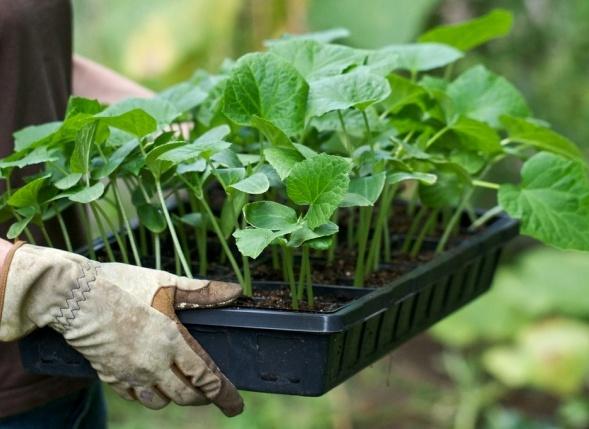
Pre-treatment of seed is essential to improve seed germination. The following procedures are performed during seed preparation:
- Calibration. Seed selection is performed if the seeds were harvested independently or purchased from a third party. Store-bought seeds should not be calibrated, as this was already done at the factory. Only the largest seedlings with uniform coloring and no surface deformations are selected.
- Disinfection. To prevent future diseases, cucumber seedlings are disinfected in advance. To do this, prepare a 1% potassium permanganate solution, in which all selected seeds are immersed for half an hour. They are then removed from the potassium permanganate, rinsed with water, and dried. Bacterial preparations are also used for disinfection. Fitosporin-M is considered the most effective.
- Soaking. This procedure is performed to reduce the time it takes for seeds to germinate. To soak a seed, wrap it in a small piece of cloth and place it in a glass of water for 2-3 days. The water should not be cold.

Preparing the soil mixture and planting
Before planting the seeds, you need to prepare the soil mixture. Some gardeners purchase ready-made soil suitable for growing cucumber seedlings. They fertilize it with a humus-rich substrate and immediately pour it into the pots.
To prepare the soil mixture yourself, you need to mix one part peat with one part river sand and two parts garden soil.
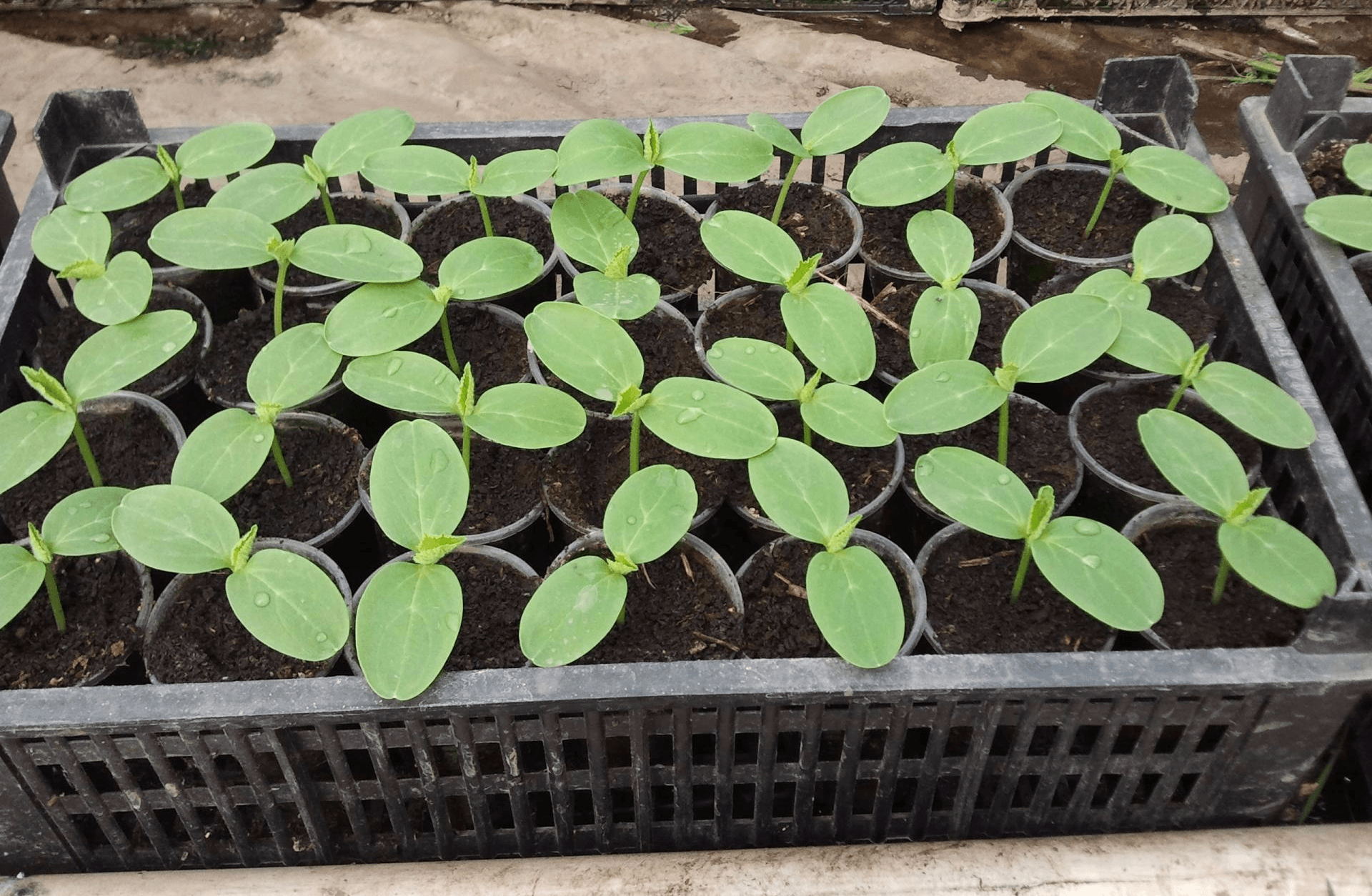
The prepared soil is poured into the pots, after which planting begins. Experienced gardeners recommend not planting the seeds too deeply, as this will slow germination. Therefore, make holes in the soil 2-3 centimeters deep.
How to properly plant cucumber seedlings
Many beginning vegetable growers do not know, How to plant cucumbers from seedlings into open ground. Therefore, it's best to understand in advance how to transplant grown cucumber seedlings.
Timing of planting seedlings
It's important to determine the correct time for planting seeds and seedlings in advance. Seeds are sown in the first half of March or in late February if the seedlings will be grown indoors. May or June is ideal for transplanting seedlings into the garden, as temperatures during this period remain consistently between 15 and 20 degrees Celsius.
Soil preparation
To ensure better growth of planted vegetables, it's important to prepare the soil in advance. This preparation begins in the fall, before the first frost.
First, the soil is dug over to loosen it slightly and remove weeds. After this, the soil can be fertilized to improve its fertility. Experts recommend adding more organic matter. For example, you can mix the soil with fresh cow manure, which will enrich the soil with phosphorus, calcium, potassium, and nitrogen.
Suitable conditions
Before you begin transplanting seedlings, you need to familiarize yourself with the proper growing conditions for cucumbers. This vegetable crop requires the following:
- Lighting. Without sufficient light, planted bushes will not be able to grow tall.
- Nutrients. If the soil lacks nutrients, seedlings will dry out and die.
- Watering. Bushes should be watered regularly, as over-dried soil reduces fruiting and slows seedling growth.
Choosing a landing site
Vegetable sowing should be done in the most suitable area. To choose the right spot for planting cucumbers, it's important to understand the factors to consider.
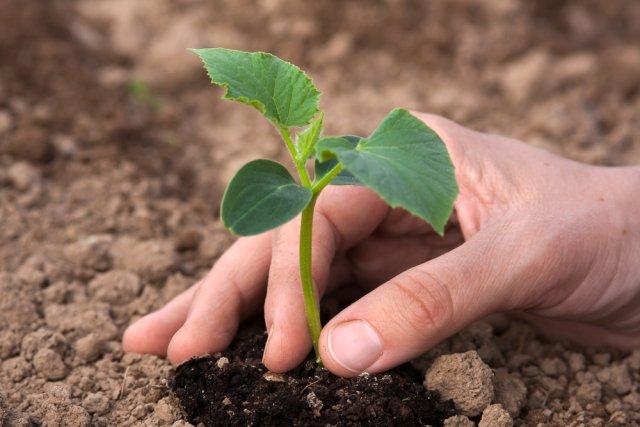
Experienced gardeners recommend planting seedlings in locations protected from strong winds. Also, choose a well-lit spot for cucumbers. Seedlings should not be planted in the shade, as they will droop and wilt due to lack of light. Therefore, it's not recommended to plant them near tall plants that will shade them.
Scheme for transplanting seedlings into open ground
A transplanting diagram will help you plant your seedlings correctly, so it's important to familiarize yourself with it. Experienced gardeners use three main methods for planting cucumbers:
- Wide-row. When using this method, the distance between each row is at least 100 centimeters. The bushes are spaced 30-40 centimeters apart.
- Ribbon gardening. In this case, the bed is created so that the rows are spaced 80-90 centimeters apart.
- Standard. The most common planting method, with row spacings of 65 centimeters.
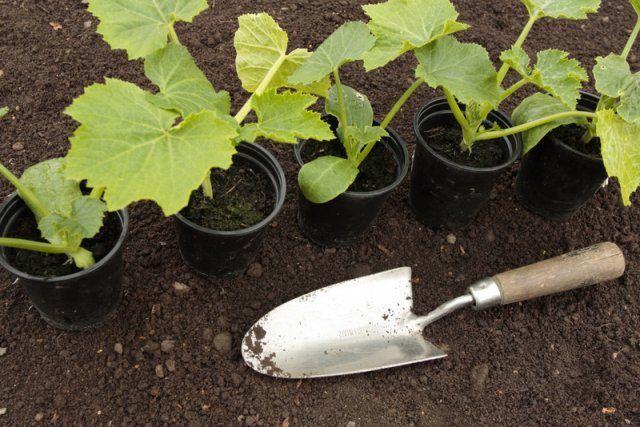
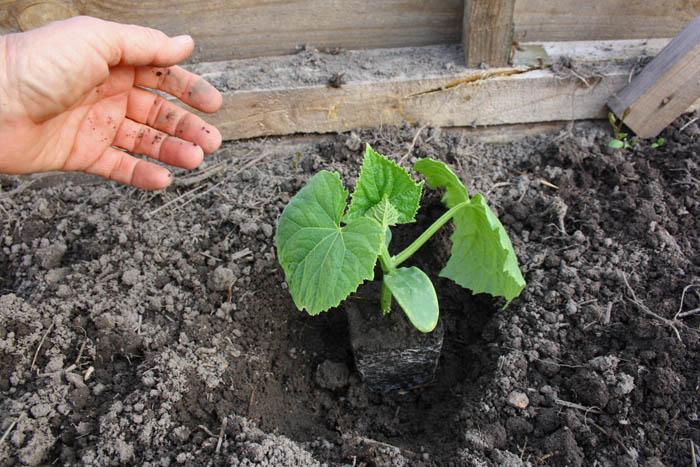
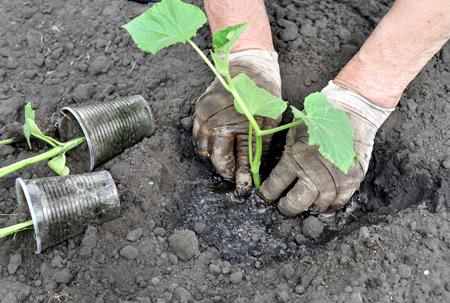
Transplanting begins with digging holes for the seedlings. Each hole should be 8-10 centimeters deep. After creating the holes, the cucumber seedlings are carefully removed from the pot and planted vertically in the soil. If a peat pot was used to grow the seedlings, the seedlings are planted along with it.
Caring for plants after planting
Planted cucumbers must be properly cared for, as without care they may wither.
Watering
To water cucumber seedlings, use warm water (20-25 degrees Celsius). Using water that's too cold can cause root rot. Water the plants at least four times a week. If you refuse irrigation, vegetables will grow more slowly, and ripe fruits will become bitter.
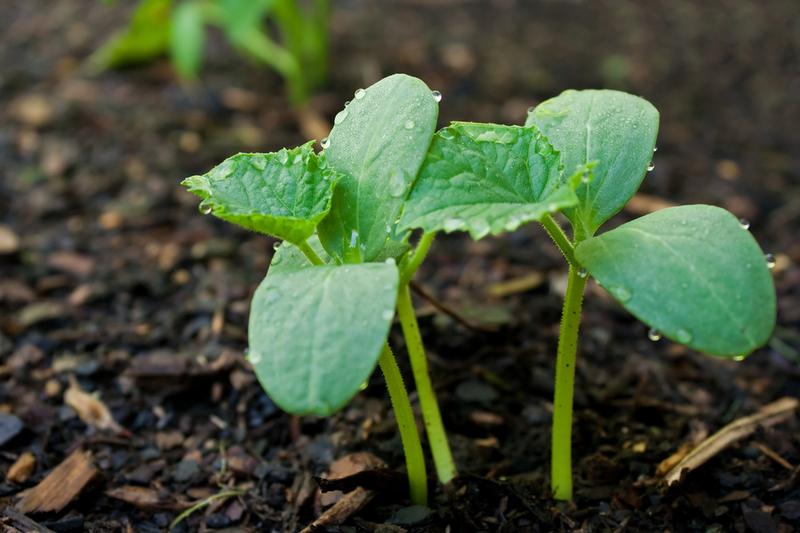
After each watering, the soil should be loosened with a hoe. This improves oxygen supply to the top layer of soil.
Top dressing
Without regular soil amendments, the plants begin to wilt. Vegetable growers recommend adding more organic matter to the soil, which significantly accelerates seedling growth. Mineral fertilizers are used to develop the root system. For example, a cup of superphosphate is sprinkled under each plant to promote growth.
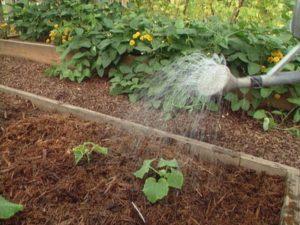
During the flowering period, the amount of mineral fertilizer used is increased. A shallow hole is dug near each bush and potassium and nitrogen fertilizers are added.
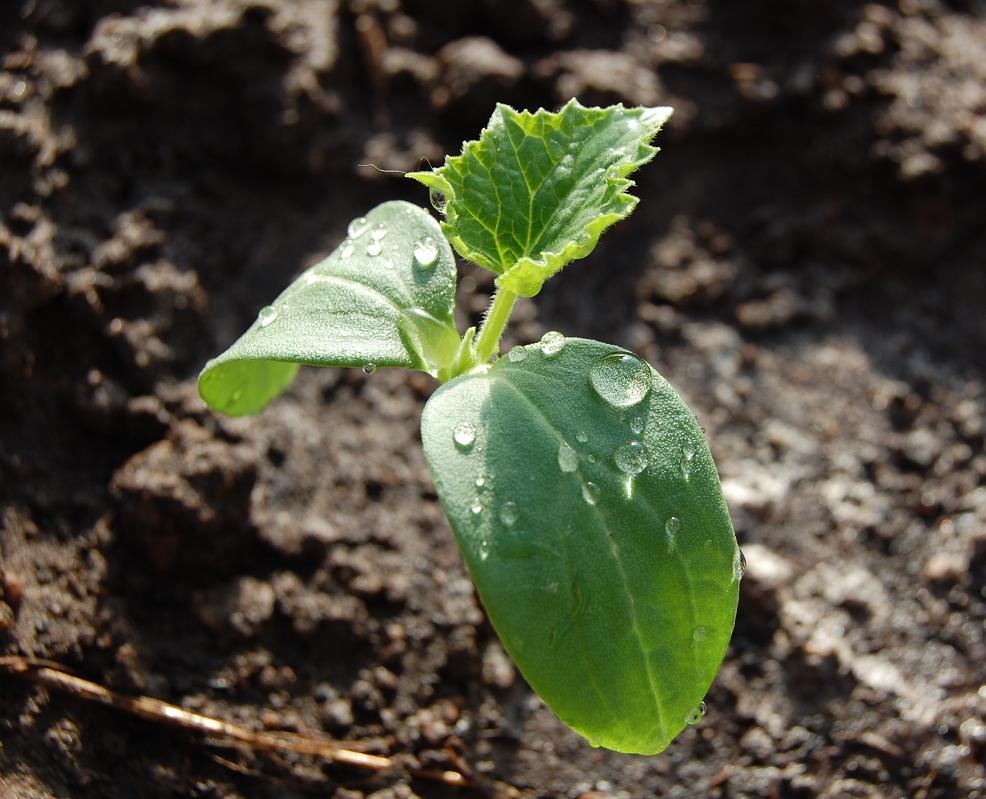
Pinching
Cucumbers are pinched several times per season. The first time is when the second true leaf forms. The second pinching is done after the ninth leaf appears. It's worth noting that pinching is always stressful for vegetables, so it should be done carefully.
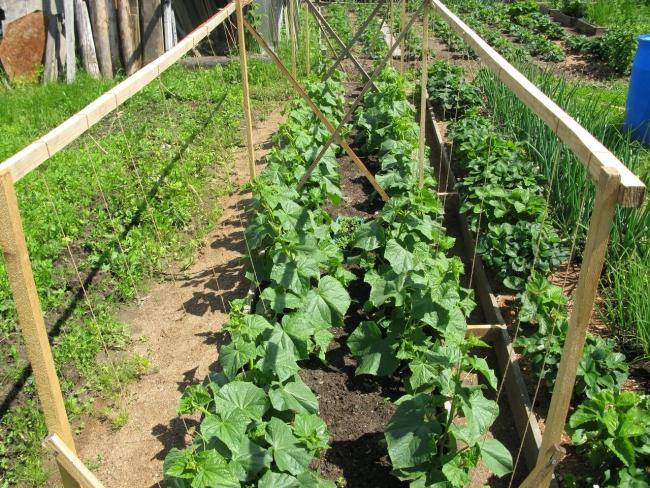
Garter
Some gardeners prefer to tie their cucumbers to supports. This protects them from many diseases and simplifies harvesting. To tie the cucumbers, metal or wooden supports are installed near each plant. A rope is then tied to the main stem of the plant, which is then tied to the support.
Possible problems
Planting and growing cucumbers can be accompanied by certain problems, which it is recommended to familiarize yourself with in advance:
- Cucumbers taste bitter. This problem occurs if the soil has been insufficiently watered, resulting in insufficient moisture for the vegetables.
- Yellowing leaves. Yellowing leaves appear due to a lack of nutrients or a diseased seedling.
- Root freezing. The root system can freeze if planted in a hole 4-5 centimeters deep. Such a shallow depth will not protect the roots from frost.
Conclusion
Many vegetable growers grow cucumbers outdoors. Before planting the vegetable, it's important to understand its specific characteristics. planting cucumbers and recommendations for caring for them.
Related posts:
 How to properly plant cucumber seedlings at home and what to feed them with
 Rules for growing tomatoes in open ground, choosing a variety, planting and care
 How to choose a tomato variety for growing in Ukraine and when to plant seedlings
 How to plant carrot seeds in open ground, timing and sowing methods
 How and when to properly plant beet seeds in open ground
 Description and characteristics of the best seeds of pea varieties and types
 What is the best way to feed tomato seedlings to make them plump?
 What fertilizers and when to use for feeding tomatoes in a greenhouse