
- Why water cucumbers?
- Basic rules for watering in a greenhouse
- At what time of day is it recommended to water cucumber bushes?
- Why is temperature control necessary?
- Water requirements
- How often should you water?
- Calculating the watering rate
- After landing
- During flowering and ovary formation
- During the fruiting period
- In hot and rainy weather
- Irrigation techniques in greenhouses and hothouses
- Drip irrigation
- Manual watering
- Automatic watering
- Watering cucumbers through bottles
- How to properly water cucumbers in a polycarbonate greenhouse
- Helpful tips for gardeners: how to water cucumbers so they don't taste bitter?
Vegetable growers may be faced with the question, How often should cucumbers be watered? In a greenhouse. A properly organized irrigation regime affects the health of vegetable crops. It is important to avoid stagnation of moisture around the roots and prolonged drying of the soil. The amount of water needed for cucumbers will vary at different stages of their development. There are several techniques for performing this procedure indoors.
Why water cucumbers?
Watering is an important part of cucumber care. It should be done correctly, avoiding overwatering and allowing the soil to dry out.
Lack of water leads to a cessation of plant growth and development; the leaves will begin to turn yellow, dry out and wither. The fruits do not grow to the stated size, become deformed, turn yellow and become bitter in taste.
To prevent such problems from occurring, it is important to establish a timely and correct watering regime.
Basic rules for watering in a greenhouse
By following a few rules, you can carry out the procedure of moistening the beds without any problems:
- It's recommended to make a depression near the cucumber bed to catch the water. This will prevent the liquid from spilling all over the greenhouse, ensuring each root receives the necessary amount of moisture.
- Water should be applied gradually, allowing it to fully soak into the soil. The water should be absorbed precisely at the root zone of each bush.
- In the evening, it is advisable to sprinkle the plants using a spray bottle or watering can.
It's recommended to periodically add iodine or urea to the water used for spraying. This will provide foliar nutrition and protection against infections.
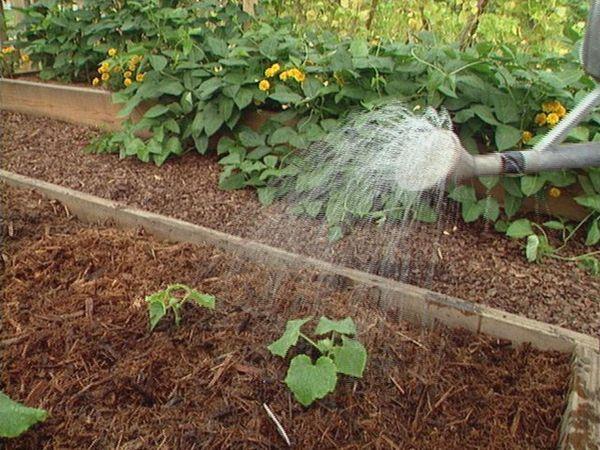
At what time of day is it recommended to water cucumber bushes?
The best time to water is morning or evening. In extreme cases, watering at night is permitted. Avoid watering immediately after sunset or at night due to the risk of cracking the fruit and stems of the plant. This occurs due to sudden temperature changes.
Why is temperature control necessary?
When growing cucumbers indoors, monitor the air temperature and humidity levels. During the day, the air temperature is maintained between 22 and 24 degrees Celsius. At night, the temperature is reduced to 18 degrees Celsius.

During the period of active fruit ripening, the room air should be even warmer. Daytime temperatures should range from 24 to 29 degrees Celsius, and at night, the air should be cooler, around 19 degrees Celsius.
The required air temperature level is maintained by ventilating the room and shading the glass.
Humidity in the greenhouse should be maintained at 95%. This desired humidity level can be maintained by misting the greenery and thoroughly watering the beds. Mulching the soil will help maintain soil moisture. Peat, straw, and film are good choices for mulch.

Water requirements
In a greenhouse or hothouse, water cucumbers carefully. It's important to avoid getting the leaves wet. Therefore, water only the soil around the roots:
- Water for irrigation must be warm.
- It is poured into containers in advance so that it has time to settle before watering.
- If a hose is used for watering, a low water pressure is set.
- In sunny, hot weather, it is additionally recommended to sprinkle the plants using a watering can.
- If the water is hard, it is recommended to add wood ash to it.
If you water the beds with cold water, the crop will weaken, its development will slow down, and the ovaries will begin to fall off.
How often should you water?
The frequency of watering depends on the cucumbers' development stage, weather conditions, and the indoor air temperature and humidity. In most cases, watering is necessary every two days.

Calculating the watering rate
The amount of water required for each root depends on many factors. The watering rate primarily depends on the stage of development of the vegetable crop's underground part:
- Young seedlings have small root branches, reaching up to 4.5 cm. No more than 4 liters of water are required per 1 square meter.
- A mature plant requires more water. Roots extend up to 16 cm. Up to 14 liters of water are used per square meter.
After landing
During the first few days after planting, cucumbers require ample watering. Once the seedlings have established roots after transplanting, watering is reduced to once every five days. 4.2 liters of water are used per square meter. This watering schedule is maintained until the fruit sets.
During flowering and ovary formation
Once the cucumbers begin to bloom, increase watering to once every two days. In hot, dry weather, it's advisable to moisten the soil daily. If the indoor temperature exceeds 25 degrees Celsius, sprinkler irrigation is essential.


During the fruiting period
During the ripening of cucumbers, it is recommended to thoroughly moisten the beds:
- If fruiting coincides with the beginning of spring, then the beds are watered every three days.
- During fruiting at the end of April or May, the frequency of irrigation is once every two days.
- During the summer months, the soil should be moistened every day or every other day.
In hot and rainy weather
In damp, cold weather, additional soil moisture should be avoided. As the air cools, the soil becomes cold and damp. Overwatering can lead to the development of fungal infections and rot. In cloudy but warm weather, irrigation should be carried out according to the standard schedule.
On hot days, it's recommended to water vegetables daily. This should be done in the morning or evening. Sprinkler irrigation is also recommended. Experienced gardeners recommend wetting the walls, paths, and other objects in the greenhouse to add additional moisture to the dry air.
Irrigation techniques in greenhouses and hothouses
Specialized watering techniques allow for economical and efficient water use, ensuring each plant receives the moisture it needs.
Drip irrigation
Drip irrigation has a whole list of positive qualities:
- little time is spent;
- it is possible to regulate the moisture level in the soil;
- easy to install;
- the soil around the roots is not damaged;
- the ability to always use warm water.
There are several options for drip water supply. A simple method is to install a raised tank, from which hoses or PVC pipes with small holes are extended throughout the garden bed.
Manual watering
You can water cucumber beds manually using a watering can or ladle. Water should be applied around each root, being careful not to disturb the top layer of soil.

Automatic watering
The automatic option is well suited for closed beds:
- In the first option, water supply is controlled manually using a faucet. Before planting the seedlings, a tank is installed and hoses are run through the beds.
- A convenient option is to operate the system using a pump. The system is equipped with a timer that allows you to program the time and amount of water.
Automatic watering will allow you to use water sparingly and properly moisten your garden beds.
Watering cucumbers through bottles
The necessary moisture can be delivered to plants through plastic bottles. This method is convenient and easy to use when growing vegetables in a polycarbonate greenhouse.
The option of watering through bottles has a number of advantages:
- the formation of puddles is not allowed;
- the soil is sufficiently saturated with moisture in one procedure, so the interval between waterings can be reduced;
- the procedure is simple to carry out and does not require a lot of time and effort;
- Anyone can make an irrigation system.


To create this irrigation system, you need to perform a series of sequential steps:
- Small holes are made in plastic bottles to allow the water to flow out slowly.
- The bottles are buried 12 cm into the ground near each cucumber bush.
- Water is poured into the container through the neck.
- The bottle doesn't need to be lidded. If a lid is necessary, make a hole in it. This will help the bottle maintain its shape.
How to properly water cucumbers in a polycarbonate greenhouse
Rules to help you water cucumbers in a greenhouse without mistakes:
- Water is poured in small portions, avoiding stagnation.
- The soil should be loose and light with a high content of sand and peat.
- After watering, it is essential to loosen the soil.
- It is recommended to mulch the soil around the cucumbers with peat, sawdust, and straw.
- Young seedlings require moderate watering, while mature plants require more frequent watering.
- The water should be warm and settled.
Avoid getting the leaves wet. This can cause burns, which can cause the leaves to turn yellow, curl, and fall off.

Helpful tips for gardeners: how to water cucumbers so they don't taste bitter?
Bitterness is caused by a special substance (cucurbitacin) found in the vegetable's skin. Excessive production of this substance occurs under adverse conditions. Experienced gardeners offer helpful tips to prevent increased cucurbitacin levels in cucumbers:
- Cucumber beds should be watered only with warm water.
- You should not allow the beds to dry out for a long time.
- The air in the room must be kept warm.
- During the midday heat, the beds should be shaded.
- It is advisable to fertilize at the same time as watering.
If you follow these rules, the cucumbers will grow even, dense, crispy, without any voids or bitter taste.
Related posts:
 How often should you water cabbage in open ground, how many times, and with what kind of water?
 How often should you water pumpkins in open ground in August during hot weather?
 How often should you water zucchini in open ground? Irrigation rates and methods.
 How to water cucumbers in a greenhouse and open ground, timing and water consumption rates
 How often should beets be watered in open ground, the rules and timing of the procedure
 How often should grapes be watered in the summer while the berries are ripening?
 How often should you water watermelons in open ground? Rules and timing
 How and whether it is necessary to water garlic in open ground, when to stop