
- What factors determine the frequency and intensity of watering?
- Bush development
- Variety of sort
- Soil type
- Necessary conditions for irrigation
- Water requirements: cold or warm
- At what time of day should the beds be watered?
- Watering method
- How long should I water cabbage?
- Methods for watering cabbage beds
- The traditional way
- Drip irrigation
- Sprinkling
- How to ensure the required soil moisture
- How to understand that the soil lacks moisture
- Signs of excess moisture
- What to do to prevent cabbage from cracking
- How to Preserve Cracked Cabbage Heads
- The nuances of combining watering and fertilizing
- Should I stop watering cabbage before harvesting?
Cabbage is a staple in almost every garden these days. It's a versatile, tasty, and healthy vegetable. While caring for cabbage isn't difficult, it's also important not to neglect its growth. In particular, it's essential to provide the plant with sufficient moisture. To determine how often to water cabbage outdoors, it's important to learn the proper watering guidelines.
What factors determine the frequency and intensity of watering?
If you want to grow a good harvest in your garden, watering must be regulated depending on several factors.
Bush development
During the initial development stage after planting and while the cabbage heads are forming, the plant requires intensive watering. On average, watering is done every other day, but weather conditions and hilling have a significant impact on irrigation. If the weather is too dry, water the plant daily.
During periods of frequent rain and high humidity, watering should be reduced to once every 2-4 days.
Variety of sort
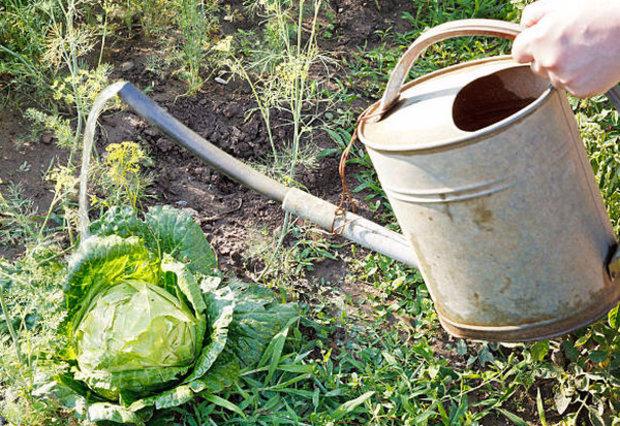
From the table below, you can find out how many times a week and how much water cabbage needs depending on its type.
| View | Watering |
| White cabbage | Before head formation, use no more than 1 liter per head. During head formation, use 2.5 to 3 liters. During head growth, use about 4 liters of water. |
| Red cabbage | Water every 6-7 days, 1-2 liters per head. During the formation of heads, increase the rate to 3-4 liters. |
| Broccoli | 15 liters per 7 days. The soil needs to be irrigated to a depth of 40-50 centimeters. |
| Cauliflower | 10 liters per week. Pay particular attention to the weather. In dry weather, increase irrigation to 3-4 times per 7 days. |
| Chinese cabbage | Water at regular intervals to a depth of 20 centimeters. The ideal method for watering Chinese cabbage is sprinkling. |
Soil type
Cabbage will not grow well in acidic soil. In this case, the soil should be limed before planting using agro-menthol or dolomite flour.A good harvest will grow in loose soil rich in nutrients. This type of soil promotes rapid gas exchange due to the presence of oxygen.
Dense soils tend to retain moisture, while light soils, on the contrary, lose it too quickly. Therefore, the frequency and intensity of watering should be reduced in dense soils and increased in porous soils. Soil quality can be improved slightly before planting seedlings. For clay soils with a high density, add compost, ash, and sand. For 10 square meters, you will need 30 kilograms of compost, 20 kilograms of ash, and the same amount of sand. These components are added and incorporated into the topsoil in the fall.
Soils with a high sand content require more nutrients. Such soils are too light. This can be corrected by adding peat moss and a mixture of humus and black soil. For every 10 square meters, you need one bucket of peat moss and two buckets of humus and black soil. It is recommended to add these components in spring and fall.
On marshy soils and dense peat bogs, intensive watering can damage the quality of your harvest. In such soils, trenches are often dug and then filled with small stones and branches to provide drainage. The trenches should then be filled with a mixture of fertile soil and humus. Cabbage beds should be planted above these trenches.
If drainage isn't available, add one bucket of compost and ash per 10 square meters of garden beds, along with two buckets of fertile soil mixed with sand. In this case, the beds should be raised to help prevent waterlogging.
Necessary conditions for irrigation
To avoid damaging the crop, you need to know the requirements for the water used and the correct time of day to water the cabbage.
Water requirements: cold or warm
What kind of water is used to water cabbage?
Temperature regulation is crucial for watering. The water should be neither too cold nor too warm. Ideally, water temperatures should range from 17 to 20 degrees Celsius.You cannot use tap water due to its high chlorine content, nor water collected from wells if it contains a lot of iron.

Before watering, let the water settle in a barrel. After settling, an iron deposit will form, which should be poured out as far away from the plantings as possible.
At what time of day should the beds be watered?
Cabbage is watered in the evening. Watering in cloudy weather is also possible. This is because only by avoiding direct sunlight can the leaves be protected from sunburn.

Watering method
During dry weather, you should water your plants using a combination of both overhead and root watering. This method will prevent deterioration in crop quality.

How long should I water cabbage?
How often you need to water depends directly on the cabbage variety. Early varieties should be watered two days after planting. Late varieties should be watered immediately on the day of transplanting, and then again about a week later. Sprinkler irrigation can save you time. It can be used for 2-3 hours instead of daily watering.
Early cabbage requires a large amount of moisture in June, while late cabbage requires the main volume of liquid in August.
They stop supplying moisture to early cabbage varieties 2 weeks before cutting the heads, and to late varieties - a month before the planned harvest.
Methods for watering cabbage beds
The traditional way
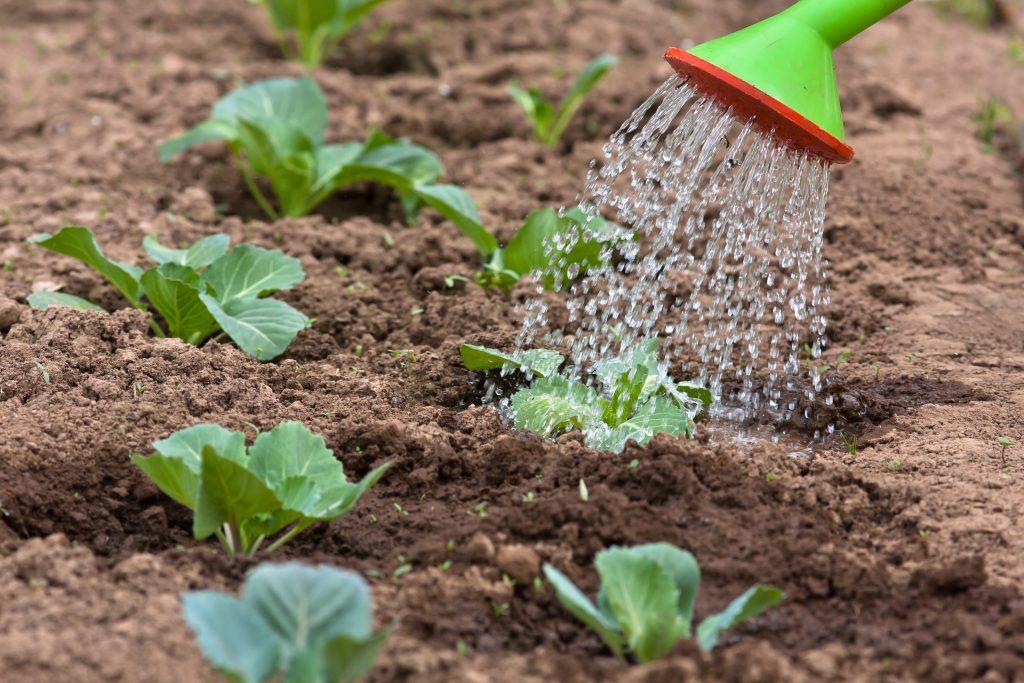
This type of watering is the simplest. It's done with a watering can or hose. Furrows are made in the soil and water is poured into them.
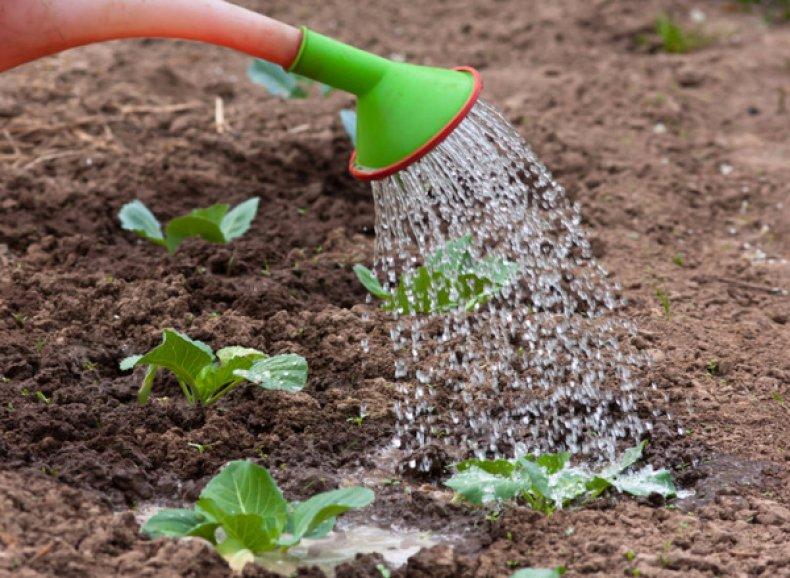 This simple method is ideal for medium-density soil, since in light, porous soil, water will immediately drain into the ground, without reaching the root system.The advantage of this method is that water is delivered through trenches directly to the root zone.
Drip irrigation
This method is suitable for those who cannot devote a lot of time and energy to gardening. The disadvantage is the high cost of the equipment required for this type of irrigation. Irrigation occurs in small amounts. Plant roots are constantly moistened, preventing the soil from drying out.
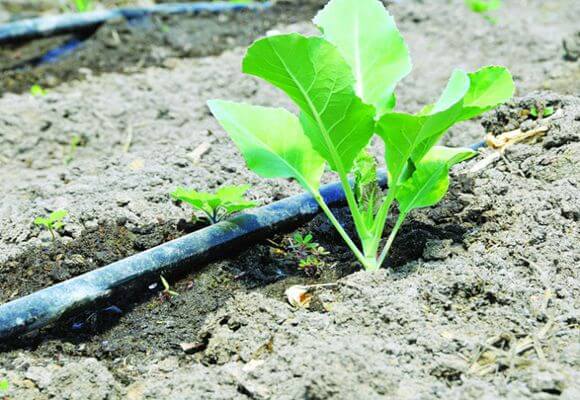
It is important to pay special attention to the correct setup of the equipment to prevent excess or lack of moisture.
Sprinkling
In this case, watering occurs by sprinkling the cabbage leaves. This method not only provides soil moisture but also humidifies the leaves and air. This is especially beneficial during the period of emergence and active growth of cabbage heads.
Sprinkler irrigation can be used on all soil types, but careful attention must be paid to the quality of watering and frequent loosening of the soil. These measures will prevent the soil from becoming waterlogged. This method should not be used on seedlings.

How to ensure the required soil moisture
How to understand that the soil lacks moisture
It's crucial to pay sufficient attention to soil moisture. If the soil is too dry, head formation will fail, and cabbage growth will slow. If dry weather sets in, the situation will be even worse. When temperatures are above 28 degrees Celsius, water the cabbage every evening.
To determine if the soil is too dry, pick up a piece of soil and form it into a ball. If the ball cracks and crumbles in your hand, this is a sure sign that you need to increase watering.


Signs of excess moisture
Keep in mind that overwatering can also damage the plant. If the soil is too wet, the plant may die, and you'll lose your harvest. If your cabbage leaves have lost their elasticity and drooped, but don't regain their elasticity after watering, it's time to reduce the watering intensity.
What to do to prevent cabbage from cracking
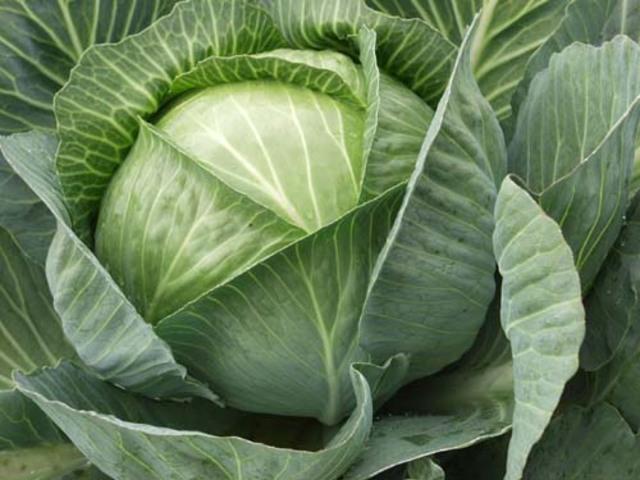
Cabbage heads may begin to split if watering before and after head formation is more intense than during emergence. This can be caused by either miscalculating the amount of watering or untimely rainfall.
It's also worth noting that heads of cabbage may begin to split due to overripeness. This means they won't continue to grow in size and it's time to harvest.
How to Preserve Cracked Cabbage Heads
There are two ways to save heads of cabbage that crack during growth:
- cutting off part of the roots;
- turning the head of cabbage clockwise by 90 - 180 degrees.
These methods will help reduce the nutrition of the heads of cabbage and ensure normal further growth without the appearance of even more cracks.
The nuances of combining watering and fertilizing
Fertilizing cabbage is best done in conjunction with watering. If you're aiming for a large-scale harvest, NPK20 is the best option. Apply it once or twice. During the second application, increase the potassium content and decrease the nitrogen. For indoor growing, 2-4 applications are recommended. It's also a good idea to loosen the soil during this time.
Should I stop watering cabbage before harvesting?
Watering before cutting the heads is not recommended. This can cause the fruit to crack. It is recommended to stop watering by harvest time.
Related posts:
 Growing and caring for Chinese cabbage in open ground and greenhouses
 Planting, growing, and caring for cauliflower in open ground and greenhouses
 Why does cabbage grow tall in the garden and what can be done about it?
 How to water cucumbers in a greenhouse and open ground, timing and water consumption rates
 Why do cabbage leaves turn purple and what can be done to treat them?
 How often should cucumbers be watered in a greenhouse, when is the best time and how many times?
 Can cabbage be sprayed with valerian to control pests and what are the treatment guidelines?
 How to properly plant cabbage seedlings in open ground: spacing, timing, and temperature