
- Do watermelons need to be watered?
- How often should you water watermelons?
- seedlings
- In open ground
- In the greenhouse
- How do you know when a watermelon needs to be watered?
- Basic rules of watering
- After landing
- During the flowering period
- During ripening
- Features of growing with drip irrigation
- The principle of drip irrigation
- Drip irrigation system device
- What to water watermelons with to make them grow faster?
- Can I water a plant with whey?
It's hard to imagine summer without a favorite flavorful treat—a juicy watermelon. Many gardeners grow this striped fruit in their gardens. Watermelon is a heat-loving plant that requires increased watering. How often should you water watermelons outdoors, and can drip irrigation make the task easier?
Do watermelons need to be watered?
To get a decent watermelon harvest, the crop needs regular watering. Soil moisture levels influence the plant's growth rate, immunity, and the taste of the ripe fruit. Watermelons' basic soil and watering requirements include:
- They do not tolerate loams; the soil must be loose and airy, rich in organic matter, with the addition of mineral fertilizers.
- The area must be well lit; in the shade or partial shade the berries often do not ripen, and there is no sweetness in the ripe fruits.
- Regular irrigation is necessary for melon crops from the moment of planting until they are fully ripe.
- The drier the soil, the weaker the bush develops and the smaller the fruit.
Water only with warm water, in the morning and evening. Avoid allowing water to drip onto the plant's leaves during periods of high sun exposure.
How often should you water watermelons?
Regular irrigation begins from the moment melon seeds are planted. The amount of water applied determines the speed and timing of plant emergence.
Important! Lack of watering significantly reduces seed germination and delays the emergence of the first shoots.
Lack of moisture leads to:
- germination decreases;
- a weak bush and root system are formed;
- fewer fruits are set;
- The fruits grow small, often deformed, and quickly crack.
Watermelons are 90% water; lack of moisture is detrimental to the plant at all stages of growth. The frequency of watering and the amount of moisture required depend on the region, weather conditions, and irrigation method. Watermelons do not tolerate prolonged droughts or prolonged rainy seasons.

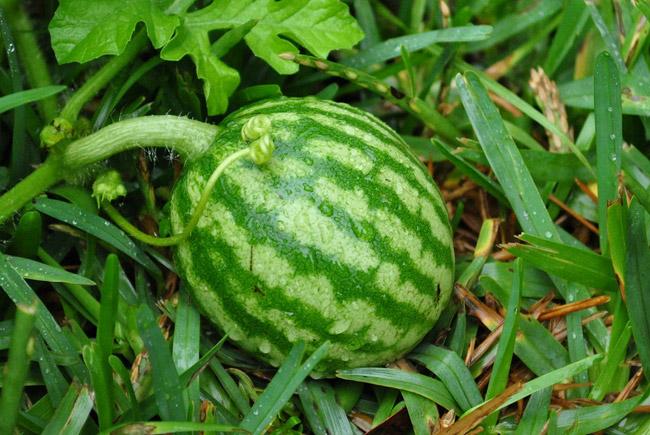
seedlings
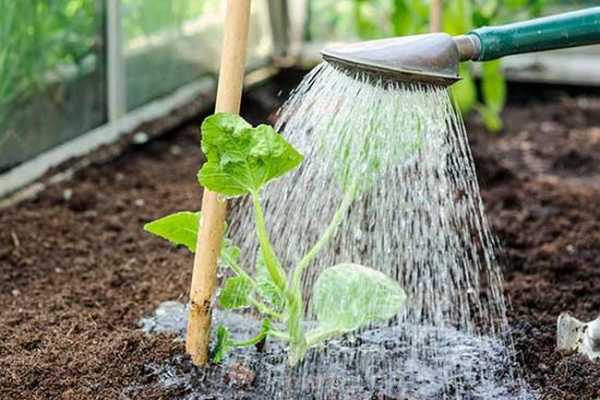
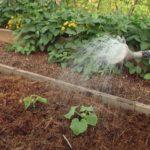
Watermelon seedlings are recommended to be grown in small individual containers, such as peat pots. Plant in disinfected and thoroughly moistened, loose soil. Drainage should be installed at the bottom. Water daily, carefully, using a watering can. The water should be warm. Once the sprouts emerge, water along the "rim of the glass"—avoid getting water on the leaves or eroding the soil around the tender young stem.
In open ground
After transplanting the watermelons to their permanent location, reduce watering frequency to once every 1-2 days. Pay attention to the weather, soil temperature, and ambient temperature. During the rainy season and inclement weather, watering should be avoided. After a thunderstorm or heavy rain, watering should resume after a week.
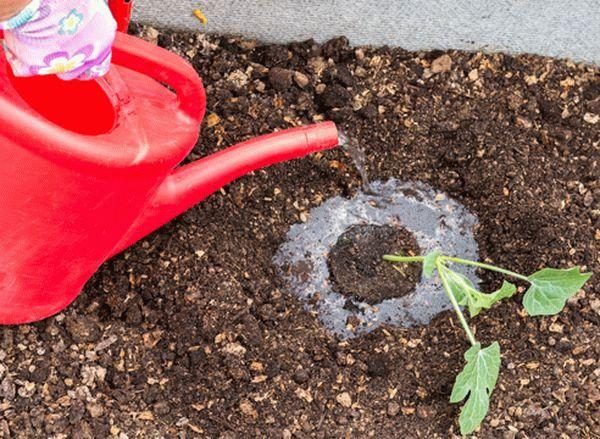
Once the first buds have opened, watering frequency is reduced to twice a week. However, this will require more warm water per watermelon; the optimal dose for a mature plant is 10 liters.
If you water your melons using sprinklers, the stems will rot, increasing the risk of fungal diseases. It's recommended to place straw under the newly formed fruit.
In the greenhouse
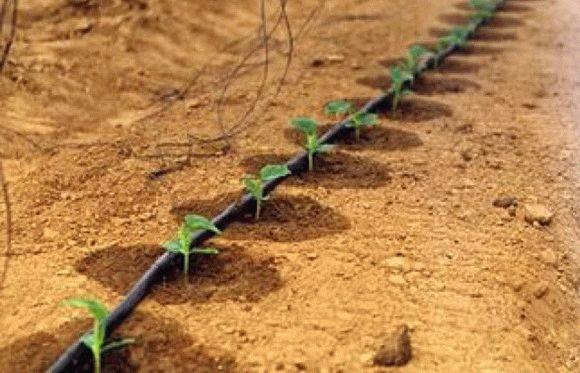
A drip irrigation system is convenient for indoor use. The water used is warm, and watering is delivered directly to the roots, preventing drips from falling on the leaves. This prevents soil erosion, saving the gardener significant time and effort. When growing watermelons in a greenhouse, the room must be regularly ventilated. Watering once a week is sufficient.
How do you know when a watermelon needs to be watered?
When growing melons, the soil should be moistened to a depth of 60-70 centimeters. If the soil is not moist enough, the plant leaves curl, lose their color, and droop.
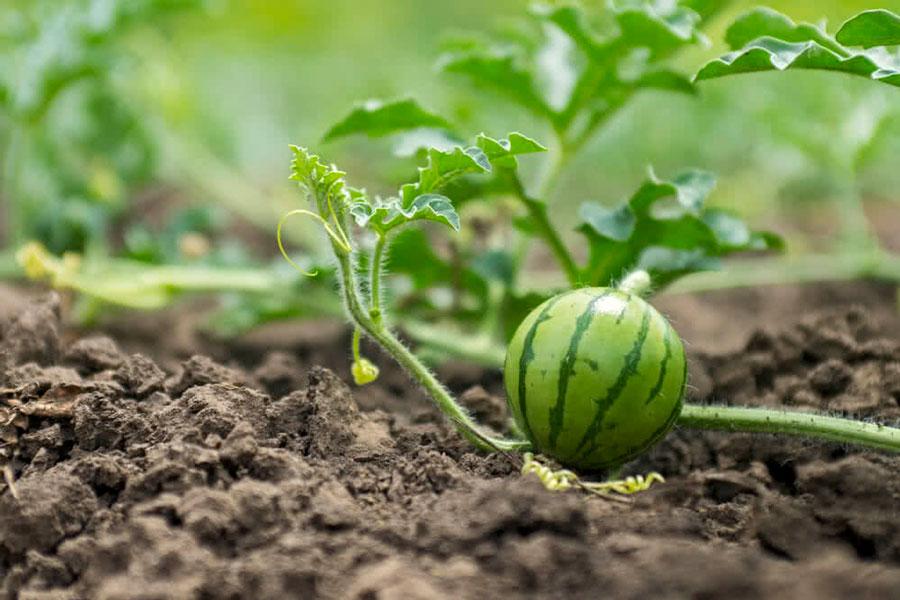
It's important to properly balance the watering schedule with the weather and climate conditions during the growing season. Watermelons are often susceptible to root rot, and excess moisture near the roots is detrimental to the plant.
Basic rules of watering
The frequency of watering and the amount of moisture required vary at different stages of plant growth. The amount of moisture required also varies by month; the heaviest watering is done in July. After watering, it is recommended to loosen the soil around the watermelons.

After landing
This is a crucial time. If watermelons aren't watered regularly, seed germination may be as low as 50%, and the sprouts will take a long time to emerge. Water with a sponge or watering can, being careful not to wash away the soil, as this is the period when the plant's root system is developing. It's crucial to water with warm, settled water. Before planting, thoroughly moisten the pot.
During the flowering period
During this phase, the melon patch should be watered twice a week, directly at the roots. You can combine irrigation with the application of liquid mineral fertilizers. Once a week, after watering, the plants should be hilled or loosened.
During ripening
Once the fruit has set and begun to grow, watering the watermelons once a week is sufficient. Avoid allowing moisture to accumulate under the fruit and avoid allowing soil to fall onto the plant after watering or loosening. Avoid pouring water onto the newly formed fruit.
Features of growing with drip irrigation
A convenient method, proven effective by thousands of gardeners. The main advantages of drip irrigation:
- saving water, time and effort of the gardener;
- drops do not fall on the tops and leaves of the plant;
- the optimal amount of water required by the plant is consumed;
- the soil does not wash away, the melon field is moistened evenly;
- can be combined with the stage of applying mineral fertilizers.
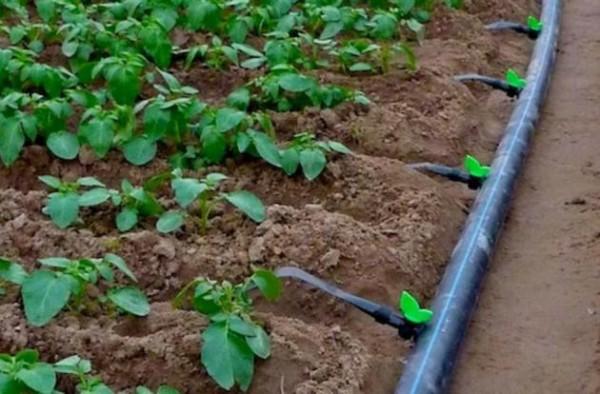
Automated drip irrigation systems are available for purchase at specialty stores. You can also build your own system. Each gardener will have to decide for themselves which method to choose.
The principle of drip irrigation
A barrel filled with water is placed in a greenhouse or near melon plants. Over time, the water is allowed to warm naturally in the sun's rays.
This is important: watermelons cannot be watered with cold water.
Hoses with individual taps or special holes for each bush are run under the rows of bushes, through which watering will be carried out.
Drip irrigation system device
The drip irrigation system includes:
- hose or plastic pipe;
- plugs, nuts, filters;
- water tank with ball valve;
- and other devices.
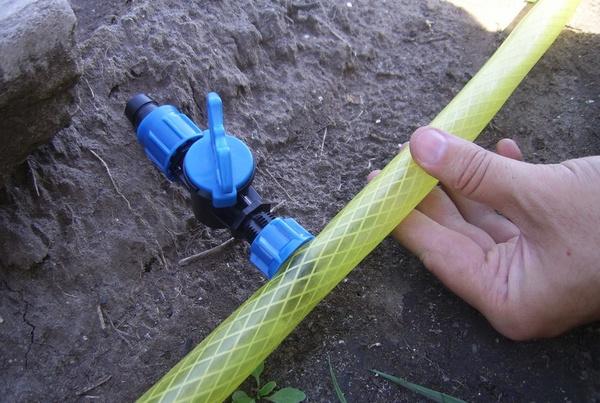
If you purchased a store-bought system, assemble the drip irrigation system according to the instructions. Water the melon patch this way three times a week.
What to water watermelons with to make them grow faster?
In northern regions, the period of truly warm summers is shortened. When cold weather sets in, watermelons stop growing. To speed up the ripening process and ensure a good harvest, gardeners resort to certain tricks. Here's what to water to speed up watermelon growth:
- An infusion of rotted manure and humus, diluted with water in a ratio of 1:10.
- Liquid vermicompost.
- Mineral liquid complexes with increased content of potassium and magnesium.
- Yeast supplements.
- Application of whey.

Organic and mineral fertilizers should be applied regularly. Plant growth must be maintained throughout all stages of development.
Can I water a plant with whey?
Lactic acid organisms and bacteria can significantly accelerate plant growth. However, whey should not be used in its pure form; it must be diluted with water at a ratio of 1:10.
An original recipe for stimulating growth and fruit formation on watermelons has survived from Soviet times. Add 1-2 liters of whey, 4 handfuls of wood ash, 5 liters of settled and strained bird droppings, and 3 liters of yeast to a barrel of warm water (150 liters). This mixture is then watered at the roots and hilled up.
Growing a watermelon in your garden isn't difficult; the key is proper plant care and a well-regulated watering system. In northern regions, it's safer to grow watermelons indoors. For open-air cultivation, it's important to choose the right varieties that ripen quickly and are resilient to temperature fluctuations and changing light conditions.
Related posts:
 How and what to feed watermelons in open ground after planting, during flowering
 Simple, step-by-step recipes for preparing salted watermelons for the winter in jars
 How to properly pickle whole and part watermelons in a barrel for the winter: Grandma's recipe
 How often should beets be watered in open ground, the rules and timing of the procedure
 How often should you water cabbage in open ground, how many times, and with what kind of water?
 How often should grapes be watered in the summer while the berries are ripening?
 How to water cucumbers in a greenhouse and open ground, timing and water consumption rates
 How often should cucumbers be watered in a greenhouse, when is the best time and how many times?