
- Description and Features
- Growing region
- Main characteristics of the variety
- Pros and cons of the variety
- How to plant correctly
- Seedless method
- Recommendations for choosing deadlines
- Predecessors
- Site and soil requirements
- Site preparation
- How to select and prepare planting material
- Through seedlings
- Choosing the timing
- Requirements for soil mixture
- How to prepare seeds
- The seeds are soaked in a light pink solution of potassium permanganate beforehand. If special solutions are available, use them. Disinfection should not be neglected, as the seeds can carry bacterial viruses or diseases from neighboring crops or poorly maintained soil.
- How to plant
- Aftercare
- Temperature conditions
- Stimulation of lateral root formation
- Top dressing
- Planting in open ground
- Care instructions
- Watering mode
- Hilling
- Loosening and weeding
- Tying to a support
- Protection from cold
- Feeding regime
- Bush formation
- How to properly harvest seeds
- Diseases and pests
- Powdery mildew
- Root rot
- Bacteriosis
- Fusarium
- Hybrid varieties
- Crimson Ruby F1
- Crimson Wonder F1
- Harvesting and storage
- Tips and recommendations
Crimson Sweet watermelon slices are surprisingly sweet and juicy—characteristic of this early-ripening variety. This melon is grown in temperate climates, where the fruits ripen in midsummer. The plant is drought-resistant and pest-resistant, so it thrives throughout the growing season. In cool climates, greenhouse planting is the best option.
Description and Features
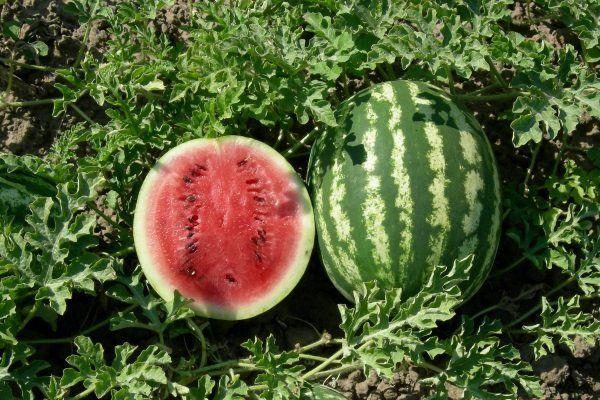
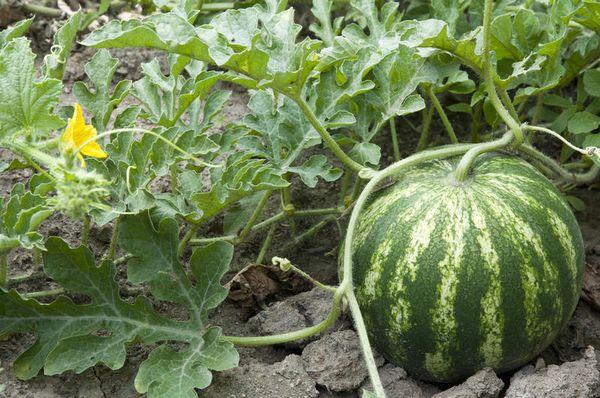
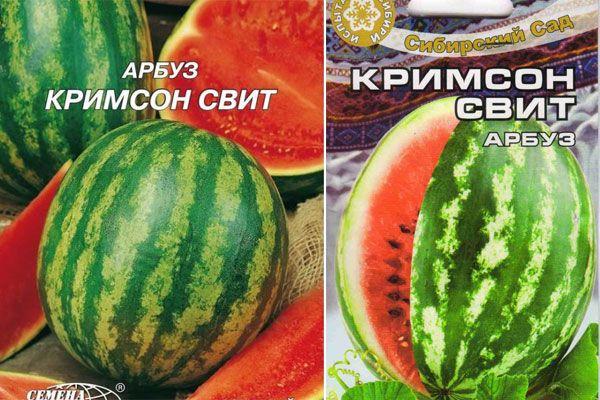
According to the description, the Crimson Sweet variety is distinguished by its large, oblong fruits, with a matte green rind with light green stripes around the circumference. Watermelons grown in melon fields weigh 10-12 kg, while those grown in garden plots and greenhouses weigh slightly less, ranging from 5-8 kg.
The root system of this watermelon variety develops quickly, with the seeds producing a main root and numerous secondary roots. The main stem is branched and creeping, extending up to 5 meters. The leaves are large, triangular, and have a stiff texture.
During the growing season, the early Crimson Sweet crop evenly distributes the development of the entire plant, with flower colonies forming from the 4th to 6th leaf.
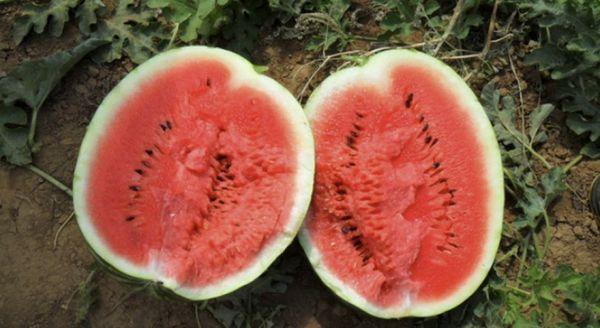
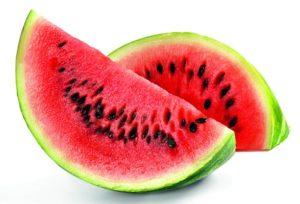
The Crimson Sweet watermelon has one of the best taste qualities, its bright red flesh is juicy and harmoniously sweet.
Growing region
Melons are widely grown in central Russia, where winters are moderately cold and summers are humid. Cultivating melons at home is common in Central Russia, the Nizhny Novgorod region, the Central Black Earth Region, and the Volga region.
Main characteristics of the variety
The early-ripening Crimson Sweet variety is drought-resistant and thrives in temperatures ranging from 20 to 30 degrees Celsius. Its frost resistance is average, as the roots are vulnerable to sudden temperature fluctuations. It is also quite resistant to pests and diseases.
Crimson watermelon has a high sucrose content and is eaten fresh or pickled. It can also be used to make preserves, marmalades, juices, and smoothies. The fruit stores perfectly in a cool place for up to 14 days and transports well.
Pros and cons of the variety
Melons, based on their characteristics and the positive reviews of experienced gardeners, have their own unique characteristics. The Crimson Sweet watermelon is characterized by:
- increased sweetness and juicy pulp;
- large fruits and productivity;
- resistance to arid soils;
- immunity to diseases and pests;
- good transportability.
From the negative reviews, we can conclude that the Crimson Sweet variety:
- loses its flavor in rainy climates;
- capricious to fertilizers;
- germinates poorly in peat and black soils;
- The roots are sensitive to sudden changes in temperature.
How to plant correctly
Depending on climate conditions, gardeners choose one of the methods: pre-sowing in containers for seedlings or planting seeds in open ground.
Seedless method
Planting seeds in open ground is typical for regions with warm springs. It's important to organize proper seeding, which largely depends on the soil, site, and planting material.
Recommendations for choosing deadlines
Once the soil warms up to 12-15 degrees, which is usually recorded in early May, you can sow in the selected area.

Predecessors
Predecessors grown in previous crops in the future planting site play a special role for the Crimson Sweet melon crop. Legumes are preferred.
Site and soil requirements
Watermelon plants do not tolerate dense peat soils, black soil, high humidity, or close groundwater. Crimson Sweet should be planted in a site with loose, sandy soil. Plant in an open location with plenty of sunlight and limited shade.
Site preparation
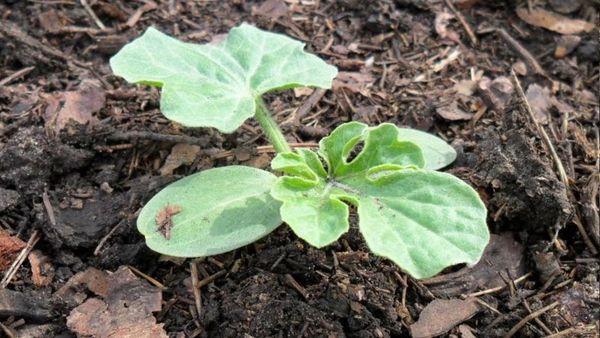
Proper soil preparation ensures healthy and fast-growing Crimson Sweet seedlings. To do this, remove all weeds from the soil and then till it. If there isn't enough sand, mix it in mechanically.
How to select and prepare planting material
Planting material can be collected from a previous harvest. For the first sowing, buy seeds from specialist stores. These seeds are usually treated with fungicides, but if you're unsure, treat the purchased seeds with fungicides or soak them in potassium permanganate. This disinfects the Crimson Sweet watermelon planting material.
Through seedlings
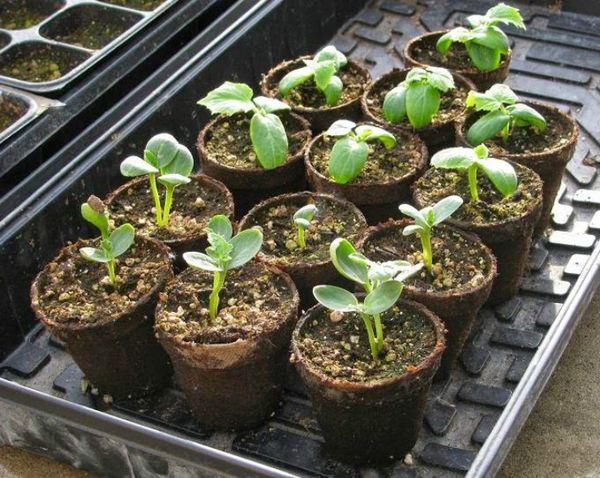
The seedling method is considered the most favorable. Planting young seedlings in containers first gives them strong immunity to diseases and pests.
Choosing the timing
Planting takes place in early May, and in 4 weeks the Crimson Sweet watermelon seedlings will be ready to be moved into open ground.
Requirements for soil mixture
The soil for planting seeds should be prepared in the fall; clean river sand is added to the soil.
How to prepare seeds
The seeds are soaked in a light pink solution of potassium permanganate beforehand. If special solutions are available, use them. Disinfection should not be neglected, as the seeds can carry bacterial viruses or diseases from neighboring crops or poorly maintained soil.

How to plant
A furrow is made in a container with soil: it is watered with warm water, then the treated seeds are planted to a depth of 1 cm.
Aftercare
Crimson Sweet watermelon should be germinated in a warm, sunny location. Water as needed, using room-temperature water.
Temperature conditions
During growth, the temperature should be maintained between 25 and 30 degrees Celsius, with heat lamps also being used. Once the first shoots appear, the temperature is reduced to 20 degrees Celsius. A week before planting, the containers are placed on the balcony for 15 minutes, then for half an hour, and then for an hour. This will help the young plant acclimate to the weather.
Stimulation of lateral root formation
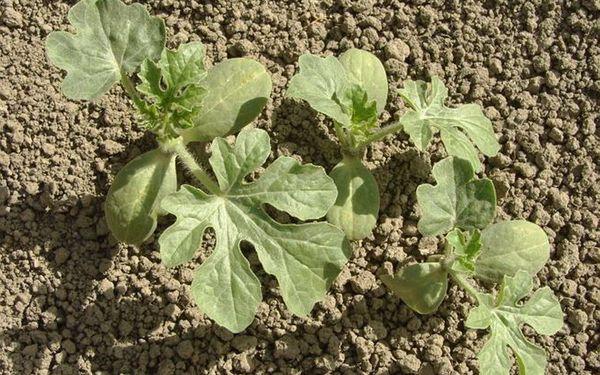
When the first two leaves appear on the Crimson Sweet watermelon stem, a special growth inhibitor called "Athlete" is used. Spraying the young plant helps focus development on the root system and stimulates the growth of lateral roots. This ensures the melon receives adequate nutrition for ripening fruit.
Top dressing
After 28 weeks, the seedlings are ready for planting outdoors. To help them acclimate to their new location, they are sprayed with a solution of Epin. No additional fertilizer is required during the growing period in the container; maintaining the correct temperature and watering are essential. Before planting outdoors, potassium and phosphorus fertilizers are added.
Planting in open ground
Open ground for planting requires soil warmed to 15 degrees Celsius. The weather should be warm, with no recurring frosts. Cloudy and rainy weather should be avoided, as the soil should be dry and loose.
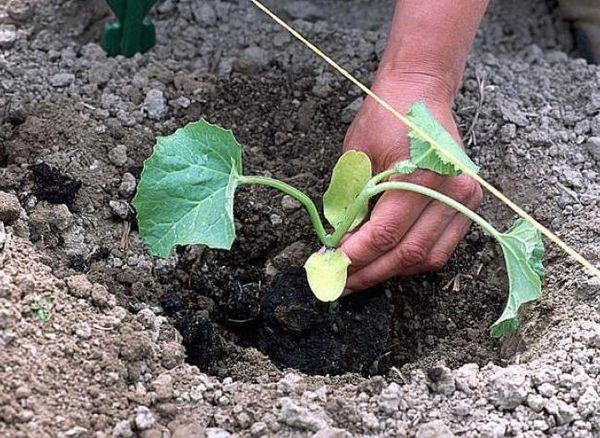
The planting pattern for melons is demanding, as the vines spread over large distances. Due to its extensive root system and long vines, the Crimson Sweet watermelon requires a lot of space.
When grown outdoors, the distance between seedlings is 2 m x 2 m. This planting distance increases yields to 60 tons per hectare. In a garden plot, 1.5 m x 1.5 m is sufficient, and in a greenhouse, even less—65 cm x 65 cm.
Experienced gardeners practice planting seedlings on black plastic. They lay it on the soil, make cuts, and dig 12-cm-deep holes into which the young plants are placed. The main advantages of this method are:
- in protecting the root system;
- when watering, the volume of water absorption is controlled;
- weeds, which are often carriers of bacteria and pests, do not germinate;
- The stems and leaves are not dirty, the watermelon fruits are clearly visible.
Care instructions
The Crimson Sweet watermelon requires careful cultivation, which depends on the climate and soil conditions of the site. Simple methods improve the plant's immunity, yield, and environmental resistance. These include watering, weed control, hilling, and tying.
Watering mode
During the growing season, melons are watered a couple of times a week, splitting the daytime watering into two sessions. The first is in the morning, the second in the evening. For open areas, evening watering is especially important; it nourishes the deep roots. Daytime watering provides more cooling and moisture to the plant's outer structure.
During flowering, watering is reduced. Later, as the fruit ripens, irrigation is stopped to avoid creating a damp environment for the watermelons lying on the ground.
If the soil is covered with black film until fruiting, water the bushes daily, 6 liters twice a day. Once the fruiting begins, stop watering.
Hilling
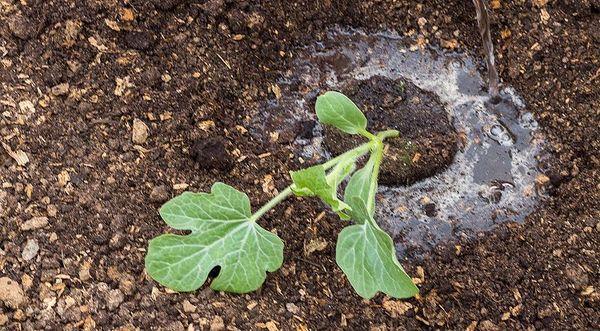
One way to protect the Crimson Sweet variety's root system from compacted soil and heavy rainfall is by hilling it. Creating mounds at the base of the stem stimulates the growth of lateral roots, which subsequently increases nutrition and leads to high yields.
Loosening and weeding
The Crimson Sweet watermelon grows both deep and on the surface, so it's important to maintain the soil. Weeds should be removed promptly, weeding should be done, and the soil should be loosened to a shallow depth to avoid damaging the roots.
Tying to a support
In open ground, the vines spread out, and the watermelons lie flat on the ground. This is a natural environment for melons. Greenhouse cultivation requires vertical staking. As the watermelons gain weight, they are placed in netting and tied horizontally.
Protection from cold
Young seedlings are vulnerable to sudden temperatures during their growth period, so when temperatures drop, they are covered with a greenhouse or agrofibre.
Feeding regime
The first fertilization is done before planting, enriching the soil with phosphorus and potassium. The next round of fertilizing begins two weeks after the plants have adapted to the open ground. An organic fertilizer consisting of chicken manure mixed with water at a ratio of 1 to 10 is used. Later, an ammonium fertilizer with nitrate is used: 20 grams of powder are diluted in 10 liters of water and watered.
Bush formation
To ensure balanced nutrition, pinch out auxiliary shoots on the Crimson Sweet watermelon stem. The majority of the fruit forms on the main stem; once 3-4 fruits have formed, the remaining ovaries should be removed.
Forming a bush prevents the vines from growing too large and taking up all the root nutrients. This also ensures that the foliage develops evenly and doesn't block the light from the fruit, which can sometimes prevent ripening.
How to properly harvest seeds
Harvesting seeds at home follows standard guidelines. You must:
- select a ripe, strong Crimson Sweet watermelon;
- cut it in half, collect the seeds from the pulp;
- rinse in water at room temperature;
- dry, pour into a bag and label.
Diseases and pests
In humid regions, the Crimson Sweet variety is often susceptible to fusarium, bacterial wilt, and root rot. High humidity is detrimental to the rhizomes and leaves. The main pests of melons are the brown marmorated stink bug and the larvae of the shoot fly. Treatment is carried out with Fury, Komandor, and Inta-Vir.
Powdery mildew
Young Crimson Sweet plants are susceptible to powdery mildew. The disease is characterized by a snow-white film covering the leaves and ovaries. Infection can be prevented early by treating the seeds with a manganese solution. If early signs are noticed, immediately treat the green parts of the watermelon with Fitosporin.
Root rot
Root rot causes the roots to swell and crack. The lower stems and leaves become covered in dark brown spots, then turn yellow and die. The fruit crop slowly dies. The disease is difficult to avoid in regions with extreme temperature fluctuations, heavy rainfall, or if cold water is used to irrigate the melon crop.
For treatment, the root collar is sprinkled weekly with crushed chalk, colloidal sulfur, and activated charcoal. The fruits are sprayed with a 0.1% solution of Fundazol.
Bacteriosis
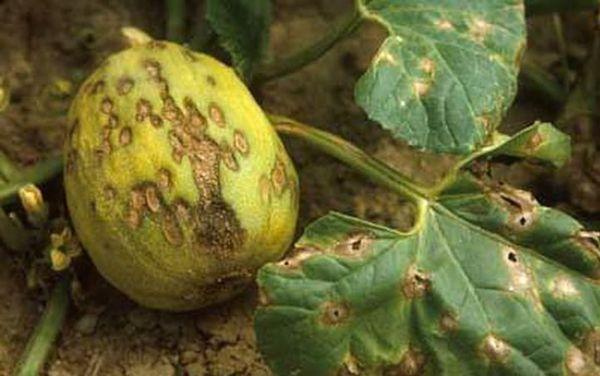
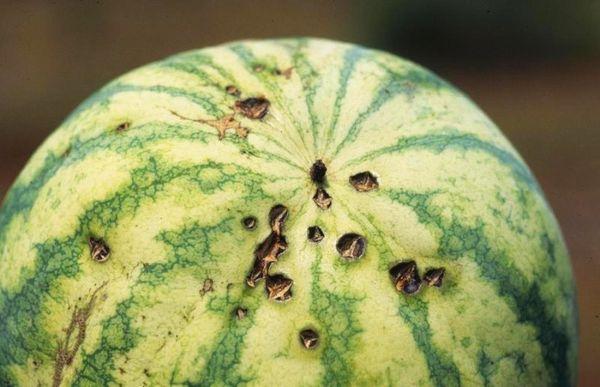
Bacterial blight manifests itself as raised brown spots on the skin of watermelons, with a central spot resembling an insect bite. The flesh turns yellow and rots, but the skin remains intact. Ripe fruits are primarily susceptible to this disease.
Experienced gardeners regularly conduct inspections, and affected fruits are disposed of away from the plot.
Fusarium
Fusarium wilt affects both young seedlings and mature plants. A characteristic sign of infection is wilting and drying of leaves, which turn light green. Stems become waterlogged, and the roots rot. This disease is common in regions with cool summers. Plants are treated by watering: 10 g of potassium salt, 30 g of ammonium sulfate, and 125 g of superphosphate are diluted in 1 liter of water.
Hybrid varieties
Through selection, hybrid varieties of Crimson Sweet watermelon were developed: Crimson Ruby F1 and Crimson Wonder F1
Crimson Ruby F1
Crimson Ruby F1 is an early watermelon variety, ripening in 60-65 days. It has strong resistance to sudden temperature fluctuations and diseases. The fruits are large, oval-shaped, averaging 14 kg in weight, with dark green skin. The flesh is velvety red, juicy, and rich in sucrose. This watermelon has strong resistance to fusarium.
Crimson Wonder F1
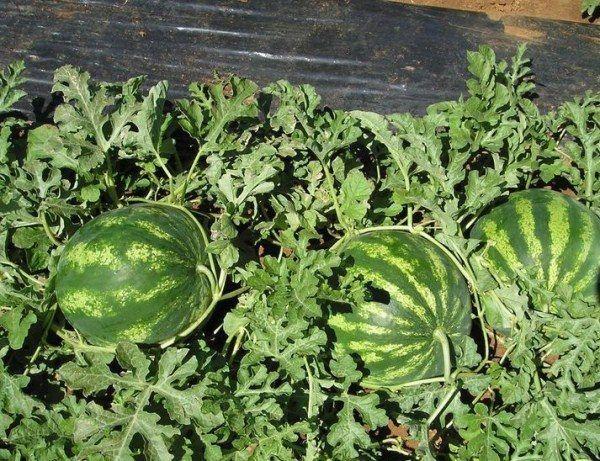
Crimson Wonder F1 is a mid-season variety resistant to dry soils and temporary low temperatures. It has a different coloring than its predecessors, with light green skin featuring dark longitudinal stripes. The fruits are large and oblong, with a firm skin that conceals tender flesh with a refreshing flavor and pleasant aroma. It is highly resistant to fungal diseases.
Harvesting and storage
Harvesting begins 80-85 days after sowing, in late July, and the ripening period continues until September. Each bush produces 3-4 large, high-quality fruits, each weighing an average of 12 kg. In a greenhouse, the average weight is 5-8 kg. The rind is quite thick, allowing the watermelons to be stored in a cool place for up to 2 weeks.
Tips and recommendations
To ensure successful growing of the Crimson Sweet watermelon, it's important to follow the recommendations of experienced melon growers: properly prepare the planting material, avoid sowing it in unheated soil, and avoid overwatering the berry beds.
Related posts:
 Description and characteristics of Sweet Pomponette daffodils, planting and care
 Description of Sweet Cherry F1 tomato fruits and rules for growing tomatoes
 How to propagate and grow peas, cultivation technology, and care in open ground
 Description and characteristics of the best seeds of pea varieties and types
 80 Best Eggplant Varieties for Different Regions with Descriptions and Characteristics
 Description of the Velika grape variety, cultivation and care tips
 The best grape varieties for growing in the Urals, planting and care rules in summer
 Description of varieties of sowing peas and cultivation, to which family they belong