
- Watermelon diseases and treatment methods
- Fusarium
- Anthracnose
- Root rot
- White rot (sclerotinia)
- Leaf rust
- Gray rot
- Olive spot
- Bacterial spot
- Mosaic disease
- Powdery mildew
- Downy mildew (peronosporium)
- Pests of crops and their control
- Melon aphid
- Sprout fly (larvae)
- Spider mite
- Wireworm
- Thrips
- Root nematode
- Noctuid moths
- Locusts
- Causes of various symptoms
- The leaves are turning yellow
- The leaves are curling
- The ovary dries up
- The seedlings are wilting
- General preventive measures
Like any fruit crop, watermelons require care. For proper development, they require regular watering, fertilizing, and comfortable temperatures and humidity. Watermelons are often susceptible to infectious and fungal diseases, so they especially need preventative measures. Let's look at the diseases that affect watermelons and how to protect them.
Watermelon diseases and treatment methods
Watermelons are highly susceptible to diseases such as powdery mildew, various types of rot, fusarium, and others. If signs of any of these diseases are detected, take immediate action and treat the cucumbers with an appropriate product to avoid crop loss.
Fusarium
Fusarium wilt is caused by a harmful fungus called Fusarium. The fungus spreads throughout the plant, clogging the watermelon's blood vessels and accumulating toxins. This ultimately leads to the death of the fruit. The first signs of the disease appear while the seedlings are still growing.
To prevent fusarium, it is necessary to destroy dried shoots after harvesting and disinfect the soil.
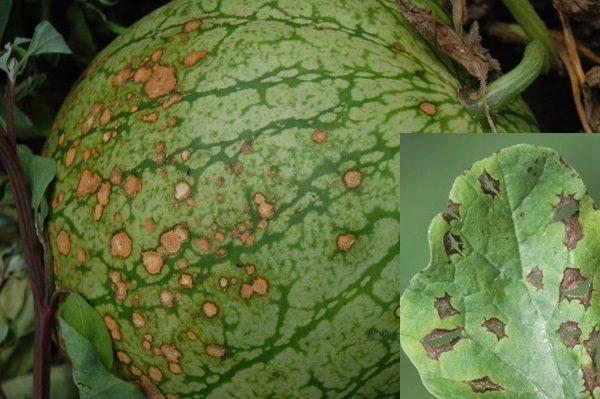
Anthracnose
This disease often appears during seasons with high humidity. It causes the watermelon to develop yellowish spots, which eventually increase in size and merge with each other. To prevent this, treat the seeds with Fundazol before planting, and disinfect the soil and equipment.
Root rot
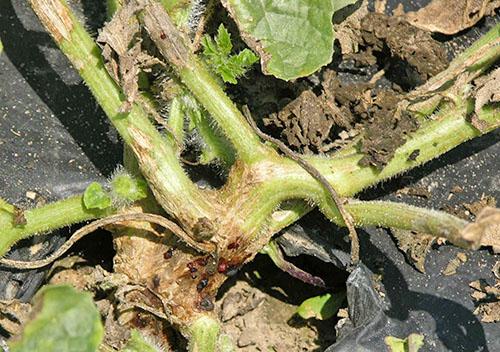
It appears on the above-ground portion of the plant as black-brown spots at the base of the stem. The root system thickens and disintegrates into individual fibers. The affected watermelon gradually dies. As a preventative measure, it is recommended to treat the seeds with a potassium permanganate solution before planting. It is also important to carefully monitor the amount of watering, as excess moisture causes rot.

White rot (sclerotinia)
Under its influence, the leaves at the base of the plant primarily discolor and rot. Afterward, the stems begin to rot and die. Fertilizing with zinc sulfate and urea helps combat the disease.
Leaf rust
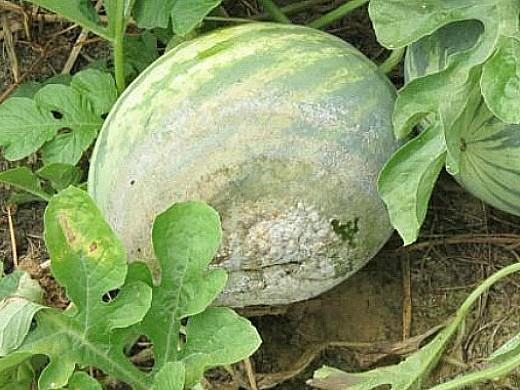
This disease is caused by rust fungi. Brown bumps appear on the bush, which eventually crack. The fungus is caused by excess moisture and nitrogen-based fertilizers. It is treated with fungicides.
Gray rot
It is spread by the fungus Botrytis cinerea, which appears in the garden during damp weather. The ovaries become water-soaked and moldy. Fungal spores appear in the affected areas. The fungus persists in the soil for up to two years. Treatment is by weeding and removing any remaining infected stems.
Olive spot
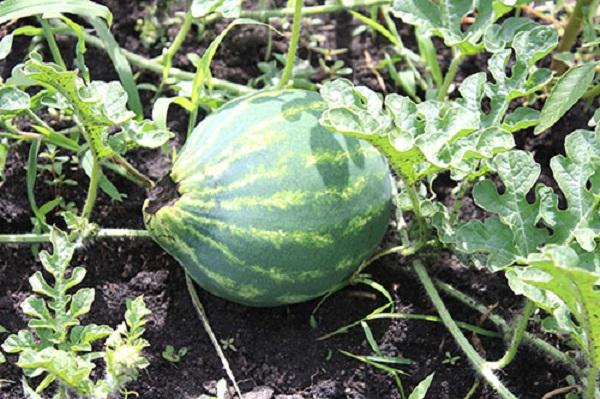
It appears as variously shaped spots on the leaves of bushes. The leaves curl, a coating appears on the stems, and the fruit buds gradually dry out. Proper crop rotation is essential for prevention.
Bacterial spot
The most common disease among watermelons. The disease initially appears on the leaves as spots. These spots then appear on the fruit and spread, damaging the tissue. There is currently no effective treatment for bacterial spot; only removal of the infected plant parts can help.
Mosaic disease
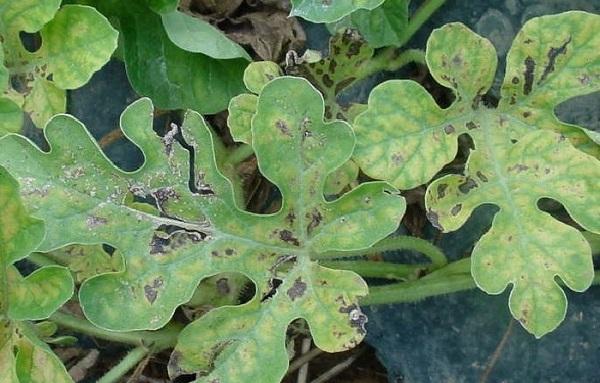
It appears on the leaves and stems of the plant as yellow spots. Infected leaves grow small, and the watermelon generally develops poorly. It is spread by aphid colonies during the growing season and also through contact between healthy and diseased plant parts.
Powdery mildew
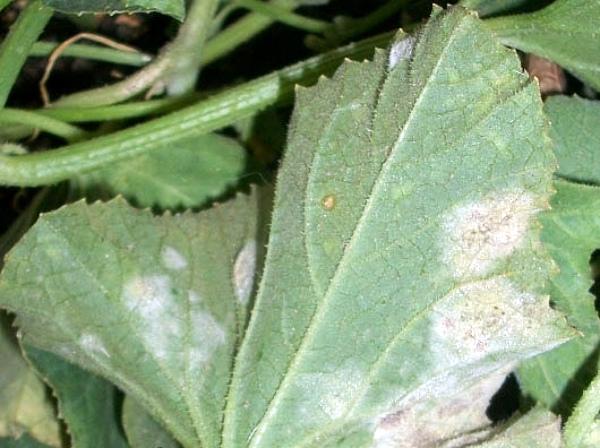
It is spread by a fungus that hides in the soil. White spots appear on the leaves, the fruit becomes deformed, and the flavor of ripe watermelons deteriorates. To combat this, the plant is treated with a 25% solution of karatan suspension.
Downy mildew (peronosporium)
It appears as angular spots on leaves. Infected areas turn brown and die. The pathogens survive in the soil for up to three years.
Pests of crops and their control
Watermelons' worst enemies include pests such as melon aphids, mites, wireworms, locusts, and other harmful insects. Let's look at each pest separately.
Melon aphid
The most common pest in watermelon beds. They can be winged or wingless. The wingless insects are the most dangerous. Plants infested with aphids exhibit a mosaic pattern. The leaves curl, and a white coating appears on the underside. To combat them, treat watermelons with an ash solution. A good folk remedy for aphids, which can be prepared at home, is a solution of 200 grams of stove ash per liter of water with the addition of 50 grams of laundry soap.

Sprout fly (larvae)
They eat away the stems and roots of the plant from the inside, causing the watermelon to rot. The sprout fly lays eggs in the soil. To remove them, the soil must be dug over. After planting, the plants should be sprayed with Iskra Bio.
Spider mite
They reproduce in dry, warm weather. They attach themselves to the tissue on the underside of leaves and feed on the sap. BI-58 is used to control the mite.
Wireworm
They chew holes through watermelons, causing them to rot rapidly. Traps containing jars of potato, carrot, and beetroot pieces help eliminate them.

Thrips
They look like small dark streaks. They feed on leaf sap. They allow the leaves to completely wither within a week, after which they move on to the stems. Chamomile infusions are effective against thrips.
Root nematode
Roundworms are microscopic insects that attack watermelon roots. To kill them, disinfect the soil with carbon disulfide and chloropicrin.
Noctuid moths
Cutworm caterpillars emerge from the soil at night and devour watermelon leaves and shoots. To control them, spray the plants with a wormwood infusion.

Locusts
Locusts consume all parts of the plant. In the event of a massive infestation of these pests, only chemicals, such as Taran, can help.
Causes of various symptoms
Watermelon diseases and pests typically present with specific symptoms. Early detection and appropriate action are essential, otherwise the harvest will be lost.
The leaves are turning yellow
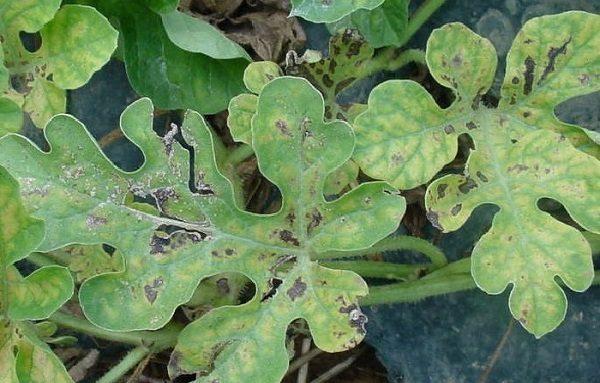
The main reason yellow watermelon leaves A lack of water is the cause. This can also be a symptom of parasitic insects, such as mole crickets and wireworms. Leaves turn yellow due to bacterial spot, various types of rot, and powdery mildew. This symptom is especially common when the plant is not planted outdoors on time.
The leaves are curling
Melon leaves may curl due to excessively hot or cold temperatures and nutrient deficiencies. This can also be a symptom of fusarium wilt, necrosis, or anthracnose.

The ovary dries up
Ovaries can turn black and dry out if the climate is unsuitable for growing watermelons. To compensate for these climate conditions, it is recommended to use artificial heating in the greenhouse.
Also, the ovaries dry out in the presence of anthracnose, bacterial or olive spot, or gray rot.
The seedlings are wilting
The main cause of young seedling death is improper watering, most often overwatering. Excess moisture promotes fusarium wilt. To prevent seedling wilting, it's important to use disinfected soil, maintain a stable temperature, and apply fertilizer regularly.
General preventive measures
Most melon diseases begin to manifest themselves while the seedlings are still growing. The root stalk begins to darken, and the bush becomes droopy—all of this indicates that the plant is already infected. The infected plant must be removed and the soil replaced. Seedlings should be treated with Krezatsin.
To prevent diseases, the greenhouse should be regularly ventilated and disinfected. In the fall, the area should be dug over. The planting site should be changed every three years. The soil should be disinfected before planting, regularly loosened, and properly fertilized. It's essential to maintain a proper watering schedule: provide the plant with the required amount of moisture and avoid overwatering to prevent rot. Water should always be at room temperature.
Related posts:
 Description and treatment of potato diseases, methods of control using folk and chemical means
 Causes and treatment of eggplant pests and diseases, how to combat them at home
 How to propagate and grow peas, cultivation technology, and care in open ground
 How to properly plant peas in a greenhouse and open ground
 How to plant grapes step by step, with a description of the process and care
 What is the best way to treat currants against diseases and pests after harvesting?
 The best eggplant varieties for growing in a polycarbonate greenhouse: planting and care
 Causes and treatment of anthracnose on grapes, how to treat and combat it