
- Features of growing in a greenhouse
- Preparing a polycarbonate greenhouse
- Growing seedlings
- How to properly prepare the soil
- Screening
- Disinfection
- Fertilizer
- Selecting seeds
- Sorting
- Germination test
- A weak solution of potassium permanganate
- Flushing
- Kornevin or Zircon
- Sowing time
- Seedling container
- Planting seeds
- Watering
- Picking
- Landing technology
- When to plant
- Comfort zone or seating pattern
- Good and bad neighbors
- How to reconcile vegetables
- Care
- How to maintain temperature
- Sun protection
- Watering
- Top dressing
- Pollination
- Stepsonovka
- Garter
- Formation after landing
- Formation into one stem
- How to form two stems
- How to create a bush with multiple stems
- Peculiarities of the regions
- Central Russia
- Ural
- Siberia
- The best productive varieties
- Purple Wonder F1
- Dolphin
- Nutcracker
- Half-hearted
- Bagheera F1
- Romantic
- Joker
- Sofia
- Vakula
- Namesake
- City Policeman F1
- Fabina F1
- Black beauty
- Robin Hood
- Sancho Panza
- Bibo F1
- Boyarin F1
- Alenka
- Goliath F1
- Pink flamingo
- Swan
- Viola di Firenze
- Maxik F1
- Baikal F1
- Sailor boy
- White Night
- Icicle
- Albatross
- Epic F1
- Secrets
- Answers to questions
- Why do flowers fall off?
- Why aren't the seedlings growing in the greenhouse?
- Why do leaves curl?
- Why do leaves turn yellow?
In the warmer climates where eggplant is native, it grows as a perennial herb. Cultivation began 1,500 years ago. It requires warmth, sun, and good care, and is quite demanding in terms of growing conditions. In many regions of Russia, eggplants only grow in greenhouses. Let's look at how to get a good eggplant harvest in polycarbonate greenhouses—growing guidelines, soil preparation, and the best varieties.
Features of growing in a greenhouse
Eggplants are considered crops that require strict adherence to agricultural practices. They are sensitive to soil conditions and stop growing if there is insufficient heat, light, and moisture. Breeders are helping to address these issues by developing varieties adapted to regional climates.
Greenhouse cultivation allows you to create conditions that eggplants prefer. The advantages of greenhouse cultivation include:
- the ability to maintain the required humidity and temperature parameters;
- independence from weather disasters.
By creating comfortable conditions for the plant, gardeners achieve a significant improvement in the taste and aroma of the fruit.
Basic rules for growing eggplants in a polycarbonate greenhouse:
- A rational choice of a variety suitable for a greenhouse and the conditions that can be maintained in it.
- Pre-planting soil preparation.
- Regulation of lighting (12 hours a day), temperature, air humidity.
- Watering with warm water according to the recommended scheme.
- Removing excess ovaries.
- Supplementary feeding to replenish nutrients.
To ensure these conditions, certain rules must be followed during the construction and operation of greenhouses. Polycarbonate greenhouses are a convenient option. They retain heat well, are reliable, and durable. They are also easy to maintain.

Greenhouse requirements:
- the presence of vents and transoms for ventilation;
- installation in a well-lit area and use of fluorescent lamps to increase the photoperiod;
- in cold regions – an additional heating system to maintain the temperature;
- installation of anti-condensation film for insulation.
There's no need to make a greenhouse for eggplants tall, as the plants are small. Ease of use is the primary consideration; 1.8-2.5 meters is sufficient. For the frame, choose a suitable material; polycarbonate is laid loosely to prevent cracking from temperature fluctuations. Provisions for ventilation are mandatory.
When using a greenhouse, remember not to plant too densely; 3-4 plants per square meter are recommended. The greenhouse size should be planned in advance. In cold regions, the greenhouse must be heated, which increases the cost of harvesting. It is recommended to build the structure on a foundation deepened by 20 centimeters to reduce heat loss.
Preparing a polycarbonate greenhouse
After harvesting, the greenhouse is prepared for winter. No organic matter, supports, or plant ties should be left behind. The soil is dug over, and roots, tops, and leaves are removed. The soil is treated with fungicides if the plants were diseased during the growing season.
Autumn disinfection of the greenhouse is carried out in the following cases:
- in case of mass disease of plantings in a greenhouse;
- with continuous cultivation of one crop;
- If you fail to control the pest during the season, it can overwinter in the greenhouse.
Disinfection can be carried out in the spring, 14 days before planting the seedlings. Sulfur checkers are commonly used. Subsequently, the soil should be maintained with biostimulants (Organic-Balance or others).
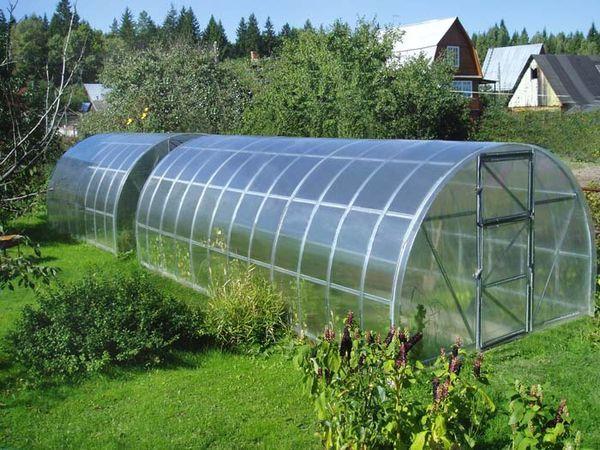
In the spring, wash the walls with a solution of laundry soap. It's important to thoroughly clean the frames, as they harbor colonies of pathogenic bacteria, disease-causing organisms, and pests.
Growing seedlings
Due to their long growing season and heat-loving nature, eggplants are planted as seedlings throughout the country. To prevent crooked and dry fruits, it's essential to strictly follow proper agricultural practices.
How to properly prepare the soil
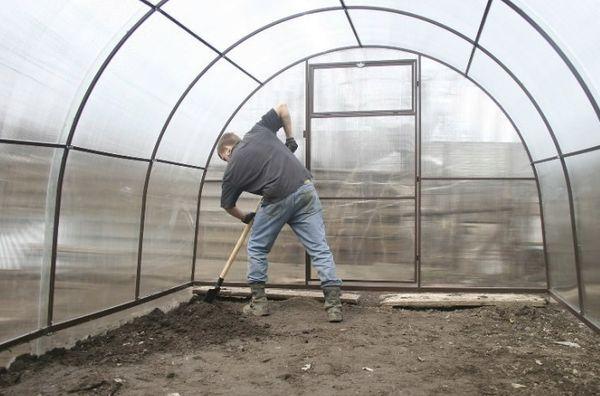
Soil preparation for planting is equally thorough in greenhouses and for growing seedlings. Pre-planting disinfection involves removing residues from the previous year's harvest, as well as pest eggs and larvae. This treatment will prevent infection from entering the soil.
In a greenhouse, it's important to clean the soil in the fall, as it harbors fungi and bacteria that actively multiply in warm weather. Without this, growing a good harvest next year is impossible. When grown in the same spot for many years, the soil deteriorates, becoming depleted of nutrients, making it increasingly difficult to remove pathogens.
Important: In permanent greenhouses, crops are grown in the same location for several years. It's important to regularly replace the top 20-30 centimeters of soil.
Screening
Mechanical tillage is the first step in preparing the greenhouse soil. All undecomposed residues are removed from the soil. To do this, the soil is passed through a fine-mesh sieve, removing roots, debris, and pest eggs and larvae. Remains of old mulch that have not yet decomposed in the soil are removed.
Disinfection
There's a whole arsenal of disinfection methods available, including tried-and-true old-fashioned and modern chemicals. Folk remedies are gentler, but if you use a greenhouse for a long time and the soil is seriously contaminated with diseased plants, chemicals may be necessary.
Copper sulfate solution
A copper sulfate solution effectively disinfects greenhouse soil. Prepare it at a rate of 5 grams per 10 liters of water. Water the soil, let it dry, and then dig it in.
Steam
Steaming the soil in a greenhouse is only possible with specialized equipment. Seedling soil is steamed using the following method:
- put a bucket on the fire, pouring 1-1.5 liters of water into it;
- bring to a boil;
- Place a sieve or colander with soil (4-5 centimeters layer).
The exposure time is 30 minutes, then move on to another portion of soil.

Treatment with boiling water
Pour boiling water over the soil at a rate of 1-2 buckets per square meter of the greenhouse. Immediately cover the soil with plastic film to maintain the high temperature for longer. This method is used to restore soil fertility in tired soils that have been in crop rotation for a long time.
Calcination
This is how soil is prepared for indoor seedlings. The soil is poured into a deep baking tray to a depth of 5 centimeters and moistened with water. The soil is then placed in the oven, preheated to 70-90°C. The baking time is 20-30 minutes. Higher temperatures are not used. Many agronomists believe that this method kills some beneficial microorganisms.
Bleach
Lime is used in two ways: dry and by preparing a solution:
- Dry. Consumption: 100 grams per square meter of greenhouse. Sprinkle the powder onto the dug soil and distribute it while harrowing with a rake.
- The solution is prepared using 400 grams of lime per 10 liters of water. The mixture is left for 8 hours, stirring occasionally. Allow it to settle, then apply the top layer. Spray with a spray bottle.
The greenhouse walls and equipment are thoroughly watered.

Formalin
Formaldehyde is useful for treating soil in greenhouses to prevent blackleg infestation. Apply 10 liters of the prepared solution per square meter of area. The ratio is 250 milliliters of 40% formaldehyde per 10 liters of water.
After watering the soil, cover it with plastic wrap and let it sit for several days, with the doors tightly closed. Wait until it dries, then dig and harrow it. The greenhouse is well ventilated.
Fertilizer
Fertilizing the soil before planting is the final step in preparation. For greenhouses, add a half-bucket of compost or peat mixed with a cup of ash per square meter of beds. To reduce excess acidity, sprinkle dolomite flour (2 tablespoons).
Important: do not use fresh manure and clay when preparing your own soil mixture.
Selecting seeds
When choosing eggplant seeds for a greenhouse, it is important to consider several factors:
- hybrids are more resistant to diseases and productive;
- it is better to give preference to zoned species;
- compliance with expiration dates;
- Pelleted varieties do not require additional preparation before planting.
Please note that when growing hybrids, it is not possible to obtain seeds.
Sorting
When purchasing uncalibrated seeds, inspect them and remove any damaged ones. Ideally, all seeds should be the same size, free of chips and mold. Seeds of the same size will grow together and develop evenly.
Germination test
Before disinfecting and planting, the seeds are tested for germination. To do this, prepare a saline solution at a ratio of one teaspoon of salt to 200 milliliters of water. The seeds are immersed in the water for 20-30 minutes. Any seeds that float to the surface are considered defective and removed.
This method isn't particularly accurate. If most of the bag is exposed, try germinating it in a warm, damp cloth.


A weak solution of potassium permanganate
Potassium permanganate is a proven method for disinfecting seedlings. Eggplant seeds are dipped in a bright pink solution; too dark a color will damage the embryos. The water should be at room temperature, and the soaking time should be 20-30 minutes.
Flushing
After treatment with potassium permanganate, the seed material is washed with water of the same temperature to wash off the remaining solution.
Kornevin or Zircon
Growth stimulants enhance germination and accelerate root growth. They influence the subsequent development of seedlings and mature eggplants. Kornevin and Zircon are used separately or together, diluted according to the instructions, and then soaked in the seeds.
Sowing time
The time for planting seeds for seedlings depends on many factors:
- eggplant varieties;
- features of climate and weather;
- Is the greenhouse heated?
Gardeners have to choose the timing themselves, based on recommendations on eggplant seeds and their gardening experience.
For the middle zone and cultivation in polycarbonate greenhouses, eggplant sowing is carried out from the beginning of February to the first ten days of March.

Seedling container
If you're confident in the quality of the seed and have individual containers or trays, it's convenient to sow eggplant seeds individually. They're planted directly into plastic or peat cups. Most people use communal containers for the initial sowing and then transplant them later.
It's important to disinfect containers, especially if they've been used before. Any container up to 10 centimeters tall is suitable. Place a drainage layer on the bottom and the prepared potting mix on top.
Planting seeds
Let's note two more procedures that many gardeners consider mandatory before planting eggplants:
- Hardening off. This is done for unheated greenhouses and when planting seedlings in open ground. Eggplant seeds are kept on a damp cloth in the refrigerator for 24-48 hours.
- Germination. Place the seed on a flat plate, placing it on a loose, water-moistened cloth. Maintain constant humidity, warmth (28-30°C) and sunlight are essential. Seeds with sprouts will germinate faster, but planting them is difficult. There is a risk of breaking the eggplant sprouts. Tweezers are commonly used.
Soil is poured into prepared containers and watered without excess. Allow the water to saturate the soil layer. Make furrows 1-1.5 centimeters deep and spaced 5 centimeters apart when planting in shared containers. Eggplant seeds are placed 1.5 centimeters apart and covered with soil, compacting gently. Water with warm water.
To create a greenhouse effect, cover the containers with plastic or glass and place them in a warm location (25-27°C). If there is insufficient light, use fluorescent lamps. During the day, remove the eggplant cover briefly to allow for ventilation.
Sprouts will appear in 6-10 days; when they begin to push against the film, it is removed. Once sprouting has occurred en masse, the eggplant seedlings can be moved to cooler rooms (17-18°C).
Watering
The first watering is carried out after 6-7 days. It is better to moisten the soil with a spray bottle so as not to wash away the soil and expose the seeds.
Once the eggplant seedlings have started to grow, water them at the roots with a small watering can (like a teapot). Insufficient moisture causes the seedlings to become stiff, the stems to become woody, and the future harvest will decline.

Watering frequency depends on how dry the soil is; eggplants dislike both over- and under-watering. Water temperature should be between 25-28°C; tap water should be allowed to settle; if possible, use melted or rainwater.
Some gardeners practice additional disinfection of the soil after the eggplant seedlings emerge with a weak solution of potassium permanganate.
Picking
The appearance of three leaves is a signal to transplant eggplant seedlings if they're growing in a shared container. Many people can't avoid this, as individual plantings require a lot of space, and young seedlings in separate containers are more difficult to reach with light.
Eggplants should be pricked out as early as possible, while the cotyledons are still growing. This increases the survival rate. Pricking instructions:
- light watering of eggplant seedlings;
- preparing separate containers with a capacity of 0.7-1 liter, half filled with soil, watering the soil;
- the soil composition in the new container is the same as for the first sowing;
- carefully remove the seedling with a lump of soil, trim the main root;
- plant in a new container, without bending the roots, vertically;
- add more soil, lightly compact it around the eggplant stem.
The final stage is watering and placing the eggplant seedlings in a location away from direct sunlight. The seedlings are kept in this position for 24 hours, with subsequent increases in light.
Transplanted plants should be fertilized after 7-10 days, and then every 2 weeks. A total of 3-4 applications at home are required. If the soil is well-fertilized and eggplants are growing normally, 2-3 applications may be sufficient.
Organic and mineral fertilizers are added alternately; ready-made fertilizers for seedlings can be used. A balanced approach is beneficial for eggplants.
Important: when seedlings are stretching, fertilizing will not help, but will only worsen the situation.

Landing technology
Eggplant seedlings are ready for planting in 2.5-3 months. By this time, the greenhouse should be prepared and the soil should settle for about a week. The holes should be shallow (20 centimeters), and 1.5 liters of a pale potassium permanganate solution should be poured into each. The seedlings, with a lump of soil, are transferred from the container to the garden bed.
The young eggplant seedling is not planted deep, the soil around it is lightly compacted and watered.
When to plant
If the greenhouse is heated, planting should be done two weeks earlier. It's important for the soil to warm to 15°C at a depth of 20 centimeters. When planting in unheated greenhouses, wait until the temperature rises steadily to avoid losing the seedlings to frost. This will require guidance from forecasts and personal experience. Typically, this is done in late May or June.
The seedlings should have 7-10 leaves on a strong and dense stem, and the root should fill the entire volume of the container.
Comfort zone or seating pattern
The desire to grow more eggplants often results in a reduced yield. The plant grows spreading bushes with large leaves. It is recommended to space the plants no closer than 45-50 centimeters apart in greenhouses. When planting in two rows, the seedlings are staggered.
Too many bushes per square meter leads to poor ventilation and the rapid spread of diseases and pests in the greenhouse.

Good and bad neighbors
When growing outdoors or in a large greenhouse, you can plant the following next to the eggplants:
- sweet pepper is the best neighborhood for both crops;
- white cabbage;
- legumes;
- melons;
- green;
- beets;
- zucchini.
Tomatoes are closely related to eggplants; the crops suffer from common diseases and should be separated into separate plots. Planting them next to potatoes can lead to an infestation of Colorado beetles, which eat the foliage, ovaries, and fruit.
How to reconcile vegetables
Most gardeners only have one greenhouse, so they have to grow vegetables together. It's helpful to know how to space crops so they don't interfere with each other.
The best option is to create separate zones secured with doors or hanging films. These are attached to the greenhouse ceiling, separating the crops. Cucumbers require high humidity and naturally release moisture, so they need to be separated from other crops.
Tomatoes and eggplants are planted at opposite ends of the greenhouse to avoid losing all the plants if they become infected. In any case, you'll need to closely monitor the bushes to detect problems early. eggplants without harm They plant bell peppers and greens.

Care
When growing eggplants in greenhouses, constant monitoring of temperature and humidity is required, as well as providing a long period of illumination during early planting.
How to maintain temperature
The temperature comfort zone for the crop is 25-28°C. At these temperatures, the bush grows quickly in the greenhouse, and the ovaries develop into fruit. A deviation of 3-4°C is acceptable. If the deviation from these parameters is significant, the greenhouse is heated or cooled.
Temperatures are measured at the soil level and at a depth of 1.5-2 meters. If temperatures drop sharply, create a greenhouse over the eggplants by stretching plastic over arches. If the air in the greenhouse has warmed above 30°C, the easiest way to reduce the temperature is by ventilating the area. Open vents, doors, and transoms, being careful not to create strong drafts in the greenhouse.
Note: As hot weather sets in, some gardeners remove some of the polycarbonate sections of their greenhouses to ensure constant ventilation and lower temperatures.
Sun protection
Greenhouses are recommended to be placed in well-lit areas. During hot, sunny weather, the heat inside the structure reaches record levels. Eggplants lose their blooms, and the plants simmer. What gardeners recommend for protection from excessive sun exposure:
- Whitewashing the walls of the greenhouse on the sunny side with water-soluble paints (in particular chalk).
- Curtaining walls from the sun's side from the inside or outside of the building.
- Use of reflective mesh to block up to 50-75% of heat and light.
The sunniest sides of the greenhouse are covered with cardboard or fabric, creating shade.

Watering
Water with water at a temperature of 24-26°C, which is preferred by eggplants. Well water or borehole water is harmful to the roots. It's best to use settled water from containers. Watering in greenhouses should be done in the morning or evening.
Excess water isn't required, as most eggplant roots are located at a depth of 20 centimeters. Approximate watering schedule:
- the first after planting seedlings - after 6-7 days;
- when growing stems and green parts - once a week;
- when the fruits are growing - 2 times a week, more often when they dry out.

Between waterings, the eggplant beds are loosened slightly. Water the eggplants at the roots; the fuzzy leaves do not require sprinkling. If condensation accumulates on the greenhouse walls, wipe it off with a cloth.
Note: The recommended air humidity is 60-70%, so eggplants don't do well with cucumbers, which prefer much higher humidity.
Mulching the beds helps retain moisture and reduce the need for watering in the greenhouse; it is best to use organic matter for this purpose.
Top dressing
The first two weeks are spent allowing eggplant seedlings to take root and acclimate to the new conditions. During the season, fertilize 3-4 times, alternating organic and mineral fertilizers.
The plant thrives on nitrogen fertilizers, which are applied early in growth to promote foliage growth. Approximate schedule:
- 2 weeks after transferring to the greenhouse - nitroammophoska (NPK), 3 tablespoons per 10 liters of water, half a liter per bush;
- during flowering - nitrogen-phosphorus, a tablespoon of superphosphate and a teaspoon of ammonium nitrate per bucket of water;
- during fruit growth – potassium chloride, potassium nitrate, ammonium nitrate.
It is useful to use herbal infusions (nettle), yeast solution. Growth stimulants that protect against diseases and accelerating the vegetation of eggplants.

Pollination
Eggplants don't require special pollination. Shaking the clusters during mass flowering is sufficient. If fruit set is insufficient, use pollinators such as Bud or Ovary.
Stepsonovka
It's important to remove excess shoots on eggplants to ensure fruit growth. Basic rules for removing side shoots:
- All leaves and ovaries of the main stem are cut off up to the first branching of the trunk.
- Apical growth is stopped by pinching to ensure the growth of ovaries and fruits.
- Before pruning, the pruning shears are sharpened and disinfected with a disinfectant solution.
Excess lateral shoots on the bushes are regularly removed; this facilitates ventilation and accelerates fruit weight gain. On large clusters, some weak flowers and deformed ovaries are removed.
Garter
Tall varieties with unlimited stem growth and bushes with large numbers of fruits require staking. They are secured to individual supports or trellises. Soft fabric is carefully wrapped around the stems at nodes or branches and secured to the supports. As the bush grows, the staking is increased.
Formation after landing
Stem shaping is part of the process of pinching out side shoots. Standard, low-growing eggplant varieties don't require shaping, and are preferred by many gardeners.
Formation into one stem
If gardeners overdo planting density—there are too many bushes—the eggplants are grown as single stems. This same pattern is chosen for weakened seedlings that have difficulty establishing and produce weak shoots. This pattern is used for tall eggplant varieties and hybrids.
Bush formation begins 2-3 weeks after planting:
- cut off all shoots up to 3-4 leaves;
- 6-8 leaves – stepsons are cut out completely, half of the ovaries are left;
- 9-10 leaves – shoots are removed;
- above - leave 2-3 leaves with ovaries.
When grown this way, the bush requires strong support in each area where the fruits are growing.
How to form two stems
Many gardeners practice this method of growing in greenhouses - the bush is not too dense, and is more stable.
When the seedlings are actively growing and reach 30-35 centimeters, the top of the eggplant is cut off. A pair of symmetrical side shoots is selected from the side shoots, forming a convenient fork. The lower shoots are removed, leaving the plant with two trunks.
Stepchildren are removed in the usual way, and the number of ovaries is also regulated, leaving 2-3 eggplants on the brush.
How to create a bush with multiple stems
The top growth point of the bush is removed when the seedling reaches 30-35 centimeters. Two shoots are selected to create a double-stemmed bush.

After two weeks, the crown begins to form. A side shoot is left on each stem, and the remaining shoots are pinched back to prevent growth. This process continues along all the forks, leaving one shoot at a time. The resulting bush resembles a tree crown.
Pinching off side shoots helps remove weak shoots, damaged flowers, and deformed fruit buds. A month before the eggplants ripen, pinch off all the tops to ensure the plant's energy is focused on fruit production.
This scheme is used when some seedlings are lost and space becomes available in the beds. The resulting bushes are spreading and wide. If planted too closely, the eggplants will lack space, and diseases can easily spread through the interlocking crowns.
Peculiarities of the regions
The zoning of eggplant varieties primarily concerns outdoor cultivation. Greenhouse cultivation techniques are the same across regions; the timing of transplanting seedlings to a permanent location depends on heating availability.
Central Russia
In the central part of the country, eggplant seedlings are transferred to a greenhouse at the end of May. In cold weather and without heating, the temperature can be raised using stoves or containers of hot water. Popular varieties among gardeners in the region include:
- Joker;
- Bagheera;
- Black beauty;
- Diamond.
When daylight hours shorten, watering is postponed until later. It's important to wait until the soil warms up. If condensation forms, wipe the structure clean.

Ural
The Ural region is characterized by severe cold snaps in June. Polycarbonate greenhouses are best made from multilayer plastic and equipped with heating systems.
Eggplant varieties with a short growing season are chosen for cultivation, as cold spells can occur as early as August. The best varieties for the Urals are:
- Early ripening – standard, up to 200 grams;
- Diamond;
- Snowy – white fruits, tender, without bitterness;
- Leader;
- Nutcracker.
Eggplants are not grown in open ground in the Urals.
Siberia
In the coldest parts of the region, greenhouses are placed on a foundation, deepening it by 20 centimeters. Popular eggplant varieties include:
- Early ripening – pear-shaped elongated fruits;
- Vakula;
- Epic;
- Dwarf early 921 – a low bush (45 centimeters), with a yield of up to 5 kilograms;
- Black beauty;
- Nutcracker.
In the south of Siberia, many people grow the crop in open ground.
Important: it is better not to plant late-ripening varieties in greenhouses, leaving them for southern regions.
The best productive varieties
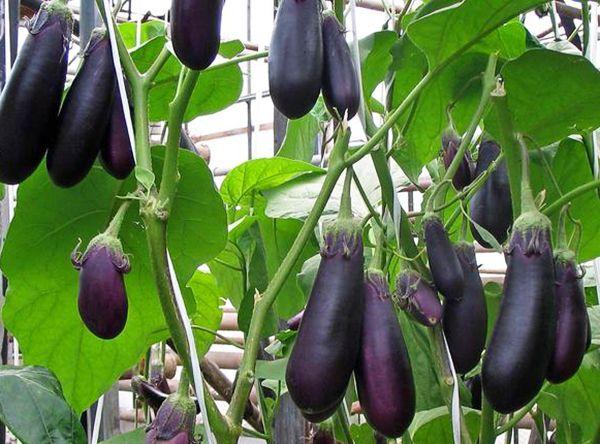
Most eggplant varieties sold in Russia are recommended for greenhouse planting. Here's a list of the most popular and sought-after varieties.
Purple Wonder F1
Among its peers, this hybrid is distinguished by its low maintenance, yielding up to 6-8 kilograms per square meter. The fruit is virtually free of bitterness under any growing conditions. It ripens early (100 days). It is suitable for canning in circles, as it holds its shape well.
Dolphin
The eggplant bush grows to a height of 150-200 centimeters, with a robust, dense crown. The fruits are elongated and pointed. It is a large-fruited variety, weighing up to 450 grams. The color is uneven, with light markings. It is beloved for its small number of seeds and delicate flavor.
Nutcracker
The fruits are dark, glossy, and plump, resembling pears. They produce eggplants throughout the season. With proper care, the harvest grows in several waves, ripening until autumn. The seeds are small, almost invisible after cooking. The first harvest is in 100-110 days.
Half-hearted
This eggplant variety grows well even in cool temperatures. The fruits are variegated, not purple, with white stripes. Among striped varieties, it stands out for its very white flesh and balanced flavor, weighing 220 grams.

Bagheera F1
Eggplants of classic shape and color yield up to 3 kilograms per plant. They mature in 110 days, and the plant is dense and tall – up to 1.2 meters. The plant requires pinching and removing excess buds. The crop grows well in polycarbonate greenhouses.
Romantic
The fruits of the 'Romantika' variety are lilac-purple, with tender, light-colored flesh. For abundant fruiting, grow in two stems. The bush grows up to 1.5 meters tall and requires support. The eggplants are round-cylindrical, up to 20 centimeters long.
Joker
The fruits grow on clusters containing up to seven ovaries. Ripening is uniform, with purple eggplants growing up to 100 grams in weight. Up to 50-60 eggs are harvested per plant per season. Vigorous flowering culminates in the setting and ripening of the fruit; the flowers do not fall off. The bush grows to 130 centimeters and requires support.
Sofia
A convenient eggplant variety for a large family—the fruit grows up to 800 grams. These giants take a long time to grow, up to 145 days. They are shaped like a huge pear, fleshy, with light-colored flesh. These plants are prone to diseases, so preventative measures are taken during cultivation.
Vakula
The tall eggplant bush grows to over 2 meters in greenhouses. This variety is considered high-yielding, yielding 8-12 kilograms per square meter. The fruits are plump, with a diameter only half their length.

Eggplants ripen evenly, causing the plant to topple over and requiring secure support. They have a short ripening period of 95-100 days.
Namesake
Round eggplants They have a delicate lilac-pink color. The taste of the fruit matches its appearance – no bitterness, firm flesh that holds together when cooked in any way. The flavor is excellent at any time of harvest, even when not yet ripe. Eggplants weigh an impressive 500-900 grams. In greenhouses, they require support.
City Policeman F1
The bushes are grown in two stems, requiring support as they stretch to 1.8-3 meters. The fruits are uniform, up to 30 centimeters long, and weigh up to 0.5 kilograms. They produce best in heated greenhouses. The eggplants are excellent quality, with green flesh, a good shelf life, and do not wrinkle during storage.

Fabina F1
This hybrid originates from France and has become established in most regions of Russia. It produces a good harvest in greenhouses. Smaller fruits (15 centimeters) have the best flavor. The eggplant bushes are just over half a meter tall and hold the fruit well without support. When grown in warmer climates, it ripens very quickly (60-80 days).

Black beauty
This variety produces round fruits—heart-shaped or pear-shaped. The dark skin color gives it its name. Its small seed count and pleasant flavor make it popular with gardeners. It does not tolerate temperature fluctuations well, losing fruit and reducing yield. It grows well in polycarbonate greenhouses.
Robin Hood
It adapts well to any growing conditions and thrives in greenhouses and open ground. It produces plump, round fruits resembling pears. The surface is glossy purple, and the skin is tender. Despite its short stature, it's best to tie the plant up, as the fruits ripen simultaneously and often topple the plant.
Sancho Panza
The fruits are truly gigantic, growing up to 0.9 kilograms, with an average weight of 0.4-0.5 kilograms. The eggplants are almost spherical in shape. They take up to 130 days to ripen. The bush is not very dense, making them easy to grow in greenhouses.

It bears few thorns, which makes cultivation and harvesting easier.
Bibo F1
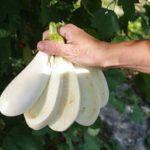
A hybrid native to Holland, it's a white eggplant variety. It's weather-resistant and can be grown in unheated greenhouses. The bushes are medium-sized and not very dense. The main difference is that the plant produces a single crop.
Boyarin F1
Ripens in 110 days and is considered an early variety. The eggplants are pear-shaped with a glossy, very dark surface. They are ideal for cooking; the flesh does not become soggy and holds its shape well no matter how you cook it.
The bush grows to 130 centimeters and requires trellis support. In July, some of the ovaries are removed to speed up the ripening of the main crop in the greenhouse.
Alenka
The eggplant has a classic shape and an unusual green color. The flesh is a slightly lighter shade. The low bush (70 centimeters) requires no support. The Alenka variety has juicy flesh that can be eaten raw. Plant 4-6 plants per square meter, yielding 8 kilograms.
Goliath F1
Growing eggplants in two stems is recommended, as this gives the plant greater stability. This is essential—a single eggplant weighs up to a kilogram, just as its name suggests.

The bush grows up to 2.5 meters, which should be taken into account when growing in low greenhouses. Support is essential. Plant 2-3 bushes per square meter, yielding 12-16 kilograms.
Pink flamingo
The ovary forms in clusters of 2-6. The long cylinders of the Pink Flamingo grow up to 35-40 centimeters and curve slightly. The eggplant is lilac-pink in color, with a white interior. The seeds are clustered only at the top of the long cylinder.
The bushes are tall (120-180 centimeters), with a wide, loose crown. They take a long time to set fruit, and the fruits ripen consistently. The greenhouse eggplant harvest takes a long time.
Swan
White fruits of the classic eggplant shape. They tolerate weather fluctuations well and can be grown outdoors in many regions. They are considered a high-yielding eggplant variety, yielding up to 18 kilograms per square meter.
Viola di Firenze
Italians have developed a variety distinguished by its rounded fruits, excellent flavor, and a fantastic size—up to 800 grams. The eggplant is lilac-purple in color, with almost white flesh, free of voids and excess seeds.
The variety is famous for its high yield of excellent quality and the absence of thorns.
Maxik F1
This hybrid can be harvested in a greenhouse within 100 days. It produces well in polycarbonate structures, yielding up to 10-12 kilograms of eggplants per square meter. The eggplant has a classic, slightly elongated shape (25 centimeters). The bush, no taller than a meter, can grow without support in a greenhouse if two or more stems are present.
Baikal F1
The hybrid bears fruit for a long time, yielding up to 6 kilograms. In greenhouses, this indeterminate hybrid grows up to 2.5 meters and requires trellis support.

Sailor boy
The eggplant skin resembles a striped vest, with alternating white and purple stripes running its length. The eggplants are oval-pear-shaped, weighing 250-400 grams. The yield is respectable, at 8-10 kilograms per square meter.
White Night
A variety of white eggplantThey have a refined flavor, reminiscent of champignons to some. The fruits are slightly elongated, yielding up to 6-8 kilograms. The bushes are robust and branched, holding their fruit well.
Icicle
A low bush (60-70 centimeters) produces eggplants that resemble true icicles—snow-white fruits weighing 200 grams. The fruits are delicious, without bitterness, and transport without loss of quality.
Albatross
Dark purple eggplants, round in shape, weighing up to 250 grams. They ripen in 85-110 days.
Epic F1
Grown on farms for its high yield and low maintenance. It adapts remarkably well to any conditions. The eggplants are teardrop-shaped, tapering at the top.
Eggplant produces a large number of ovaries, which, under proper cultivation, grow into fruits weighing up to 300-400 grams. The bush grows up to a meter and, when ready to harvest, turns purple due to the ripening of the eggplants.

Secrets
When growing in greenhouses, it's important to care for not only the eggplants but also the structure. Cleaning and disinfecting the greenhouse should be a must.
Some tips from experienced gardeners:
- Greenhouse eggplants are taller than those grown in the open ground. This should be taken into account when choosing a variety if the structure is not very tall.
- For tall eggplants, staking is essential. The stem is secured to a support around each node.
- You shouldn't sprinkle eggplants; water them at the roots.
- Young seedlings are shaded from the hot sun until they get stronger.
- During fruiting, watering is increased.
- By purchasing pelleted eggplant seeds, you can avoid the need for disinfection.
- Picking eggplants increases the seedlings' readiness period by 10-15 days.
- The temperature inside the structure is reduced by watering the spaces between rows and paths.
- If containers with eggplant seedlings are kept on windowsills, radiators are covered with blankets, and cracks in windows are carefully sealed.
- For one eggplant seedling, the container volume required is at least 0.7 liters.
If any of the work techniques remain unclear, it’s worth using videos made by gardeners.
Answers to questions
We will answer the most frequently asked questions from inexperienced gardeners.
Why do flowers fall off?
In greenhouses, eggplants often lose their flowers and fail to set fruit. The most likely causes are:
- Sudden temperature changes. Daytime temperatures should be reduced to 25-28°C, shading the eggplant plants if they receive too much sun. At night, close the doors carefully and provide heating.
- Insufficient watering.
- The eggplants were not fertilized on time.
- Excess nitrogen. Overfeeding with this element will cause excessive green mass growth on the bush. Fertilize with phosphorus and potassium.
If eggplants are blooming but not producing fruit, thin the clusters by removing 2-3 flowers. Shake the clusters during the day to remove excess pollen and improve pollination. Spraying the eggplant foliage with a boron solution (10 grams per 10 liters) can be helpful.

Why aren't the seedlings growing in the greenhouse?
The most common cause is damage to the eggplant root system when transplanting the plants into greenhouses. It's important to stimulate root growth by watering the plants with Kornevin. Also, review all key care aspects, adjusting watering, temperature, lighting, and fertilizing.
Why do leaves curl?
Thus, eggplants can react to an improper watering schedule, a lack of light, and minerals. It's important to review your gardening practices and adjust your care. Pest infestations, such as spider mites and aphids, are a common cause. Eggplant bushes should be inspected and treated with insecticides.
This needs to be done quickly if the eggplants are growing densely or the plantings are too close together. Infestations spread easily in a greenhouse, and you could lose your harvest.
Why do leaves turn yellow?
The most common cause of yellowing eggplant foliage is nitrogen deficiency. Plants are fed with nitrogen fertilizers.
Eggplant leaves can turn yellow from cold water, which can damage the roots and lower leaves. When watering, use water that matches the soil and air temperature.
Yellow spots may be caused by burns. Yellowing and drying of the edges of eggplant leaf blades indicates a potassium deficiency. Fertilize with potassium-containing fertilizers.
Growing eggplants is a creative and labor-intensive process. Even experienced gardeners encounter problems. Strict adherence to agricultural practices, diligence, and optimism help overcome them.
Related posts:
 80 Best Eggplant Varieties for Different Regions with Descriptions and Characteristics
 Causes and treatment of eggplant pests and diseases, how to combat them at home
 Characteristics and description of the Almaz eggplant variety, cultivation and care
 Planting, growing, and caring for eggplant seedlings at home
 How to quickly prepare pickled eggplant in jars for the winter, the most delicious recipes and storage conditions for the preparations
 Description and characteristics of the Bibo eggplant variety, cultivation and care
 How to grow eggplants outdoors and in a greenhouse in Siberia, care tips, and the best varieties
 How to properly plant and care for eggplants in open ground