
- The history of the F1 hybrid
- Description and photo
- Fruit
- Bushes
- Characteristics of the variety
- Productivity and fruiting
- Scope of application
- Resistance to diseases and pests
- Advantages and disadvantages
- Growing seedlings
- Soil preparation
- Seed sowing pattern
- Care
- Planting seedlings in open ground
- Care
- Watering and soil care
- Top dressing
- Spraying against diseases
- Harvesting and use of crops
- Reviews
Eggplants are difficult to grow outdoors because they take a long time to mature. Foreign breeders have solved this problem by creating the Epic F1 hybrid eggplant. This vegetable matures early, within 65 days. This makes it possible to grow it outdoors even in northern regions. Simply plant the seedlings, and 25 days after flowering, you'll have delicious, nutritious fruits.
The history of the F1 hybrid
Dutch breeders at Monsanto have developed the early hybrid Epic F1. This heat-loving plant can be grown both indoors and outdoors. Its full maturation cycle is 65 days. Eggplants planted from seedlings are ready to fruit 25 days after flowering.
Description and photo
This eggplant hybrid was recently developed, but is already popular among gardeners for its positive characteristics: high yield, hardiness, and large fruit. The vegetable is grown not only in southern regions but also in colder areas.
Fruit
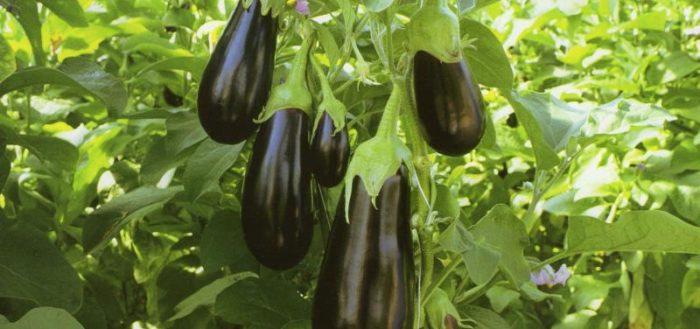
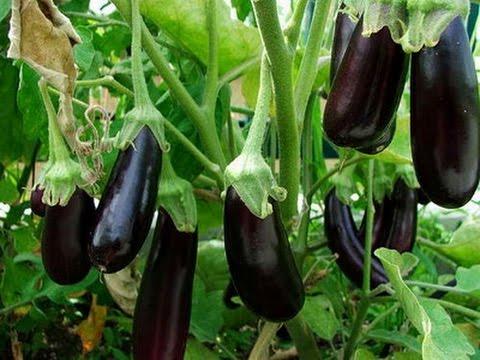
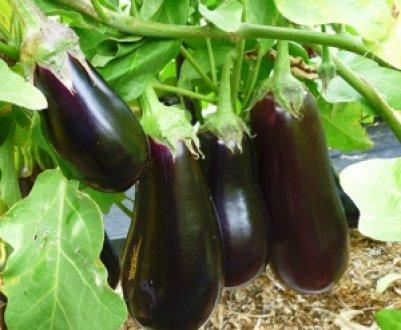
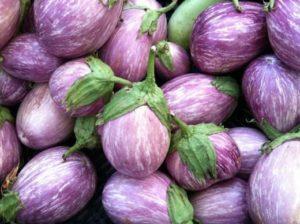
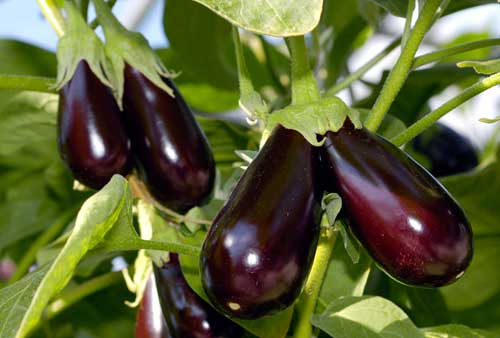
Ripe fruits are purple. The glossy surface gives them a marketable appearance. They weigh 200-230 grams and are distinguished by a smooth cylindrical shape, tapering slightly toward the sepals. Eggplants are 22 centimeters long and 10 centimeters wide.
The snow-white flesh is dense, aromatic, and almost seedless. The bitterness typical of eggplant is absent. When fried, the vegetables resemble mushrooms. Spines are rare, but sometimes present, on the eggplant sepals.
Bushes
The plant grows as a vigorous bush with drooping, bright green leaves. The sturdy stem reaches up to 100 centimeters. It requires support during cultivation. The trunk is green, with hints of purple, blue, and red.
Characteristics of the variety
The Epic eggplant is a high-yielding variety with large fruits, disease resistance, and excellent flavor. It ripens early.
Productivity and fruiting
Each eggplant bush produces eight fruits. If planted at a rate of three plants per square meter, the yield is 4.8-6 kilograms.
Scope of application
Epic eggplants have proven themselves in the culinary arts. The fruits are eaten after boiling, stewing, baking, and canning, as they are not eaten raw. Freshly cooked and canned eggplants retain their beneficial properties, but instead acquire new flavor notes.
The dietary product is used for therapeutic and preventive purposes, for atherosclerosis, gallstones and kidney stones.
Resistance to diseases and pests
Epic eggplants are resistant to the tobacco mosaic virus. They are also susceptible to late blight. Eggplants are also susceptible to the Colorado potato beetle. Insecticides are used to control them, and the beetles are collected mechanically.
Advantages and disadvantages
The Epic F1 hybrid is popular among gardeners due to its positive characteristics:
- High yield.
- An unpretentious vegetable that does not require any special skills during cultivation.
- Resistance to fungal, viral diseases and pests.
- It tolerates temperature changes well.
- The fruits have good taste, the pulp is not bitter.
- Attractive appearance due to uniform size and glossy skin.
- Dietary product: low-calorie, a storehouse of vitamins, proteins, and potassium.
- Vegetables are healthy when freshly prepared and retain their beneficial properties when preserved.
Flaws:
- In cold regions, eggplants are grown using seedlings in open ground; by seed – in a greenhouse.
- Tall bushes require staking. Otherwise, large fruits will break the stems.
- Eggplants cannot be stored for a long time at home.
Despite some shortcomings, gardeners enjoy growing Epic eggplants.
Growing seedlings
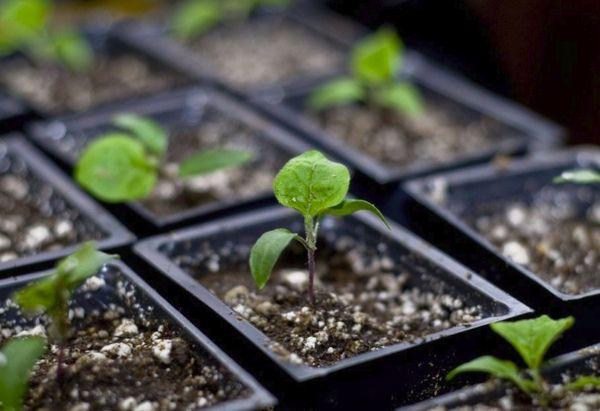
Eggplants don't transplant well because their root system is very fragile. To avoid transplanting, seedlings are sown in the first half of March. This eliminates the need for transplanting.
Soil preparation
Eggplants prefer loose, breathable soil. A seed-starting medium designed for flowers can be purchased at a store. At home, add sand and compost to garden soil in a ratio of 2:2:1. Compost can be replaced with peat moss. Garden soil, peat moss, and sawdust (1:2:3) are all suitable.
The substrate prepared by hand is disinfected before use in various ways: with heat, cold, or a solution of potassium permanganate.
Seed sowing pattern
Store-bought planting material doesn't require treatment, as the manufacturer has provided this for you. Home-grown seeds are soaked in a 2% potassium permanganate solution for 15 minutes. Rinse in cold boiled water and dry. Then soak for 24 hours in a growth stimulator, such as Energen.
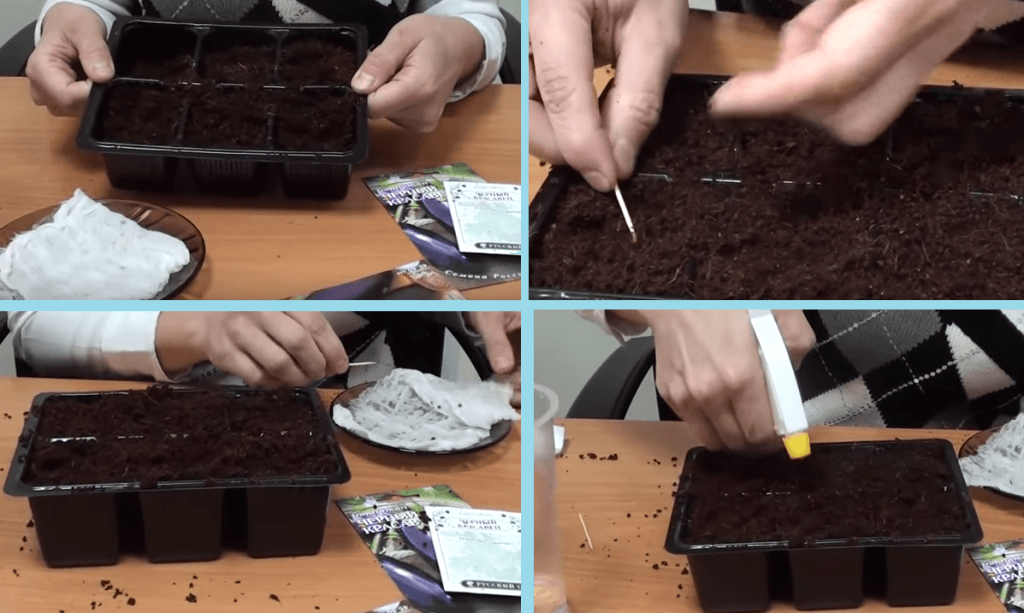
The substrate is planted in individual cups or containers. In the latter case, the planting pattern is 8x8 or 1x1 centimeter. The substrate is moistened, the seeds are placed, and covered with soil to a depth of 1 centimeter. The containers are covered with plastic wrap and placed in a warm place: near a radiator or on a shelf. The air temperature should be maintained at 25 degrees Celsius.
Care
The first shoots will appear in a week. Remove the covers from the containers. Move the containers to a cooler location (18 degrees Celsius) to prevent the seedlings from growing too quickly. Reduce the nighttime temperature to 13 degrees Celsius. When two true leaves appear, transplant the seedlings if they were sown using a 1x1 cm pattern. Water as needed. Drooping leaves may be a signal to begin transplanting.
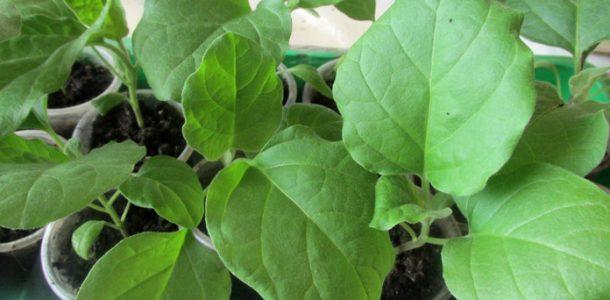
The first fertilizer application is made 7 days after germination, using phosphorus fertilizer. Subsequent applications are made every 10 days. An organic infusion or complex mineral fertilizer is used. Seedlings should receive half a day of daylight. If daylight is insufficient, artificial lighting is used.
Planting seedlings in open ground
Seedlings are transplanted into open ground when the ambient temperature is above 15 degrees Celsius. As soon as the temperature rises above 15 degrees Celsius, the seedlings are transferred to the garden. By this time, the seedlings will have grown to 15-20 centimeters tall, with five leaves per stem. Eggplants prefer neutral or slightly alkaline soil. Water the seedlings and soil thoroughly the day before planting.
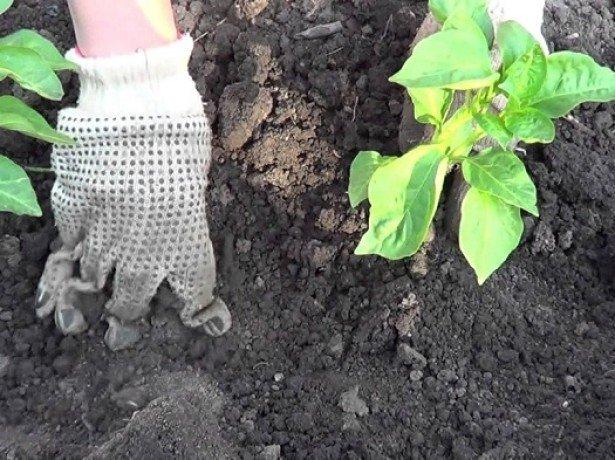
Holes are dug at a distance of 60 centimeters between bushes – 65 rows. The next row is planted in a checkerboard pattern.
Care
The plant is removed from the container, the cotyledon leaf is torn off, and it is planted deep into the soil up to the leaflets. The seedlings are dug out of the container with a lump of soil. The hole is prepared along the length of the root ball. Eggplants do not tolerate drafts well. Therefore, a protective barrier of plastic film is prepared and wrapped around the plantings. The top should be open.
Watering and soil care
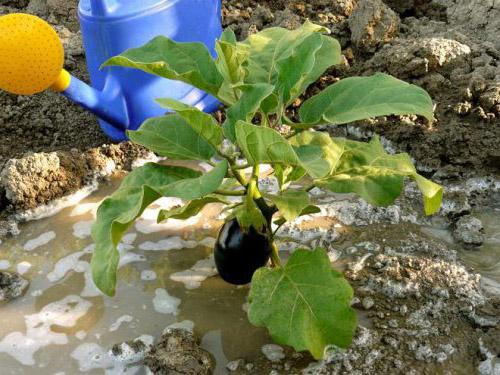
Don't water the soil for three days after planting. The seedlings will benefit from the moisture provided before planting. Use rainwater for irrigation. If using tap water, use settled, warm water. Drooping leaves will indicate the need for watering. During periods of intense growth, or on hot days, water daily.

After watering, loosen the soil. A mulch of onion peels, garlic peels, and straw helps retain moisture. Epic eggplants grow up to 1 meter in height. The bushes need to be tied to a trellis.
Top dressing
When planting seedlings, if the soil is poor, add a handful of humus and ash. Experienced gardeners advise against feeding eggplants with organic matter until the fruit sets, as this can encourage the growth of green matter.
Two weeks after planting, feed the plants with complex mineral fertilizers. Once small eggplants have formed, feed them with phosphate-nitrogen fertilizers. Fertilize the vegetables twice a month throughout the growing season.
Spraying against diseases
Foliar feeding is used for preventative purposes, such as preventing diseases and pest attacks. It can be alternated with root feeding.
The following are used as protection against diseases:
- biochemical preparations that do not harm plants or people;
- Chemical agents. They deal with the disease quickly, but the preparations are harmful to plants, soil, and people;
- folk remedies: decoctions, infusions of plants with insecticidal and fungicidal properties.
Preventative spraying will help grow healthy fruits.
Harvesting and use of crops
Epic eggplants must be picked on time. Unripe vegetables do not fully ripen after harvesting. Overripe fruits should not be eaten, as they release a harmful substance called solanine, causing bitterness and loss of elasticity.
Maturity is determined by the following characteristics:
- the fruits turn purple when ripe;
- the pulp is elastic;
- the skin is glossy;
- The first harvest takes place 25 days after flowering.
Eggplants ripen gradually and should be checked every 3 days.
To ensure that the siblings continue to develop normally, the stalks are not torn off, but cut off.
Fresh Epic eggplants will keep for about a month. To extend their shelf life, wipe them with a dry cloth after harvesting. Place them on a rack in a single layer and store in a cool place at 1 degree Celsius. Check the eggplants periodically and discard any that have spoiled.
Reviews
Gardeners who grow the Epic hybrid speak highly of it. According to their observations, the bush produces numerous ovaries—more than it can support. Therefore, bush training is used. Yellowing leaves are removed, side shoots below the first inflorescence are pinched, leaving only 2-3 above, and the number of ovaries is regulated to 8 to 10.
Related posts:
 80 Best Eggplant Varieties for Different Regions with Descriptions and Characteristics
 The best eggplant varieties for growing in a polycarbonate greenhouse: planting and care
 How to quickly prepare pickled eggplant in jars for the winter, the most delicious recipes and storage conditions for the preparations
 Causes and treatment of eggplant pests and diseases, how to combat them at home
 Making finger-licking good eggplant caviar with peppers and tomatoes
 How to freeze fresh, fried, and baked eggplants for the winter at home in the freezer
 How to properly freeze fresh eggplants for the winter in the freezer, storage periods
 27 of the most delicious eggplant appetizer recipes for the winter