
- Peculiarities of growing eggplants in Siberia
- The best varieties
- Eggplants for open ground
- Eggplants for greenhouses
- How to Grow Eggplants in Siberia
- When to sow
- Sowing for seedlings
- Preparing the landing site
- Planting eggplants in a garden bed
- Caring for plantings
- Eggplants in open ground
- Eggplants in a greenhouse
- Diseases and pests
- Harvesting and storage
Of the nightshade crops, eggplant was the latest to appear in garden plots. This heat-loving crop requires suitable conditions and grows best in southern regions. However, breeders have developed varieties and hybrids that allow eggplant to thrive in Siberia, despite the sudden temperature fluctuations and short summers. It is grown both in open ground and in greenhouses.
Peculiarities of growing eggplants in Siberia
Eggplants are very demanding when it comes to heat. They grow poorly even at temperatures of 10-15 degrees above zero. Even in a greenhouse, proper planting guidelines are essential. Seedlings should not be weak or lack a strong root system. Any damage to the roots or stems can result in the death of the plant.

In addition to suitable conditions—warmth, light, and humidity—vegetables require proper care. While adjusting conditions in open ground is difficult, it's easier in a greenhouse.
But without proper care, the eggplant will not produce full-fledged, fully ripe fruits.
To achieve a high vegetable yield, you need to pay attention to the composition and structure of the soil in the garden bed and properly distribute the bushes in accordance with the planting pattern.
But first of all, the planting material must be resistant to weather and climate disasters, and to diseases.
The best varieties
Growing eggplants in the region beyond the Urals requires agricultural expertise, adherence to planting schedules, and adherence to proper planting practices. Without these skills, ripening the purple fruits is impossible. For the northwest, the vegetable varieties needed are those developed and tested by local breeders.
Eggplants for open ground
In open ground, hybrids are grown that can withstand low temperatures, do not require special care, and are capable of bearing fruit abundantly.
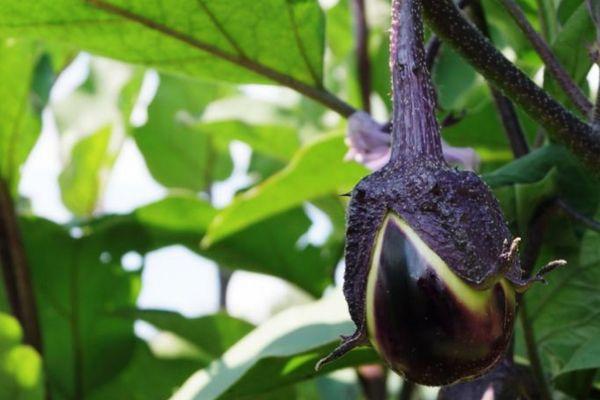
It is better to choose early maturing varieties of vegetable crops:
- The large-fruited Bull's Heart F1 variety is prized for its increased resistance to fungal infections. The oval berries reach 400 grams in weight, are covered with a smooth, glossy skin, and have cream-colored flesh. The bushes bear fruit for a long time in sunny, warm weather.
- Gardeners have tried the Almaz eggplant, which matures in 109-120 days after germination. The cylindrical fruits reach 100-150 grams in weight and 14-18 centimeters in length. The variety's description also states that the fruits are versatile, suitable for canning, stewing, and salads.
- The Siberian Prince is also worth mentioning, with each bush producing up to 10 large fruits. The hybrid is noted for its excellent fruit set and ease of care. The 300-gram berries are covered in a thin purple skin with light-colored flesh inside. The harvest begins in the first ten days of August.
- The Skorospel'nyy variety of eggplant grows in open ground in Siberia and produces excellent fruit. Even under unfavorable weather conditions, the plant produces fruit that has reached technical maturity.
- The early-ripening Prince Fairytale is valued for its excellent, non-bitter pulp taste, small number of seeds, and tender skin.
- The Easter Egg hybrid produces early-ripening, round-shaped, white vegetables.
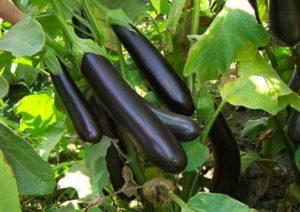
To ensure eggplants have time to ripen in the garden, it is necessary to choose varieties bred by Siberian breeders.

Eggplants for greenhouses
To avoid risking future harvests, gardeners grow eggplants in hotbeds and greenhouses. Not only early-ripening varieties, but also mid-season varieties, are suitable for beds under plastic covers.
A good choice is the Robin Hood hybrid, with its high yields and low maintenance requirements. Bushes 1 meter tall can produce up to 10 fruits weighing 200-300 grams.
The Maria hybrid, with 75-centimeter-tall bushes and 200-gram fruits, has earned its popularity for good reason. One square meter of this variety yields up to 7 kilograms of smooth, uniform, dark purple fruits.

The oval-shaped, pinkish-purple fruits of the Romantic variety ripen within 120 days, or slightly earlier with proper care and in greenhouse conditions. This vegetable is characterized by white flesh, excellent flavor, and versatility.
High-yielding greenhouse varieties include the hybrid Siberian Early 148. Developed at the West Siberian Experimental Station, this hybrid produces bushes up to 50 centimeters tall and produces fruit weighing 200 grams. This variety is recommended for canning and culinary processing. Fruit yields are guaranteed in any weather.
The Long Purple Eggplant dwarf bush reaches a height of 40 centimeters. The elongated, dark berries have tender, greenish flesh. The fruits are not bitter, making them delicious in any form.
How to Grow Eggplants in Siberia
To grow this heat-loving crop, the necessary conditions are created both in a greenhouse and in open beds. To achieve ripe fruit, it's essential to follow the planting schedule and guidelines, and provide the plants with careful care.

When to sow
Eggplants cannot be planted directly from seeds in Siberia. Only seedlings are suitable for proper agricultural practices. Considering the vegetable's ripening period, seeds can be planted until February 20th. This will give the fruits enough time to emerge and reach maturity.
To speed up germination of planting material, soak the seeds in Zircon, a growth stimulant. Seeds collected from last year's harvest are suitable for sowing. You can activate the vital processes within them by soaking the material. Place it on damp cheesecloth and leave it in a warm place for 2-3 days.
Soil condition also affects seedling health. It's best to disinfect, warm, and water the soil.

Eggplant seedlings should be no more than 70 days old before planting when grown in a greenhouse. Therefore, in this case, you can begin preparing the seedlings in the second half of March.
Sowing for seedlings
Eggplant seeds are placed in individual pots with nutritious soil enriched with micro- and macronutrients. After spreading the seeds on the surface, they are covered with slightly moistened soil. The layer should not exceed 1 centimeter. Then, lightly compact the soil, and cover the pots with plastic wrap.
The seeds germinate best at temperatures of 25 degrees Celsius or higher. The sprouts will appear only after two weeks.
As soon as the seedlings appear, you need to begin to lower the temperature by 4-5 degrees, and place the containers on well-lit windowsills.

Take a look Also

After one week, you'll notice a true leaf emerging from the seedlings. Now it's time to transplant the seedlings. To prevent stress, treat the seedlings with Epin at this point. Seeds planted in individual cups will produce 1-2 plants. Choose a strong, healthy seedling, and discard the weak one.
Although eggplant seedlings typically do not stretch their stems, when daylight hours are short, supplementary lighting is provided using phytolamps.
Seedling care includes organizing:
- moderate watering;
- applying fertilizers after picking twice with a 20-day interval;
- loosening the soil in containers;
- hardening 2 weeks before planting in the garden.
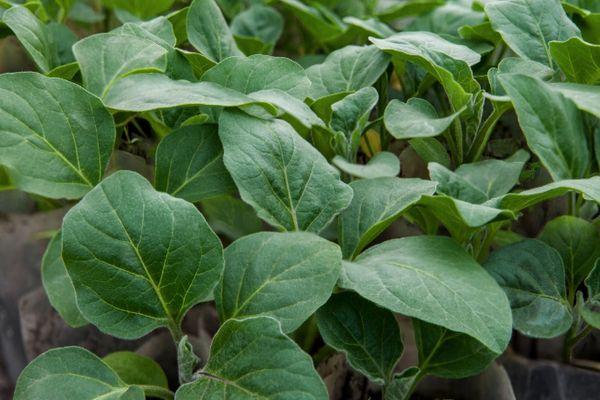
At the budding stage, vegetable bushes are ready for transplanting to a permanent location. A well-developed root system and the presence of 7-8 leaves indicate the plant's readiness for further development and growth.

Preparing the landing site
The soil for planting vegetables is prepared in advance in the fall and spring. Eggplants begin to bear fruit faster in open, sunny locations than in shade. To make the soil light and nutritious, add coarse river sand and humus or peat. Dig the soil thoroughly, digging in any missing elements.
The best predecessors for this vegetable are cabbage, carrots, and legumes. However, don't plant eggplant instead of other nightshade crops.
The plant bed should be free of weeds and have well-warmed and moist soil.

Planting eggplants in a garden bed
Begin planting the bushes in open ground after May 15th, and in greenhouses 10-15 days earlier. The best time for planting is evening. Leave a 40-centimeter gap between the holes, and 50-60 centimeters between the rows.
It is better to transplant by transshipment so as not to damage the plant’s root system. After planting in the holes, cover the lower part of the stem with soil and compact it lightly. Water the plantings generously and apply an 8-centimeter layer of mulch with sawdust, peat, and finely chopped straw.
To ensure eggplants survive transplantation, you can spray them with Extra and Epin. The plants will take root better if they are shaded for the first 2-3 days. This will ensure healthy and strong growth.
Caring for plantings
Agrotechnical measures for growing eggplants on a plot include:
- watering 1-2 times a week, and in hot weather every 2 days;
- fertilizing with organic and mineral fertilizers once every 2-3 weeks;
- loosening the soil and removing the crust on the surface of the bed;
- bush formation in tall specimens.
Vegetable crops are cared for in the same way in both the greenhouse and the garden. However, there are some minor differences.
Eggplants in open ground
When growing plants in open beds, pay attention to soil moisture. Overly dry or waterlogged soil will kill vegetable plants.

As for fertilizers, you can use organic matter in the garden in the form of a solution of mullein in a ratio of 1:6 or bird droppings - 1:12. Fertilizing with mineral fertilizers takes place 10 days after planting, and then during the period of budding and fruiting.
Dwarf vegetable varieties don't require staking or pinching. However, loosening the soil after watering and rain is essential.
Eggplants in a greenhouse
Greenhouse eggplants are fertilized with Zircon and Zdraven. Three to four treatments are administered per season to ensure proper growth and root development.


Eggplants require more heat in a greenhouse than other crops. Therefore, air and soil temperatures are monitored before planting the seedlings. The soil should warm to at least 15 degrees Celsius at a depth of 20 centimeters.
During the growth of vegetable crops, air humidity should be within 70-80%, otherwise there will be a delay in development, as well as a deterioration in the commercial quality of the fruit.
Water the bushes only with warm water, balancing high soil moisture with low air humidity. To achieve this, ventilate the greenhouse.
Diseases and pests
Like other nightshades, eggplant suffers from fungal infections during wet and cold summers. Plants can become infected from cold water, contaminated seeds, or a lack of nutrients in the soil.
Vegetable seedlings are often infected with blackleg fungus. This causes the plant stem to become weakened and the leaves to wilt. Watering the seedlings with Fitosporin will help cure the disease.

Excessive soil moisture leads to the appearance of black spot on vegetable leaves. Young plants require treatment with fungicides. If the infestation is severe, destroy the affected plants and disinfect the soil with a potassium permanganate solution.
Eggplant leaves affected by powdery mildew appear during periods of heavy and prolonged rainfall and sudden temperature fluctuations. At the onset of the disease, it's important to spray the affected plants to prevent their destruction.
Late blight manifests itself as brown spots on the fruit. You can combat the fungus with a garlic solution (200 grams of crushed cloves per 3 liters of water). Prepare the solution over a two-week period. Before application, dilute the solution with water in a 1:1 ratio.
The main pests of the crop include the Colorado potato beetle, whitefly, and spider mite.

In the fight against the nightshade-loving beetle, insecticide treatment and manual collection of the larvae are recommended.
Whitefly larvae must be controlled, as they transmit sooty mold. The pest can be found on the underside of leaves. A tar soap-based solution will help kill the parasite.
Harvesting and storage
The berries are picked as they ripen. They should have brightly colored skin, juicy flesh, and white seeds. Hybrids picked in time are healthy and can be used to prepare delicious dishes and preserved for the winter. Overripe berries are more bitter and have a hard center. They are not suitable for storage.
Fresh eggplants can be stored in the refrigerator for up to 2-3 weeks. They can also be dried by slicing them into slices. There are also ways to freeze vegetables.
Related posts:
 The best eggplant varieties for growing in a polycarbonate greenhouse: planting and care
 80 Best Eggplant Varieties for Different Regions with Descriptions and Characteristics
 Causes and treatment of eggplant pests and diseases, how to combat them at home
 How to quickly prepare pickled eggplant in jars for the winter, the most delicious recipes and storage conditions for the preparations
 How to properly plant and care for eggplants in open ground
 Making finger-licking good eggplant caviar with peppers and tomatoes
 A description of the best eggplant varieties for growing in greenhouses and open ground in the Moscow region.
 Planting, growing, and caring for eggplant seedlings at home
I grow eggplants outdoors (in southern Siberia), using the Bull's Heart variety. They are large and tasty, with tender flesh. I achieve high yields and early maturity through fertilization, specifically, applying a bio-growth activator 8-10 days after planting. BioGrowI consider it a personal success that I can grow fully ripe eggplants in our climate.