
- The history of the F1 hybrid
- Description and photo
- Fruit
- Bushes
- Characteristics of the variety
- Productivity and fruiting
- Scope of application
- Resistance to diseases and pests
- Advantages and disadvantages
- Growing seedlings
- Timing
- Soil preparation
- Seed sowing pattern
- Care
- Temperature conditions
- Daylight hours
- Irrigation
- Top dressing
- Planting in open ground
- Care
- Watering and soil care
- Top dressing
- Spraying against pests and diseases
- Bush formation
- Harvesting and storage
- Secrets of vegetable growers
- Reviews
Gardeners report in reviews of the F1 Valentina eggplant that this heat-loving variety is capable of producing a stable and abundant harvest in central Russia. This characteristic, along with the fruit's mild flavor, has attracted increased interest from gardeners. Furthermore, the plant is characterized by its low maintenance and increased disease resistance.
The history of the F1 hybrid
The F1 hybrid Valentina was officially registered in the State Register in 2007. This early-ripening variety was bred specifically for cultivation in Russia's challenging conditions. The eggplant is capable of producing a harvest both in open ground and in greenhouses.
Description and photo
The F1 Valentina eggplant variety produces its first harvest 60 days after planting. This plant is easy to care for and has strong immunity to common infections.
Since this eggplant is a hybrid variety, propagating it from seeds collected from the fruit is not recommended. This is because such plant varieties do not inherit the characteristics of their parents.
The popularity of the F1 Valentina eggplant among gardeners is due to the pleasant taste of the fruit (no bitterness) and the ability to grow in regions with short summers.
Fruit
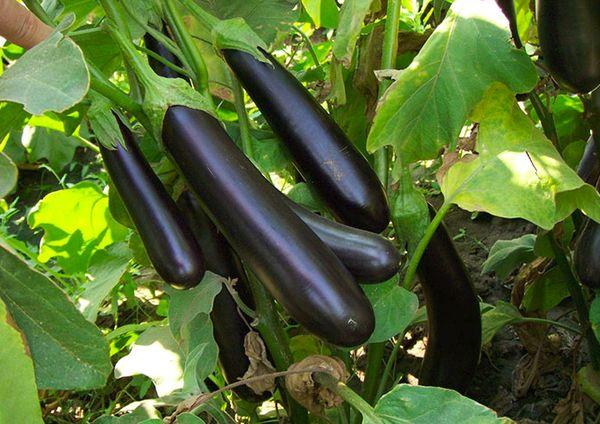
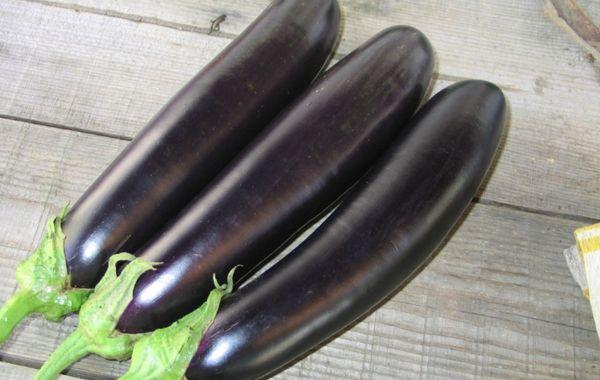
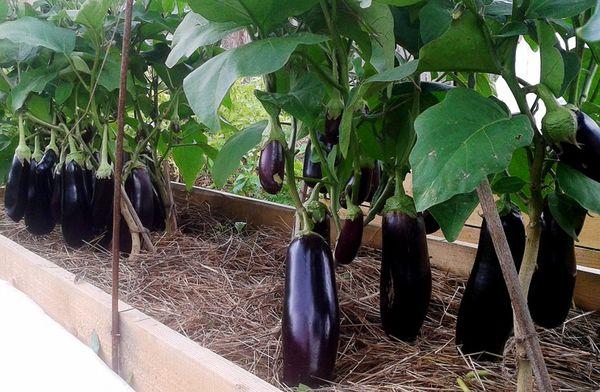
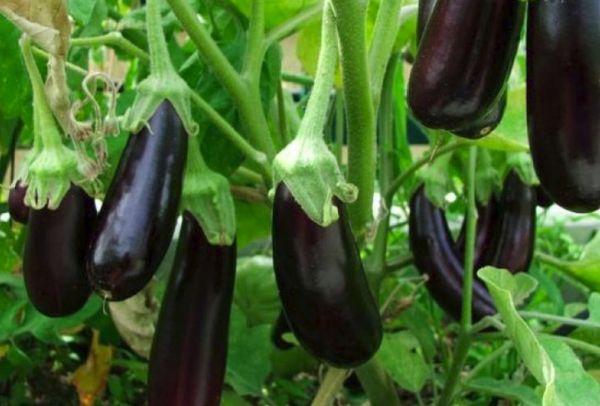
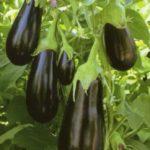
The fruits of the F1 Valentina variety are distinguished by the following characteristics:
- shape - drop-shaped, elongated;
- length - up to 26 centimeters;
- diameter of the lower part - up to 5 centimeters;
- total weight - up to 250 grams.
The fruit is dark purple in color. The eggplant flesh is creamy white.
Bushes
The following characteristics are characteristic of the F1 Valentina eggplant bushes:
- vigorous trunk;
- semi-spreading crown;
- length - up to 90 centimeters;
- color - light purple.
The leaves of the plant are medium-sized, have a rich green hue, and have notches along the edges.
Characteristics of the variety
The F1 Valentina eggplant is grown outdoors in southern regions, and in northern regions, it's planted in hotbeds or greenhouses. The hybrid is undemanding and tolerates weather fluctuations well. Even under unfavorable conditions, the flowers on the bushes do not fall off and form ovaries, which later become fruit.
Productivity and fruiting
The first ripe fruits appear on the bushes 60 days after planting. The F1 Valentina eggplant variety can be picked from mid-July. Up to three kilograms of ripe fruit can be harvested from one square meter.
Scope of application
Eggplants of this variety are characterized by their marketable appearance. Therefore, the crop is often grown for commercial purposes. F1 Valentina eggplants are also suitable for various dishes and for winter preserves.
Resistance to diseases and pests
The F1 Valentina variety is characterized by strong immunity. This hybrid is susceptible to fungal diseases if grown in high-humidity conditions. Common pests include Colorado potato beetles, aphids, spider mites, and slugs.
Advantages and disadvantages
Choice in benefits of eggplants F1 Valentina is explained by the following advantages of the variety:
- early harvest;
- absence of bitterness in fruits;
- attractive appearance of fruits;
- a small amount of seeds;
- resistance to sudden and frequent weather changes;
- resistance to tobacco mosaic virus.
Gardeners consider the small thickness of the fruit to be the main drawback of this variety. There are also complaints about the taste.
Growing seedlings
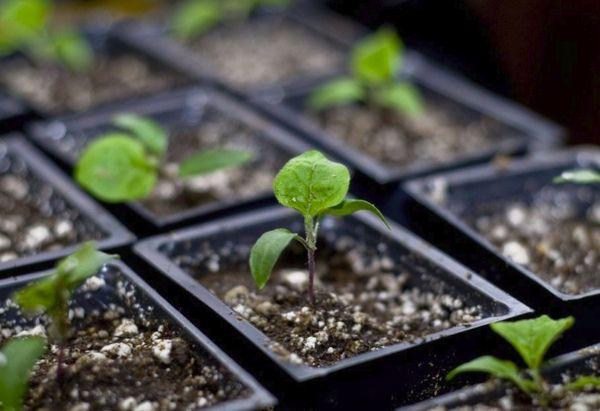
Eggplant seeds don't require pre-sowing treatment. However, some gardeners disinfect the seedlings using hydrogen peroxide or a growth stimulant. After this treatment, the seeds are soaked in aloe vera juice and then dried. Some gardeners also germinate the seedlings. To do this, they soak the seeds for several days, wrapped in damp cheesecloth. Once the seedlings emerge, they are planted in prepared soil.
Timing
The time for planting seeds depends directly on the region where the crop is growing. Typically, seeds are sown in early to mid-March.
Soil preparation
To germinate seedlings, use a mixture of four parts humus, two parts peat, and one part sawdust. This mixture is then scalded with boiling water. It is also recommended to add a urea solution to the peat mixture (one tablespoon per 10 liters of water). If you are planting seeds in clay soil, add river sand to the seedling container.
Seed sowing pattern
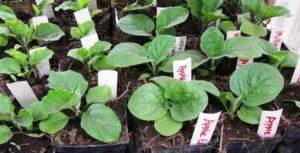
It is recommended to sow eggplant seeds in individual peat pots. Other containers are not suitable for this crop, as the plant has a delicate root system.
Care
The development and productivity of the future bush depends on how strictly the rules for caring for seedlings are followed.
Temperature conditions
For the first two weeks after sowing, it's recommended to place the eggplant containers in a room with a temperature of 17-18 degrees Celsius. This will prevent the sprouts from stretching. Then, move the containers to a room with a temperature of 22-28 degrees Celsius.
Take a look Also
Daylight hours
Seedlings grow well with long daylight hours. However, prolonged absence of sunlight has a detrimental effect on the plant. If necessary, grow lights can be used.
Irrigation
For irrigation, use melted or settled water, the temperature of which should be above 20 degrees Celsius. Water every two days.
Top dressing
For seedling development, gardeners typically use a mixture of 10 grams of urea and 30 grams of superphosphate diluted in 10 liters of water. Fundazol, Gaupsin, and other antifungal agents are recommended for use during watering to prevent infection.
Planting in open ground
Before planting outdoors, it's recommended to harden off the seedlings. To do this, take the containers with sprouted eggplants outdoors daily, gradually increasing the time they spend outdoors. The seedlings can be transplanted outdoors when straight shoots 17 centimeters or more long with six leaves emerge. Eggplants typically reach this size by mid-May.
It is recommended to fertilize the eggplant soil with potassium sulfate, superphosphate, and wood ash. These components should be added during tillage.
Eggplants should be transplanted in the evening, in calm weather. Dig holes up to 15 centimeters deep, spaced 0.5 meters apart, for the plants. After planting, cover the seedlings with soil and water at a rate of 500 milliliters per bed. Then, mulch the soil around the bushes with dry grass or pine needles. To prevent moisture evaporation, gardeners cover the soil between the beds with dark plastic.
Care
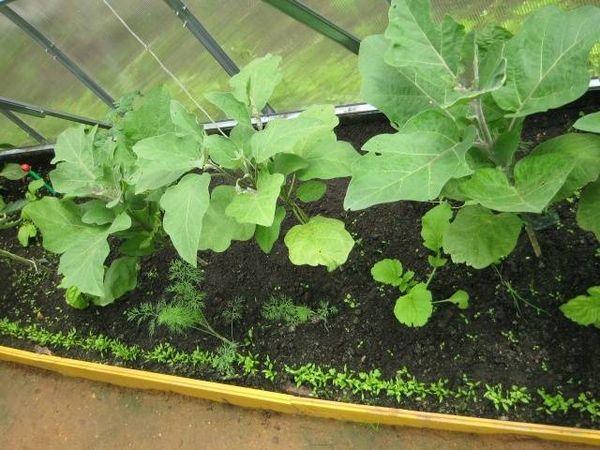
F1 Valentina eggplants require little care. To ensure fruit production, regular watering and fertilizing are necessary.
Watering and soil care
It's recommended to water the bed 2-4 times a week, using settled water heated to 24 degrees Celsius. After watering, loosen the top layer of soil to ensure oxygen reaches the roots.
Top dressing
Two weeks after planting in open ground, apply a complex fertilizer such as Rastvorin or Kemira-Lux under the bushes. During bud formation, the plant should be fed with phosphorus-potassium fertilizers. Also at this time, gardeners add a mixture of one tablespoon of potassium sulfate and 1.5 tablespoons of ammonium nitrite, diluted in 10 liters of warm water.
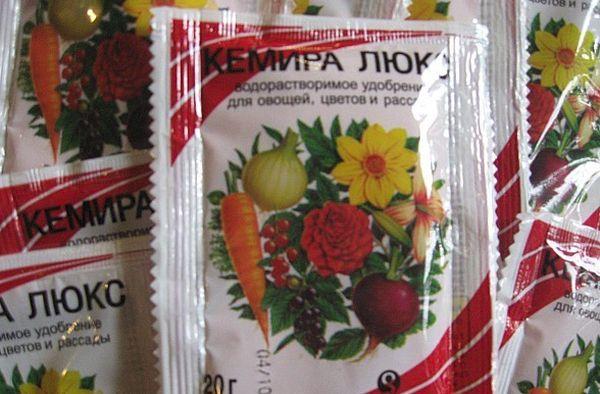
When ovaries begin to form on the bushes, eggplants are fed with nitrogen-phosphorus fertilizers. A month before harvest, a mixture of superphosphate and potassium salt (one tablespoon each) diluted in 10 liters of warm water should be applied.
Spraying against pests and diseases
To prevent fungal infections, spray the bushes with Fitosporin or Zircon. Quadris helps combat late blight, and Horus helps against gray mold. Wood ash sprinkled on the soil can be used to combat slugs. To get rid of aphids, insecticide treatment is required. It is also recommended to plant marigolds or calendula near the bed, which will repel pests with their strong scent.
Bush formation
The F1 Valentina eggplant variety is known for its vigorous growth habit. Therefore, during the growing season, the plants need to be tied to supports.
Harvesting and storage
Eggplants are harvested as they ripen. The fruits are cut from the bushes with pruning shears. Eggplants can be stored in a cool place for up to one month.
Secrets of vegetable growers
For growing seedlings, it is recommended to use peat or soil from the region in which the crop grows. It is prohibited to use fresh manure as fertilizer. This type of fertilizer damages the root system. If the bushes are planted in soil with a high clay content, coarse sand should be added to the soil.
Reviews
Alexey, Rostov
"The Valentina hybrid ripens quickly. The fruits are pleasant to the taste, no worse than those of varietal eggplants."
Antonina, Moscow region
"The fruits are a little thin, but that's not a big deal. The eggplants emerge early on the bushes, even with the rare sunny days. There were no problems with germination."
Marina, Tambov
"The hybrid completely met our expectations. It's easy to grow, has a pleasant flavor, and is suitable for a variety of dishes. We grew it in a greenhouse. We didn't have to treat it for disease once during the summer."
Related posts:
 80 Best Eggplant Varieties for Different Regions with Descriptions and Characteristics
 How to quickly prepare pickled eggplant in jars for the winter, the most delicious recipes and storage conditions for the preparations
 The best eggplant varieties for growing in a polycarbonate greenhouse: planting and care
 Causes and treatment of eggplant pests and diseases, how to combat them at home
 Making finger-licking good eggplant caviar with peppers and tomatoes
 How to freeze fresh, fried, and baked eggplants for the winter at home in the freezer
 Description and characteristics of the hybrid eggplant variety Epic, planting and care
 How to properly freeze fresh eggplants for the winter in the freezer, storage periods