
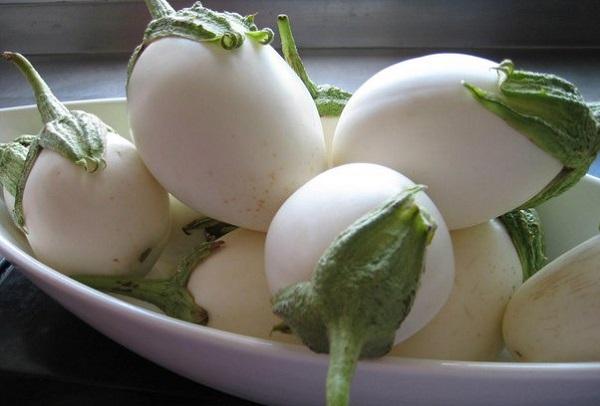
These fruits have long been a staple in the human diet, as it's no secret that vegetables should occupy a significant portion of the daily menu. Growing and eating white eggplant has become popular. It has a distinctive flavor, and a variety of cultivated varieties are available to choose from.
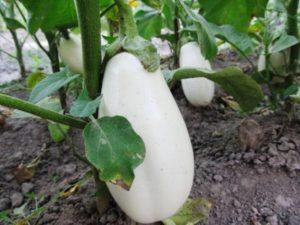
Description and photo
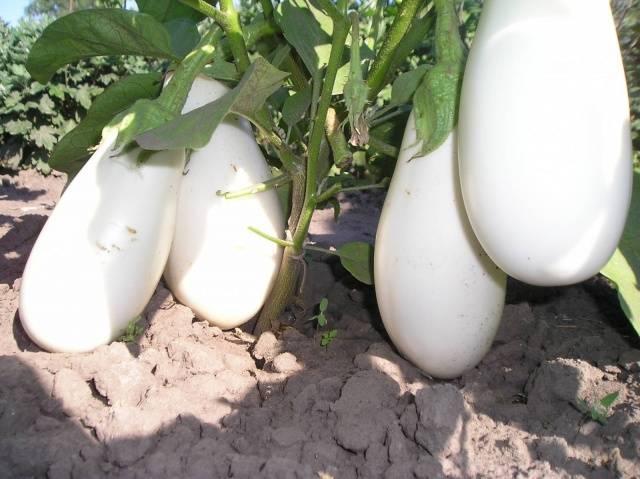
All hybrids of these eggplants have the same color, differing only in the presence or absence of a characteristic sheen on the skin. Furthermore, among the various varieties, fruits vary in shape, size, and flavor.
History of selection
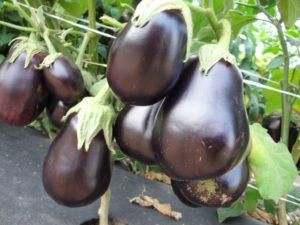
White eggplant is a hybrid created by breeders from the common blue eggplant. Blue eggplants contain anthocyanins, a pigment that gives the fruit its rich dark color and a slightly bitter taste. By removing this pigment, the resulting variety lacks both the dark color and bitterness.
However, it is worth noting that anthocyanins are extremely valuable for humans, as they are recognized as powerful antioxidants.
Taste qualities
White eggplants have a delicate flavor due to the lack of bitterness typical of other varieties. Their flavor is reminiscent of champignons and, in some cases, chicken. The lack of bitterness and the large number of seeds make them popular and indispensable in cooking.
Nutritional value
100g of the product contains 25 kcal. The fruit is characterized by a high content of carbohydrates, proteins, and fiber. It is rich in beneficial minerals and vitamins.
Types
Growing this eggplant variety is no more difficult than traditional ones. Temperature remains an important factor, as the plant thrives on warmth and light.
Iceberg
Seedlings are planted in greenhouses or under plastic. This variety is characterized by a medium ripening period. The bush is spreading, reaching a height of up to 0.6 m. The leaves are green and medium-sized. The fruits of this variety are oval, up to 20 cm long, and weigh up to 250 g. The flesh is white and quite juicy, without bitterness. This eggplant variety tolerates heat well and is characterized by resistance to diseases.

White Night
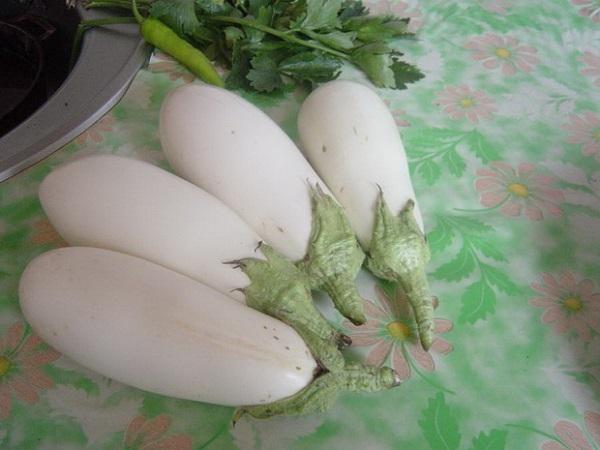
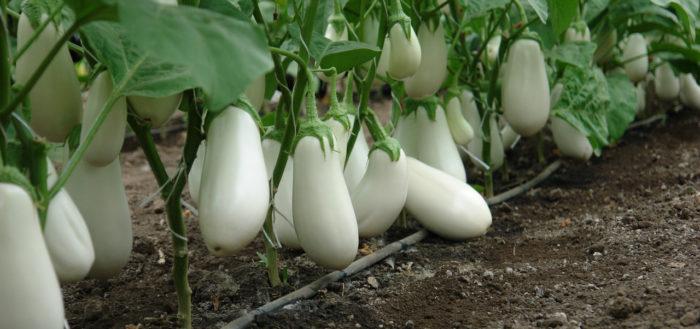
This eggplant variety is considered an early variety, suitable for open ground cultivation, with a ripening period of 80 days. It is immune to a number of major diseases. The compact bush grows to a height of 0.75 m and has green leaves. The vegetables are cylindrical, approximately 25 cm long, up to 10 cm in diameter, and weigh 270 g. The yield is 8 kg per m.2.
Fluff
Cultivation is carried out primarily under film. Sowing occurs in mid-spring, with seedlings planted in early June. Yields are 4.8 kg/m3.2The plant reaches a height of 1.4 m, making it a tall plant requiring timely staking, bush training, and adequate light. Thorns are absent or sparse. The leaves are a rich green, and the fruit is matte, oval, and lacks a characteristic sheen, weighing up to 230 g.
The taste of mushrooms
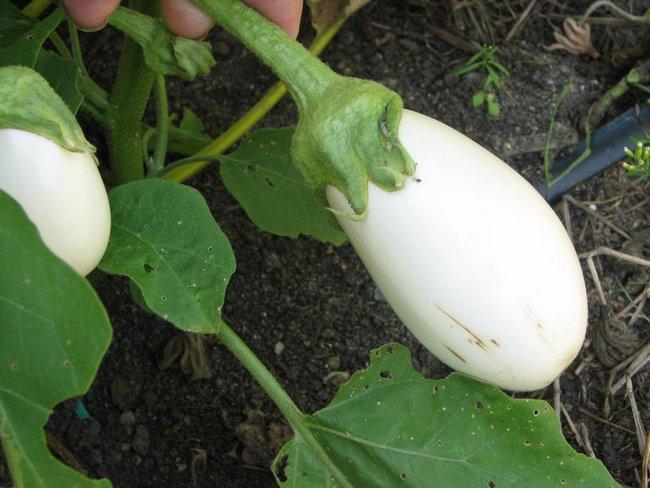
The plant is considered an early variety, maturing within 105 days after sprouting. It is recommended for cultivation in open beds. With proper care, up to 6.5 kg per m can be harvested.2A shrub up to 0.7 m tall. It has medium-sized, green leaves with slightly wavy edges. The fruits are cylindrical, pear-shaped, and glossy. They weigh up to 250 g.
It has a stunning flavor similar to mushrooms, making it popular. It is widely used in cooking.
Pelican F1
This variety is characterized by high yields, excellent flavor, and a relatively long shelf life. Ripening occurs 116 days after germination. Yields up to 7.6 kg per m.2A single bush yields approximately 2 kg of fruit. The bush can reach a height of 1.8 m. The fruits are cylindrical and slightly glossy. The average weight is 130 g.
Swan
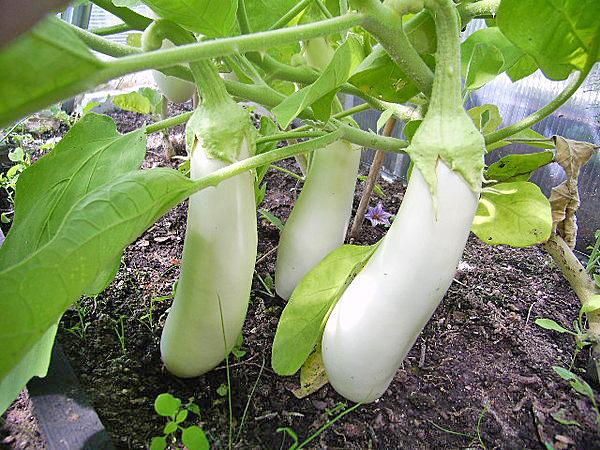
The advantage of this variety is its immunity to diseases and temperature fluctuations. Its popularity is due to its excellent yield: 18 kg per m2It has excellent flavor and ripens in 120-130 days. It is grown in open beds and greenhouses. It reaches 0.75 m in height and has green leaves.
The fruit is similar to a pear, with a slight gloss, weighing up to 300 g, with a thin skin.
Ping-Pong F1
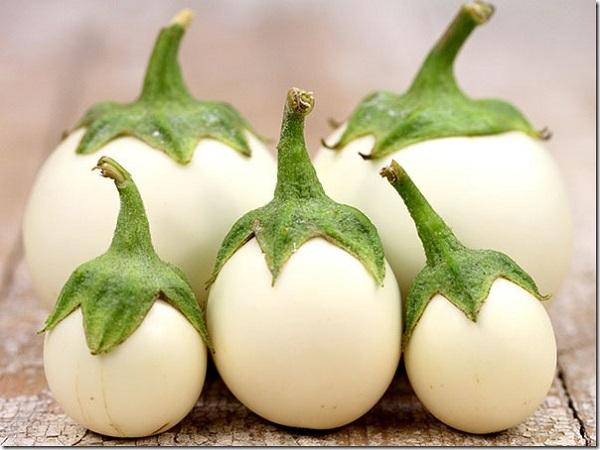
Considered one of the most popular eggplant varieties, it is grown primarily under plastic and matures in 117 days. The yield is 7 kg per m.2With proper care, a bush can yield up to 1.7 kg, and during the active phase, up to 20 ovaries can be found on the bush. The eggplant grows up to 0.8 m tall, with medium-sized, green leaves slightly dissected along the edges. The fruits resemble chicken eggs, measuring about 7 cm long, 6 cm in diameter, weighing up to 90 g, and with firm flesh.
Bambi F1
Considered ornamental, eggplant is ideal for growing in greenhouses, balconies, and windowsills. It grows fairly quickly, with a dense crown reaching only 0.5 m in height. The eggplants are shaped like eggs and weigh 70 g. The advantage of this variety is good fruiting even in low light conditions.
Stork
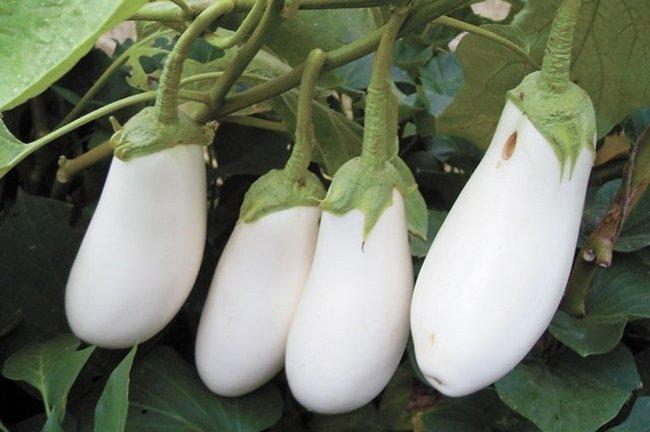
A relatively early-maturing crop. The first harvest begins 90-100 days after planting. It is recommended to cultivate in greenhouses. However, in the southern regions of the country, this eggplant variety produces good yields in open beds. From 1 m2 It is possible to collect up to 7 kg of eggplants weighing 90-110 g. The fruits are ovoid, with tender, juicy pulp. Harvesting vegetables on time is crucial. If harvested late, the fruit becomes tough and loses its nutritional value.
White egg
The eggplant, called Eggplant, is a Japanese selection and an early variety. The time from sprouting to harvesting averages 60 days. With proper care, the plant produces a good harvest. The vegetable is ovoid in shape, up to 10 cm long, weighing approximately 210 g, and has a distinctive mushroom flavor. The bush requires no shaping or support, reaching a height of up to 0.7 m.
Bibo F1
Native to Holland, this early-ripening variety is grown in open beds and greenhouses. It requires vertical support. The fruit is up to 18 cm long, 8 cm in diameter, and weighs up to 400 g. It is oval in shape and has an average yield of 5 kg per m.2The fruit's unique sweet taste allows it to be consumed fresh.
Advantages and disadvantages
The advantages include:
- excellent taste: no bitterness, relatively dense pulp with a pleasant mushroom flavor;
- the absence of a bitter taste allows vegetables to be consumed raw;
- seeds are completely or partially absent;
- a large number of useful valuable components.
They are inferior to their blue relatives in terms of benefits, the blue pigment is a powerful antioxidant. White eggplant has a shorter shelf life, compared to its normal relative, is sensitive to temperature changes, and it is impossible to collect seed material.
Reviews
The peculiarities of cultivation and impressions can be judged by the reviews of gardeners.
Darina Ivanovna, Klimovo: "After many years of growing eggplants, I've realized that you shouldn't get hung up on just one variety. I used to prefer blue ones. When I tried growing white ones, I was impressed. Many people said it was too difficult. In fact, if you do everything right, the results won't take long to come. And the taste of the fruit is amazing. They don't taste bitter at all."
Tamara Petrovna, Smolensk: "I tried growing Pelican. I haven't noticed any particular difficulties growing it; with proper care, we get a good harvest. The fruits also have tender, slightly sweet flesh. I've pickled them fresh, and they're delicious."
Related posts:
 The best eggplant varieties for growing in a polycarbonate greenhouse: planting and care
 80 Best Eggplant Varieties for Different Regions with Descriptions and Characteristics
 Causes and treatment of eggplant pests and diseases, how to combat them at home
 Planting, growing, and caring for eggplant seedlings at home
 Characteristics and description of the Black Beauty eggplant variety, planting and care
 How to properly plant and care for eggplants in open ground
 A description of the best eggplant varieties for growing in greenhouses and open ground in the Moscow region.
 How to grow eggplants outdoors and properly care for the plant