
One of the most demanding garden crops, eggplants are difficult to grow. Seedlings are often puny and unviable due to poor seed quality. Many gardeners collect their own eggplant seeds as the most reliable way to obtain tasty fruit. This allows them to preserve the best varietal qualities and produce a bountiful harvest of high-quality fruit.
Seed collection
If you want grow eggplants To select a variety suitable for the given climate conditions, you must collect the seeds from the fruits yourself. To do this, you must consider the following:
- Hybrids do not retain the qualities of the variety.
- Seeds are obtained from fully ripened vegetables. Therefore, it is necessary to sow seeds for seedlings as early as possible.
- Seed material must be collected from healthy specimens.
- Fruits ready for seed collection should have a yellowish-brown color.
Taking these nuances into account, you can grow a vegetable crop and collect seeds from it.
Selection of eggplants
The quality of the seeds collected from eggplants depends on their commercial characteristics. It's important to ensure that the eggplant:
- does not belong to hybrid varieties;
- bred for growth in a specific climate region;
- will have time to ripen during the growing season;
- will be able to supply high-quality seeds.
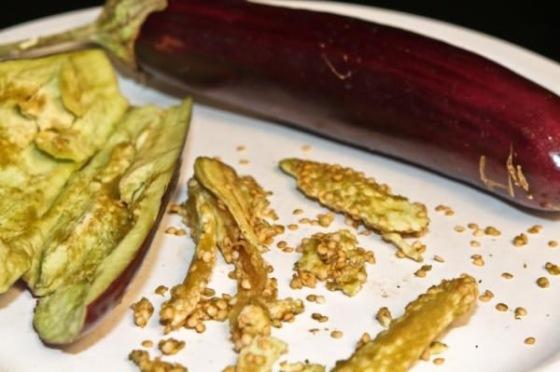
If the eggplants haven't ripened yet, they're picked and placed in a cool, dark place where they'll ripen in 2-4 weeks. Then, cut the fruit open, remove the seed pods, crush them, and grind them to remove the seeds. You can dilute the seed mixture with water and press it through a sieve. Drain the liquid and collect the seeds. The preparation of the seeds for planting depends on how they were stored.

Drying seeds and storage
Preserve the seeds before planting, following proper drying and storage procedures. After collecting the seeds from the fruits, wash them, spread them on paper, and place them in a well-ventilated area with low humidity.
Drying seeds in the sun is not recommended. The seeds are constantly stirred to ensure they dry thoroughly.
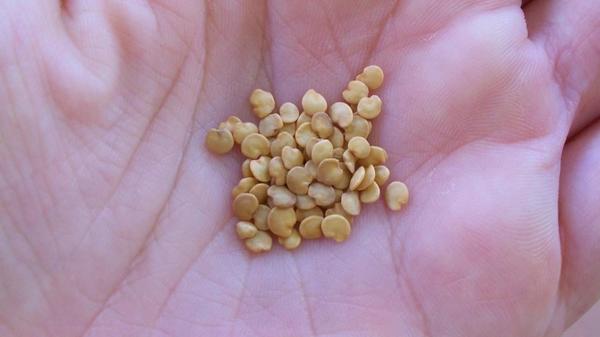
Then place the seeds in a paper bag or cardboard box and store in a dry, dark place. Ideally, place them in a cupboard where the temperature stays below 15 degrees Celsius. Seeds should avoid drafts and high humidity. Storing eggplant seeds can last for 3 years. They will not lose their germination capacity during this period.
Take a look Also
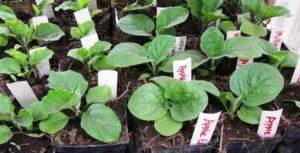
Growing eggplants from seeds at home
The seeds collected from the fruits are suitable for growing vegetables at home. However, to obtain a harvest of blue fruits, it is necessary to follow all growing conditions and guidelines.
Necessary conditions
Before collecting seeds, it's important to know whether the chosen variety is suitable for the climate zone. In colder regions, early-ripening varieties are essential. Only then will they have time to produce ripe fruit. In southern regions, late-ripening varieties ripen, while in temperate climates, mid-season varieties are best. It's best to prepare a greenhouse for growing heat-loving vegetables. In a greenhouse, seedlings can be planted earlier, and they will have time to produce ripe fruit.
Selecting a location and preparing the soil
Eggplants have a weak root system, so they shouldn't be transplanted. It's best to prepare peat cups or pots for the seedlings right away, each large enough to hold two seeds. The peat container is then immersed in the planting hole together with the plant when transplanting into open ground or a greenhouse.
Peat tablets, placed in a tray filled with water, are also suitable for growing plants. Vegetables can also be grown in plastic cups.
Eggplants require loose, nutritious soil with a pH of 5.5-6.5. Prepare your own soil mixture of 2 parts peat, 2 parts humus, 2 parts turf, and 1 part sand or vermiculite. For nutrients, add 40 grams of superphosphate, 10 grams each of ammonium sulfate, and 10 grams of potassium salt per 10 kilograms of soil. To disinfect, water the soil with boiling water or a potassium permanganate solution two weeks before planting. You can also bake the soil in the oven.
Preparing and sowing seeds
Planting material also needs to be prepared in advance for sowing. To do this, the seeds:
- soak in warm water;
- keep for 20 minutes in a solution of potassium permanganate;
- dipped in growth stimulants such as "Epin";
- harden by placing it in the refrigerator for 24 hours.
You can germinate the seeds before sowing by placing them in damp layers of toilet paper. They sprout quickly when the container is placed in a warm place with a temperature of 25 degrees Celsius.
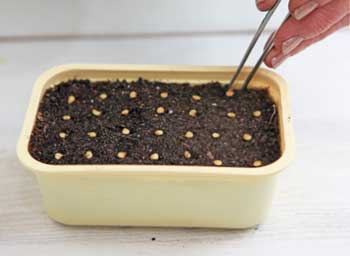
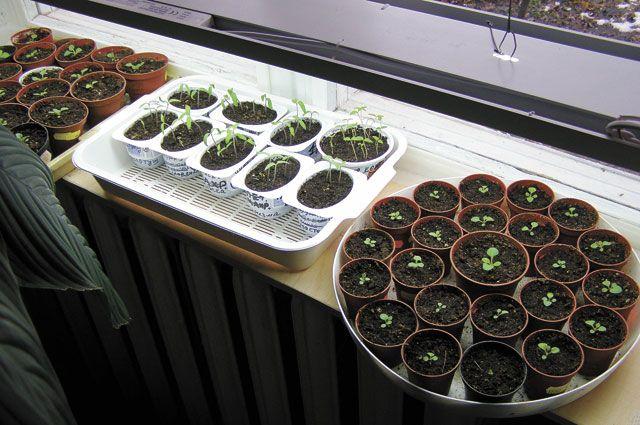 The vegetable seeds are planted in pots to a depth of 1-1.5 centimeters. Then water the containers and cover them with plastic wrap. Place the containers with the planting material in a warm place and wait for the sprouts to appear. Remember to ventilate the containers and moisten the soil.
Caring for crops
Vegetable seedlings typically emerge 7-10 days after sowing. The containers are immediately moved to well-lit windowsills. The room temperature can be lowered to 15 degrees Celsius. After 10 days, it is raised to 20-22 degrees Celsius.
Seedlings are pricked out if there's not enough space in the containers and when two true leaves have already appeared. Two plants are usually planted in individual containers, with the weaker one removed later.
Fertilizer application rates must be maintained. Too little or too much micronutrients will stunt growth or burn roots and leaves. To prevent disease, water plants with water slightly tinted with iodine once a month. Water with room-temperature water as the top layer of soil in the pot dries out. Only proper seedling care will ensure strong seedlings.

Pest and disease control
Any deviation from agricultural practices leads to the appearance of symptoms of various diseases in seedlings:
- Excessive moisture causes plant roots to rot. Black rot also appears when plantings are too dense and the plants don't receive enough light.
- Black spots on seedling leaves indicate a fungal infection. The fungus and its spores can survive in the soil and seeds, so it's important to treat the soil before planting.
- When leaves turn brown, it is a sign of late blight, which is common among nightshade crops.
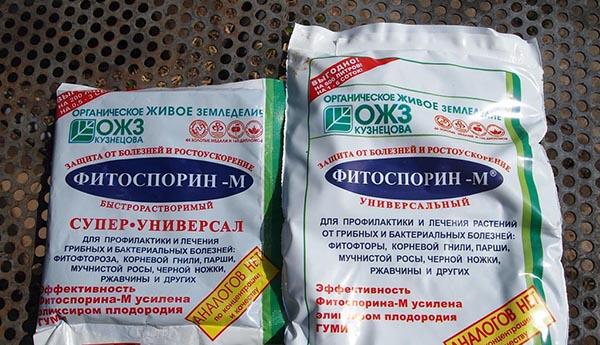
Seedlings can be saved at the early stages of the disease. Biological preparations such as Fitosporin and Alirin are helpful. Spray the seedlings with garlic infusion and Bordeaux mixture to prevent diseases.
Common plant pests include aphids and spider mites. Pest colonies can be removed by wiping the leaves. An infusion of onion peels is effective against insects. Insecticide treatments can be used to quickly eliminate pests.
Harvesting and storage
Depending on the variety, eggplants are picked from the vine when they are ripe. The fruit should be bright purple, although some varieties produce white and light blue fruit. The flesh of ripe fruits should be creamy, and the seeds should be whitish. If you need to collect seeds from the fruits, keep them on the stems longer to allow the seeds to darken and the skin to brown.
Store ripe eggplants in a cool place. They can stay fresh at a temperature of 5-10 degrees Celsius and a humidity of 70-80%. The fruits are also used to make delicious salads and pickles for the winter.
Related posts:
 Is it possible to soak treated cucumber seeds before planting and how to do it correctly?
 Carrot care guidelines for outdoor cultivation to ensure a good harvest
 80 Best Eggplant Varieties for Different Regions with Descriptions and Characteristics
 The best eggplant varieties for growing in a polycarbonate greenhouse: planting and care
 How to prepare tomato seeds for planting seedlings
 How to properly plant peas in a greenhouse and open ground
 How to properly prepare cucumber seeds for sowing in open ground
 How to grow potatoes from seeds at home