
- The history of the F1 hybrid
- Description and photo
- Fruit
- Bushes
- Characteristics of the variety
- Productivity and fruiting
- Scope of application
- Resistance to diseases and pests
- Distinctive features
- Advantages and disadvantages
- Growing seedlings
- Timing
- Preparing soil and containers
- Seed sowing pattern
- Care
- Temperature conditions
- Daylight hours
- Irrigation
- Top dressing
- Picking
- Top dressing
- Planting seedlings in open ground
- Care
- Watering and soil care
- Top dressing
- Spraying against pests and diseases
- Bush formation
- Possible difficulties
- Harvesting and storage
- Secrets of vegetable growers
- Reviews
Although eggplants are heat-loving crops, they have long been grown in virtually all climate zones. Breeders have long developed cold-resistant varieties that produce good yields in northern latitudes. The Nutcracker eggplant variety has gained popularity among gardeners thanks to its characteristics and ease of cultivation.
The history of the F1 hybrid
The Nutcracker eggplant was developed by Russian breeders. This variety is suitable for cultivation in the Urals, central regions, the south, and Siberia.
Description and photo
Studying the description of the appearance of the bushes and fruits will help you decide whether to plant the Nutcracker eggplant variety or choose another hybrid.
Fruit
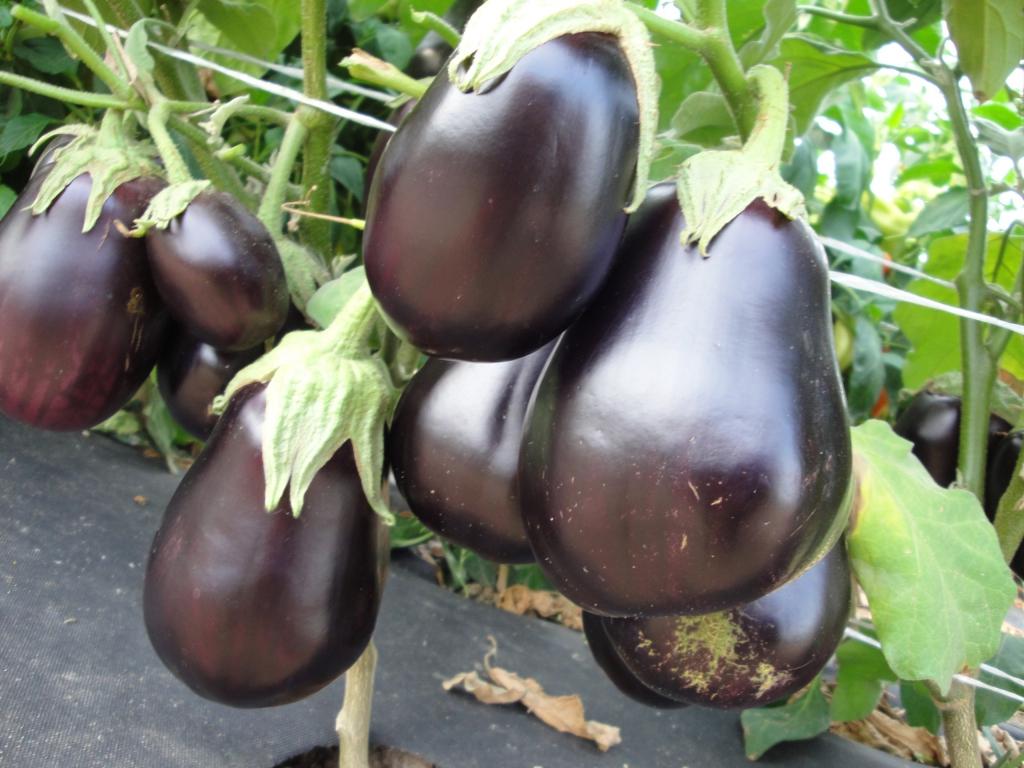
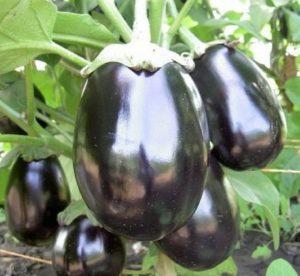
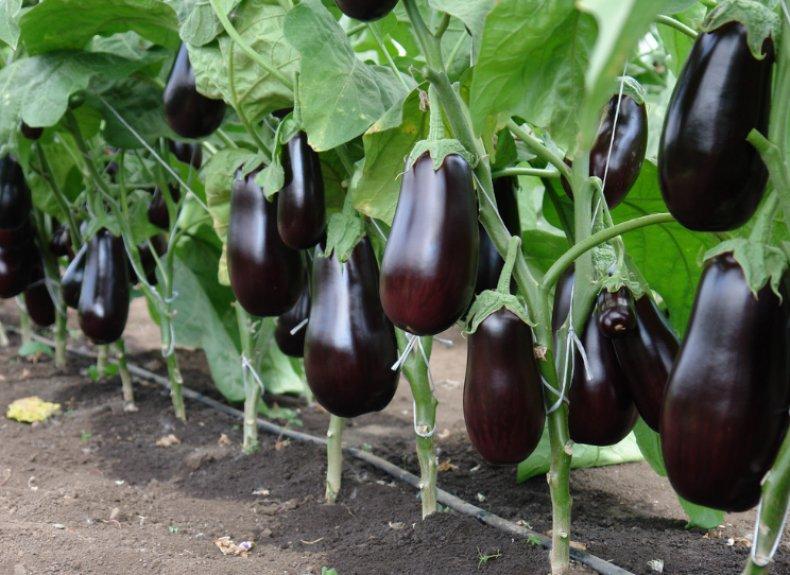
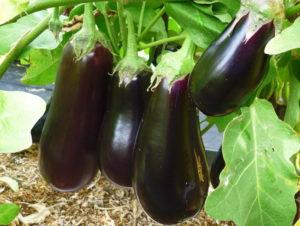
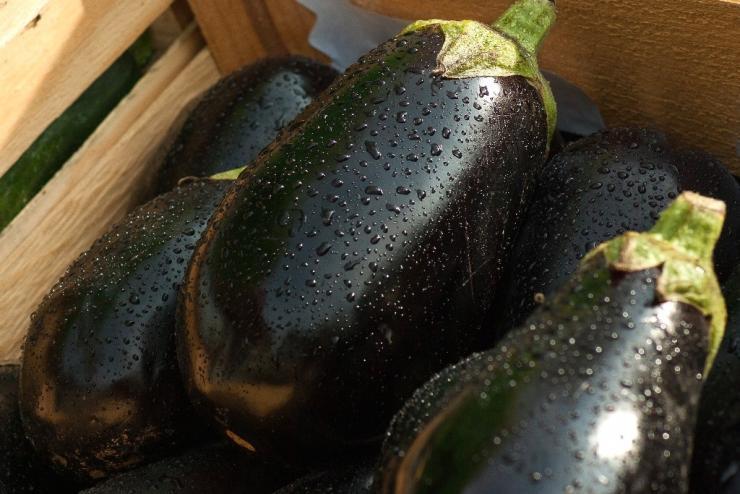
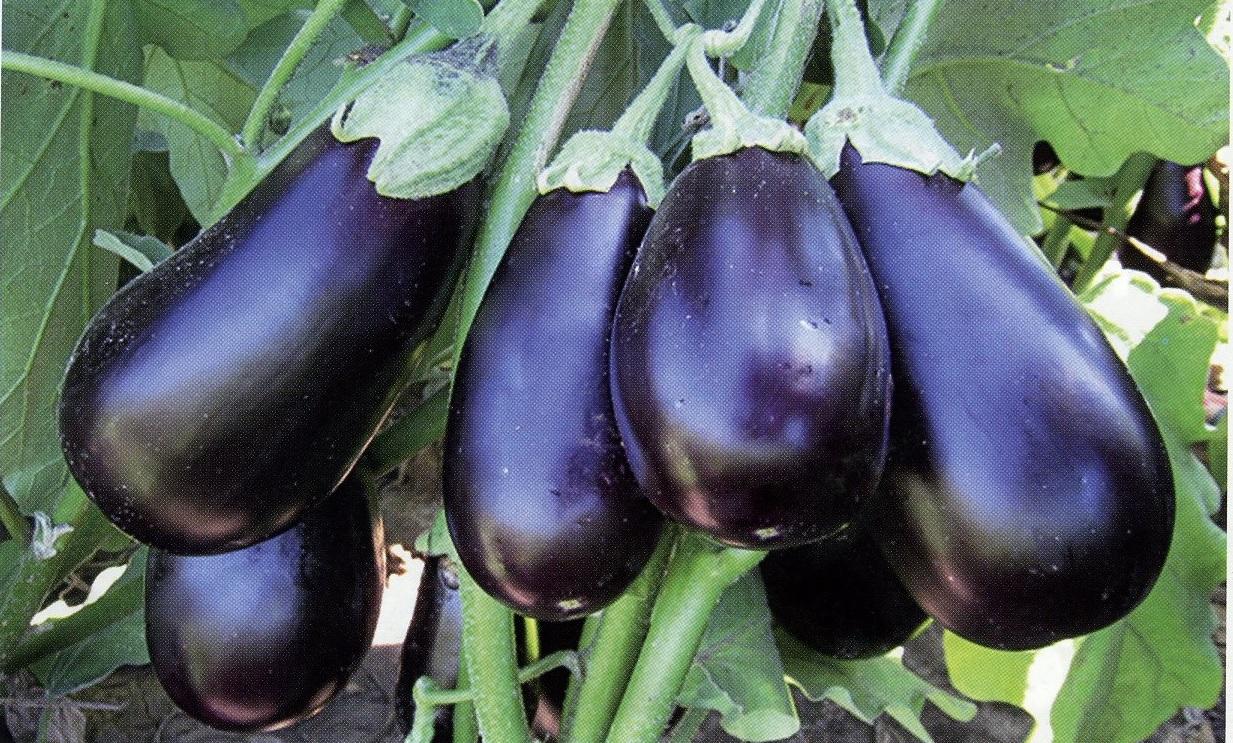
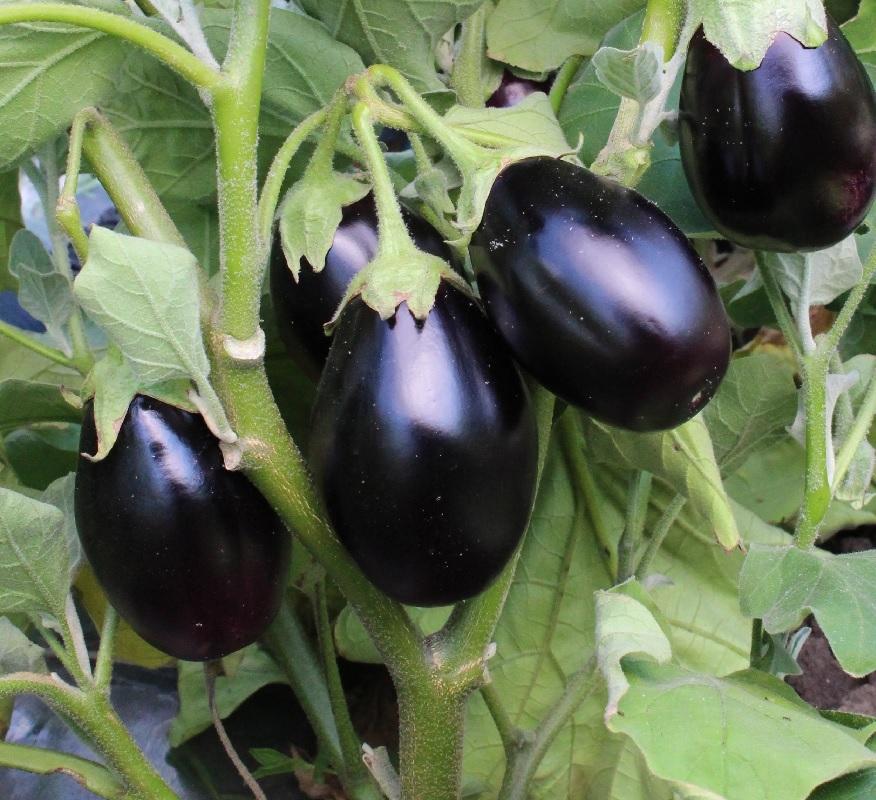
Ripe fruits are spherical or pear-shaped. The skin is glossy and a rich purple hue. The length of the fruit ranges from 13 to 16 cm. The average weight of a ripe fruit is 240-265 g, reaching a maximum weight of 700 g. The flesh is white and not bitter. The seeds are small.
Bushes
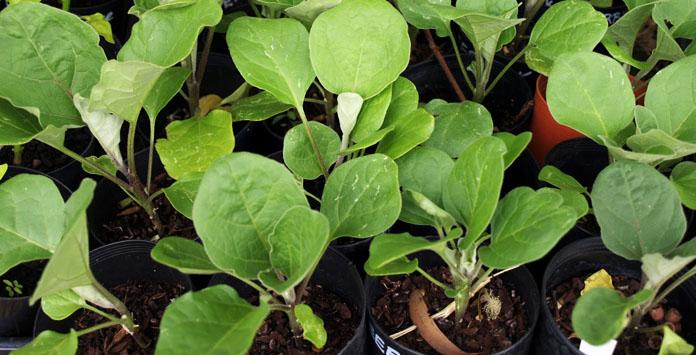
The height of a mature bush can vary and depends on growing conditions. In open ground, the plant grows up to 1 m. In a greenhouse, the stem can reach 1.5 m. The bush type is semi-spreading. The leaves are medium-sized, a rich light green. The shape is elongated and rounded. The main stem is strong.
Characteristics of the variety
In addition to describing the bush's appearance, important characteristics include yield, fruiting period, and disease resistance.
Productivity and fruiting
The fruit ripens mid-early. The first ripe eggplants appear on the bushes 100-113 days after sowing the seeds. The yield is good; with proper care, a mature plant can yield up to 8 kg of fruit. Fruiting continues throughout the growing season.
Scope of application
Ripe eggplants have a wide range of uses. Because they don't taste bitter, they're perfect for appetizers and salads without soaking in salted water. They're also used for winter preserves.
Resistance to diseases and pests
Disease and pest resistance are average. The variety has good immunity to tobacco mosaic. Resistance can be increased with proper care.
Distinctive features
The main distinguishing feature of the Nutcracker eggplant variety is the absence of bitterness in the pulp, as is the case with most hybrid varieties.
Advantages and disadvantages
The advantages of the Nutcracker variety include:
- high yield and long fruiting period;
- vegetables begin to ripen early;
- absence of bitterness in taste;
- versatility of use in cooking.
No significant drawbacks have been identified with the hybrid. The only drawback is that the eggplant seeds cannot be collected. The variety is considered a hybrid and is not intended for further propagation.
Growing seedlings
Growing eggplant seedlings isn't particularly difficult. And it's not much different from cultivating other vegetable crops.
Timing
Eggplant seeds are planted towards the end of winter, in late February or early March. In northern regions, sowing can be delayed until mid-March. In southern regions, sowing can be postponed until mid-February.
Preparing soil and containers
Before sowing seeds, wash the containers with a weak solution of potassium permanganate. The eggplant soil mixture contains:
- turf soil;
- peat;
- sand.
All ingredients are taken in equal parts. Wood ash can be added before planting the seeds. Fine gravel or crushed shells are placed on the bottom of the container. Then, add soil and begin planting.
Seed sowing pattern
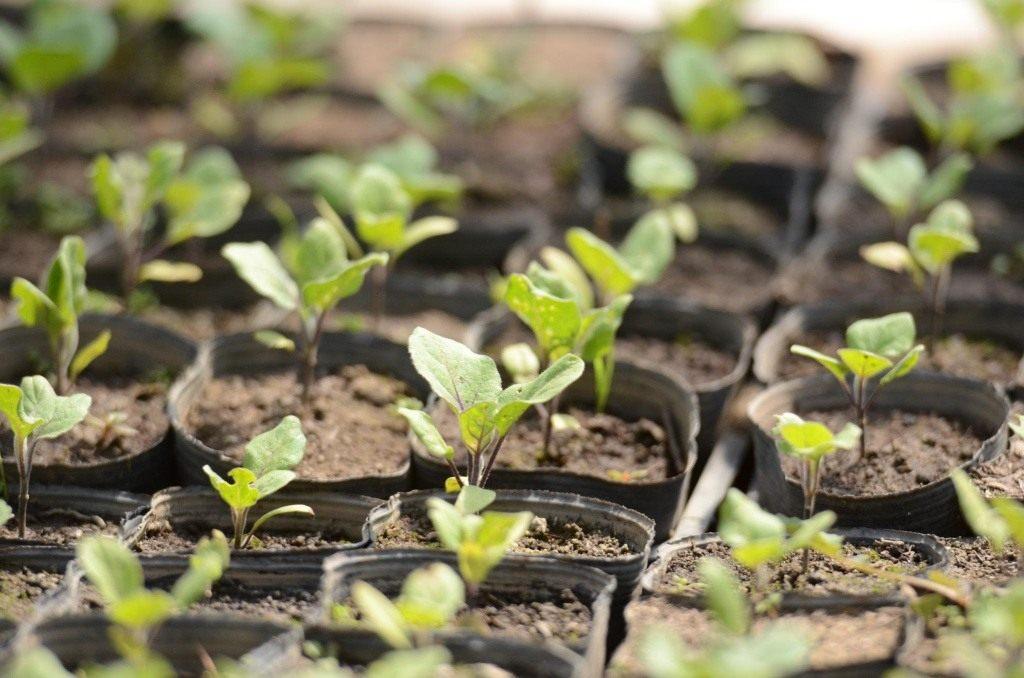
Make 1-cm-deep furrows in the soil. Plant the seeds, leaving space between them. Cover lightly with soil and water generously with warm water.
Care
To ensure that seedlings appear as early as possible, they need to be provided with favorable conditions for active growth.
Temperature conditions
Eggplants don't like cold or drafts. The optimal temperature for seedling growth is between 16 and 23 degrees Celsius. A drop of a few degrees at night is acceptable.
Daylight hours
Eggplants are sun-loving plants, so place the seedling containers in sunny windows. East- or west-facing windows are best. Seedlings should be exposed to at least 14 hours of sun. If there is not enough sunlight, place lamps next to the boxes and turn them on in the evening for 3-4 hours.
Irrigation
Plants prefer moist soil, so water the soil around the seedlings as it dries out. Use warm, filtered water. Water the seedlings early in the morning or in the evening, after sunset. Avoid exposing the leaves to direct sunlight after watering.
Top dressing
A few days after sowing the seeds, water the soil with potassium humate diluted in warm water. Fertilize once a week. It's also helpful to water the seedlings with wood ash diluted in water.
Picking
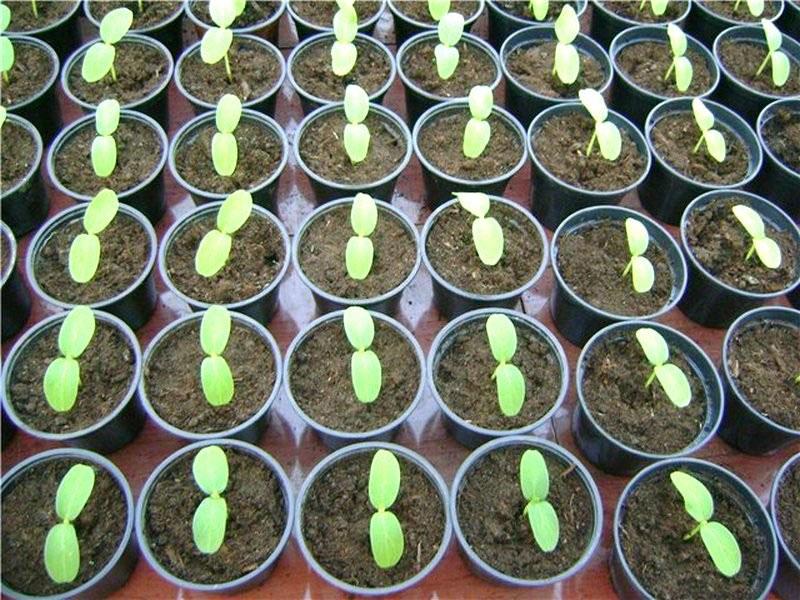
The bushes are pricked out after they have two full-fledged leaves. For transplanting, use decomposable peat containers. The seedlings are then planted in the ground in the spring.
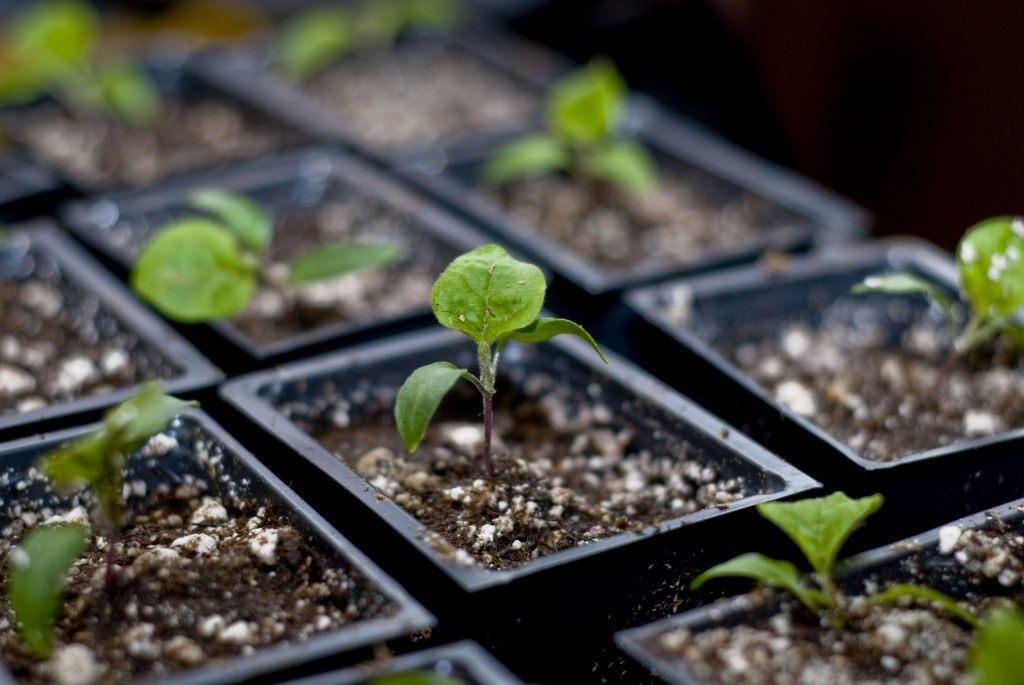
Top dressing
After transplanting, continue feeding the seedlings. The bushes are watered with chicken manure diluted in water.
Planting seedlings in open ground
Eggplants are transplanted into open ground around mid-May. Warm weather should arrive outside.
The process of planting seedlings:
- dig up the soil, remove weeds;
- add manure and dig up the soil again;
- leave the soil for 2 weeks;
- After 2 weeks, start planting seedlings;
- holes 30 cm deep are made in the soil;
- the distance between holes is 60 cm;
- Place the seedling in the hole and cover it with soil.
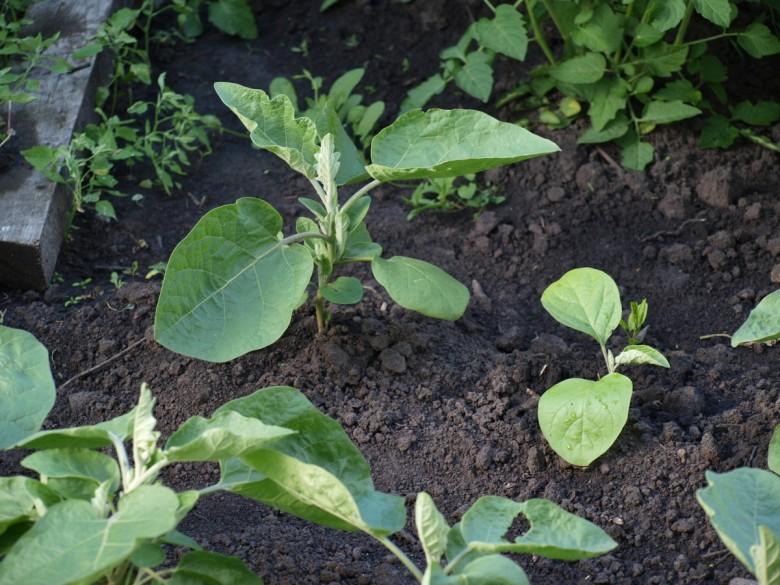
Water the bed generously. Cover the beds with a warm cloth in the evening. It's best to cover the eggplants for the first two weeks.
Care
After transplanting the seedlings into open ground, care for the bushes continues. Particular attention is paid to watering and fertilizing the soil.
Watering and soil care
Once a week, weed the beds and remove all weeds. It's best to weed before watering. Watering should be done in the evening, after sunset. Watering the bushes in the heat can cause sunburn on the foliage. Avoid watering the beds with cold water. Only sun-warmed water is suitable for irrigation.

Top dressing
Without fertilizing, it's impossible to grow a good harvest. After transplanting to their permanent location, feed the plants with nitrogen-containing fertilizers to promote vigorous foliage growth. During flowering and fruiting, plants require phosphorus and potassium. Water the soil with chicken manure several times a season, about once a month. Watering with weed infusions is also effective.
Spraying against pests and diseases
Among pests most often occur on eggplants The Colorado potato beetle appears. Colorado potato beetles are removed by hand. If the beds are small, using chemicals will harm the fruit.
Eggplants are often affected by diseases such as:
- late blight;
- root rot.
Spraying the bushes with Fitosporin helps against late blight. If signs of late blight have only recently appeared, treatment with Bordeaux mixture helps. If the bushes are severely affected, the plants are dug up and destroyed. Wood ash and Fundazol are used against root rot. The bushes are sprinkled with ash, and the next day they are sprayed with Fundazol. After 14 days, the plants are sprayed with Bordeaux mixture.
Bush formation
When the bushes begin to grow, leave three healthy stems and trim the rest. As they grow, trim the lower leaves as well. They don't do any good, but they do draw nutrients from the soil.
Possible difficulties
When growing plants, yellowing foliage is a common problem. Eggplant leaves are thin and react quickly to changes in soil composition. If the foliage turns yellow, nitrogen needs to be added to the soil.
At high temperatures, inflorescences become sterile. This problem is difficult to resolve, especially when grown outdoors. This also occurs if seedlings were planted in cold soil.
Harvesting and storage
Harvest as the fruit ripens. It's not advisable to leave the vegetables in the garden for too long, as they become soft and bitter. It's best to store the harvested crop in the refrigerator. The shelf life is up to 2 weeks.
Secrets of vegetable growers
Secrets of growing eggplants in the garden:
- To prevent the bushes from getting sick, in the spring they are sprayed prophylactically with Bordeaux mixture.
- Before sowing, the seeds are germinated. This procedure increases their germination rate. The seedlings are placed in cheesecloth and soaked in water. They are then placed in a warm place and moistened regularly. Sprouts should appear within 2-3 days. The seeds are then planted in the soil.
- It's not recommended to plant eggplants next to tomatoes. These two crops don't do well together.
Another secret to growing eggplants is transplanting. Or rather, not transplanting. The seedlings are very delicate and don't tolerate transplanting well. It's best to plant the seeds directly in individual pots.
Reviews
Klavdiya, 59: "I've been growing the Nutcracker eggplant for several years now. I'm very pleased that the vegetables don't taste bitter. This was the main criterion for choosing the variety. The yield is good, and the eggplants ripen early."
Matvey, 32: "Last year, I tried growing the Shchelkunchik variety for the first time. The eggplants grew large, with a beautiful, glossy skin. The yield was excellent; we harvested right up until autumn."
Related posts:
 80 Best Eggplant Varieties for Different Regions with Descriptions and Characteristics
 How to quickly prepare pickled eggplant in jars for the winter, the most delicious recipes and storage conditions for the preparations
 The best eggplant varieties for growing in a polycarbonate greenhouse: planting and care
 Causes and treatment of eggplant pests and diseases, how to combat them at home
 Making finger-licking good eggplant caviar with peppers and tomatoes
 How to freeze fresh, fried, and baked eggplants for the winter at home in the freezer
 How to properly plant and care for eggplants in open ground
 Description and characteristics of the hybrid eggplant variety Epic, planting and care