
- Is it possible to plant cucumbers and eggplants in the same greenhouse?
- Benefits of Neighborhood
- Are there any disadvantages?
- What does cultural compatibility depend on?
- Does interplanting affect pollination and fruiting?
- The most suitable blue varieties for planting together
- How to plant plants together correctly
- Timing of planting crops
- Bush planting schemes
- The nuances of caring for crops in open ground and in a greenhouse
- Watering frequency
- How and what to feed cucumbers and eggplants with
- Shaping plants
- Pest control
Beginner gardeners with a small plot of land often wonder how to carry out Growing and caring for eggplants in a greenhouse With cucumbers. These vegetables are tasty and healthy, so it's no wonder they're so common in Russia. The main difficulty in growing them in the same greenhouse is their different microclimate requirements.
Is it possible to plant cucumbers and eggplants in the same greenhouse?
Cucumbers and eggplants are vegetables from different families. However, they can be grown in the same greenhouse, and quite successfully.
Benefits of Neighborhood
The main advantage of growing eggplants and cucumbers in the same greenhouse is that the vegetables are free of common diseases and pests. Consequently, gardeners can expect a good harvest. Furthermore, both crops are not divided into standard varieties and those intended for greenhouse cultivation.
Are there any disadvantages?
When growing cucumbers, avoid drafts in the greenhouse, while eggplants are best grown in a well-ventilated room. The problem can be solved by using a polyethylene curtain, which limits the draft's access to the cucumbers.
What does cultural compatibility depend on?
Crop compatibility depends on how the vegetables tolerate heat. For example, early and late sowings combine frost-resistant plants. Common diseases and pests are also important. Avoid planting together plants that are susceptible to the same pest.

Does interplanting affect pollination and fruiting?
Growing vegetables together doesn't reduce yield or affect pollination. On the contrary, eggplants stimulate and support cucumber growth. Keep in mind that eggplants are self-pollinating, so it's important to choose a cucumber variety that matches.
Take a look Also

The most suitable blue varieties for planting together
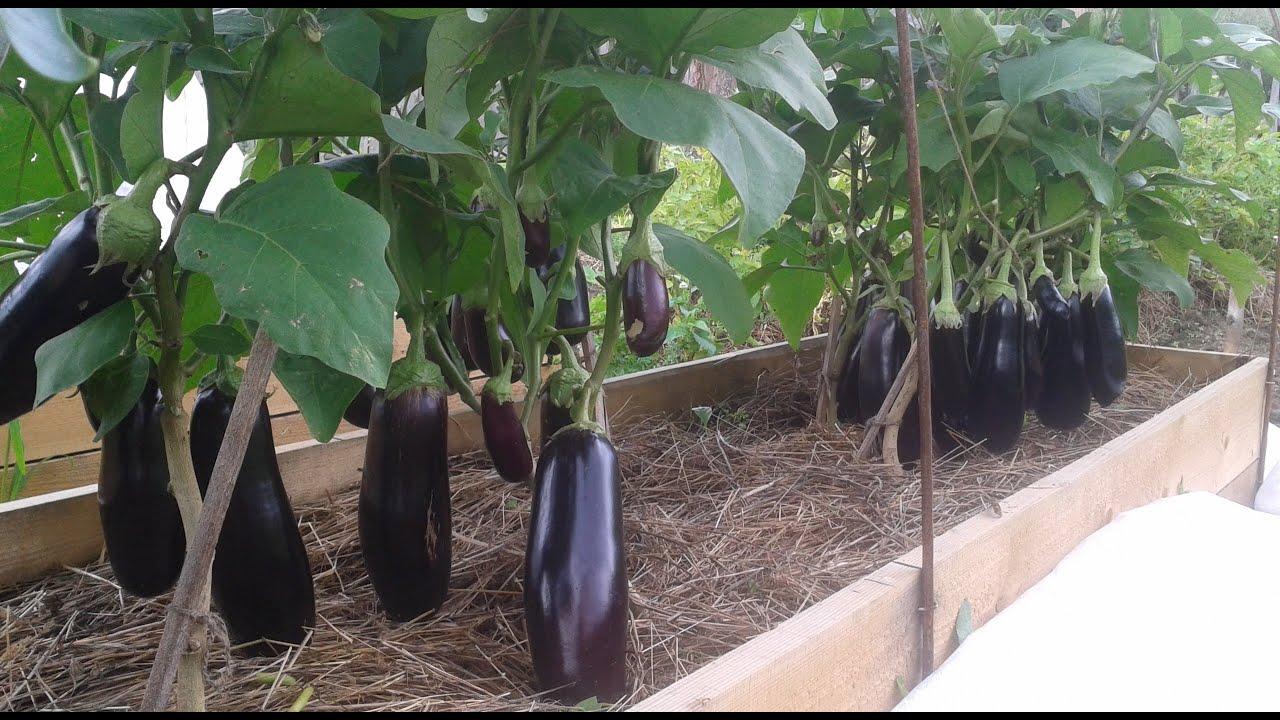
The following eggplant varieties are optimal for planting alongside cucumbers in greenhouse conditions:
- Bagheera;
- Baikal F1;
- Joker;
- City Policeman F1;
- Sofia;
- Fabina F1;
- Purple Miracle F1;
- Black beauty;
- Black moon.
How to plant plants together correctly
Eggplants grow well in the following conditions:
- dry, warm air (temperature – approximately twenty-eight degrees);
- unimpeded access of sun rays to the bushes;
- watering with warm water directly at the roots;
- carrying out tying and pinching.
The optimal conditions for cucumbers are:
- humid air (temperature – about nineteen degrees);
- soil fertilization (at least 3 times during the growing season);
- watering with warm water that has been allowed to settle;
- Carrying out treatment against diseases and pests.

Timing of planting crops
Eggplants are planted next to cucumbers between February 20th and 25th. Cucumber seedlings are usually planted in early spring. The minimum soil temperature is 15°C (53°F), and the air temperature is 18°C (55°F).
Bush planting schemes
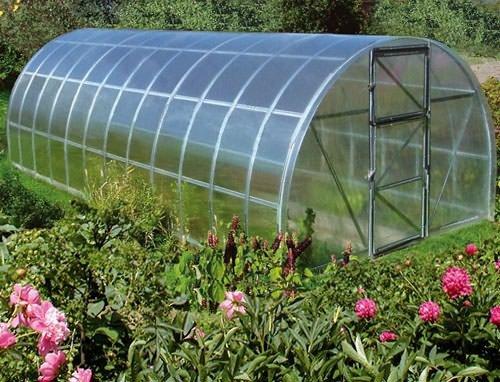
When planting in a polycarbonate greenhouse, assign individual beds to each crop. Place cucumbers in the center to avoid shading the eggplants. Plant eggplants on the sides to provide the vegetables with optimal temperature and light conditions.
Don't forget that eggplants need space, so when planting, pay attention to the distance between the vegetables.
It's advisable to separate vegetables using plastic or mesh. This will prevent the spread of diseases and ensure optimal temperatures.
If you have some space next to your eggplants, plant asparagus beans there. They're easy-to-grow, fast-growing, and produce well in greenhouse conditions. They enrich the soil with nitrogen, which helps eggplants thrive.
The nuances of caring for crops in open ground and in a greenhouse
Without knowing how to care for eggplants and cucumbers, it's impossible to get a good harvest. Watering frequency, fertilizer composition, and disease and pest control are all important.
Watering frequency
Cucumbers grown outdoors require watering at least twice a week in the summer. In the spring, after planting the seedlings, watering should be done once a week. Clay soil retains water well, so these beds can be watered less frequently. However, more water should be applied at a time.
Greenhouse-grown cucumbers should be watered every three days during flowering. Ten liters of water are required per square meter. After flowering, watering should be done every two days. Eggplants should be watered every seven days. Twelve liters of water are required per square meter. In hot weather, watering should be done four times a week.

Eggplants require more water during ripening, so once the first ovaries appear, watering frequency should be doubled, to twice a week. The volume of water applied per square meter is equal to fifteen liters.
How and what to feed cucumbers and eggplants with
The fertilization schedule for cucumbers is as follows:
- The first feeding is fifteen days after planting.
- The second feeding is at the beginning of flowering.
- The third feeding is during the fruit ripening period.
The first feeding is carried out with organic fertilizers:
- bird droppings solution (1:15);
- cow dung solution (1:6);
- slurry solution (1:8).
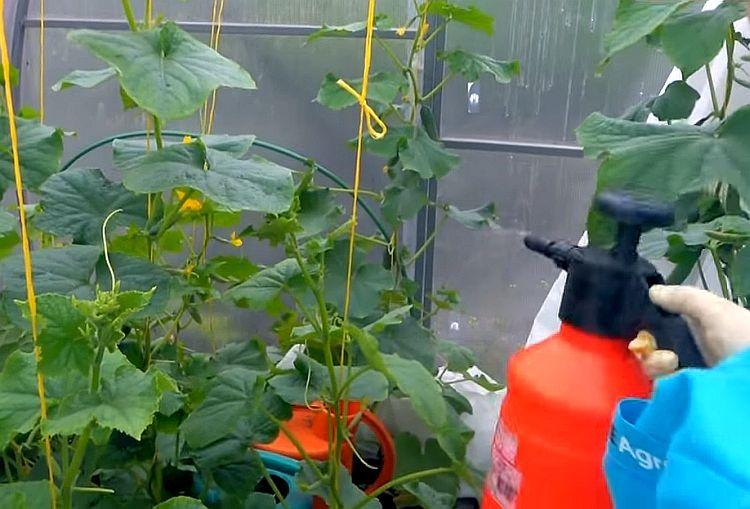
For the second feeding, mineral fertilizers are used:
- 20 grams of potassium and 30 grams of ammonium nitrate, 40 grams of superphosphate;
- a glass of ash per 10 liters of water;
- superphosphate with ash.
The third feeding is mineral:
- 30 grams of potassium nitrate per 10 liters of water;
- 50 grams of urea per 10 liters of water;
- a glass of ash per 10 liters of water.
If the soil on which the eggplants grow is mulched, then the first feeding is carried out at the beginning of budding, the second - before harvesting the fruits, the third - when fruits form on the lateral shoots.

Solutions are used consisting of 10 liters of water and:
- ammonium nitrate (5 grams);
- superphosphate (20 grams);
- potassium chloride (10 grams).
Shaping plants
Recommendations for shaping cucumbers:
- It is necessary to remove male flowers, damaged fruits, and tendrils. Tendrils impair the growth of the bush.
- During the growing season, leaves that have turned yellow or dried out need to be removed.
- When staking, be careful not to uproot the plant. Only planted seedlings that have not yet established themselves in the soil require careful staking.
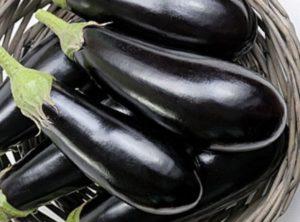

The formation of eggplants is carried out according to the following algorithm:
- Removing the upper part of the bush when it reaches a height of 30 centimeters.
- The two largest stepsons are left.
- On each stem, leave the largest shoot (in the area where the branches are). The second shoot needs to be pinched.
- While the stem is growing, at the places where it branches, it is necessary to remove the smaller shoot.
- One eggplant is left on each shoot.
Pest control
Yellow sticky flypaper can be used to combat the dark gray cucumber gnat. Ladybugs are effective against aphids. Slugs can be controlled with the chemical product Groza. It contains granulated metaldehyde, which kills the pests.
The greenhouse where the eggplants are grown must be kept clean. In the fall, plant debris is destroyed and the soil is tilled. The greenhouse is treated with a 20 percent bleach solution.
In the spring, treat the bushes with ash or tobacco dust. Whiteflies can be controlled with flypaper. Sprinkle the soil with black or red pepper. During flowering, treat the eggplant beds with insecticides. You can also treat the bushes with a garlic-onion mixture dissolved in 10 liters of water.
Related posts:
 80 Best Eggplant Varieties for Different Regions with Descriptions and Characteristics
 The best eggplant varieties for growing in a polycarbonate greenhouse: planting and care
 How to quickly prepare pickled eggplant in jars for the winter, the most delicious recipes and storage conditions for the preparations
 Causes and treatment of eggplant pests and diseases, how to combat them at home
 Making finger-licking good eggplant caviar with peppers and tomatoes
 Is it possible to plant eggplants and peppers in the same greenhouse next to each other and how to care for them?
 How to properly freeze fresh eggplants for the winter in the freezer, storage periods
 How to freeze fresh, fried, and baked eggplants for the winter at home in the freezer