
- Pros and cons of growing peppers and eggplants together
- Suitable varieties
- Basic requirements for growing
- Pepper
- Eggplant
- Is it acceptable to grow crops in the same bed?
- The nuances of planting and care in greenhouse conditions
- Preparing seeds for planting
- Proper preparation of soil and containers
- Planting seeds
- Preparing seedlings and a greenhouse for planting
- How to properly place plants in a greenhouse
- Recommendations for caring for peppers and eggplants in a greenhouse
- How to grow vegetables outdoors
- Timing and planting patterns for peppers and eggplants
- Planting and caring for seedlings and adult plants
- Disease and pest control measures for peppers and eggplants
Peppers and eggplants are heat-loving vegetables grown everywhere, ripening together and at the same time. Ensuring fruiting in both crops is not easy; it requires proper agricultural practices and growing guidelines for different soil types. Pepper and eggplant care are similar, and both can be grown in the same greenhouse; the key is to select the right varieties.
Pros and cons of growing peppers and eggplants together
Planting peppers and eggplants together is possible; gardeners have been using this technique for decades. To successfully grow vegetables together, it's necessary to create comfortable and favorable conditions for all plants. The advantages of this technique include:
- Saving space and room in your garden.
- Convenience of carrying out agricultural activities: watering, loosening, fertilizing.
- Inspection of plants is carried out in one common place.
- Plants have a beneficial effect on each other, crop rotation improves.
Eggplants and bell peppers make excellent companions. They have similar temperature, regular watering, and fertilization requirements.
The disadvantages of growing these crops together include:
- The need to select varieties.
- The transfer of diseases from one plant species to another.
- It is recommended to sow the spaces between crops with green manure.
If your plot is small and you only have one greenhouse, growing vegetables under a common roof is convenient. This eliminates the need for an additional structure, saving space on the plot.
Suitable varieties
Varieties are selected so that the following compatibility parameters match as closely as possible:
- height of bushes;
- flowering and harvest period;
- irrigation system and other agricultural measures.
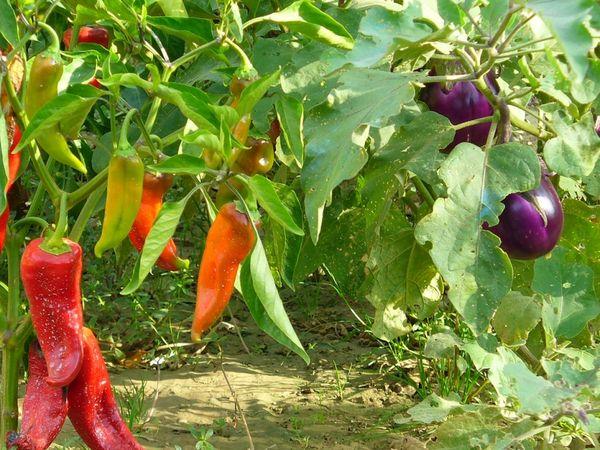 Note! Don't plant sweet and hot pepper varieties in the same greenhouse, as cross-pollination will occur. Eggplants can be grown with hot peppers, but maintain a 2-meter distance between the beds.
Plants should receive the same amount of light; varieties with the same adult bush height should be planted in the greenhouse.
Basic requirements for growing
Getting a bountiful harvest of peppers and eggplants isn't easy; these crops require many factors: watering, fertilization, disease control, lighting, and regular weeding and loosening of the beds.
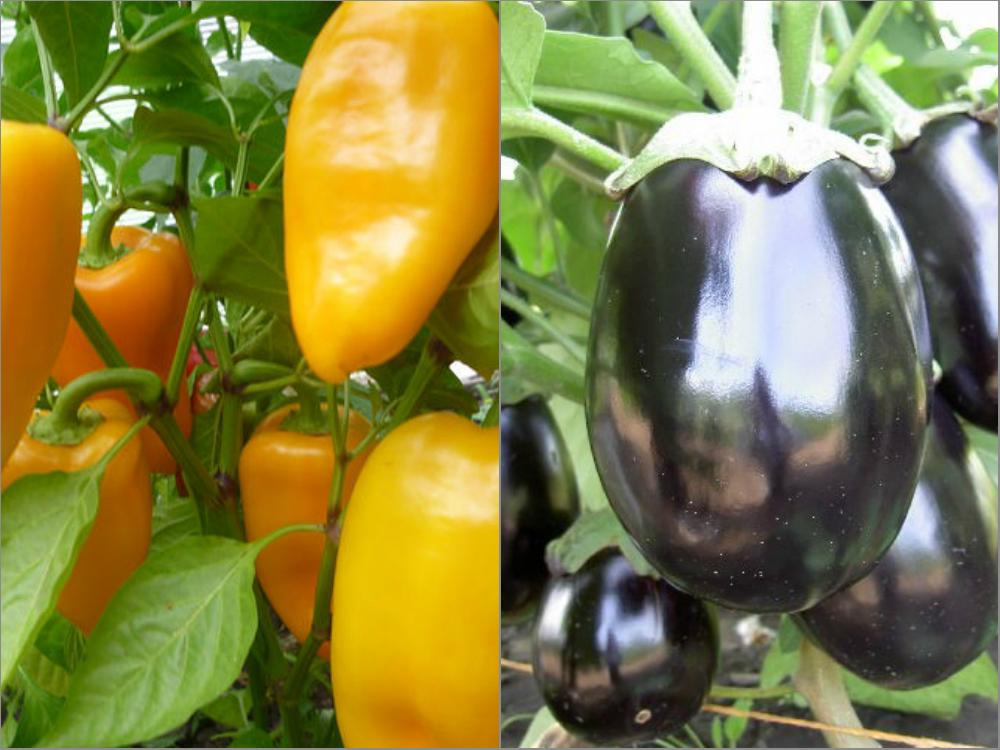
Pepper
Sweet peppers are a demanding vegetable crop. Basic growing requirements:
- Regular watering is required, do not allow the soil to dry out.
- Loosening after each watering.
- Formation of a bush.
- Fertilizing the soil, it is necessary to add potassium and magnesium fertilizer complexes.
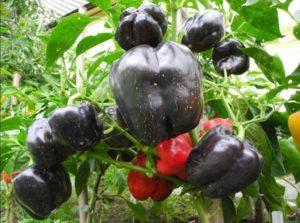
Important! Peppers are heat-loving plants and do not tolerate temperature fluctuations or drafts well. Ventilation in greenhouses is best accomplished through open windows.
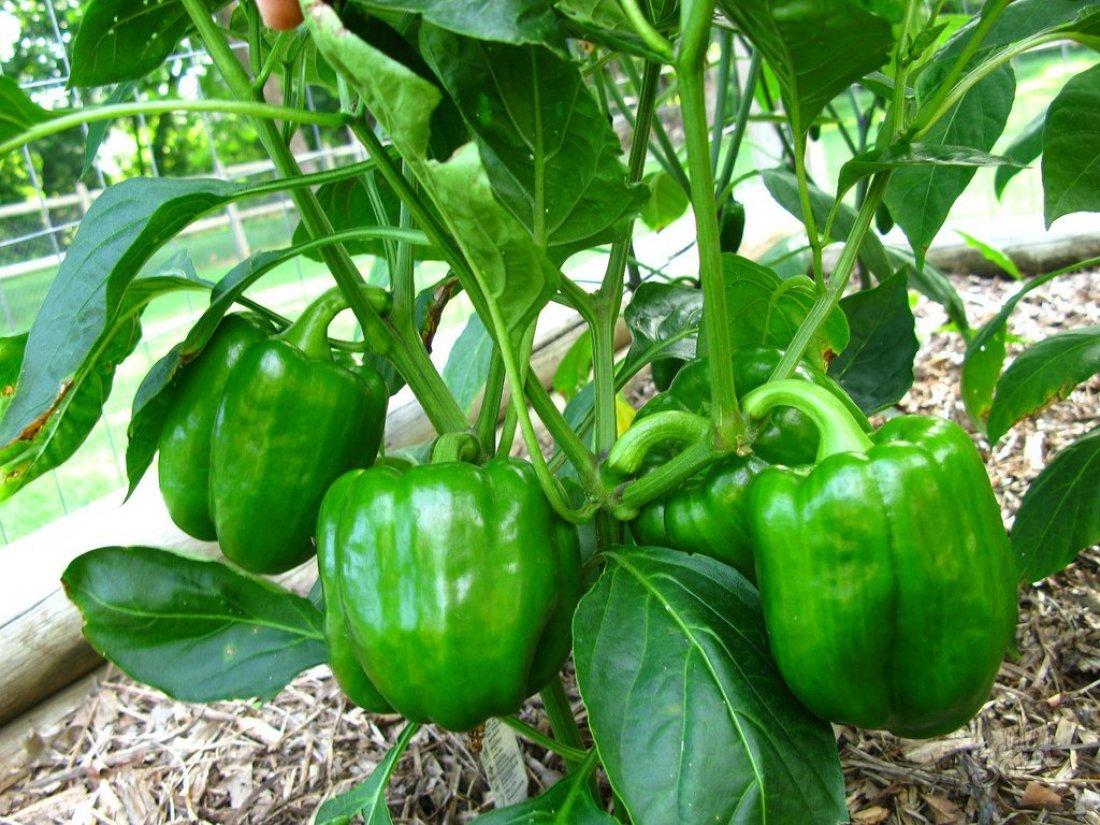
Eggplant
Eggplants are southern heat-loving plants. Like peppers, they don't tolerate drafts or temperature fluctuations. Basic growing requirements:
- Long daylight hours.
- Regular watering.
- Application of mineral and organic fertilizers.
- Garter and shaping the bush.
Both vegetable crops have increased heat requirements, but if choosing which crop to plant on the south side of the greenhouse, priority should be given to eggplants.

Is it acceptable to grow crops in the same bed?
Eggplants and peppers make good neighbors in the same garden bed. Similar care instructions, soil, and temperature requirements create favorable conditions for successful vegetable growing and a high-quality harvest.
A minor drawback is the possibility of cross-pollination between neighbors, the fruits Peppers may get a little purple The color changes, but this doesn't affect the taste of the fruit, its shelf life, or its transportability. The gardener decides how far apart to plant the crops; typically, a 50-centimeter interval is maintained.
The nuances of planting and care in greenhouse conditions
In southern regions, eggplants and peppers can be grown in open ground without shelter, while in northern regions, heat-loving crops are best placed in a polycarbonate or film greenhouse.
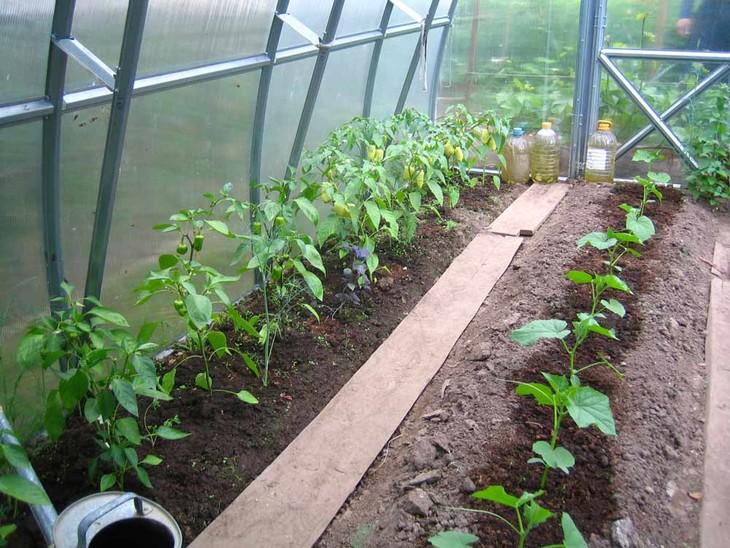
The process of growing vegetable crops in greenhouses begins with the preparatory stage – growing seedlings from plant seeds.
Preparing seeds for planting
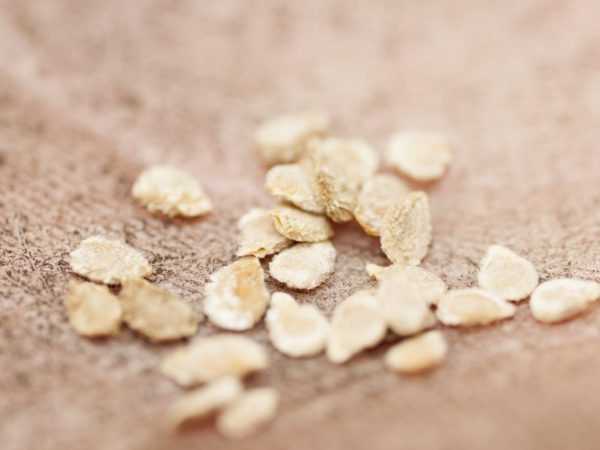
The time to sow seeds for seedlings of both crops is February. By March, it will be too late, and the seedlings won't have time to strengthen for planting in their permanent location. Start by checking the seeds for germination and soaking them. Pour a bag of seedlings into a glass of warm water. Viable seeds are heavy and will sink to the bottom within 30 minutes. Empty seeds will float to the surface and should be removed.
Next, the seeds are disinfected by soaking them in a solution of brilliant green or potassium permanganate for three hours, then left in a container of clean water for 24 hours. The seeds are now ready for planting.
Proper preparation of soil and containers
Eggplants and peppers prefer neutral, loose soil with added mineral fertilizer. A mixture of humus, peat, and sand is suitable for seedlings. A little wood ash can be added to improve soil aeration.
Before planting the seeds, the soil is scalded with boiling water to disinfect it. The seeds can be planted half an hour after the soil has been heated.
Seedling growing containers are 15-20 centimeter deep boxes. They should be washed and treated with boiling water, then filled with prepared soil.
Planting seeds
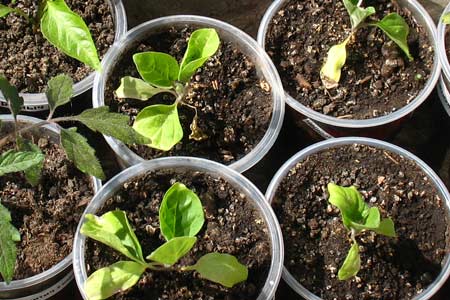
Plant the seeds 1.5 centimeters apart and lightly cover with soil. Then water the soil with warm water and cover with plastic wrap, creating a kind of "greenhouse." The containers should be aired daily, briefly opening the plastic wrap. The first shoots will appear in 7-10 days, at which point the plastic wrap can be removed. For convenience, label the containers with the variety and the date the seeds were planted.
Preparing seedlings and a greenhouse for planting
Hardening off is an important step in preparing seedlings for growing in their permanent location. The plant containers are first brought outdoors, to a balcony or veranda, for 1-2 hours a day, gradually increasing the duration.
A week before planting seedlings outdoors or indoors, spray them with an aqueous solution of iodine or brilliant green: 5 drops of iodine or 10 drops of brilliant green per 10 liters of water. Bordeaux mixture can also be used to protect the plants from fungal infections and pests.
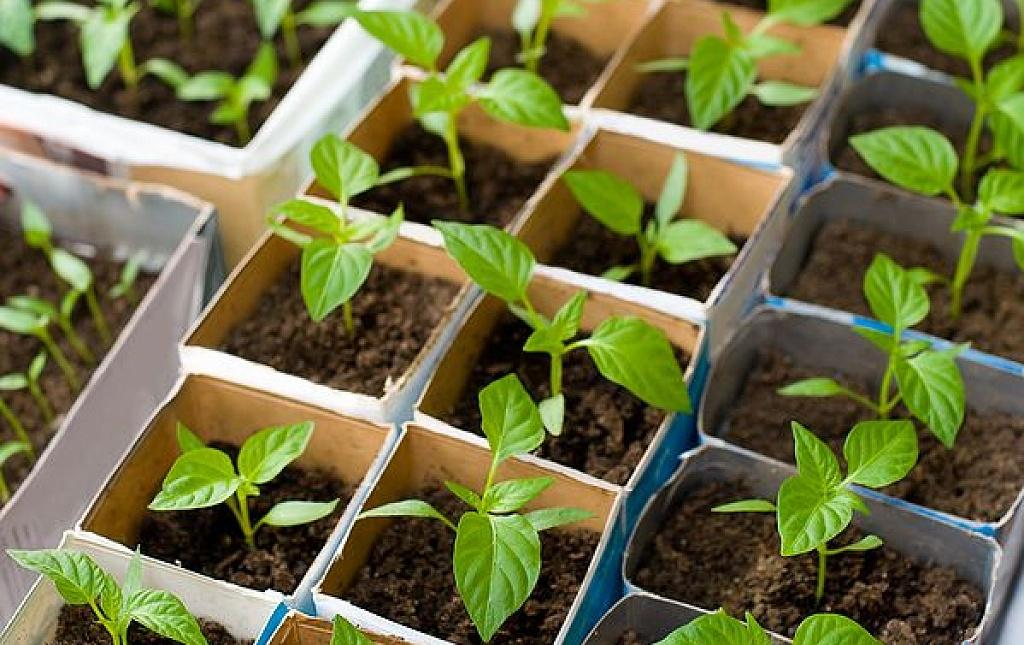
While the seedlings are hardening off, preparatory work is carried out in the greenhouse:
- The beds are dug to a depth of 30 cm.
- Fresh manure is added to the soil and distributed around the perimeter of the room, mixing it with the main soil.
- A complex of mineral-organic fertilizers is added to the main soil: humus, peat, wood ash, and you can add a little urea.
The day before planting the seedlings, the beds are watered with hot water and loosened.
How to properly place plants in a greenhouse
The basic rule for plant placement in a greenhouse is to avoid overcrowding, ensuring each seedling receives sufficient light and air. Plants should be spaced 50-60 centimeters apart, with approximately 5-6 seedlings per square meter.
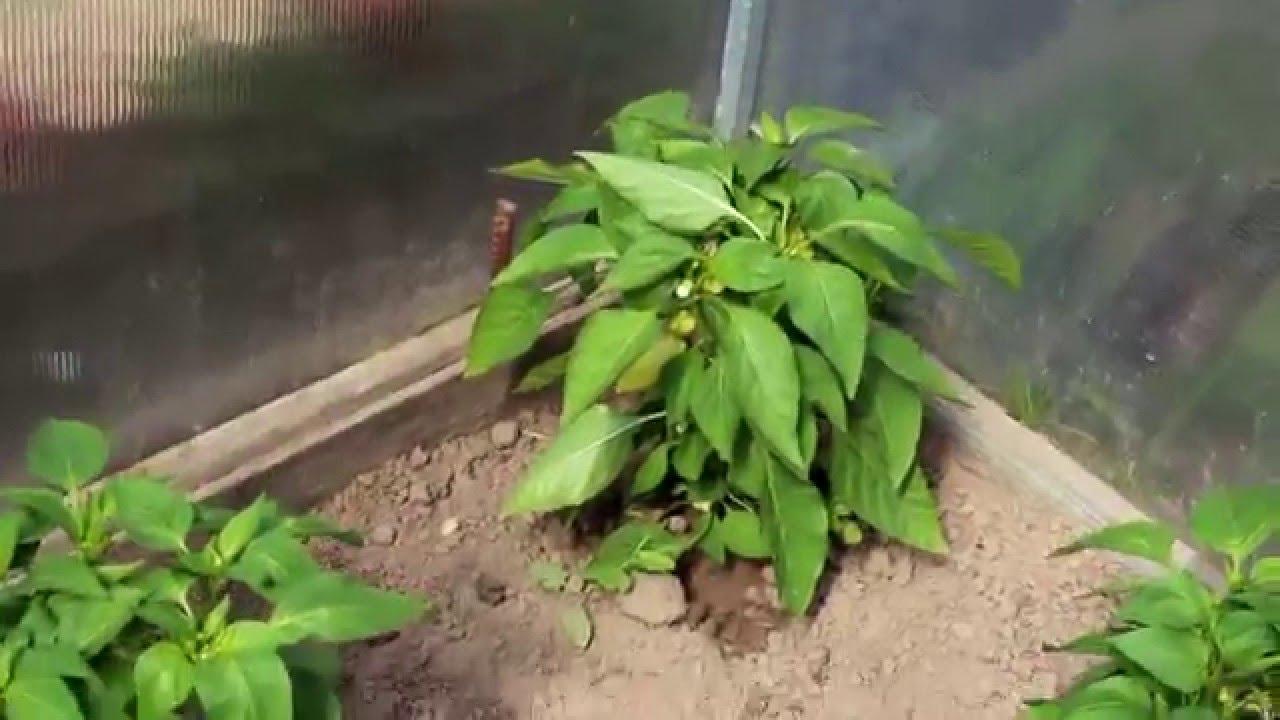
Peppers and eggplants have shallow root systems, so planting holes shouldn't be deep; 15 centimeters is sufficient. Eggplants are planted further south, with green manure crops planted next to each other between the vegetable beds.
Recommendations for caring for peppers and eggplants in a greenhouse
Proper and regular care of vegetable crops is the key to a good harvest. Here are a few tips:
- Plants can only be watered at the roots with warm water.
- During the period of flowering, setting of ovaries and fruiting, the amount of water per watering is increased.
- It is recommended to pick off excess ovaries: 12 pieces are enough for pepper, 6 pieces for eggplant.
- Application of superphosphate during the flowering period.
- After watering, the soil is carefully loosened, trying not to damage the surface root system of the plants.
- Timely removal of side shoots and pinching of tops at a height of 35-40 centimeters will prevent dense plantings and increase crop yields.
- It is necessary to regularly ventilate greenhouses, preventing drafts.
- All agricultural activities are carried out in the evening or in cloudy weather.
How to grow vegetables outdoors
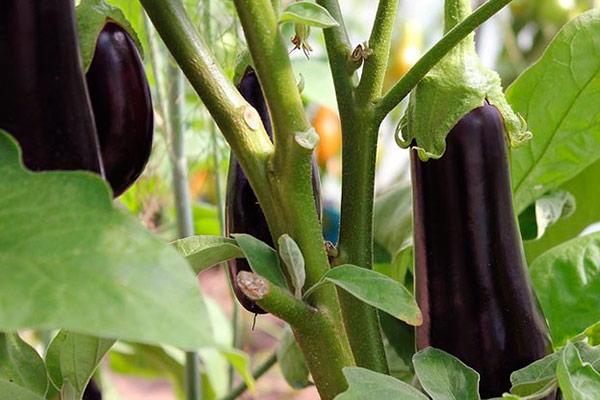
When growing heat-loving plants outdoors, choosing the right location is crucial. The site should be sunny and draft-free. Prepare the soil in the fall, dig it thoroughly, and apply fertilizer before winter. Legumes such as peas, beans, and kidney beans are good precursors, and you can safely plant plants from the Solanaceae family after them.
Timing and planting patterns for peppers and eggplants
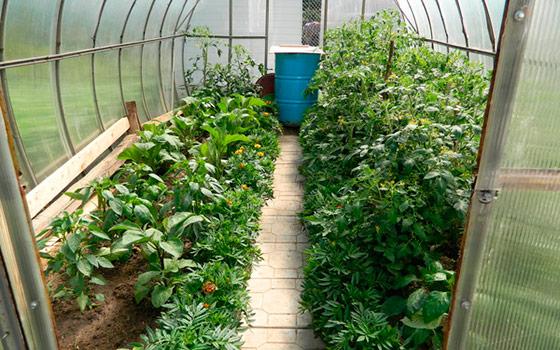
Planting peppers and eggplants in open ground Planting is done in rows only after the threat of the first frost has passed and warm weather has set in—late May, early June. At night, the plants can be covered with plastic covers or agrotextiles. Plants are spaced 50 centimeters apart, and the bushes are planted in staggered rows.
Planting and caring for seedlings and adult plants
The rules for caring for and planting vegetable crops in open ground are the same as for growing peppers and eggplants indoors:
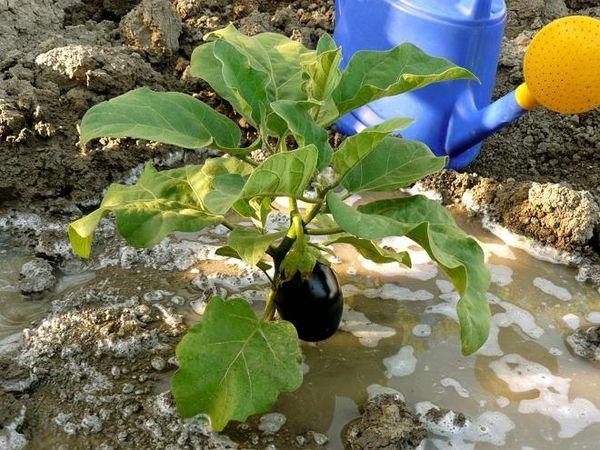
- Regular watering at the roots with warm water in the evening.
- Loosening and removing weeds.
- Treatment against pests and diseases.
- Fertilizing three times per season.
Bush formation: The tops of the plants can be left unpinched, but excess side shoots and side shoots should be removed. Some varieties require staking. Fertilize the plants and spray against pests 10 days after planting, then during bud formation and flowering.
Disease and pest control measures for peppers and eggplants
Eggplants and peppers belong to the same plant family, so they are susceptible to the same types of diseases and pests:
- Black bacterial spot: appears on plant leaves as black spots with a yellow border.
- Late blight is a fungal disease that occurs in conditions of high humidity.
- Mosaic is a viral disease that affects the fruits and leaves of plants.
Folk remedies such as spraying with iodine and brilliant green, as well as various biological and chemical preparations such as Ridomil and Fitosporin, are used to combat diseases. Soil disinfection and removal of plant debris after harvest are mandatory.
Eggplant pests:
- Slugs eat the leaves and fruits of plants. To control them, bushes are treated with wood ash and tobacco dust.
- Aphids drink plant sap and settle on stems and leaves. The pest can be destroyed with insecticides: "Karbofos" or "Kelthane".
- Spider mites multiply quickly and spread to neighboring bushes. To combat the pest, treat the plant with a solution of laundry soap and garlic.
Growing peppers and eggplants in the same garden bed and getting a bountiful harvest of both is possible, both outdoors and indoors. The plants belong to the same family and make good neighbors, with similar soil, temperature, and watering requirements. The fruits ripen simultaneously if the varieties are properly matched.
Related posts:
 80 Best Eggplant Varieties for Different Regions with Descriptions and Characteristics
 How to quickly prepare pickled eggplant in jars for the winter, the most delicious recipes and storage conditions for the preparations
 Causes and treatment of eggplant pests and diseases, how to combat them at home
 The best eggplant varieties for growing in a polycarbonate greenhouse: planting and care
 Making finger-licking good eggplant caviar with peppers and tomatoes
 How to freeze fresh, fried, and baked eggplants for the winter at home in the freezer
 Is it possible to plant eggplants in the same greenhouse with cucumbers? How to grow and care for them?
 How to properly freeze fresh eggplants for the winter in the freezer, storage periods