
Gardeners have been growing bell peppers for years. Few are surprised by their yellow, red, or green colors. More recently, an exotic vegetable has appeared: purple peppers. Not only do they look beautiful in salads, but they also contain significantly more nutrients than their counterparts. The coloring pigment has been shown to have positive health effects.
Description and characteristics of purple pepper
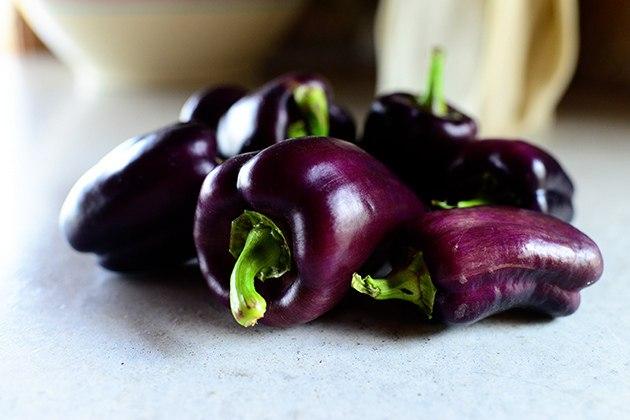
Purple peppers are native to South America. The bushes' appearance and foliage vary depending on the variety. Fruits come in large, medium, and small sizes. Their fleshiness, thinness, and shape vary. Fruit color depends on their anthocyanin content, ranging from a light lilac to a rich, dark purple.
The high anthocyanin content allows the fruit to convert solar energy into heat. Therefore, the fruit can withstand cold climates. This characteristic distinguishes it from green, red, and yellow peppers.
Properties and yield of the crop
Purple peppers have the highest chemical composition among vegetables. Their beneficial properties and vitamins are preserved whether fresh or canned. When stewed, they turn green. To preserve their exotic appearance, they are used sliced for salads.
Purple pepper is useful for the following diseases:
- anemia;
- gastrointestinal disease;
- diabetes mellitus;
- hypertension;
- diseases of the nervous system.
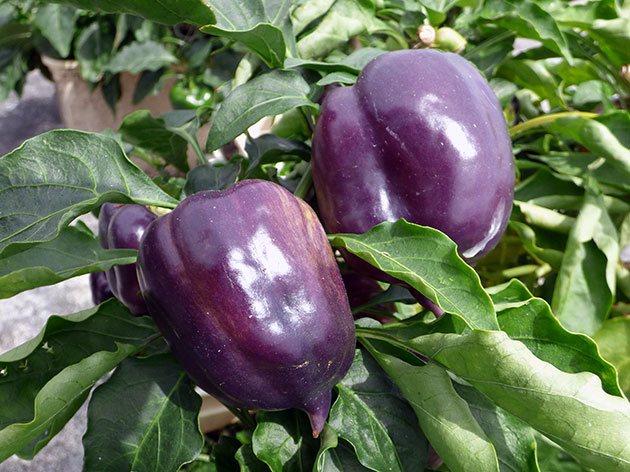
The pigment anthocyanin prevents colds, lowers eye pressure, improves vision, and strengthens blood vessels. Purple peppers also include hybrids. Yields range from 5 to 9 kilograms per square meter.
The best varieties of purple peppers
All types and hybrids of sweet purple peppers differ in ripening time, taste, and weight.
Star of the East
The Star of the East hybrid survives harsh climates, with temperatures reaching -10 degrees Celsius. Ripening time is mid-early, 100-110 days.
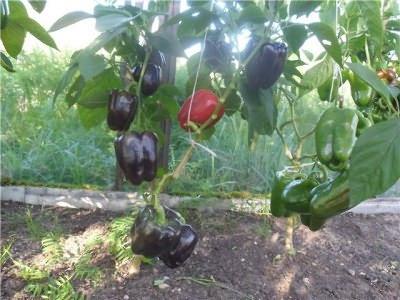
The bushes are medium-sized. The fruits are fleshy, weighing 200 grams. They are a rich purple color. The shape is cuboid. The walls are up to 10 millimeters thick. The yield per square meter is 6-8 kilograms. The flavor is neutral—not overly bitter or sweet.
Blot
The mid-early Klyaksa variety ripens in 100-120 days. The bushes are medium-sized, compact, and 60 centimeters in diameter. These vegetables have good immunity, withstanding drought, heat, and cold. They are also resistant to pests and diseases.
Klyaksa grows well both outdoors and indoors. The fruits are dark red with a purple tint. They are cone-shaped. The walls are thick, the flesh is juicy, and the flavor is unique. Klyaksa weighs 150 grams. The yield is 4.5 kilograms.
Purple Bell
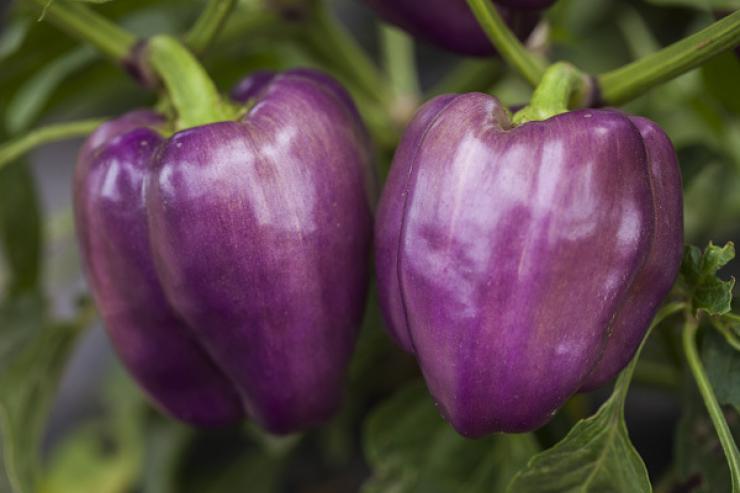
The Purple Bell variety is grown from seedlings. The maturation period, from planting the seedlings to harvest, is 70-75 days. Further care after planting consists of watering, loosening the soil, fertilizing, and weeding.
The bushes are spreading, reaching 70-80 centimeters. They tolerate minor temperature fluctuations. They have strong resistance to diseases and pests. They do not tolerate growing next to cucumbers. The fruits are cube-shaped and sweet and aromatic. They weigh 120-200 grams per fruit. The color is reddish-purple. With proper care, the yield is 6-8 kilograms.
Maxim
The Maxim hybrid ripens from seed in 120 days. The bushes are compact, semi-spreading, 60 centimeters in diameter and 90 centimeters tall. They require staking. They grow in both open and closed ground. Ripening is uniform, with up to nine fruits per bush, each weighing 130 grams. The pods are conical, thin-walled, and the flesh is plump, juicy, and pleasantly flavorful. The color is purple.
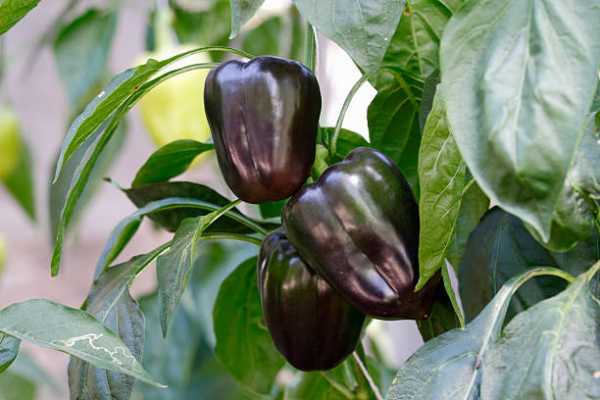
The yield from one square meter is 6-8 kilograms.
Othello
The Othello hybrid grows as a semi-spreading bush, reaching up to 90 centimeters. Three seedlings are planted per square meter. Ripening time is 110 days after germination. Care includes watering, staking, fertilizing, and shaping.
Peppers with a strong immune system are resistant to temperature fluctuations and pests, and rarely get sick. The fruits are cone-shaped and deep purple. They range in size from 10-13 centimeters and weigh 90-110 grams. The flesh is sweet and juicy. The walls are 7 millimeters thick. The yield is 7-8 kilograms per square meter.
Amethyst
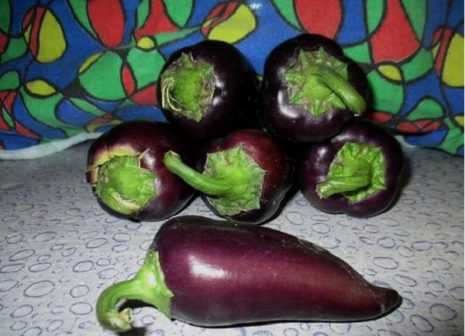
Amethyst's compact bushes grow to 60 centimeters tall, planting four seedlings per square meter. They mature in 110 days after emergence.
The fruits are red and purple, weighing 160 grams. Amethyst responds well to watering and fertilizing. The yield is 12 kilograms per square meter. The vegetables are fleshy and juicy. The flavor is sweet and aromatic.
Ode
Oda's low-growing (50 centimeters) bushes don't require staking. Ripening time is 115-120 days. The vegetables are resistant to diseases and pests. The fruits are oval-conical, ranging in color from light to dark purple. The thick-walled fruits are aromatic. The flavor is sweet and juicy. Each fruit weighs 100-150 grams.
Lilac Lavender
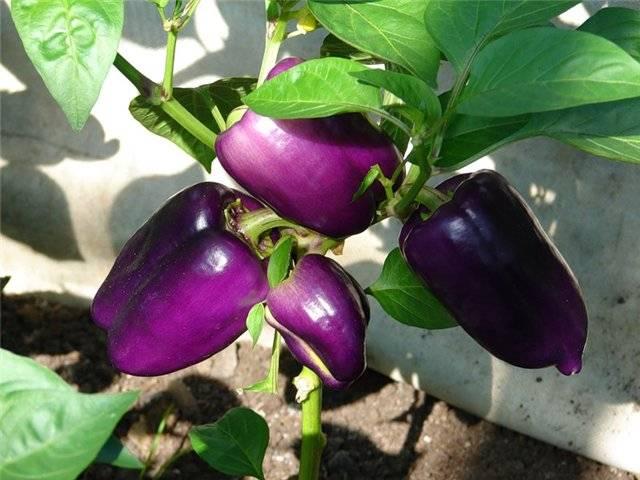
The Lilac Lavender variety grows as massive bushes, up to 50 centimeters tall. It can be grown both indoors and outdoors. The fruits are large, weighing between 300 and 400 grams. The walls are thick, 8-9 millimeters. The lilac color of the vegetable fades to a dark crimson hue. It has almost no seeds. The flavor is sweet, with spicy notes.
Altai chameleon
The Altai Chameleon variety gets its name from the wide range of colors found on a single fruit: green, yellow, and brown. As it ripens, the fruit turns red with blue sides. The bush is semi-spreading. The fruits are sweet, weighing 100 grams. With proper care, the yield is 7-9 kilograms per square meter.
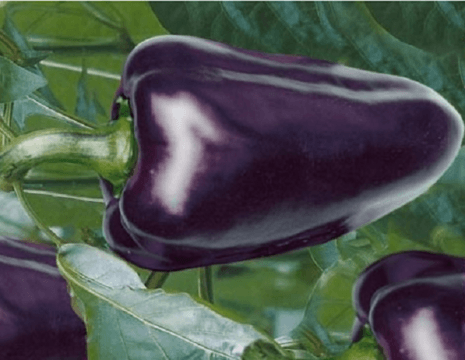
Purple Beauty
Purple Beauty matures in 120 days after germination. The bush grows up to 70 centimeters in length, forming a standard. It has protective immunity to diseases and pests. It is suitable for both open and closed ground cultivation.
The fruit weighs 200 grams. It's purple with a blue tint. It's cuboid in shape. The flavor of the Purple Beauty pepper is sweet and juicy.
Bagheera
The Bagheera variety matures in 115-120 days. The first shoots are considered the starting point. The bushes are short, 55 centimeters tall, and compact. Bagheera is the largest purple pepper in terms of fruit weight, at 360 grams. It is a versatile grower. It is resistant to diseases and pests. It tolerates heat and temperature fluctuations. The fruits are thick-walled, 8 millimeters thick, sweet, and have a distinct aroma. The color is purple.
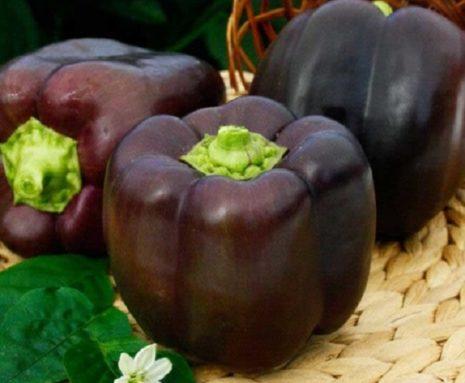
The cube-shaped fruits have a marketable appearance and are highly transportable. The yield per square meter is 8 kilograms. Care is simple: watering, loosening the soil, and fertilizing.
Arab
The Arap hybrid thrives in a variety of regions due to its high resistance to diseases and pests. It tolerates temperatures of 12 degrees Celsius. The peppers are small—100 grams each—and equal in length. Their color is deep purple. The fruit is conical in shape, with a smooth, shiny skin.
The Arab is prized for its excellent taste. Its walls are medium, and the flesh is tender, juicy, and sweet. Yields up to 6 kilograms per square meter. It requires regular watering, fertilizing, and loosening.
Lilac fog
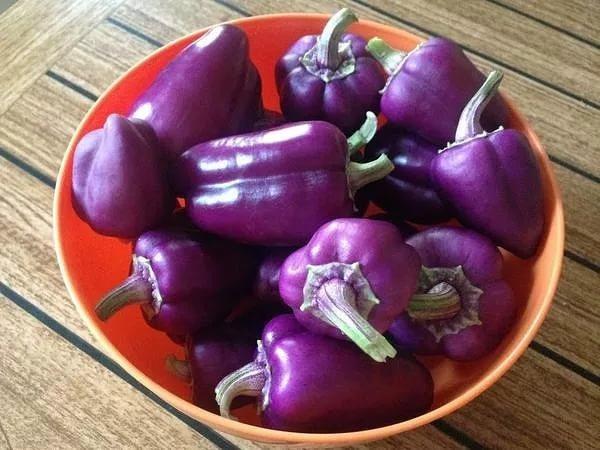
The Lilac Mist hybrid matures in 130 days. In colder regions, it is recommended to grow it in a greenhouse. The bush is compact, reaching up to 80 centimeters in length. The planting pattern is three bushes per square meter.
The fruits weigh 100-160 grams and are light purple, hued more towards lilac. They acquire a reddish hue when ripe. Their shape resembles a truncated pyramid. The walls are 7 millimeters thick. The flavor opens up when fully ripe. The flesh is juicy and sweet. Yield: 6-9 kilograms.
Big Daddy
The Big Papa variety is grown from seedlings. Sow 75 days before planting in open ground or a greenhouse. Maturity occurs in 105 days from germination.Big Papa fruits are cone-shaped and dark cherry in color. When ripe, they take on a purple hue. They weigh 90 grams and have medium-thick walls. The flavor is sweet. Yields 6-7 kilograms per square meter.
Reviews of experienced gardeners about the crop
"I'd like to highlight the Bagheera variety. I've been growing it outdoors for many years. It's unaffected by fluctuations in night and day temperatures. Care is simple: water, loosen the soil, and fertilize. The peppers are delicious and aromatic. We use them fresh, freeze them, and can them. The yield is consistent year after year."
Alena K.
"Two varieties have taken root in my garden: Klyaksa and Zvezda Vostoka. I plant them as seedlings in open ground. They're easy-to-care-for varieties, but they do require care. This results in a bountiful harvest. They do change color when preserved, but the flavor is excellent. I have no concerns about diseases or pests."
Fedor S.
Related posts:
 Description of the best pepper varieties for greenhouses and open ground in 2025
 What varieties of tomatoes are best to plant in a polycarbonate greenhouse?
 TOP 30 best varieties of sweet peppers for greenhouses with descriptions
 Description and properties of the 50 best varieties of asparagus beans, benefits and harms
 30 Best Dutch Cucumber Varieties with Descriptions and Characteristics
 Description of blight-resistant tomato varieties for open ground and greenhouses
 Description of the best varieties of bee-pollinated cucumbers, rules for their formation and care
 The best cucumber varieties for open ground in the Moscow region and their cultivation