
- General description of the culture
- Benefits and harms
- Classification of varieties by ripening time
- Early varieties
- Blue Lake
- Fedoseyevna
- Shadow on the fence
- Gait
- Yellow neck
- Melody
- gold necklace
- Mid-season beans
- Earring
- Sissy
- Anniversary
- Laura
- White shoulder blade
- The Purple Queen
- Late varieties
- Beronia
- Xera
- Hope
- Classification by other criteria
- Varieties for freezing
- The Snow Queen
- Amber
- Mauritanian
- The best fiber-free varieties
- Golden Saxa
- Second
- Sweet sash
- Harvest beans
- Gerda
- Flat
- Turk
- The Butter King
- Ad rem
- Bush varieties
- Treasure
- Zlata
- Sapphire
- Climbing beans
- Bluehilda
- Rumba
- Golden Nectar
- The best varieties for different regions
- For Siberia
- Emerald
- Gold of Siberia
- Darina
- For the Middle Belt
- Sugar Triumph
- Viola
- Golden Princess
- For the Moscow region
- Emerald earrings
- Black Opal
- Snow Maiden
- Crane
- The best varieties of the Vigna genus
- Macaretti
- Countess
- Summer resident
- Watchtower
- Lillian
- Siberian size
- Yunnan
- Mash
- Spaghetti
Asparagus beans are a seasonal crop that ripen in midsummer. The sweet, juicy, and tender pods are boiled or stewed whole. They taste similar to young asparagus. There are a huge variety of varieties, each with its own unique characteristics (ripening time, pod length). Cowpeas, with their meter-long, slender pods, are gaining popularity. However, this crop prefers warmer climates.
General description of the culture
Green beans are an annual vegetable crop from the legume family. They are closely related to the common bean, but their pods lack the tough membrane and coarse fibers. The long, thin beans, when cooked, taste like young asparagus. Many varieties have been developed, differing in maturity time, stem height, pod color, and pod size. Cowpea, an Asian variety with long (up to 1 meter) green, juicy pods, is the most common.
Asparagus beans grow to a height of 0.4-3 meters. Depending on the variety, the crop forms long, twining stems or low-growing bushes. The leaves are green, long-petiolate, and trifoliate. The bean blooms with white, pinkish, or soft purple flowers, collected in axillary racemes. After pollination, these flowers are replaced by pendulous, long beans in colors ranging from yellow, purple, cream, and green.
 Each pod contains between 3 and 16 elliptical seeds. Green beans are a heat-demanding crop. Their seeds begin to germinate at temperatures of 10-12 degrees Celsius, and for normal development, the plant requires 20-25 degrees Celsius.
Green beans are grown specifically for their long, greenish pods. They lack a parchment layer inside and no coarse fibers between the pods, so the whole pod is edible. Unripe pods, which are cooked, are eaten. Everyone is familiar with runner beans—a spicy Asian snack made from boiled (for no more than 2 minutes) pods.
Beans have beneficial properties; they contain a lot of proteins, vitamins, minerals and microelements.
The asparagus variety is called "sweet" and has a slightly sweet taste. It's a low-calorie dietary product (only 47 kilocalories per 100 grams).

Benefits and harms
Green beans are beneficial for the body. The pods are eaten fresh, boiled, stewed, and fried. They can also be juiced, dried, and frozen. Green beans can be eaten on their own or used as an ingredient in salads, soups, and vegetable stews.
Benefit:
- prevents the occurrence of heart attack;
- normalizes blood pressure;
- restores the body after acute respiratory viral infections;
- used to treat anemia;
- has a calming effect, normalizes sleep;
- used for diabetes, lowers blood sugar levels;
- is a diuretic;
- relieves joint pain.

However, green beans are not recommended for people with ulcers, cholecystitis, chronic gastritis, or colitis. Elderly people and those with gastrointestinal diseases should exercise caution when consuming green beans. It's important to remember that this product, like all legumes, can cause flatulence.
Classification of varieties by ripening time
Green beans are classified by harvest time. There are early, mid-season, and late varieties. Most varieties have a limited shelf life, so after harvesting, the pods should be eaten or preserved within 2-4 weeks.
Early varieties
Early-ripening varieties of green beans mature in 45-55 days. Ripe pods need to be picked regularly to ensure the plant continues to flower and produce new fruit.
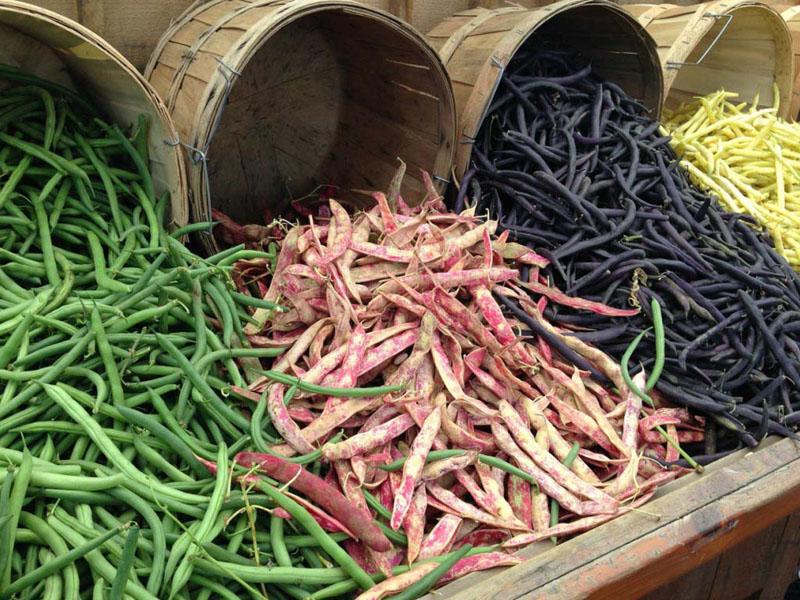
Blue Lake
A tall asparagus bean. It matures in 50-56 days. The stems reach 1.5-3 meters and require staking. The light green pods grow up to 16 centimeters long. Inside are small, light-colored seeds. The pods are free of coarse fibers, so the pods can be eaten whole. A single stem yields 660 grams of pods.
Fedoseyevna
An early, easy-to-grow, and undemanding crop with elongated green pods. The harvest can be completed as early as 46 days. The pods grow up to 20 centimeters long on lush bushes up to 0.75 meters tall.
This plant has delicate lilac flowers and huge trifoliate leaves.
Shadow on the fence
A variety of early bean bred in 2016, the green, juicy beans are harvested in just 46 days. One square meter of plot yields 4 kilograms of beans. The stem is long and twining, growing up to 1.5 meters. The pods are 22 centimeters long and 10 millimeters wide. Inside the beans are small white seeds.

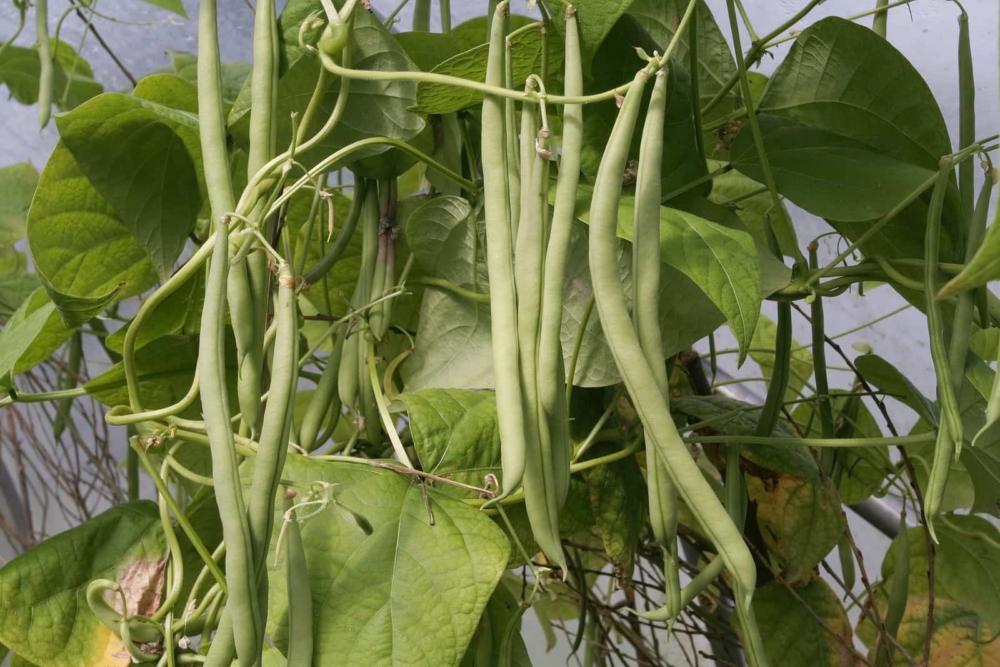
Gait
An early asparagus bean. Harvesting begins in 50 days. Small, compact plants produce numerous fleshy, firm, juicy, smooth, medium-length dark green beans. Inside are white seeds. This hardy and easy-to-grow variety yields 640 grams of beans.
Yellow neck
An early bush crop. Light yellow beans, 10-12 centimeters long, are harvested on the 55th day. The bush height is 0.35-0.40 meters.
Melody
An early-ripening green bean with long, climbing stems that need to be tied to a support. The wide, flat, greenish pods are harvested on the 55th day. Each pod measures 24-25 centimeters.

gold necklace
An early, climbing crop, reaching 2 meters. The pods are yellowish, tuberculate, up to 17-20 centimeters long and 20 millimeters wide. The beans are sweet and juicy.
Mid-season beans
Asparagus beans, which mature in 60-75 days, are called mid-season. This is the most common variety in temperate latitudes.
Earring
Light green fruits are harvested as early as 60 days. This plant has a tall, twining stem. The pods, slightly curled at the base, grow up to 21 centimeters long and 20 millimeters wide. It blooms with delicate purple flowers and produces black seeds.

Sissy
The delicate, creamy-colored fruits ripen in 70 days. This crop has a long, twining stem (up to 3.5 meters), requiring support. The pods are soft yellow, medium-length, juicy, and soft. The yield is low—only 1.5 kilograms per square meter.
Anniversary
The pale green beans, with a slight purple tint, are harvested as early as 65 days after harvest. The bush is medium-height (up to 0.8 meters). The oblong pods grow up to 30 centimeters long, containing light-brown seeds. This variety, bred by Siberian breeders, adapts well to all weather conditions.
Laura
A mid-season bush bean. The stem grows up to 0.40 meters in height. The yellowish pods, 10-12 centimeters long, are harvested on the 60th day.

White shoulder blade
A mid-early crop with soft yellow, almost white, delicate-tasting, elongated beans. The pods are harvested at 65 days.
The Purple Queen
The bush of this crop grows to a height of 0.4-0.6 meters. The pods ripen in 55-60 days. The beans are oblong, medium-length, slightly curled, shiny, and dark purple. After cooking, the pods turn greenish. Inside the pods are brown seeds. One stem yields 500 grams.
Late varieties
Green beans, which mature in 80-100 days, are considered a late-season variety. This crop is best grown in southern latitudes, in regions with long, warm summers.

Beronia
A Dutch variety. The fruits ripen only 84-95 days after germination. The flowers and seeds are white. The seeds have a high germination rate. Tall bushes produce numerous elongated, dark green pods.
Xera
A Dutch variety that ripens 78-85 days after germination. The short bush produces oblong, light green, slightly flattened pods containing white seeds. This crop is ideal for farm cultivation, yielding 2 kilograms per square meter.
Hope
Developed by Russian breeders, this variety matures in 80-86 days. Short bushes produce long, thin, greenish beans with white seeds inside. A meter of land yields 2.2 kilograms of fruit.

Classification by other criteria
Green beans are classified by a number of other characteristics, such as suitability for freezing, yield, absence of strings inside the pods, and stem characteristics.
Varieties for freezing
Breeders have developed new varieties of asparagus beans that are suitable for freezing without losing their flavor. Frozen beans retain most of their nutrients for up to a year.
The Snow Queen
An ideal variety for freezing. The stem is twining, growing up to 1.45 meters in height. The beans are dark green, oblong, up to 16 centimeters long and 15 millimeters wide. The flowers and seeds inside are white. A yield of 2.5 kilograms is obtained per square meter.

Amber
A mid-season variety. On low bushes, oblong, medium-length, amber-colored pods with white seeds ripen. Only 1.3 kilograms of fruit are harvested per meter.
Mauritanian
A mid-season, climbing asparagus bean. It can bear fruit until the first autumn frosts. The pods are medium-length, greenish, straight, very juicy and tasty. A square meter can yield up to 3 kilograms.
The best fiber-free varieties
Some varieties of green beans lack coarse fibers early in the ripening process, but they appear later, at full maturity. Varieties have been bred that retain the parchment layer throughout the entire growing season.

Golden Saxa
An early-ripening crop. The low, compact bushes are covered with oblong, slender, light-yellow beans. They have a delicate, slightly sweet flavor and lack a parchment-like layer inside. A square meter of plot yields up to 2 kilograms of fruit.
Second
An early-maturing crop, well-adapted to all weather conditions. It forms a medium-sized, densely foliated bush. The light-green fruits grow up to 10-14 centimeters long. Each pod contains approximately 5-6 yellow-gray, shiny seeds. The yield is 610 grams per plant.
Sweet sash
An early-ripening variety, its yellowish beans can be picked as early as 45 days. The pods are 15-17 centimeters long. The beans are sweet in taste, juicy, and tender. A square meter of plot yields 2.1 kilograms of fruit.

Harvest beans
The average yield of asparagus beans is 2 kilograms per square meter. However, varieties have been developed that can yield 4 kilograms of fruit from the same area.
Gerda
Bred in 2005, this early-ripening variety has stems that reach a height of 3 meters. The pods are light yellow, large, and long. Each pod is 35 centimeters long, weighing 12 grams. Inside are large white seeds. Each plant yields 990 grams.
Flat
An early crop. The bean harvest begins in 48-55 days. Deep purple beans grow on medium-height bushes. Each pod is 16 centimeters long, 20 millimeters wide, and weighs from 8 grams each. Each plant produces 560 grams of beans.

Turk
A mid-season crop with a climbing stem. The beans are thin, long, and pale green. The plants require support. One square meter of garden space yields 4.5 kilograms.
The Butter King
An early bush crop. The stem grows up to 0.40 meters tall. The yellowish, long, thin beans are harvested on the 50th day. The pod size is 25 centimeters. Yield is 680 grams per plant.
Ad rem
An early, climbing crop. Thin, greenish, medium-length pods can be harvested in 55 days. Almost 4 kilograms of fruit can be harvested from one square meter of plot.

Bush varieties
Bush varieties are very popular with vegetable growers. They are easier to care for, require no support, and produce fruit consistently throughout the growing season.
Treasure
An early crop. The beans are picked at technical maturity, when they are greenish in color. The pods are elongated, thin, and straight. Inside them are small seeds.
Zlata
This is an early-ripening bush crop. Each plant produces numerous light-yellow, thin, oblong fruits. Each bush produces 500 grams of pods.
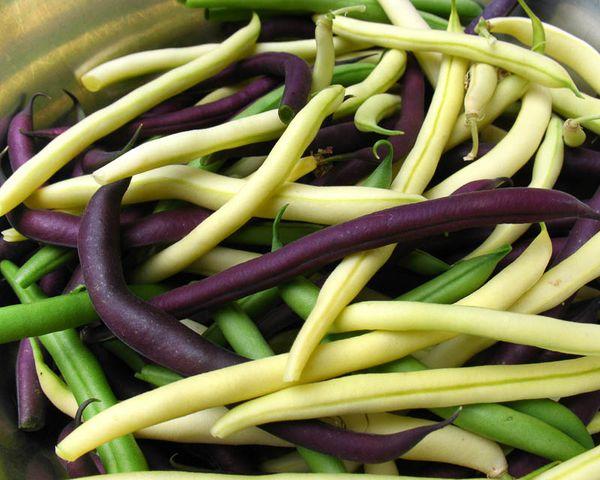
Sapphire
An early crop, ripening in 47-50 days. The beans are a rich purple color, each 14 centimeters long. This variety is resistant to adverse weather conditions.
Climbing beans
Climbing varieties of asparagus beans They reach 1.5 to 5 meters in height. These plants don't require much space, but they do require support.
Bluehilda
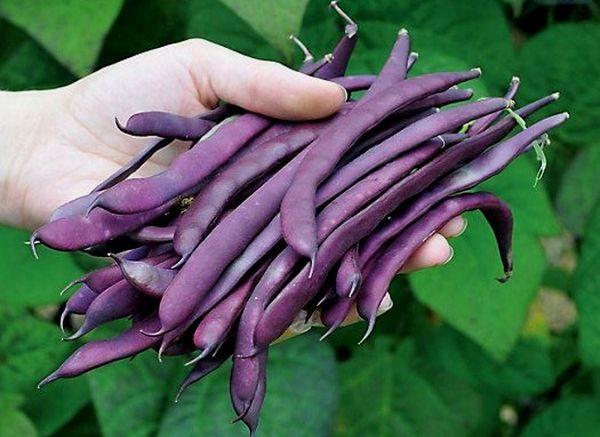
A mid-season variety developed by German breeders. The robust vine grows up to 2.5 meters in height. The beans mature in 60 days. The delicate purple pods grow up to 25 centimeters long. This easy-to-grow crop yields 700 grams of fruit.
Rumba
A mid-season variety with a long, twining stem. The fruits are ready to harvest after 70 days. The deep purple pods grow up to 24 centimeters long. A meter-sized area can yield 3 kilograms of beans.
Golden Nectar
A mid-season crop with a long, twining stem. The bright yellow, juicy pods are harvested on the 72nd day. Each pod reaches 25 centimeters in size. A single stem yields 650 grams of pods.
The best varieties for different regions
Russia spans a variety of climate zones. Specific varieties of asparagus beans for open ground cultivation have been developed for each region, adapting well to weather conditions and producing high yields.
For Siberia
Siberia has warm but short summers. Early-maturing varieties of asparagus beans are best planted in this region.
Emerald
An early variety developed in Primorye. The harvest begins on the 56th day. The bushes are short and compact. The emerald-colored fruits reach 16 centimeters in length. Up to 2.6 kilograms of pods can be harvested from a square meter.
Gold of Siberia
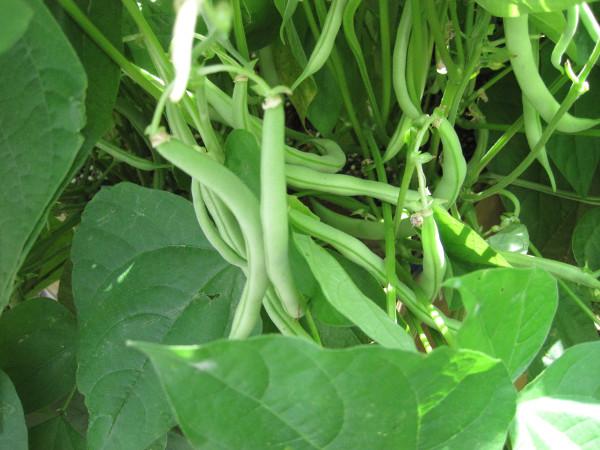
A mid-season bush crop. The pale yellow, straight pods grow up to 13-15 centimeters long. This variety is resistant to adverse weather conditions and fungal diseases.
Darina
An early-ripening variety developed by Novosibirsk breeders. A short bush produces 10-14 greenish, oblong pods. Each pod is 15 centimeters long and weighs 9 grams. A single bush can yield 350 grams.
For the Middle Belt
Central Russia enjoys warm and long summers. However, late-season varieties of green beans don't always ripen before the first autumn frosts.

Sugar Triumph
This variety was developed back in the 1930s. The greenish fruits are harvested in 55 days. They ripen on short, compact bushes. The pods have a pleasant, slightly sweet flavor, are fiberless, and each pod is 16 centimeters long. The yield is low (only 1.3 kilograms).

Viola
A mid-season asparagus bean developed by Siberian breeders. Light purple, curved beans grow on medium-height bushes. Each bean is 16-19 centimeters long. Yields are low (up to 1.2 kilograms).
Golden Princess
A mid-early bush bean. The beans are light yellow, slender, and up to 17 centimeters long. They have a delicate, slightly sweet flavor. The yield is average (2 kilograms per square meter).
For the Moscow region
In this region, summer lasts almost three months. However, rain is common during the warm season. A wide variety of asparagus beans, with any ripening time, can be grown in the Moscow region.
Emerald earrings
An early bush variety. Green beans are harvested at 51 days. Each stem produces 15-25 pods, each 18 centimeters long.
Black Opal
An early-ripening variety with green pods and black seeds inside. The medium-height bush blooms with delicate purple flowers and then produces long, straight, greenish beans. The yield is average (2.1 kilograms).
Snow Maiden
An early-maturing asparagus bean. The plants grow up to 0.35 meters in height. On the 48th day, light yellow beans measuring 17 centimeters long and 12 millimeters wide are picked from the stem. The yield is average (2.6 kilograms per square meter).
Crane
An easy-to-grow, early-ripening crop. The bush grows up to 0.50 meters in height. The beans are thin, straight, and greenish, up to 16 centimeters long. The yield is low (1.5 kilograms).
The best varieties of the Vigna genus
Cowpea is a variety of asparagus-like green bean native to Asia. Its pods are very long, lacking coarse fibers and a tough outer layer. However, this crop prefers hot climates and does not ripen well in cool weather.
Macaretti
Cowpea beans A Russian-bred variety that matures in 60-65 days. This cultivar has a tall, twining, fast-growing stem that requires support. The fruits are greenish, juicy, and fleshy, growing up to 35 centimeters long. A single stem yields 1.5 kilograms.
Countess
A Russian variety of cowpea. It matures in 60 days. The stem grows up to three meters tall. It produces numerous long (up to 0.6-1 meter), thin, green pods. Inside are small, oblong, dark seeds. This is a very sensitive variety, sensitive to adverse weather conditions. A single crop yields up to 2 kilograms of fruit.

Summer resident
The asparagus bean was developed in 2016. This early-maturing, climbing plant reaches up to 3 meters in height. The pods are harvested after 55 days. The light green fruits grow to 50-80 centimeters in length. A single stem yields 2.5 kilograms of pods.
Watchtower
An early crop with a long, climbing stem. The dark green beans grow up to 86 centimeters long. Each pod weighs 55 grams. A single plant yields 2.1 kilograms of fruit.
Lillian
A mid-season crop bred in Russia. The long, thin, greenish beans are harvested after 84 days. Each pod measures 50-80 centimeters. It boasts high yields (3 kilograms per plant).

Siberian size
An early variety, ripening in 55 days. The greenish pods grow to 50-70 centimeters in length. Each vine yields an average of 2 kilograms of fruit.
Yunnan
A Chinese variety of asparagus bean, perfected by Russian breeders. This mid-season crop produces green beans that grow to 65-75 centimeters in length. Inside the pods are small brownish seeds.
Mash
An early bush bean. The stem grows up to 50 centimeters tall, with pods measuring only 12 centimeters. The greenish-olive pods are harvested on the 55th day.
Spaghetti
Cowpeas mature in 60 days. A single vine can yield up to 5 kilograms of light green or soft purple pods. The beans grow thin and long (similar to spaghetti). There is no parchment layer inside. Each pod is 55 centimeters long and 10 millimeters wide. The beans are sweet and juicy, without a bean flavor.
Related posts:
 Description of the 90 best varieties of beans for open ground with names
 How and where beans grow, planting and care rules in open ground
 Recipes for pickled beans for the winter at home
 Health benefits and harms of black beans, varieties, contraindications, and recipes
 Recipes for making pickled green beans for the winter at home
 The best recipes for pickled beans in jars for the winter are so good you'll lick your fingers.
 Planting seedlings and seeds, growing and caring for asparagus beans in open ground
 The benefits and harms of red beans for the human body: for women, men, and children