
- Can you eat ornamental beans?
- Popular varieties of the crop
- Ordinary
- Turkish beans
- The Purple Queen
- Harmony
- Golden Neck
- Pink
- Blauhilda
- Dolichos
- Spanish White
- Vigna of Caracalla
- Borlotto
- Golden Nectar
- Green Giant
- Winged beans
- African 55
- Grain violet
- Bluehilda
- Turshevaya
- Winner
- How to plant ornamental beans correctly
- Landing dates
- Planting seedlings
- Transplanting into a garden bed
- Sowing seeds in open ground
- What care does this ornamental plant need?
- How to water beans
- Top dressing
- Garter
- Reproduction methods
- Gardeners' Tips
Ornamental beans are climbing plants that can reach up to 5 meters in height. They're ideal for decorating a garden, growing along a fence, wall, or gazebo, and can even hide structures that spoil the garden's appearance. The key is to provide a sturdy support. Furthermore, ornamental beans produce a bountiful harvest of beans, enriching the surrounding soil with nitrogen, which is beneficial for other plants. This plant is low-maintenance, but still requires proper care.
Can you eat ornamental beans?
Despite its name, ornamental beans are completely edible. Moreover, they contain numerous nutrients and vitamins, which, combined with their low calorie content, make them a valuable food.
This culture has several more advantages:
- With regular use, the condition of skin, hair and nails improves.
- Immunity is increased.
- You can make many different dishes with beans.
- It is also used in folk medicine for the treatment of bronchitis, itchy skin and other diseases.
The only variety that is inedible is the purple bean. However, it shouldn't be confused with the Blauhilda variety, which also has purple pods. This asparagus bean is not only edible, but its beans are also very tasty and tender.
Popular varieties of the crop
Many bean varieties with different colors have now been bred. The advantage of this crop is that it's suitable for more than just garden decoration. For example, the purple-flowered Dolichos purpurea has a pleasant aroma and is even used in bouquets. There are also bicolor varieties, and several with red flowers.
Ordinary
This annual variety reaches a height of one and a half to three meters. Its major advantage is its rapid growth (it begins blooming within a month), and the last harvest can be in mid-autumn. If you don't wait too long and pick the pods immediately, new ones will appear throughout the season. This variety also has dense foliage, and flowers come in a variety of colors.
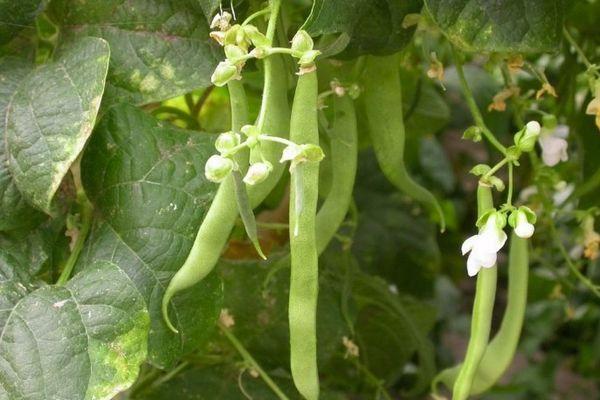
Turkish beans
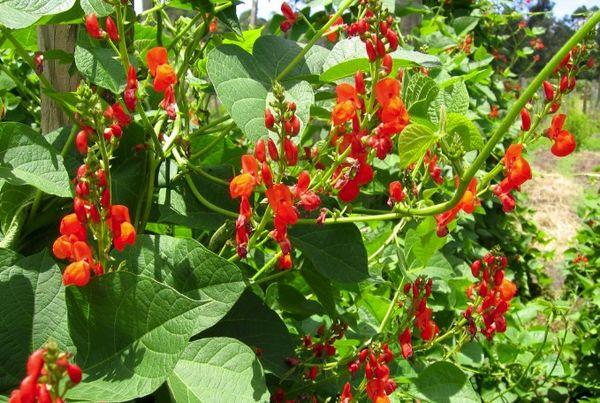
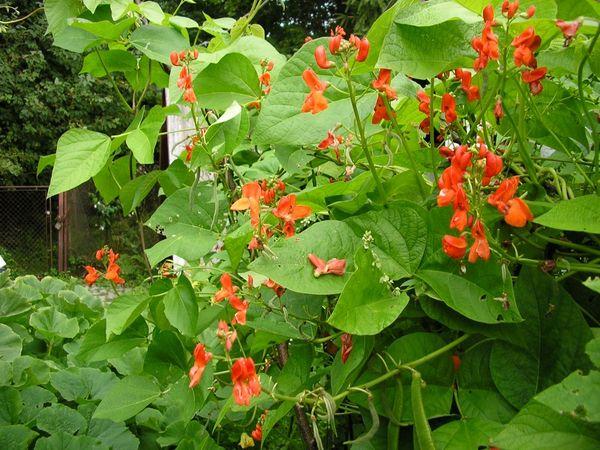
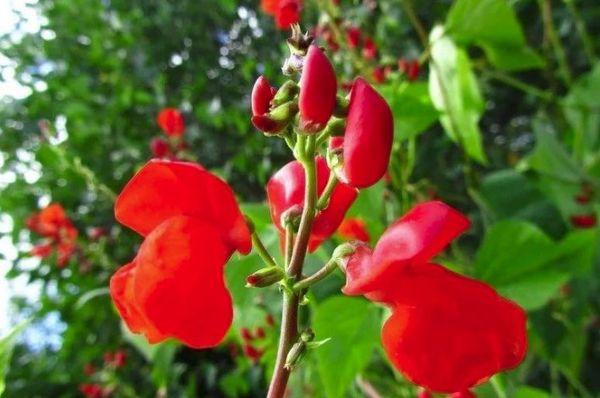
One of the most popular, thanks to its beautiful, fiery red and scarlet flowers. If planted early, they can bloom all season long. Furthermore, this variety can grow up to 4.5 meters.
The Purple Queen
This variety is highly prized for both its edible and decorative qualities. Large purple flowers give way to pods that can reach 20 centimeters in length. They are highly prized by gourmets. The plant itself is not particularly tall, growing up to 1.5 meters, and the beans mature 50 days after planting.
Harmony
It grows up to 4 meters. The pods, up to 20 centimeters long, have a beautiful golden color, making them a great addition to the garden. Harmony also blooms and bears fruit for a very long time, until late autumn, when frosts begin.

Golden Neck
Another variety with beautiful, bright lemon- or gold-colored pods up to 22 centimeters long. Although the plant itself grows up to one and a half meters, it looks great alongside larger shrubs. Furthermore, Golden Neck is resistant to diseases and pests and produces a bountiful harvest.
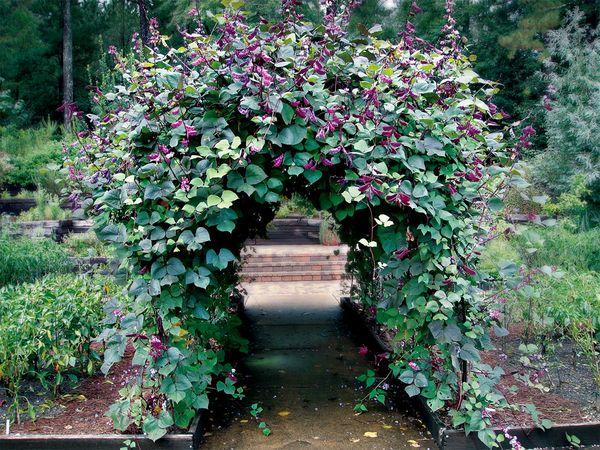
Pink
This variety lives up to its name, as not only are its flowers a soft pink with hints of white, lilac, and purple, but the pods are also bright crimson, and the fruits are pink with marbled markings. Reaching a height of 3.5 meters, you can even decorate your home with pink beans. It produces a bountiful harvest.
Blauhilda
A very interesting and beautiful variety for a number of reasons:
- bright purple color of flowers and pods;
- Over time, the leaves also acquire a purple tint;
- the pods are long, up to 23 centimeters, unlike other varieties – wide;
- the plant reaches 4 meters in height;
- The branches are heavy due to their thickness and green mass.
Although this variety is late-ripening, its flowering begins early and continues until late autumn. Therefore, Blauhilda is a good choice for decorating a plot throughout the season.
Dolichos
One of the few varieties that is even suitable for bouquets, the purple lilac is sometimes called climbing lilac because it blooms with large, delicate purple inflorescences. Another plus is its pleasant fragrance. It lasts up to two weeks in a vase without drooping.
Spanish White
A shelling variety with very large and tasty light-brown fruits. The small, wide pods are bright green, making them almost invisible among the dense foliage. However, the strong, thick vines are adorned with an abundance of large white flowers. The branches reach up to 4 meters in length.
Vigna of Caracalla
An even more unusual view:
- the flowers are large, up to 5 centimeters, twisted into a kind of snail shell, which is how the variety got its name;
- the color of the inflorescences can be white, yellowish, pale peach, violet or even purple and scarlet;
- has a pleasant and bright aroma;
- branches grow up to 5 meters;
- perennial plant, but in temperate latitudes it usually grows for one year.
But the length of the vines also makes them very fragile, so they easily tear and break.
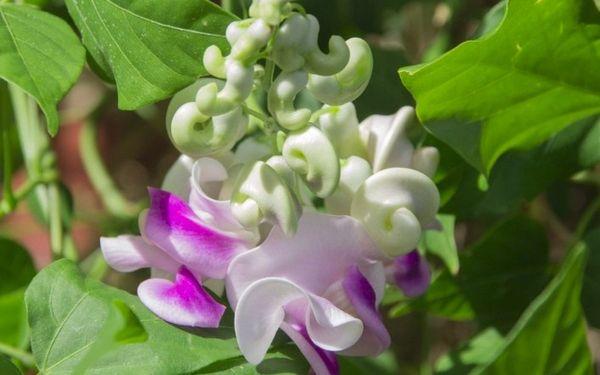
Borlotto
A variety for lovers of red. Both the vine and flowers are scarlet, as are the pods, which form a red and white marble pattern. The beans have a nutty flavor.
Golden Nectar
Both the inflorescences and the pods are colored in various shades of yellow, lemon, and gold. The length is up to 25 centimeters. This is also a tall variety, growing up to 4 meters.
Green Giant
Although this variety has small purple flowers, the flowering vines pair well with varieties of other shades. This green giant boasts excellent flavor—the beans are sweet and tender. The harvest can continue until late fall.
Winged beans
This variety is distinguished by its blue and cream flowers, with both shades sometimes appearing in a single inflorescence. The buds themselves typically have two petals, hence the variety's name. Interestingly, not only the beans but also the flowers and leaves are edible.
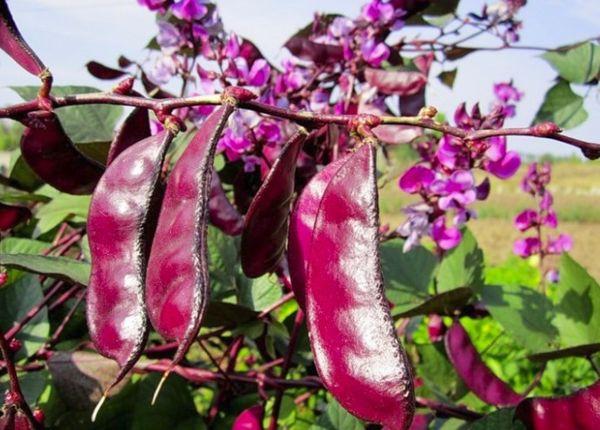
African 55
It's a productive and demanding cultivar, but produces a very large harvest. Its main characteristic is its night-blooming. The buds are bright purple, turning brownish-yellow when closed.
Grain violet
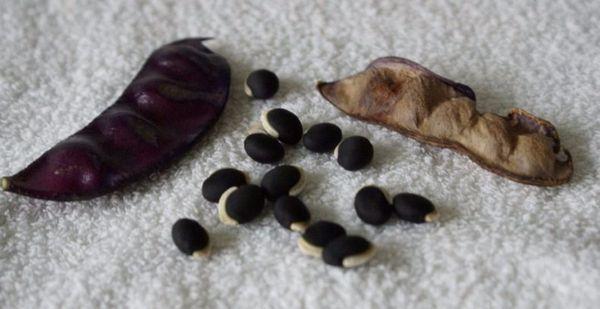
Another shelling variety. With proper care, it grows up to three meters. Both the pods and the beans themselves are a pleasant purple hue.
Bluehilda
The flowers and pods are also colored the same—purple and violet. It blooms two months after planting. The vines are long and heavy.
Turshevaya
Primarily used in cooking, this variety was bred from the asparagus variety. It's easy to grow but produces a high yield.
Winner
This perennial climbing variety produces a bountiful harvest in about 80 days. The flowers are fiery red, the leaves are a regular green, and they reach up to 30 centimeters. It's a good addition to a variety of dishes.
How to plant ornamental beans correctly
When planting this crop, it is important to choose the right time, as well as take into account other features, including transplanting rules.
Landing dates
Remember that frost is harmful to seeds of such crops; at -1°C, they easily die, and at best, they germinate poorly. Wait until the soil warms up to at least +8°C. Ideally, the air temperature should be +20-25°C. Here are the planting times for different regions:
- in temperate latitudes – mid-May;
- in the north – beginning of June;
- in the south – April.
If you're growing cucumbers, you can plant beans at the same time—the timing is almost the same. As for seedlings, they start growing in late March. In the north, it's best to plant them in late April.
It's okay if you planted beans too early and the sprouts turned out to be too big; just create support for them from available materials when you plant them in the garden bed.
Planting seedlings
The seedlings should be kept indoors for about a month to allow them to strengthen, but also to withstand subsequent transplanting. Beans are easy to grow, but clay soil should be avoided. The best option is a mixture of turf and sand in a 2:1 ratio. Add a handful of ash to a bucket of this mixture.
Plants should be planted in individual pots to avoid damaging the roots during repotting. You can also choose pots with removable bottoms or peat pots, which will ensure the plants survive the process unharmed. Large peat pellets work well.
The landing itself looks like this:
- Select large and whole seeds.
- Soak in water for 12-16 hours until swollen.
- Bury to a depth of 2 centimeters.
- Until the first shoots appear, maintain the temperature at 18-22 degrees.
- Then reduce it a little, and after 3-4 days increase it again.
- Water periodically.
- Fertilizing as such is not required, but if the plants are sprouting slowly, water them with an infusion containing wood ash.
After about a month, the plant is transplanted to a permanent location.
Transplanting into a garden bed
Before transplanting seedlings to their permanent location in the garden, the soil must be properly prepared. When applying fertilizer, follow these guidelines:
- Humus and compost are well suited, as well as mineral fertilizers with a high amount of phosphorus and potassium;
- fresh manure cannot be used;
- Also, avoid over-nitrogenation, otherwise the plant will have too many leaves and too few flowers;
- Add sand to clay soil and chalk to acidic soil.

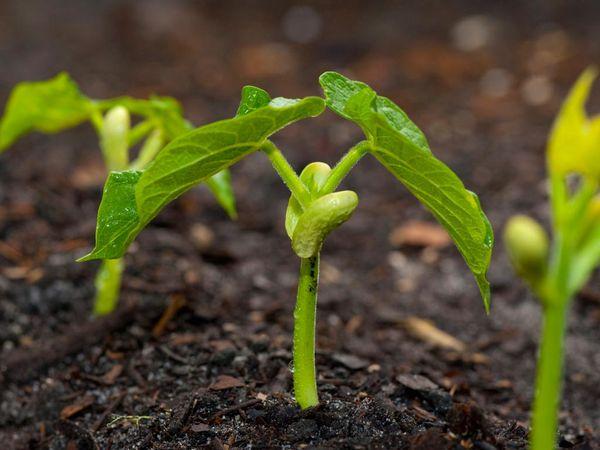
You can plant the seedlings when they have two full leaves. Don't leave them indoors for too long, otherwise you'll damage the growing roots during transplantation. Harden them off before planting by placing them on a balcony or other location with access to fresh air. There's no strict planting pattern, but it's best to leave 30-40 centimeters between plants. After planting, water them generously with warm water and apply mulch.
Sowing seeds in open ground
Sowing bean seeds is also very simple:
- If the soil is light and warm, you can simply place the seeds on top.
- In another case, 2-3 pieces are placed in holes one and a half to two centimeters deep.
- Then you need to water, mulch, and protect from frost, if necessary.
They are planted so that the distance between them is 20-40 centimeters. Without this condition, a dense hedge will form, but the plants will develop worse and produce fewer flowers.
What care does this ornamental plant need?
All types of beansPlants planted to decorate a garden don't require any special care. However, proper watering, fertilizing, and staking are important.
How to water beans
This climbing plant isn't one for water or humid conditions—it requires little and infrequent watering. It's best to water in the evening, using warm water. Water carefully, directly at the base of the stem, to avoid wetting the foliage and buds.
Top dressing
Natural or mineral fertilizers are suitable. Just don't use fresh manure. Frequent fertilizing isn't necessary; twice a day is sufficient:
- as soon as the sprout has acquired two true leaves;
- during the formation of buds.
Garter
Beans rarely need to be supported; they usually twine around the support themselves if directed in the right direction. A wooden support is ideal; beans are much less successful around metal or plastic, but in those cases, tie them with twine. Staking is often used to shape the plants or to gather the pods into attractive clusters.
Reproduction methods
Beans are easily propagated from seed; simply collect the pods. Dry the beans, then collect them in paper bags. Store until planting.
Gardeners' Tips
Here are some more tips to help you achieve a bountiful harvest and long flowering:
- Beans grow in the shade, but will feel better in the sun.
- Do not pull out the roots in the fall so that they continue to saturate the soil with nitrogen.
- Plant potatoes nearby to increase the yield. Beans also repel the Colorado potato beetle.
- The green mass is suitable for compost.
- The predecessors of beans should be potatoes, cucumbers, cabbage, tomatoes.
Related posts:
 Description and properties of the 50 best varieties of asparagus beans, benefits and harms
 Description of the 90 best varieties of beans for open ground with names
 The best recipes for pickled beans in jars for the winter are so good you'll lick your fingers.
 The benefits and harms of red beans for the human body: for women, men, and children
 Recipes for making pickled green beans for the winter at home
 Health benefits and harms of black beans, varieties, contraindications, and recipes
 How and where beans grow, planting and care rules in open ground
 How to properly freeze green beans and asparagus beans for the winter at home and shelf life