
- Benefits of asparagus beans
- General rules for preparing beans for the winter
- Classic pickling recipe
- In Korean
- Pickled green beans
- Green Bean Lobio: A Winter Recipe
- Salad with pepper in jars
- Canned with vegetables
- Preserved with basil and bay leaf
- In tomato for the winter
- Method without sterilization
- Green bean caviar
- Canning green beans
- How to store bean preserves
Many housewives overlook green beans, and in vain. Few know that this product is far superior in nutritional value to regular legumes, and that preserved beans for the winter are not only a healthy addition to the main diet, but also a delicious dish. Many are known recipes for preparing green beans for the winterThey have stood the test of time and have received well-deserved approval from the most discerning gourmets.
Benefits of asparagus beans
Green beans are a staple dietary staple, with no more than twenty-three calories per 100 grams; they also contain negligible amounts of protein, carbohydrates, and fiber. Thanks to their low cost, the green variety of this vegetable is a cost-effective way to add variety to your diet.
It can be used to prepare both main dishes and side dishes. It retains its nutritional and flavor properties whether raw, cooked, or frozen.
Due to the content of vitamins B, C and E, magnesium, potassium, folic acid and iron, this product, in terms of nutritional quality, surpasses kale and is indispensable for:
- trying to lose weight;
- suffering from urolithiasis or diabetes;
- improving the functioning of the nervous system.
As a source of amino acids, this vegetable helps support the immune system and overall well-being. The fiber it contains improves digestion and absorption.
Therefore, it's advisable to serve side dishes made from this product with meat or fish. Besides adding a touch of sophistication to the dish, this helps to better digest heavy foods.
However, along with its beneficial properties, there are also some contraindications. Dishes prepared with this vegetable should be consumed with caution by those with chronic gastrointestinal diseases, such as colitis or cholecystitis, the elderly, or those with intestinal problems.
General rules for preparing beans for the winter
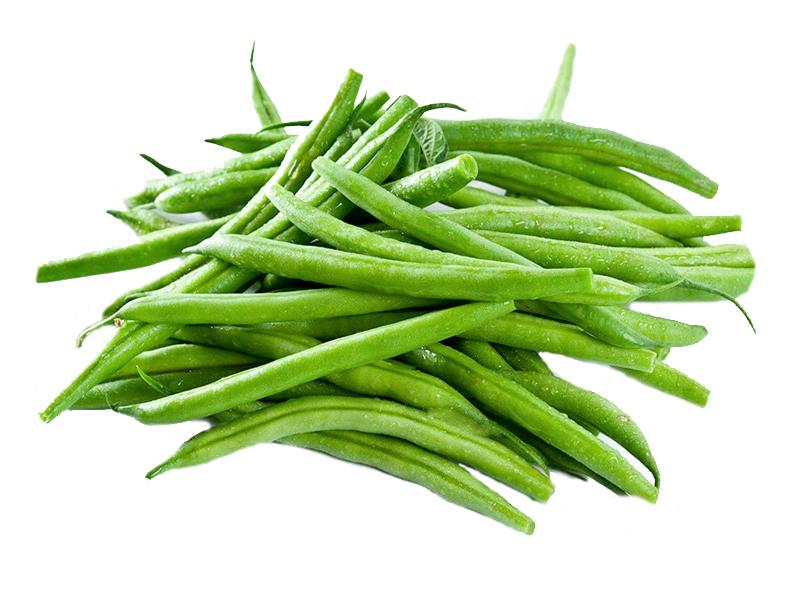
To properly and deliciously prepare this vegetable for the winter, you need to follow a few rules:
- For harvesting, only fresh young pods are used;
- they are washed well under running water and the ends are cut off;
- the prepared pods are cut into bars of the required size and pre-boiled for several minutes;
- jars for sealing are thoroughly washed with soda and sterilized to ensure the cleanliness of the walls and the safety of the product;
- The pods should not be overcooked, as this will destroy the beneficial substances contained in the product;
- If the recipe includes sterilization, it should be done for at least twenty minutes for half-liter jars.
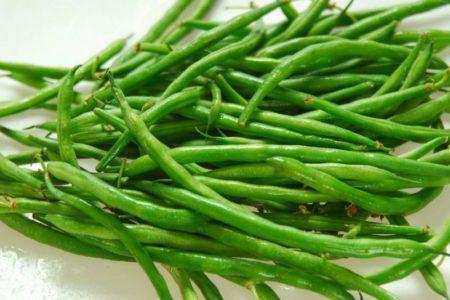
Some housewives prefer to freeze beans for the winter. This method is acceptable and doesn't affect the nutritional value of the beans. Properly frozen, they retain all their nutritional value. To do this, simmer the beans in boiling water for a few minutes, cool, portion them into small bags, and freeze.
Please note: Only freeze well-dried beans. Otherwise, they will stick together and turn into a shapeless mass after defrosting.
Classic pickling recipe
Only young, firm, light green or yellowish pods are suitable for pickling. They are thoroughly washed, removing any tough parts, divided into small pieces, boiled for a few minutes, cooled under cool water, and placed in a prepared container.
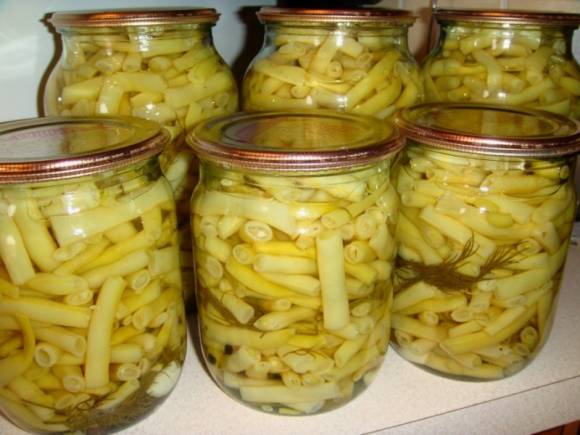
To prepare the brine, take equal parts of sugar and salt per liter of water - fifty grams each, twenty milliliters of eighty percent acetic acid essence, and spices to taste.
The container filled with brine is sterilized for about twenty-five minutes and sealed. Pickled asparagus beans retain all their beneficial propertiesIt is served as an appetizer, a side dish or a separate dish.
In Korean
To prepare this Korean-style dish at home, you need to take:
- half a kilogram of beans;
- two hundred grams of carrots;
- garlic - no more than a head;
- one onion;
- vinegar – about a tablespoon;
- half a glass of vegetable oil;
- coriander - a teaspoon;
- half a teaspoon of red and allspice;
- bay leaf;
- salt - as much as needed.
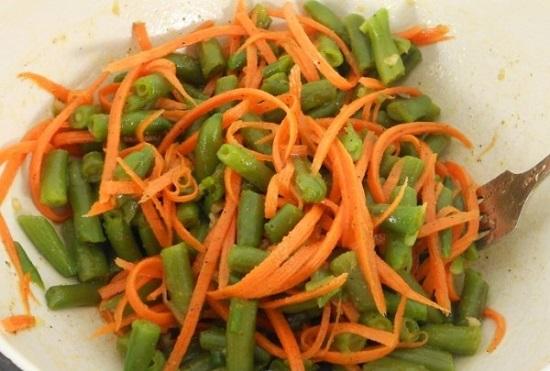
The clean, sorted main vegetable is cut into portions and blanched; the onion is cut into half rings, and the carrots are grated into long strips using a Korean grater. Combine the oil, garlic, spices, and salt, bring to a boil, and add vinegar.
Pour the resulting dressing over the vegetables, mix well and leave to marinate (for about two hours), put into jars, sterilize for twenty minutes and roll up the lids.
Pickled green beans
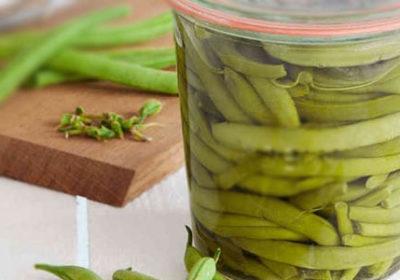
Fermented beans are very healthy. Any container will do: a makitra, a barrel, a bucket, or a saucepan. The vegetables are prepared in advance in the traditional way, packed tightly into the container, compacted, and covered with brine. For every kilogram of beans, use one liter of liquid and fifty grams of salt. Cover the beans with brine and place them under a weight. The beans ferment for six weeks: seven days in a warm place, the rest of the time in a cool place.
Green Bean Lobio: A Winter Recipe
Authentic Georgian lobio is traditionally made with red beans, but if you don't have any, you can use green beans. The beans are cut into portions and boiled for twenty minutes, then removed from the broth and allowed to drain. Set aside half a liter of the broth for the filling. Pour vegetable oil into a wide cauldron, bring to a boil, and add a large bunch of finely chopped green onions.
Add finely chopped, peeled tomatoes and cooked beans to the lightly fried onions, fry briefly, and pour in the reserved cooking liquid. Simmer the mixture for no more than five minutes. After the specified time, add finely chopped cilantro, basil, and parsley, a crushed head of garlic, spices, and salt. Heat until boiling, pour into sterilized jars, seal, and place in a warm place to cool.

Salad with pepper in jars
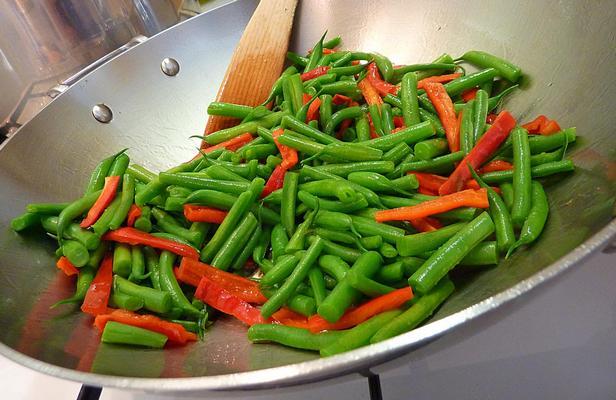
Some housewives preserve green beans in a salad with bell peppers, onions, and root vegetables. The combination of a variety of vegetables creates a sophisticated flavor profile and looks stunning on plates.
The salad contains:
- a kilogram of green beans;
- five hundred grams of bell pepper;
- a kilogram of tomatoes;
- three large carrots;
- four onions:
- one and a half tablespoons of salt;
- a tablespoon of sugar;
- an incomplete glass of sunflower oil.
The sequence of actions is as follows:
- sorted and washed beans are boiled in salted water, the ends are cut off and cut into portions, placed on a napkin to dry;
- Wash and dry the tomatoes, cut them into four pieces, remove the stems and chop into small cubes;
- carrots are thoroughly washed, peeled, rinsed, allowed to drain and grated;
- peeled and washed onion, cut into half rings or pieces, as desired;
- the washed pepper is cleaned of stems, seeds and membranes, rinsed under running water, dried and cut in the same way as the onion;
- Add onions, carrots and peppers one by one into heated sunflower oil and fry until the color changes, then add beans and tomatoes;
- Mix the ingredients well and simmer over low heat for forty minutes;
- After the time has elapsed, the boiling salad is placed into prepared sterilized jars and rolled up.
Jars of salad are placed in a warm place upside down to cool gradually, after which they are put away in storage.
Canned with vegetables
Canned green beans with vegetables are great as a standalone dish or appetizer, or as a complement to soups or main courses. To properly preserve these green beans for the winter, choose only high-quality, fresh vegetables.
To prepare you will need:
- two and a half kilograms of beans;
- six hundred grams of onions;
- six hundred grams of carrots;
- one hundred grams of parsley root;
- one hundred grams of celery;
- a large bunch of greens;
- a stack of vegetable oil – for frying vegetables;
- eighty grams of sugar;
- forty grams of salt;
- seventy-five grams of vinegar;
- bay leaf, peppercorns.
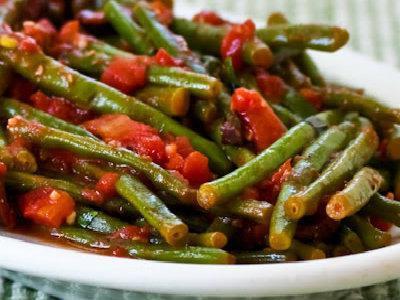
All vegetables are processed similarly to the previous recipe, simmered with water. At the end of cooking, spices, vinegar, and herbs are added. The boiling mixture is poured into prepared jars, sealed, and left to cool in a warm place.
Preserved with basil and bay leaf
Green beans don't have a distinct flavor profile, so when canning, they're often enhanced with various spices and herbs. To preserve green beans this way, you'll need:
- a kilogram of beans;
- six bay leaves;
- ten sprigs of basil;
- a teaspoon of sugar;
- a tablespoon of salt;
- a liter of water;
- two tablespoons of vinegar.
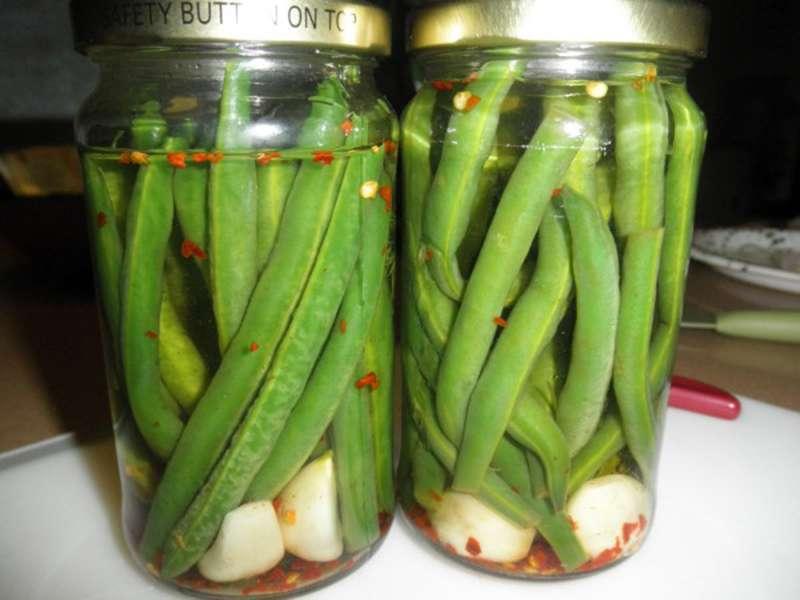
Prepared in the traditional way, green beans are placed in sterilized jars, bay leaves and basil are added, the boiling marinade is poured over them, the jars are sealed and left upside down in a warm place until they cool completely.
In tomato for the winter
The process for canning green beans in tomato sauce is identical to the recipe for vegetables. Ripe, juicy tomatoes are cut into pieces, blended, and simmered in a deep roasting pan for twenty minutes. Cooked green beans and, if desired, vegetables are added to the prepared tomato juice. Vinegar is added if the canned beans will be stored in a warm place.
Take a look Also
Method without sterilization
Sterilization is not necessary for preparing this dish. This minimizes cooking time but reduces the shelf life of the product.
For this recipe you will need:
- one and a half kilograms of beans;
- several umbrellas of dill;
- head of garlic;
- cloves, allspice, bay leaf.
For one liter of marinade, take two hundred grams of sugar, one and a half tablespoons of salt, one hundred milligrams of vinegar.
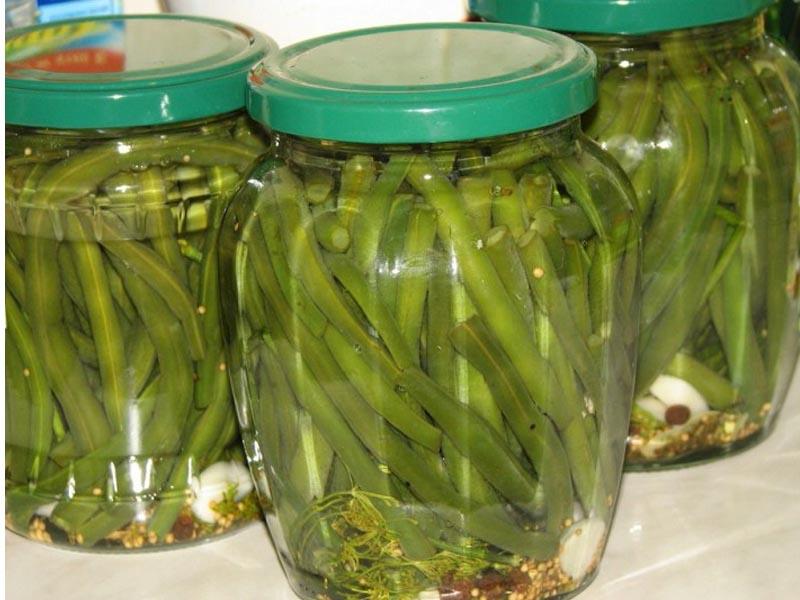
Prepared and boiled beans are placed in sterilized jars; dill, spices, and garlic are added. Boiling brine is poured over the beans and the jars are sealed. Cooled in the traditional manner.
Green bean caviar
To prepare caviar you need:
- three kilograms of beans;
- one and a half kilograms of tomatoes;
- half a kilogram of bell pepper;
- a large bunch of greens;
- a tablespoon of salt;
- three tablespoons of sugar;
- spices – optional – one tablespoon.
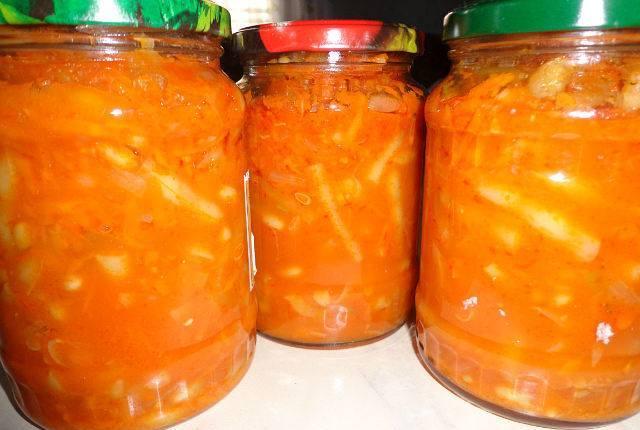
The beans are prepared in the traditional way, the remaining vegetables are cut into pieces, and the parsley is finely chopped. The vegetables are blended or ground, placed in a deep frying pan or saucepan, and simmered over low heat for an hour, stirring occasionally.
After the allotted time, add garlic, herbs and spices, cook the dish for about ten more minutes, distribute into jars and seal.
Canning green beans
Canning green beans is a very simple and hassle-free process. They are sorted, washed thoroughly, dried, and cut into pieces up to two and a half centimeters long. The cut pieces are placed in boiling salted water, blanched for a few minutes, and then placed into prepared jars, making sure to fill them completely. The boiling water is poured over the filled jars, salt and spices are added (if necessary); everything is sterilized for fifteen minutes, then sealed.
How to store bean preserves
The shelf life of the canned product is up to three years, if the recipe calls for the addition of vinegar, provided the temperature is maintained at no higher than twenty-three degrees.
Without added vinegar, but with tomato, it lasts for eighteen months in the refrigerator, or about six months when stored indoors. Fermented foods stored in the refrigerator will keep for up to three months.As can be seen from the material presented, green beans make very nutritious dishes that add variety to any table, even when serving the most exquisite dishes.
Related posts:
 Description of the 90 best varieties of beans for open ground with names
 Description and properties of the 50 best varieties of asparagus beans, benefits and harms
 The best recipes for pickled beans in jars for the winter are so good you'll lick your fingers.
 Health benefits and harms of black beans, varieties, contraindications, and recipes
 How and where beans grow, planting and care rules in open ground
 The benefits and harms of red beans for the human body: for women, men, and children
 Planting seedlings and seeds, growing and caring for asparagus beans in open ground
 The health benefits of beans for women and men, harm and contraindications