
- Description of the plant and its benefits
- Popular varieties
- For central Russia and the Moscow region
- For the Urals and Siberia
- For southern regions
- What is the difference between green beans and asparagus beans?
- Features of growing beans
- In open ground
- In the greenhouse
- The nuances of bean care
- Rules and conditions for watering
- What fertilizers should be used in the garden bed?
- Loosening the soil
- Garter
- Diseases, pests and prevention
- Peculiarities of growing beans in different regions
- Harvesting and subsequent storage
Growing a bean harvest is easy if you know how they grow, which varieties are best, and how to properly care for this vegetable crop. Legumes are often considered meat substitutes because they are rich in protein. You can grow tasty and healthy beans in almost any region by planting them in a greenhouse or open ground.
Description of the plant and its benefits
The health benefits of beans are undeniable, as they contain a lot of protein and are also a source of B vitamins. Eating beans provides the body with micronutrients such as phosphorus, potassium, copper, and zinc.
There are over two hundred varieties of beans in nature, and even more if we include hybrids. Varieties vary in plant height, bean color, ripening time, yield, and flavor. Legumes are classified according to various characteristics:
- Depending on their appearance, plants are classified as bush, climbing, and semi-climbing. Bush beans are low-growing plants up to half a meter tall, prized for their compact size, cold tolerance, early maturity, and ease of care. Vines of climbing and semi-climbing varieties can be used for ornamental purposes; these varieties produce a harvest that takes a long time to mature.
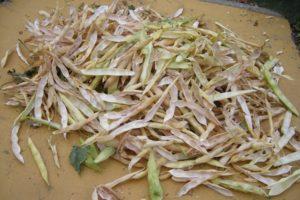
- Both the beans and pods of different varieties are eaten, and according to this criterion, all types are divided into grain, asparagus, and semi-sweet. The pods of grain (shelling) beans are not suitable for eating, as they are too tough, but the beans are nutritious and have a long shelf life. Asparagus beans, also known as vegetable or sugar beans, have soft pods and beans that can be eaten raw. Young semi-sweet beans are eaten whole as a pod; as they mature, tough fibers develop, and after ripening, only the beans are eaten.
- Another classification divides all varieties by maturity time. In Russia, early- and mid-season varieties are most often planted to allow the beans to ripen during the short season favorable for plant development. Early-season varieties are harvested two months after planting or even earlier, mid-season varieties are ready for consumption in two and a half months, and late-season varieties take three months or more to mature.
- The fruits are classified by weight, using the thousand-bean weight as a basis. Large fruits weigh 400 grams or more, medium-sized varieties weigh between 200 and 400 grams, and a thousand small beans weigh less than 200 grams.
- There are distinctions between edible and ornamental varieties. Some varieties are planted for their beautiful blooms, even though they don't produce any pods.
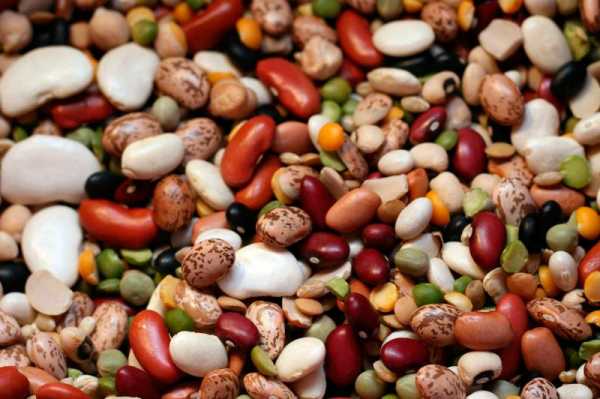
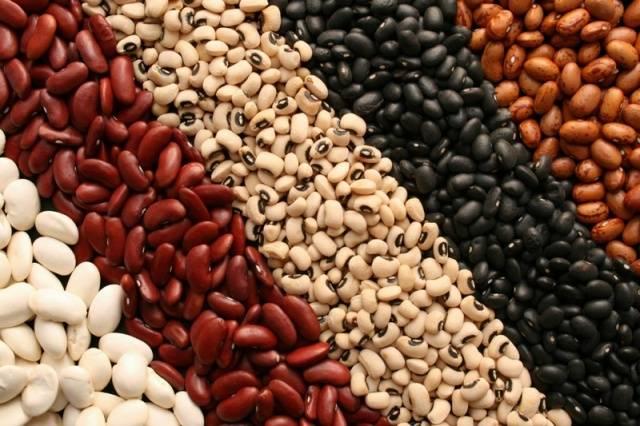
- Beans vary in color. You can see red, black, white, or even various shades of these colors, as well as variegated varieties. Dishes made with brightly colored and variegated beans are particularly unusual and beautiful. Typically, the petal color matches the hue of the bean, which develops after flowering.
Popular varieties
Bush beans are most often chosen for commercial cultivation because their compact plant takes up little space and the pods ripen evenly and simultaneously. The choice of variety for gardening should be based on the region's climate.
For central Russia and the Moscow region
In the central part of the country and the Moscow region, only those varieties with mid- to early ripening periods will have time to ripen. Many varieties have proven themselves to be successful, with the following being among the most popular.
- Zhuravushka is a variety of bush bean up to half a meter in height.
- Bluehilda is a climbing bean with purple pods up to 17 centimeters long. It ripens mid-season.
- Flamingo is a high-yielding variety with an unusually variegated pod color.
For the Urals and Siberia
When planting beans outdoors in the Urals and Siberia, preference should also be given to early- and mid-season varieties. Climbing beans, all varieties of which are characterized by a slow ripening period, are suitable only for ornamental purposes. Frequently planted varieties in Siberia and the Urals include Sibirsky Razmer, Sakharny Triumph, Shchedraya, and Severnaya Zvezda 690.
For southern regions
Beans are native to South America, so this heat-loving plant thrives in southern regions. If dry periods are frequent, the drought-resistant Lastochka variety is a good choice.
Round beans with bright purple spots are borne in pods up to 15 centimeters long. This variety is easy to grow, early maturing, and characterized by its short stature and good immunity. The following varieties are commonly found in the southern regions of Russia: Red Riding Hood, Rachel, Antoshka, Kreolka, Adzuki, and Yubileynaya-287.
What is the difference between green beans and asparagus beans?
What these plants have in common is that both asparagus and green beans are varieties of beans. Furthermore, the fruits of both types of beans are a valuable source of nutrients, such as proteins, vitamins, and microelements.
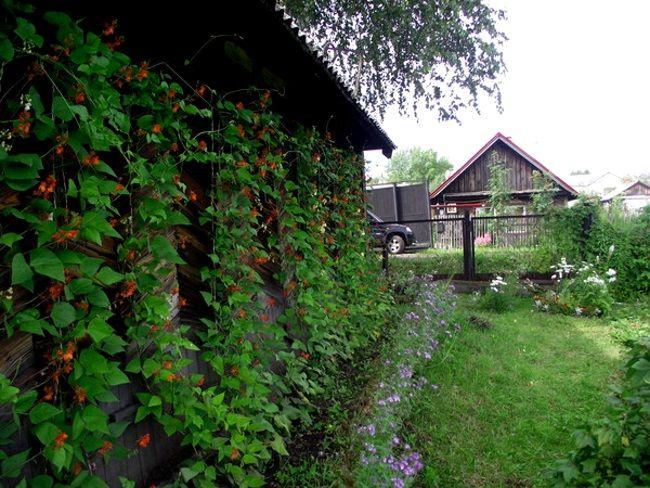
The main difference is the way they are eaten. While only the pods of green beans are eaten, the whole pods of asparagus beans, also known as sweet beans, are eaten. The delicate texture of sweet beans is due to the fact that the pods do not develop tough fibers or a parchment layer, resulting in a fleshy consistency and flavor reminiscent of asparagus, hence the name.
You can grow both asparagus and legume varieties in your garden, depending on your taste preferences.
Features of growing beans
The plant can be planted both outdoors and in a greenhouse. It's even possible to harvest it indoors by placing the bushes in boxes on a balcony or windowsill. The cultivation techniques are virtually identical for growing the crop in different conditions. The soil requires cultivation: watering, loosening, weeding, and fertilizing.
In open ground
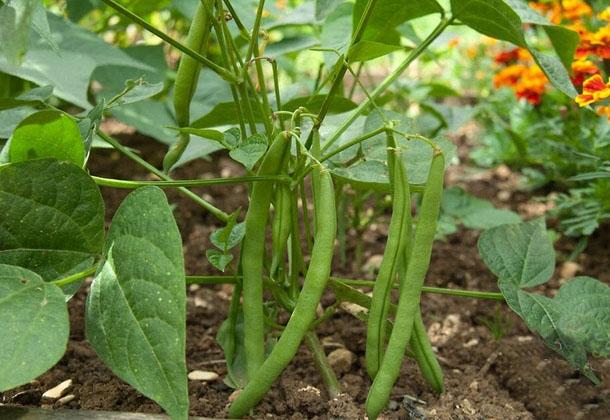
Heat-loving vegetables are planted in open ground after the soil has warmed to 10-15 degrees Celsius. To speed up soil warming, the beds are pre-warmed by covering them with plastic for several days, allowing the soil to reach the desired temperature more quickly.
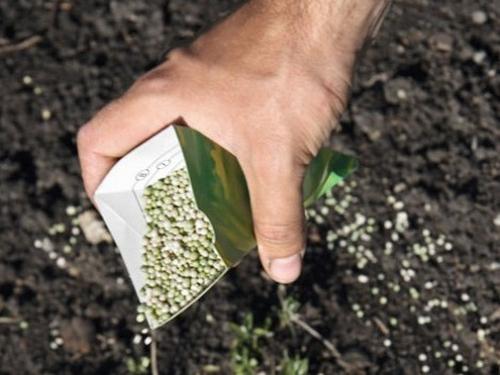
You can grow legumes in your garden by planting seedlings or pre-soaked seeds in the ground; it is best to plant sprouted beans.
The prepared seedlings are planted in a pre-watered bed, burying the seeds 5 cm deep. The distance between plants should be at least 15 cm, but closer spacing is possible, and the seedlings can be thinned out later, leaving the strongest ones. Cover the bed with plastic film to protect the seedlings from night frosts.
In the greenhouse
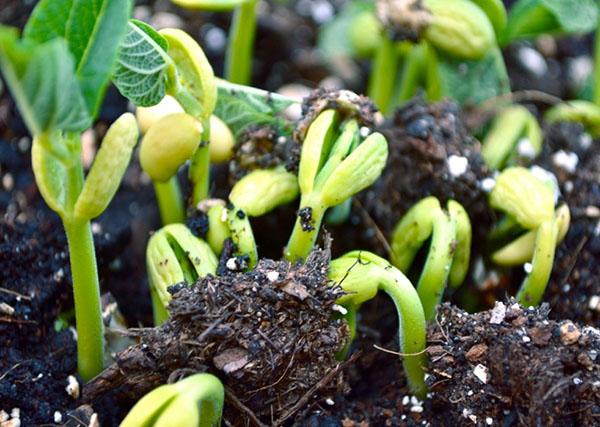
Planting bean seedlings in a greenhouse will give you the earliest possible harvest. The crop is also placed in a greenhouse when the summer is short.
The technology for planting and caring for beans in a greenhouse is no different from that in open ground. For growing beans from slightly sprouted seeds Beans are planted in each hole, then one of the strongest plants is left.
It is important to correctly position the bushes in the greenhouse so that the green mass receives enough light without blocking the surrounding plants or, conversely, shading the delicate shoots.
The nuances of bean care
To get a bountiful bean harvest, you need to properly care for the plant. This isn't difficult if you follow the recommendations for watering, loosening the soil, fertilizing, and tying the plant.
Rules and conditions for watering
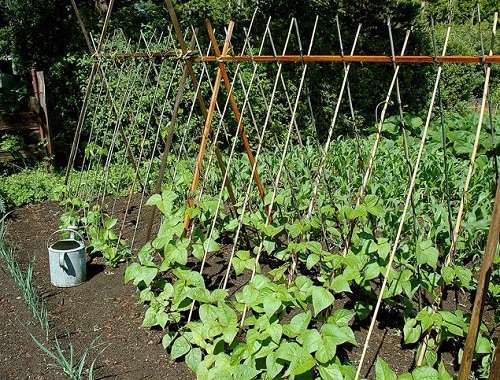
It's best to water with rainwater or settled water. Moisten the drying soil around the plant at least once a week until four leaves form.
Further abundant watering will lead to the mass formation of green mass, not fruits.
The plant will also require a lot of moisture during the flowering and fruiting period; watering is resumed after the buds appear.
What fertilizers should be used in the garden bed?
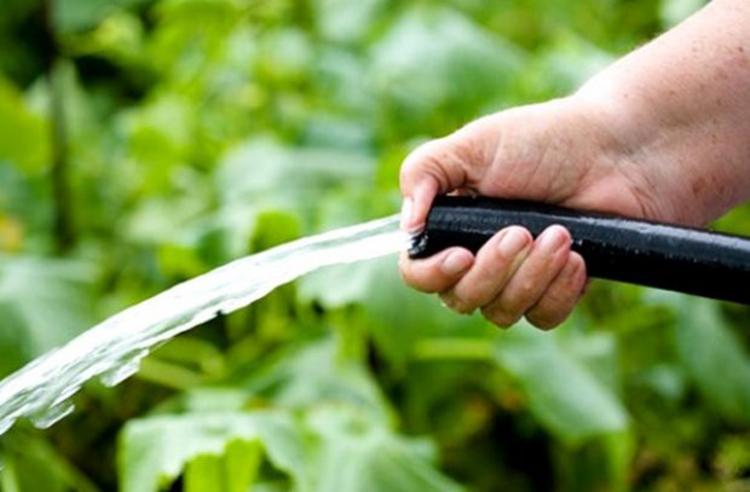
The types and amounts of fertilizers may vary depending on the density, fertility, and acidity of the soil, but the general feeding scheme is the same:
- In the fall, compost or humus is placed in the place of the future garden bed.
- In the spring, before planting beans, the soil is fertilized with urea or ammonium sulfate (a source of nitrogen), superphosphate (saturates plants with phosphorus), and chlorine-free fertilizers to enrich the plantings with potassium.
- During the flowering period, beans especially need potassium and phosphorus; any fertilizer containing these micronutrients will do. Boric acid can also be applied as a foliar feed.
There are a number of nuances that need to be taken into account when choosing fertilizers for vegetable crops:
- Nitrogen is applied only at the very beginning; afterward, the micronutrient is produced in sufficient quantities by the nodule bacteria living in the legume roots. Furthermore, excess nitrogen leads to excessive leaf growth at the expense of fruiting.
- If the soil is too acidic, it will prevent the plant from absorbing mineral fertilizers. Acidic soil should be neutralized with dolomite flour or other available means.
- It is better to add organic matter to the beds intended for beans, under the preceding crops, 1-2 years before planting legumes.
- To saturate beans with such an important microelement as boron, the seeds are soaked in boric acid as part of their pre-sowing preparation.
Loosening the soil
The soil is loosened and weeded, starting from the moment the seedlings emerge and throughout the growing season. Loosening should be done very carefully to avoid damaging the root system. It's best to do this after watering.
Garter
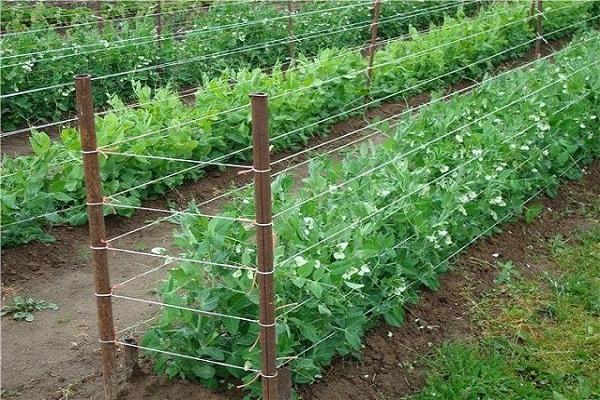
Climbing beans especially need support. Leaving the vines on the ground will cause the fruit to rot. The supports should be wind-resistant; for this, it's convenient to set stakes at an angle, cross them, and tie them together at the top to provide stability. Natural supports, such as tall, stiff corn stalks, can be used. There's no need to tie the vines; the plant will naturally grow around the support. For bush beans, the supports can be shorter and thinner.
Diseases, pests and prevention
Beans can be susceptible to fungal, bacterial, and viral infections, manifesting as various rots, affecting both the underground and aboveground parts of the plant. The most common diseases affecting beans include white and root rot, anthracnose, powdery mildew, and mosaic. Commercially available chemicals are a last resort, used only in exceptional cases, as beans are eaten.
You can protect your crops from diseases using simple but effective preventative measures.
- First of all, it is necessary to observe crop rotation, that is, do not plant beans in a bed where there were previously plants susceptible to the same diseases as legumes.
- Seeds must be stored in the right conditions; before planting, only healthy ones without visible damage are carefully selected and treated.
- It is better to choose varieties with good immunity for cultivation.
- Affected plants should be removed to avoid infecting healthy ones.
- In the fall, when preparing the beds for subsequent planting of beans, it is necessary to remove all organic matter, since pathogens overwinter on them.
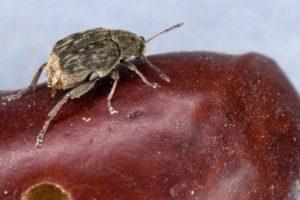
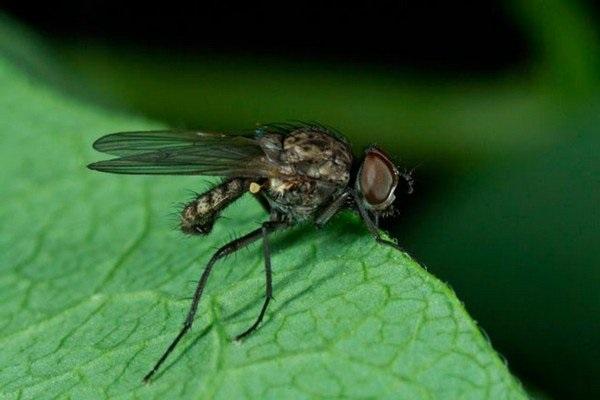
Main bean pests These include the bean weevil, aphid, whitefly, and bean weevil. These insects damage not only legumes but also other crops. Pest control measures are divided into preventative and active. Preventative measures are preferable, as they are safer for plant handling and consumption.
As a preventative measure to destroy pests, fruits are exposed to high or low temperatures.
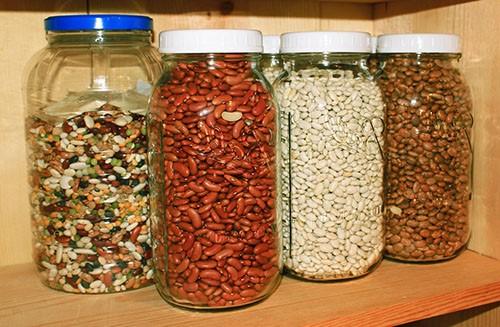
Freezing the harvest for several days will kill the adults, eggs, and larvae, which cannot withstand temperatures below -10°C (-50°F). Warming the beans will have a similar effect. The harvest should be stored in tightly sealed containers to prevent pests from entering and causing damage.
Peculiarities of growing beans in different regions
Beans can be grown in various regions, and planting and care techniques are not significantly different. In regions with a short growing season, early-ripening varieties should be planted, preferably regionalized hybrids. It's important to monitor soil temperature; if the plant is planted too early in temperate climates, subsequent frosts will destroy the seedlings. In southern regions, virtually all varieties of beans are grown.
Harvesting and subsequent storage
The rules for harvesting beans planted in the garden, as well as storing the harvested beans, depend on the chosen variety and the purpose of the fruit.

Sugar bean pods, also known as "shovel beans," are usually eaten unripe. They can be harvested as early as two weeks after flowering. They keep fresh in the refrigerator for up to two weeks, and can be frozen or canned for winter storage.
It is best to harvest shelling bean varieties before the pods open, otherwise all the beans may scatter on the ground.
A sign that the pods are beginning to ripen is the yellowing of the leaves. The pods ripen unevenly on a single plant and should be harvested as they mature. After harvesting, the pods are threshed, the seeds are dried, and stored in glass jars with tight-fitting lids for long-term storage.
It's no wonder beans have become so popular among gardeners. The variety of varieties, nutritious and tasty fruits, ease of care, and decorative climbing vines with vibrant flowers make this legume a welcome addition to any garden.
Related posts:
 Description of the 90 best varieties of beans for open ground with names
 Description and properties of the 50 best varieties of asparagus beans, benefits and harms
 The benefits and harms of red beans for the human body: for women, men, and children
 Recipes for pickled beans for the winter at home
 Health benefits and harms of black beans, varieties, contraindications, and recipes
 The best recipes for pickled beans in jars for the winter are so good you'll lick your fingers.
 The health benefits of beans for women and men, harm and contraindications
 Planting seedlings and seeds, growing and caring for asparagus beans in open ground