
Growing legumes is very popular because they are widely used in cooking and have many beneficial properties. However, the harvested crop can become a delicacy for pests, making it uneatable. How to properly store beans to prevent bugs from infesting your home? There are several options; you just need to choose the right one.
How to protect beans from bugs
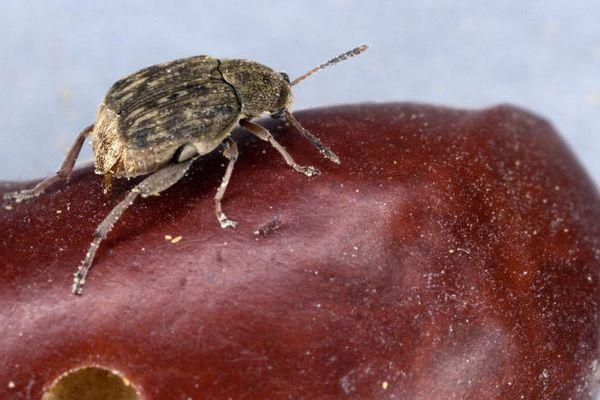
The main pests, bean weevils, live in warehouses and storage areas, as well as in garden plots, in bean pods. They require favorable weather conditions and the nutrition provided by beans to thrive.
A single insect can lay over 50 larvae in a pod. After 2-3 weeks, the larvae become adult pests. Eggs can be laid either in the pod itself or in the grains. This explains why weevils thrive in hermetically sealed containers.
Prevent the appearance of uninvited guests at the planting stage by applying pesticides to the area. Only healthy grains of a perfectly even shape, without visible damage, are selected for sowing. If infected beans are used for planting, the entire harvest may be lost next season.
How to prepare beans for storage
To preserve grains until the next harvest, they must be dried properly. This way, the harvest can be stored for several years without the risk of pest damage.
The following work is carried out:
- The harvest from the garden is collected together with the pods.
- Leave the beans in the sun, in a well-ventilated area. For example, in rural areas, the harvest was dried directly on the fence. In the city, you can use a balcony for this purpose, laying newspaper on the floor.
- The beans are dried for two weeks. During this time, the pods should turn yellow and open slightly, and the beans should become firm.
- The beans are poured onto a baking sheet and baked at a temperature of approximately 60°C for at least half an hour. This kills the pest larvae. These beans can no longer be used as planting material.
Take a look Also
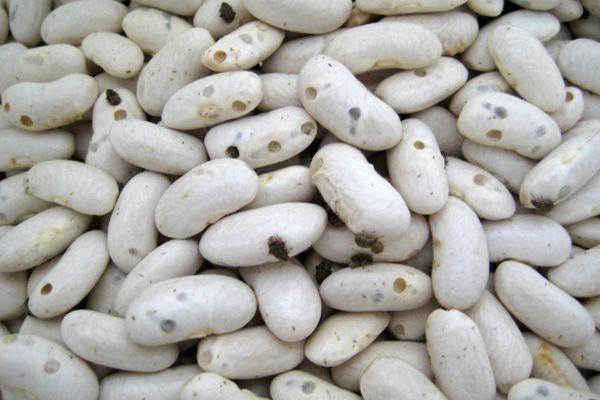
If you need to preserve bean seeds for the winter, place them in the freezer for a while after harvesting. The bean beetle larvae die at low temperatures, but the bean germination capacity remains intact.
Rules for storing beans to prevent bugs
It's important to remember that if you've had a bountiful harvest and need to store it for more than one season, you should sterilize the glass jars, then add a little wood ash to the bottom before adding the beans. Afterward, simply rinse the beans with clean water and use them for cooking. Ash will prevent the appearance of bugs and other pests.
A few chopped garlic cloves placed in a bean storage container will also repel beetles. Large quantities of beans are stored in boxes lined with regular newspaper. Printing ink has a negative effect on pests, allowing the crop to survive the winter safely.
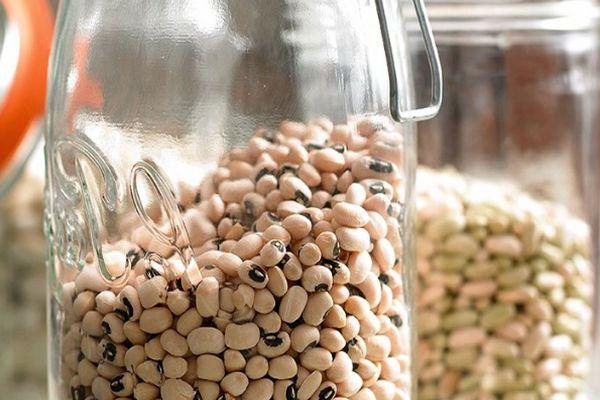
Typically, containers with beans are stored indoors, but it's better to move them to a cellar, pantry, or other cool area. Beans are known to dislike the scent of dill, rosemary, and other spices. A few sprigs of these plants are placed in the container to protect the harvested crop from harmful insects.
We select containers and premises, and create optimal conditions
Dry beans are stored in an airtight container. The following are used for this purpose:
- glass jar;
- cellophane bag;
- plastic container.
Insects and bugs should be kept out of the beans. It's best to store beans in a cool, dark place. If you're concerned about beetle larvae, it's best to freeze them. Beans tolerate low temperatures well without losing their flavor, but beetle larvae die. Before the onset of sustained cold weather, you can place the beans in the freezer and then simply take them out onto the balcony.

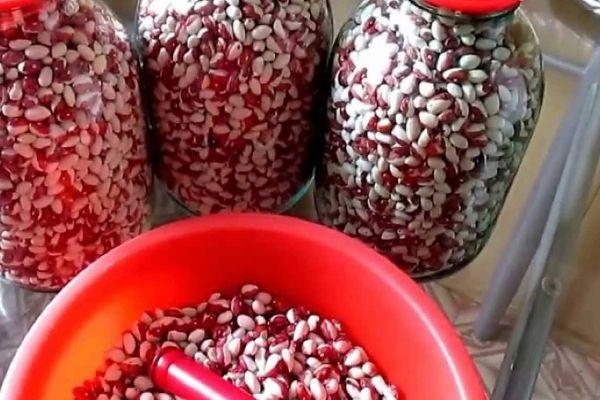
In a humid and warm room, beans will sprout quickly, so avoid keeping them in a warm place. The sprouts are unfit for consumption and are used only for spring planting. If you plan to store beans in a canvas bag, soak it in a salt solution and dry it first. This will protect the harvest from both bean weevils and other pests.
Frozen beans
Freeze only fresh, green beans, freshly picked from the garden—even in pods. Wash them, trim the ends with scissors, and cut out any damaged areas or black spots. If you're using cut pods for culinary creations, do so immediately.
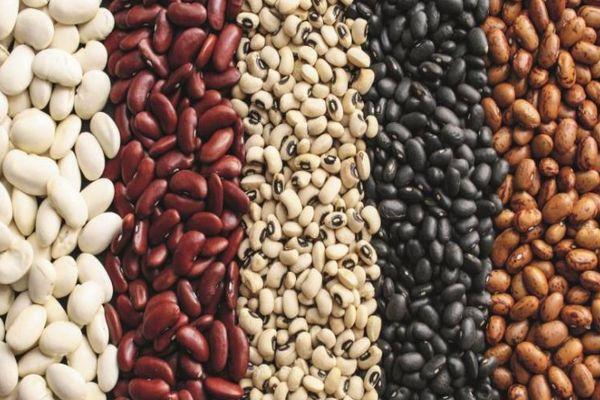
The next step is blanching. The pods are dipped in boiling water for a few minutes and then transferred to ice water. This ensures maximum preservation of the product's nutritional properties and flavor.
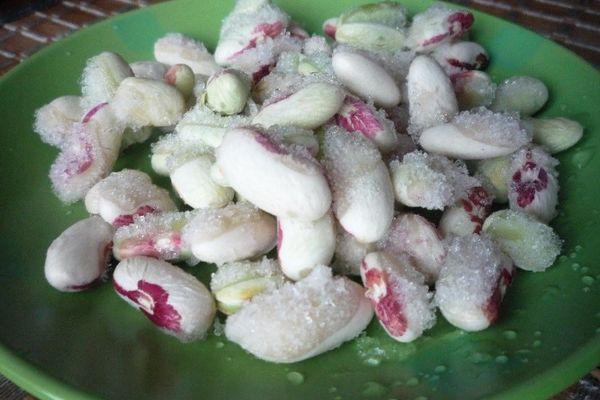
Before freezing beans in the refrigerator, they need to be thoroughly dried. To do this, lay the pods on a paper towel and let them sit for a while to allow all excess liquid to drain. Otherwise, ice will form on the beans, and the product will lose its unique flavor.
Dried beans are packaged in bags in such portions that they can be used in one cooking and no extra beans need to be defrosted.
Storage at room temperature
If dried properly, beans can be stored at room temperature throughout the winter. Some beans can be frozen, while the rest can be frozen for several hours before storage, then dried. To kill beetles and their larvae, beans can be cooked in an open oven.
The temperature inside is maintained at 100°C. The beans are kept in these conditions for 20 minutes.
The container in which the beans are stored should be airtight. It should be placed in a well-ventilated, dark place, such as a table or kitchen cabinet. Humidity should be low, otherwise the beans may sprout.
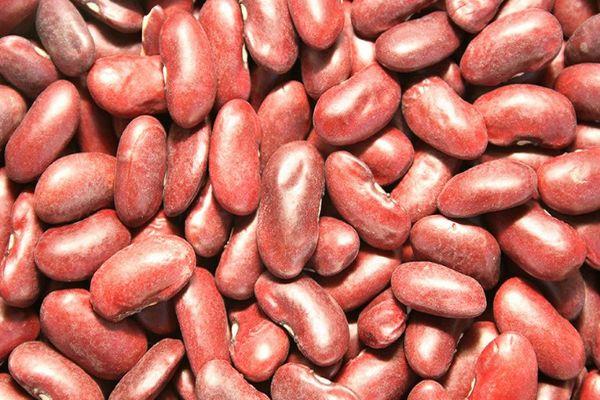
Before storing the beans, you should do the following:
- select beans with black spots or other defects;
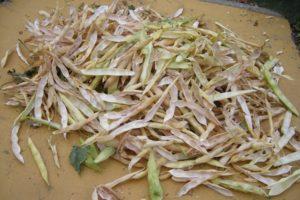
- peel the dry pods;
- remove seeds that have a coating on their surface.
Never wash beans before storing them, nor use containers that collect condensation. Storing the harvested crop near a radiator or other heat source is highly undesirable.
Terms and conditions
The key to successfully storing beans is maintaining optimal humidity and temperature. These factors largely determine the maximum shelf life of the legume. This also depends on other factors. The preferred containers are bags made of natural fabrics, wooden crates, or simple cardboard boxes.
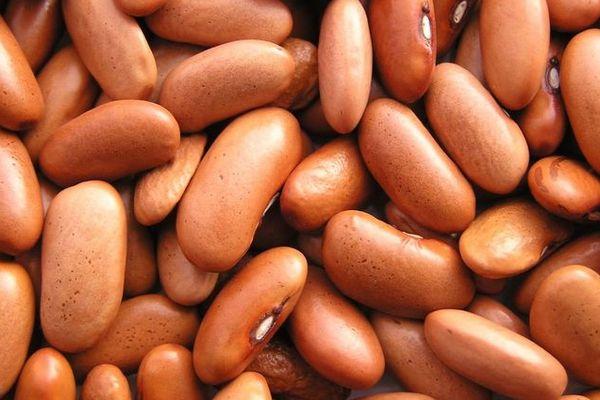
The shelf life of beans is significantly extended by low temperatures in the storage area. The optimal temperature is considered to be between +5°C and +10°C. Humidity should not exceed 50%, otherwise the beans will become moldy, develop an unpleasant musty odor, and lose their commercial qualities.
The shelf life of beans stored indoors in cloth bags, provided all pre-processing and storage procedures are followed, is 2-3 years. In glass containers with an airtight seal, this period increases to 8 years. Canned beans are suitable for consumption for two years.
Related posts:
 Description and properties of the 50 best varieties of asparagus beans, benefits and harms
 Description of the 90 best varieties of beans for open ground with names
 Recipes for pickled beans for the winter at home
 The best recipes for pickled beans in jars for the winter are so good you'll lick your fingers.
 Health benefits and harms of black beans, varieties, contraindications, and recipes
 The benefits and harms of red beans for the human body: for women, men, and children
 How and where beans grow, planting and care rules in open ground
 How to properly freeze green beans and asparagus beans for the winter at home and shelf life