
Any variety of beans enriches garden soil with microelements, phosphorus, and nitrogen. Growing legumes in your garden is beneficial for both soil and human health. The harvested crop can be preserved for future use. It's worth learning how to freeze green beans. beans for the winterShoulders and beans contain fiber and a rich set of vitamins: calcium for teeth, iron for the blood-forming organs.
Can beans be frozen for the winter?
Bush and climbing varieties of asparagus beans are highly productive. Young pods don't keep well after harvesting. They can be pickled for winter, but freezing the pods is a better option. They should be picked when the pods are very small; this is when the pods are most beneficial.
When canned, beans undergo prolonged heat treatment, which results in the loss of some of their beneficial properties. The finished product contains a preservative (vinegar), which is not recommended for everyone. Freezing has no downsides. Properly prepared and frozen beans retain all their nutritional value and can be safely used in dietary nutrition.
Selecting and preparing beans
The asparagus variety differs from the vegetable variety in that the pods lack a tough parchment layer. Young green beans are used in soups, salads, stews, and side dishes without separating the beans from the pods.
If harvested on time, shoulder blades don't require long cooking times. They're delicious and tender.
Any color variety can be frozen. Stores typically sell only green beans, but gardeners grow white, yellow, purple, and red varieties. The bean's cross-sectional shape can vary:
- flat;
- cylindrical.

Many cooks prefer round pods. They believe they are juicier, softer, and look better in the finished dish. The shape doesn't affect the quality of freezing.
The following varieties are grown for harvesting:
- Butter King;
- Fakir;
- Crane;
- Mask;
- Sonesta.
Bush beans are harvested regularly for freezing. The pods are picked while the skins are thin and the beans are small.
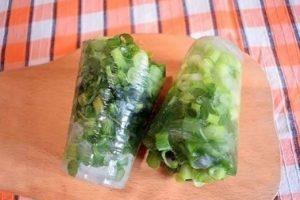
When selecting raw materials, the following rules are followed:
- blades with mechanical damage and stains are rejected;
- to disinfect (get rid of germs), soak in a weak solution of baking soda and then rinse in running water;
- discard in a sieve and dry on a piece of cloth;
- the ends are cut off on both sides.

Preparation carried out in this way eliminates further spoilage of the product and increases its nutritional value.
Preparing the refrigerator
All modern refrigerators and freezers have a dedicated button for super freezing. This function produces frozen products of comparable quality to commercially available frozen products. It allows for rapid cooling and freezing of vegetables, ensuring the preservation of all their nutritional properties. If the beans weigh more than 2 kg, the flash freeze function should be activated approximately 3-4 hours before placing the beans in the refrigerator.
How to properly freeze beans at home
What you definitely shouldn't do is dump all your beans into one large bag and refrigerate them. You'll likely never want to use such a bag in the winter. It's better to take the time to freeze them properly. The time spent preparing them will be recouped later when cooking. Preparing any dish (soup, stew, warm salad) from frozen beans is very quick.

A quick way to freeze raw beans
The fastest way to freeze beans is fresh. They need to be picked, sorted, and prepared according to the rules described above. While the beans are drying, work on the refrigerator. If it has a quick-freeze compartment, empty it. If not, prepare another compartment.
There should be enough space to place a cutting board, tray, and baking sheet with beans on the shelf.
Clean, dried beans should be poured in a single layer onto a prepared tray, which is best lined with cling film, and then placed in a quick freeze for several hours.
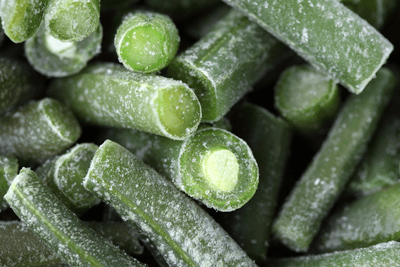
To keep frozen pods intact, they are placed in individual bags (containers), tightly tied, and each bag is labeled with a piece of paper with the freezing date. They are placed in the compartment where vegetables, herbs, and fruits are stored.
Boiled beans
Freezing pre-cooked beans speeds up cooking. Thawed beans can be used in a salad, or lightly fried to make a ready-made side dish for meat. Cooking time is quick.

Bring a large pot of water to a boil, add a pinch of salt, and drop in the clean, sliced beans. Cook until tender, at least 15 minutes. Drain the beans through a colander. Let them sit in the colander for a while to allow the water to drain completely.

Once dry, separate the beans into bags (containers). Distribute the beans in optimal portions. It's best to use just enough beans in one bag to prepare one dish.
Blanched beans
Blanching beans has its advantages. This preserves the vibrant color of the beans, which is especially valuable when preparing holiday dishes. Blanching beans is best done in a colander. You'll need two large saucepans. Bring one to a boil, and add cold water to the other. Dip the colander with the beans in the boiling water for 3-4 minutes, remove, and place in a container of cold water.

After blanching, drain and dry the beans. The finished pods can be flash-frozen on a tray or portioned into bags or containers and placed in the freezer.
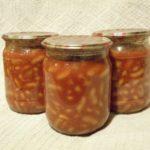
Canned beans
It's okay if you're short on freezer space and have a plentiful supply of green beans. Not all of their beneficial and nutritious properties are lost during canning.
Canned food has its advantages:
- stored for a long time;
- delicious;
- do not require additional processing before use.
You can marinate them alone bean pods Or make a vegetable platter. Korean-style carrot preserves are very popular among housewives. Green beans preserved in tomato juice or with celery are also delicious.

For those who avoid vinegar-based preserves, tomato juice is a solution. It's a good preservative and also has beneficial properties. Heat-treated tomatoes are equally beneficial for both men and women. For canning, in addition to vegetables, you'll need small jars with screw-on lids.
Freezing soaked beans
The vegetable variety of the crop contains tough fibers in its pods, so the beans are peeled. Only the beans are used for cooking. Cooking them thoroughly takes a long time. To speed up the process, the beans are soaked for several hours.


As beans absorb water, they swell, increasing in size. They cook much faster. Soaked beans can be frozen without losing their nutritional value. Many cooks boil large quantities of beans at once, cool them, portion them, pack them into bags, and freeze them. If needed, they can use the frozen pre-cooked beans to prepare any dish (borscht, side dish, salad).
How long and how to store frozen food
Storage in the freezer has certain regulations. Every food product has its own shelf life, and frozen beans have a shelf life of 6 months. You can use the product after this date if the following conditions are met:
- the temperature in the freezer compartment is -18 °C and below;
- the product is prepared correctly;
- the packaging is sealed;
- the product was not thawed during storage.

Defrosting rules
To prepare a hot dish, beans don't need to be defrosted. Simply remove the bag (or container) of frozen beans from the freezer compartment and pour the desired amount onto the dish. Immediately return any unused beans to the refrigerator.
Use the pods as directed:
- to prepare a warm salad, boil until done;
- season vegetable (meat) soup;
- fry with onions and spices to prepare a side dish;
- stew with vegetables or add to already fried (stewed) meat.
Freezing beans isn't a labor-intensive process. All the methods described require minimal time, saving you a significant amount of time during the winter when preparing delicious, healthy dishes.
Related posts:
 Description of the 90 best varieties of beans for open ground with names
 Description and properties of the 50 best varieties of asparagus beans, benefits and harms
 How and where beans grow, planting and care rules in open ground
 Recipes for pickled beans for the winter at home
 Health benefits and harms of black beans, varieties, contraindications, and recipes
 The benefits and harms of red beans for the human body: for women, men, and children
 The best recipes for pickled beans in jars for the winter are so good you'll lick your fingers.
 Recipes for making pickled green beans for the winter at home