
- Can green and onion be frozen for the winter?
- The subtleties of freezing
- How to choose and prepare the product correctly
- Preparing the refrigerator before starting the process
- Methods for freezing onions at home
- In general
- Shredded in bags
- Fried in oil
- In ice cube trays
- In a plastic bottle
- How long can frozen onions be stored in the freezer?
- How to properly defrost and use onions
Green onion lovers try various methods to preserve them for as long as possible and delight their family with fresh salads during the winter. The best way is to freeze them, especially if you have a freezer. Here's how to properly freeze onions for the winter to preserve the maximum amount of vitamins and nutrients. Freezing methods depend on the dishes they will be used in during the winter. Freezing can be used anywhere.
It's ideal for soups, side dishes, stews, omelets, puddings, pie fillings, and much more. It retains virtually no flavor or color.
Can green and onion be frozen for the winter?
Frozen onions have a number of advantages, namely:
- Blast freezing preserves virtually all of the vitamins in a product. No other method of preserving can match this. To prepare frozen food, you need a dedicated freezer, dedicated entirely to preserving fruits and vegetables. The temperature in a freezer is lower than in a refrigerator. The only drawback is that foods lose vitamin C when exposed to low temperatures, air, or metal objects. This is important to keep in mind during preparation.
- If you follow all freezing guidelines, the product will taste as if it were just picked from the garden. It will retain its vibrant color, flavor, and consistency.
- The procedure requires minimal time and effort, making it ideal for busy homemakers.
The subtleties of freezing
Before freezing, it is important to ensure that your freezer can maintain low temperatures.
For freezing, use thick plastic bags, resealable bags, and plastic containers with lids. Rectangular containers are best, as they save space in the freezer. They can easily be stacked on top of each other. To prevent greens from freezing and spoiling, seal the containers with airtight lids.
It is important to freeze in small portions so that you can use it all at once.

You can preserve both green and onion-shaped onions. The methods for preserving them are virtually identical. However, green onions are used more often, as they are exorbitantly priced in supermarkets during the winter.
How to choose and prepare the product correctly
For this preparation, use fresh, brightly colored onions. You can use either the greens or the white part. The white part of the onion contains the most nutrients. The vitamin content decreases as you move toward the top.
Take a look Also
The light color of the onion means that it has already lost half of its nutrients.
It's best to freeze greens immediately after cutting. If the leaves have been cut for three days, they won't be as vitamin-rich.
During dry weather, onion beds require daily watering. Only then will the greens remain lush.
Preparing the refrigerator before starting the process
The refrigerator or freezer must be properly prepared before storing fruits and vegetables in the fall.
Last year's frozen food should be reviewed and removed from the freezer. Some may have already passed their expiration date. If there is snow or ice, unplug the refrigerator and defrost it. Ideally, let it sit unplugged for three days.
After completely defrosting, rinse the surface and containers with warm water and baking soda. Wipe dry with a cotton cloth.
Make sure the temperature in the freezer is above 18 degrees Celsius (65 degrees Fahrenheit). This is the temperature required to preserve frozen fruits and vegetables. After a few days, turn the freezer on and wait until the desired temperature is reached. The next step is freezing.
It is important to maintain the correct proximity of products. Meat and fish products should be stored separately from fruits and vegetables. Vegetables and fruits should also be stored on separate shelves. This will allow you to quickly find what you're storing during the winter.
It is important to put the date and year of freezing on each package and bag.
Methods for freezing onions at home
There are different Recipes for preparing onions for the winterFrozen onions should only be used as an additive to dishes, not as a separate ingredient.
In general
You can freeze fresh onions whole in the freezer.
Method of preparation:
- For harvesting, you'll need fresh onion leaves or stems. It's important to harvest the greens immediately after cutting or within 24 hours.
- Peel the onion, removing any remaining old bulbs and trimming the roots. Inspect thoroughly, trimming off any dried or discolored stems.
- Rinse thoroughly under running water.
- Place on a cloth and cover with a towel to absorb excess liquid. Wait until the herbs are completely dry.
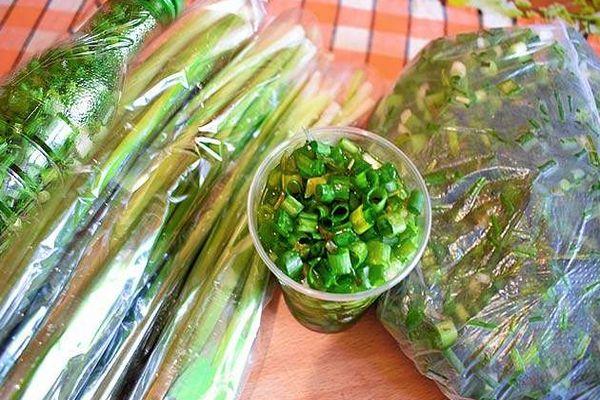
- Place the stems in a bundle and wrap them in a plastic bag. For convenience, you can cut the stems slightly smaller than the width of the bag.
- Place compactly and wrap. It is important to protect the workpiece from contact with air.
- Place on the freezer shelf.
- Another way: spread the greens on a plate and freeze, then package them in bags.
Shredded in bags
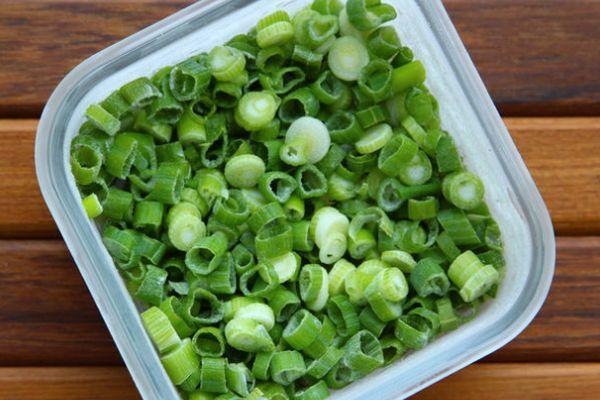
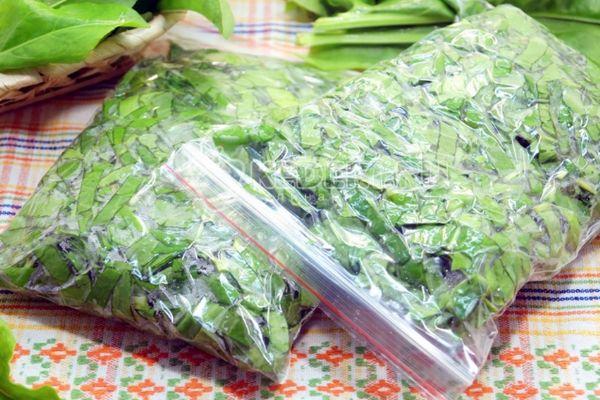
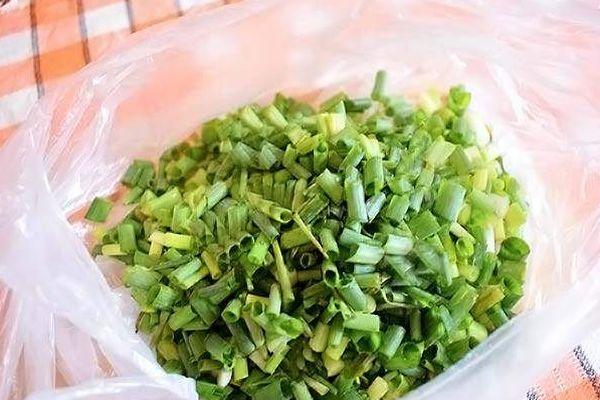
Convenient to freeze and store onions Shredded in thick plastic bags. This method is used most often. It's quick to prepare and convenient to use while cooking.

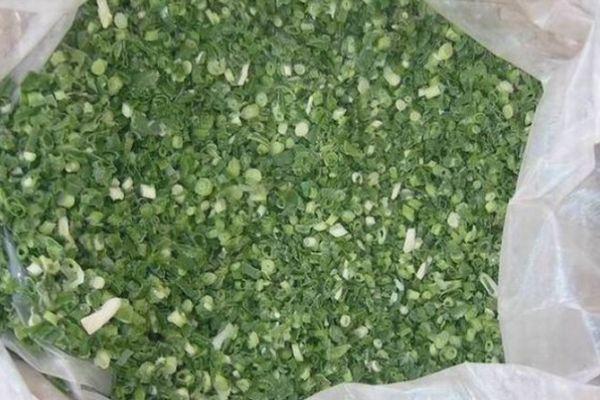
Method of preparation of the workpiece:
- Cut juicy, fresh onion stalks. If you don't have any, buy some at the market. It's a good idea to ask where they were grown.
- Sort and remove dried feathers and cut off the tips.
- Rinse well under running water to remove dust and other contaminants.
- Lay it out on a towel and let it dry. You can cover it with another towel and blot it dry.
- When the onion is dry and there is no water on it, you can start chopping.
- Use a sharp knife to cut the meat into pieces that are easy to use when preparing your masterpieces.
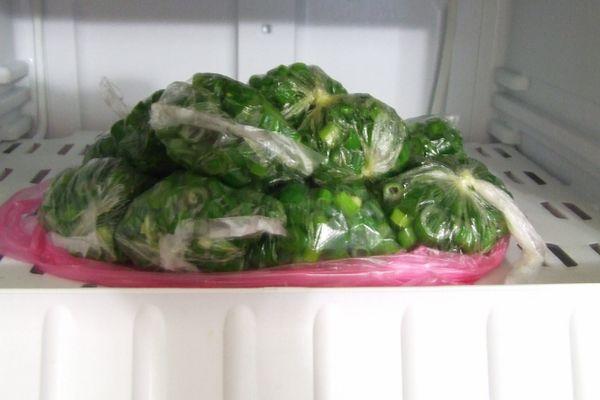
- Pre-chilling is an important step. The onions should be laid out in a single layer on a plate and placed in a quick-freeze freezer. This ensures they retain all their nutrients and remain crisp. To prevent them from sticking, cover the plate with plastic wrap. If you immediately place them in a bag and freeze them, they may freeze in a solid lump. This will make cooking difficult, as you'll need to break off a chunk, which is difficult.
- After this, pour the mixture into bags or containers. It's easier to divide it into portions so you can use one bag at a time. Refreezing the product is not recommended, as this will result in a loss of its medicinal properties. Onions are an excellent preventative for colds and viral illnesses.
Fried in oil
Experienced home cooks freeze onions fried in vegetable oil. This method works best with bulb onions, but green onions can also be used.
Step-by-step instructions:
- Sort and wash the onions thoroughly. Dirt often accumulates in the junction between the onion leaves.
- Chop into the required pieces and quickly fry in sunflower oil.
- Divide into portions, you can use a silicone mold. Then let it freeze.
- When the workpiece is frozen, remove the mold and place the workpieces in the bag on the shelf.
- Add when preparing soups, gravies, appetizers and side dishes.
In ice cube trays
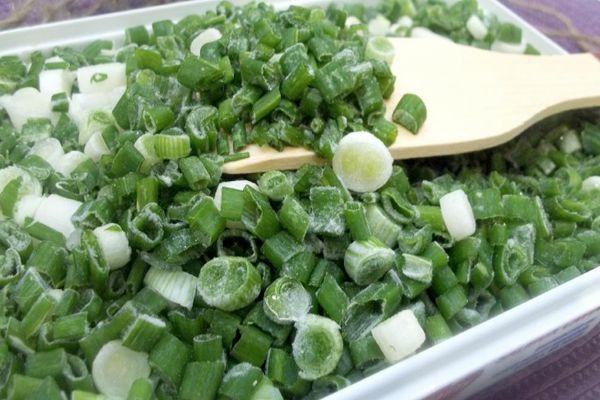
This recipe involves freezing onions along with water. It's used in preparing liquid dishes and side dishes.

Method of preparation:
- Carefully sort through fresh herbs, remove any damaged or dried parts, and rinse.
- Place on a clean cloth and cover with a towel or napkin.
- Finely chop the herbs with a knife.
- Spread evenly into the moulds and press lightly with your fingers.
- Fill the molds to the brim with clean boiled water. Place in the maximum freezer compartment.
- After 24 hours, remove the blanks from the mold and place them compactly in a suitable one.
- Place in the freezer compartment.
In a plastic bottle
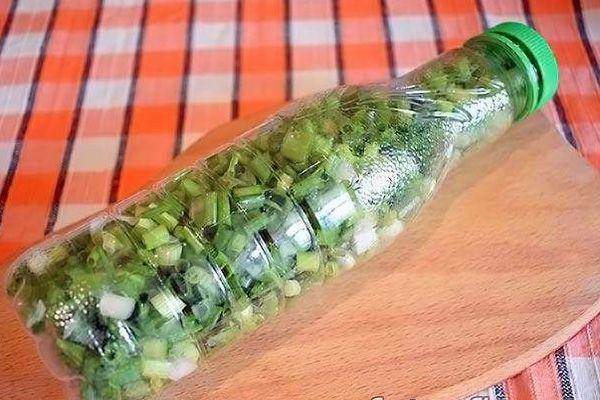
Freezing onions quickly and easily is done in a plastic bottle. The convenient and practical container ensures long-lasting storage. A wide-mouthed 500 ml container is recommended.

Wash and dry the onion and chop it finely. You can use a food processor. Rinse and dry the bottle first. Both the onion and the bottle should be dry; this will ensure the onion is crumbly and easy to remove from the bottle.
Fill the bottle to the top with onions. Screw on the lid and store in the freezer.
To pamper your family and friends with fresh herbs in winter, you need to take care of your supplies in the autumn and summer.
How long can frozen onions be stored in the freezer?
Storage time depends on compliance with all rules and temperature conditions.
If the storage temperature is between 0 and 7 degrees Celsius, onions can be stored for up to three months. At temperatures below 18 degrees Celsius, the shelf life is 10 months.
Storage beyond the stated period will result in loss of taste and smell.
At the end of winter, onions can be grown on a windowsill, so frozen preparations will not be as relevant.
How to properly defrost and use onions
Once frozen, the product is used in the same way as fresh. It can be used to prepare all the same dishes.
Not recommended for fresh vegetable salads. Pairs well with sauerkraut and grapes.
When making omelets, stews, pâtés, and sauces, onions should be frozen loose. They're easier to use and don't require defrosting before cooking.
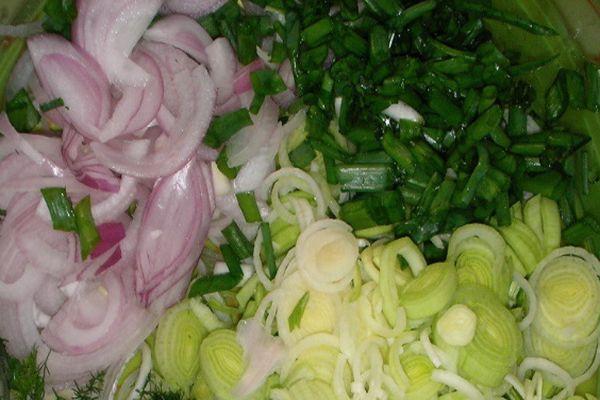
For soups, borscht, and main courses, freezing in ramekins filled with water is ideal. The frozen portions can be added directly to the finished dish without defrosting.
Onions with added butter go well with potatoes, side dishes and hot dishes.
Whole frozen meat can be defrosted by placing it on the top shelf of the refrigerator. After a few hours, remove it and slice it. Just be sure not to let it defrost completely, as this can result in a soft and watery mess.
You need to pour a small amount of onion out of the bottle and immediately put the container back.
Related posts:
 50 types and varieties of perennial onions with descriptions, cultivation, and care
 When to harvest leeks from the garden for storage, ripening times
 How and when to plant onions to get large bulbs
 Description of the best varieties of onions, planting and care in open ground
 Description of the Exhibition onion variety, growing from seedlings, planting and care
 The beneficial properties of white onions, description of varieties, cultivation and care
 Description of varieties and cultivars of wild onions, the subtleties of cultivation
 Description of Welsh onion varieties, planting, growing, and care in open ground