
- Where it grows
- Ripening time
- Regional features
- In the south
- Middle zone
- Cleaning rules
- Full ripening
- We use a pitchfork
- Hilling up bushes
- Cleaning times
- Ventilation
- Storage methods
- In the cellar
- In the refrigerator
- Drying method
- Salting
- Recipe #1 - Pickled Leeks
- Recipe #2 – Canned Leeks
- In the garden bed
- Freezer
- Glazed balcony
- In the garage
- Benefits and harms
- Reviews
- Recommended varieties for storage
Leeks are quite an interesting crop. They look like regular onions: they have a bulb, a stem, and a root. In fact, the bulb is a false leg, the stem is not hollow like a turnip, and leeks are stored differently. This garden crop also has its own unique cultivation methods, with its own tricks for achieving high yields. Knowing when to harvest leeks and how to store them is worthwhile before planting.
Where it grows
The taste and yield of leeks depend on weather conditions and the timing of harvesting. Leeks typically have a sweet, non-bitter flavor, but if harvested late, they can lose many of their beneficial nutrients.
Until recently, gardeners hadn't even encountered this giant, but after it became a staple, they began cultivating it intensively. Through trial and error, they're now able to grow enormous fruits.
Leeks are heat-loving plants, and their ripening period is quite long, so they need to be grown from seedlings.
Now, gardeners in almost every garden plot are productively growing white onion stalks and using them all winter long. Leek cultivation can be observed in all regions of the country: in the south, in the central part, and in the northwestern regions. Siberia's harsh climate negatively impacts harvests, but gardeners remain resilient and grow early varieties.
Ripening time
Ripening times depend on the variety. In crop production, early, mid-season, and late varieties are distinguished. Each variety has a different ripening time:
- early varieties - 130-150 days after sowing;
- medium varieties - 150-180 days;
- late varieties - more than 180 days.

Harvesting of early-ripening varieties begins as early as August, mid-season varieties in September, and late-ripening ones are dug up in November. Early onions do not store well and are usually eaten or canned immediately. Late-ripening leeks store best. In some regions of southern Russia, harvesting begins in December.
Regional features
Given the climatic characteristics of each region of Russia, leeks are grown from seedlings or from seeds in open ground. For example, in the south of the country, with its relatively warm climate, long growing season, and stable air humidity, leeks can be grown from seeds, but closer to the Urals, this method is unacceptable. When should leeks be planted and harvested in different regions?
In the south
In southern regions, the soil warms up as early as late March or early April, which is favorable for leeks. Seeds can be sown in pre-prepared beds in late April or early May.
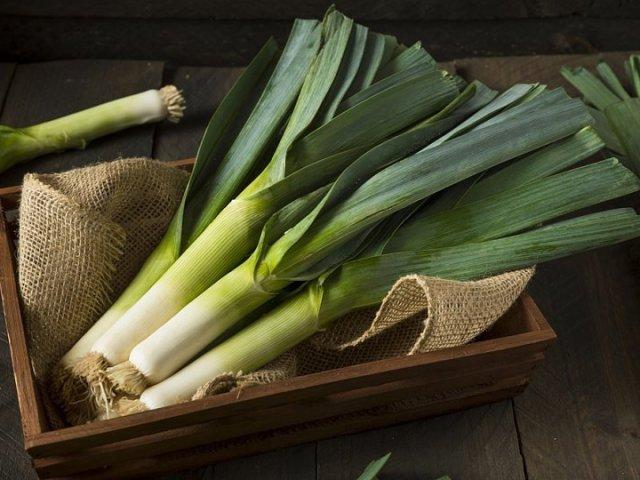
The average growing season for all varieties ranges from 120 to 180 days or more. In southern regions, even if planted in April, harvesting can begin in late October or early November. If sowing is delayed, harvesting can continue into December. In these regions, late autumn is characterized by high daytime temperatures and nighttime temperatures down to -6°C (6°F), which is not harmful to leeks. At these temperatures, they continue to grow their false bulblets.
Middle zone
Things are a bit different with onions here. As early as October, nighttime temperatures drop to -10 degrees Celsius, and daytime temperatures are also variable. Autumn is characterized by prolonged torrential rains, and in late autumn, subzero temperatures can regularly set in.
Given these weather conditions, to ensure full ripening of the leeks, they are grown from seedlings and harvested in late August. Late-season varieties are left over the winter.
Seedlings are sown in late March. Germination takes two weeks. As soon as the snow melts and severe night frosts have passed, the seedlings are planted outdoors. Harvesting timing depends on the autumn weather. The longer the onions remain in the ground, the juicier and more nutritious the harvest will be.
 Important! Leeks can withstand temperatures down to -12 degrees Celsius. Plan your harvesting time accordingly.
Cleaning rules
Onion harvesting is a modified bulb, or "white stem," as the fruit is commonly known. Harvesting must be done according to specific guidelines, which will determine the shelf life of the onion.

Full ripening
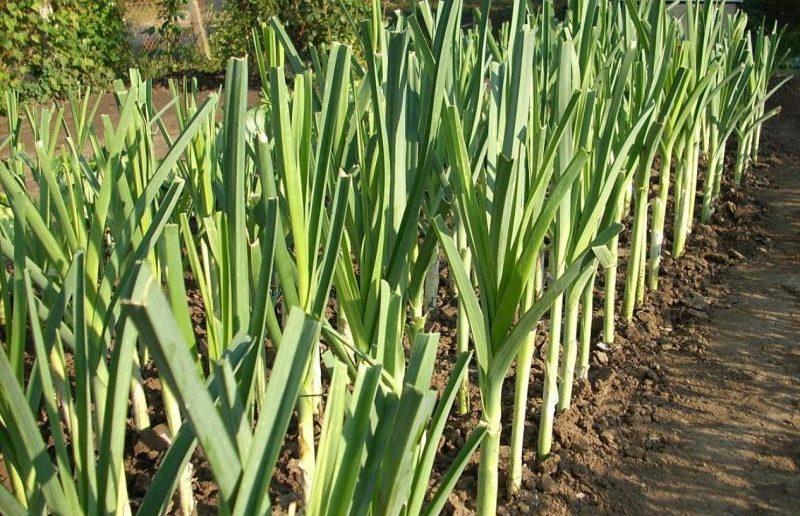
The longer the onion, the better the leek. Some varieties reach 70-centimeter (28-inch) in length. This is achieved by hilling the onions several times during the season. Once the onions are ripe, they are ready for harvesting.
This is determined by raking away the soil. If the soil applied to the onion is slightly pushed back, revealing a thickened, white stem, the vegetable is ripe and can be dug out. Also, pay attention to the foliage; it should be slightly drooping and wilted, but not yellowed. Only the lower leaves should be yellow.

We use a pitchfork
Gardeners often use a pitchfork because it causes less damage to the onion than a shovel. Digging with a shovel completely cuts the onion. This allows the cut portion to be eaten after peeling. A pitchfork is a different matter. Thin twigs can only pierce the onion. After peeling, the onion remains edible immediately.
Hilling up bushes
This procedure is performed a couple of days before the extraction. This allows the foot to dry naturally.
Cleaning times
Harvesting timing depends on the onion's full maturity. Generally, onion harvesting can begin in August and continue until the end of November, temperature permitting. During particularly rainy autumns, it's best to wait until dry weather sets in. It's recommended to harvest leeks before severe frosts set in. The critical temperature is -5°C (23°F).
Ventilation
After the onions are dug up, they are laid out on the bed to air out the soil. This will help remove soil from the roots and corms. This applies to onions dug up in damp weather.
Important! Avoid ventilation in cloudy weather. The entire leek harvest should be harvested at once to ensure proper storage. Store each harvested batch separately.
Storage methods
Don't remove all the foliage from the harvested onion crop. A portion of the foliage, approximately 7 cm after the white stem, should be retained. This ensures long-lasting shelf life and ensures the onions retain nutrients during storage.
In the cellar
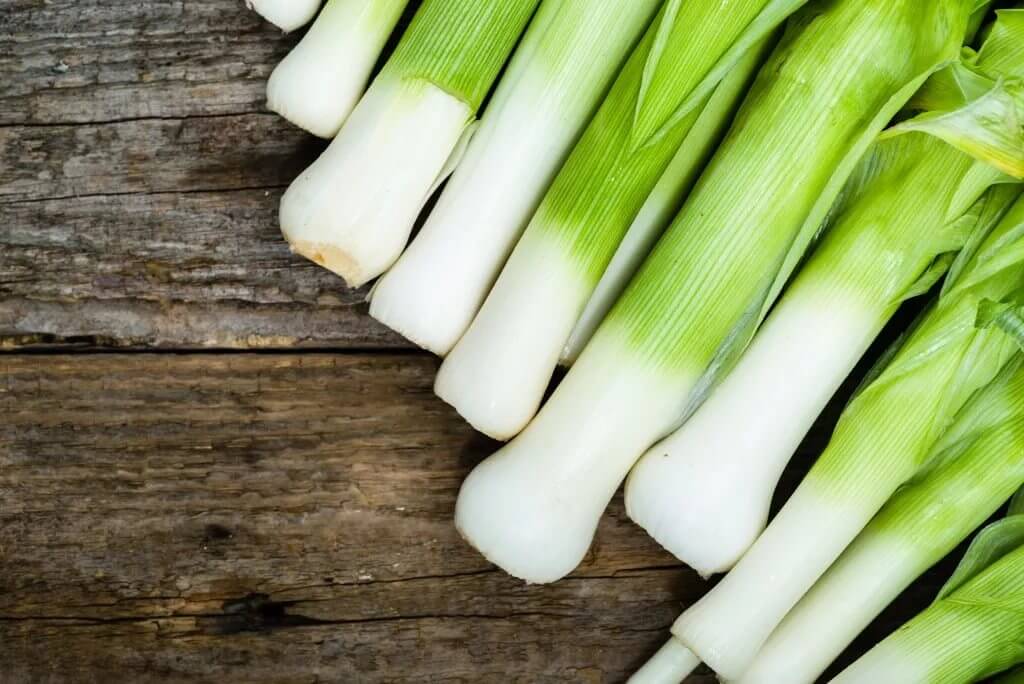
When storing leeks, make sure they're well-dried. In dry weather, dry them outdoors for a week, and in cloudy weather, dry them indoors for two weeks. Next, trim the roots, leaving the base and 1 cm of root hairs intact.
How to store leeks in a cellar:
- Fill wooden or plastic boxes with sand. The layer should be 2-3 cm thick.
- The sand must be calcined in the oven.
- Place white legs on the sand and fill the space with the same substrate, covering the entire light part.
- Ensure humidity in the cellar is 65%.
Stored vegetables should be inspected periodically. If any onions are damaged, they should be discarded.

In the refrigerator
Leeks can be stored in the refrigerator for up to 5 months. To do this, thoroughly remove the soil from the white parts of the leeks and rinse them under cold running water. Trim off the root ends and wrap them in plastic wrap or place them in plastic bags. Place these bags in the vegetable storage compartment.
If the green onions are juicy and have few wilted leaves, don't throw them away after trimming them. Carefully sort through the individual leaves, rinse them, and store them with the leeks. However, they should be consumed as quickly as possible; otherwise, high humidity will cause them to become slimy and unusable.
Important! The bag must be perforated to allow the product to ventilate.
Drying method
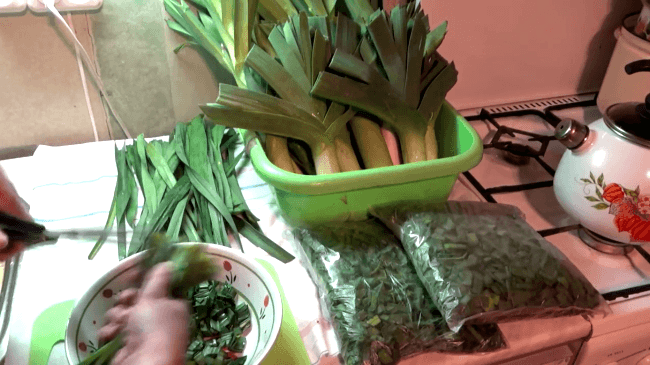
Today, housewives have all the household appliances they need to make their work easier. This includes electric dehydrators, a device that allows you to preserve vegetables, fruits, and berries for future use. Leeks can also be dried using this appliance:
- The leeks are washed thoroughly.
- The legs are cut into rings 1.5 cm wide. The leaves are cut into thin slices.
- Place the sliced onions on baking sheets and leave to dry for 4-6 hours at a temperature of 40 degrees.
If you don't have an electric oven, you can dry the onions in an oven with the door slightly ajar at 50 degrees Celsius (122 degrees Fahrenheit). Line the leaves with parchment paper and arrange the sliced onions in a single layer. Dry until tender. After drying, leave the onions in the open air for two hours to allow any remaining moisture to evaporate.

Store dried leeks in a glass container with a loose-fitting lid, away from direct sunlight. Dried leeks will keep for about 12 months.
Salting
Canning or pickling allows you to preserve foods for a long time. Leeks can be pickled in several ways.
Recipe #1 - Pickled Leeks
You will need the following set of products:
- water - 1 l;
- sugar - 100 g;
- salt - 50 g;
- peeled white onion stems;
- vinegar - 100 ml.
Method of preparation:
- Cut the white flesh of the onion into rings of any thickness, preferably up to 2.5 cm.
- Blanch the chopped vegetables for 1 minute in boiling water.
- Place the product in sterile 0.5 l jars.
- Add the remaining ingredients to the water in which the onions were blanched and boil for 5 minutes.
- Pour the brine over the onions so that it reaches only the shoulders of the jar.
- Seal tightly and turn upside down until cool. Cover with a blanket or warm cloth.

Such stocks can be consumed over a long period of time as an individual dish, and can also be added to sauces, salads, and soups.
Recipe #2 – Canned Leeks
Ingredients:
- water - 250 ml (1 glass);
- honey - 150 g;
- vinegar - 100 ml;
- chili pepper or other hot pepper - 2 pcs.;
- bay leaf to taste;
- salt - 1 tsp;
- leeks - 2 kg.
Cooking procedure:
- The onion is peeled, washed and cut into rings.
- Combine the remaining ingredients in a small saucepan and simmer for 5 minutes from the moment it comes to a boil. This makes the marinade.
- Pour the marinade over the chopped onion and leave for 12 hours.
- After the time has elapsed, the mixture is boiled and filled into sterile jars.
- They screw on the lids.

You can store such delicacies in the refrigerator, in the cellar, in the basement, that is, in a place where it is dark and cool.
In the garden bed
Since the plant is biennial, if the harvest is abundant, a couple of plants can be left in the garden bed. This is how leek seeds are harvested.
Important! To obtain seed material, only cultivar onions should be left; they retain all their characteristics. Hybrid onions in this case are not suitable for storage in the garden bed for seed ripening..
Freezer
This is perhaps the easiest way to store leeks, especially since they don't lose their nutritional value. If you have a bountiful harvest and a freezer, you can dedicate an entire compartment to them. White onions are cut into small pieces (rings, half rings), or they can be left whole. Place them in plastic containers or wrap them in cling film. Place them in the freezer. The container should be large enough to avoid having to refreeze the onions, which they don't like.

The leaves can also be frozen. Grind them and mix them with salt. The resulting puree is packaged in zip-lock bags or containers and frozen. The puree can be placed in jars and kept in the refrigerator door for a couple of days.
Glazed balcony
This method is used by people who don't have a cellar or garage, but do have a balcony. The onion stalks are placed in cardboard boxes or wooden crates and sprinkled with dry sand. Any available container will do: buckets, plastic crates, or bathtubs.
Cover the container with onions with an old rag. If the balcony isn't glazed, don't cover the onions with sand. It's better to layer them in boxes. While the onions will freeze during winter storage, they remain tasty and nutritious.

In the garage
In a garage, onions are stored in a similar way to a cellar. The vegetables are placed in boxes and covered with sand. If the garage is unheated, the boxes containing the onions are covered with old rags.
Benefits and harms
It's worth noting that leeks are several times more nutritious than onions and green onions. Eating them can help relieve a number of ailments:
- The sulfur contained in leeks actively heals bones and joints.
- Active iron regulates the level of hemoglobin in the blood and prevents the development of anemia.
- Leeks help normalize intestinal microflora.
- Normalizes cholesterol levels and fights the appearance of cholesterol plaques.
- Onions are used to prevent colds and viral diseases.
- Improves vision.
- Prevents the formation of tumors of various origins.
In addition, its diuretic properties are noted. Onions act as a natural adsorbent, capable of removing waste and toxins.

It's important to remember that this product isn't beneficial for everyone. Those with serious intestinal and stomach conditions should avoid onions, or only include them in cooked form. They should also be avoided if you have low blood sugar, as they lower blood sugar even more.
Reviews
Valentina Ivanovna Shilyaeva, Barnaul: "I've been growing leeks for several years. I prefer the Winter Giant variety. It produces well here in Siberia. I start sowing seedlings around the twenties of February. I have my own sowing method: I put a layer of chopped straw or grass hay at the bottom of each box. This provides a lot of drainage as the seedlings grow.

I place the seedling trays in the greenhouse in early March. If the temperature drops at night, I cover the seedlings, as there's no heating in the greenhouse. A kind of mulch also provides warmth from below. I plant them in the open ground in mid-April. I start harvesting in October. I dig up the onions, dry them, tie them into bunches, and hang them in the greenhouse. We have frosts here in winter, sometimes down to -30 degrees Celsius. The onions freeze, of course, but they thaw quickly at home. The fruits retain their juiciness and vitamin reserves.

Raisa Vasilyevna Chupina, Smolensk: "I'd like to share how I store onions. When I bring onions home from the dacha, I pour them into the bathtub and thoroughly bathe them. I rinse all the leaf axils and roots. I rinse them in clean water. Then I trim the roots, leaving only the bare base. I trim the leaves and dry them in the oven. I cut the onions into rings and mix them with salt in a large bowl. Then I arrange them in small jars, which I store on the balcony or in the refrigerator. These onions go well in soups, main courses, and sauces."
Recommended varieties for storage
All onion varieties are classified by ripening time. When choosing onions for your region, consider the climate.
| Name of the variety | Length of white part, cm | Ripening period, days | Care | Usage | Diameter, weight |
| Early ripening | |||||
| Goliath | 25-30 | 130-150 | The variety requires hilling and treatment against diseases and pests. | Fresh or dried | 6 cm, 500 g |
| Kilima, a Dutch variety | 10-12 | 157-160 | The variety is undemanding | Universal | 5-6 cm, 50-150 g |
| Columbus, a Dutch variety | 20 | 85-90 | The variety does not require hilling. | Universal | 6 cm, 400 g |
| Vesta, a Russian variety | 48-53 | 120 | Grown from seedlings, requires frequent hilling | For salad purposes | 2-3 cm, 250 g |
| Mid-season | |||||
| Tango | 15 | 115-125 | Sow in open ground in May, for seedlings in March, requires hilling and fertilizing | Universal | 5 cm, 200-250 g |
| Casimir, a German variety | 25-30 | 180 | Prefers abundant watering and seasonal fertilizing, grown from seedlings | For drying and fresh | 5 cm |
| Bastion | 30-35 | 150-160 | Grown from seedlings, requires 2-3 hillings per season | Universal | 3-5 cm, 130-200 g |
| Piccolo | 18 | 150-180 | Undemanding | Universal | 3.5 cm, 400 g |
| Asgeas, a Russian variety | 17 | 150-180 | The variety does not require hilling. | Dried, canned and fresh | 4 cm, 400 g |
| Kamus, a Czech variety | 18 | 110 | Easy to care for | For salads and fresh | 2 cm, 200 g |
| Prime Minister | 25 | More than 180 | Grown from seedlings, requires 2-3 hillings per season | Universal | 6 cm, 450 g |
| Late-ripening | |||||
| Mercury | 20-25 | 190-200 | The variety is demanding in terms of care. | Universal | 150-200 g |
| Bulgarian giant | 45 | 130-140 | Grown from seedlings, requires hilling to a depth of 25 cm | Fresh and in cooking | 4-5 cm, 400 g |
| Autumn Giant, a Dutch variety | 30-40 | Up to 200 | Demanding to agricultural technology: frequent watering, 3 hillings, seasonal fertilizing | For long-term storage, almost until spring | 8 cm, 500 g |
| Elephant, a Czech variety | 20 | 140-160 | The variety is undemanding to moisture and frost-resistant. | Universal | 5 cm, 300 g |
| Carantanian | 15-25 | 125-200 | The variety is demanding in terms of hilling. | In dried form, for canning and long-term storage | 4 cm, 200-320 g |
Before choosing a leek variety for your garden, you should carefully study the care requirements, as well as the growing conditions.
Leeks, or pearl onions, have become increasingly popular among many gardeners. Growing these onions is a rewarding endeavor, especially since the effort is often rewarded with a bountiful, healthy harvest that lasts a very long time under the right conditions.
Related posts:
 Description of leek varieties and features of cultivation and care in open ground
 50 types and varieties of perennial onions with descriptions, cultivation, and care
 How and when to plant onions to get large bulbs
 Description of the best varieties of onions, planting and care in open ground
 The beneficial properties of white onions, description of varieties, cultivation and care
 Description of varieties and cultivars of wild onions, the subtleties of cultivation
 Types of onion varieties with names and descriptions, their differences and cultivation
 Description of the Exhibition onion variety, growing from seedlings, planting and care
I really like this onion variety; it's not bitter and can be stored for quite a long time. Leeks can be grown not only in greenhouses but also in open ground, and they ripen quickly.