
Much has been said about how to properly store onions, but the success of this process directly depends on proper agricultural practices and the right harvesting timing. Gardeners have every opportunity to enjoy their harvest throughout the year and also prepare planting material for the next season. Onions can be stored not only in the cellar but also in a living space, provided optimal conditions are created.
When to stop watering onions
To preserve your onion harvest as long as possible, you need to properly care for it throughout the season and stop watering it in time. A couple of months after planting, the plants stop growing, and sucrose and other nutrients begin to actively accumulate in the bulbs. Irrigation is no longer necessary at this time, as excess moisture will only delay the ripening of the bulbs. Even varieties with excellent shelf life should be completely watered in July.
By early July, the plant's plume falls to the ground, the scales on the bulbs dry, and turn golden. This indicates that the bulbs are ripening. According to folk customs, watering onion beds is stopped on the feast of Peter and Paul, which is celebrated on July 12. If rainy weather sets in or you continue to irrigate the beds, it will be difficult to preserve the onion harvest at home.
When to harvest onions from the garden
Time onion harvesting This should coincide with the period when the plant enters dormancy. The scales should be dense and dry to prevent pathogenic bacteria and fungi from penetrating, and to prevent sap from evaporating.
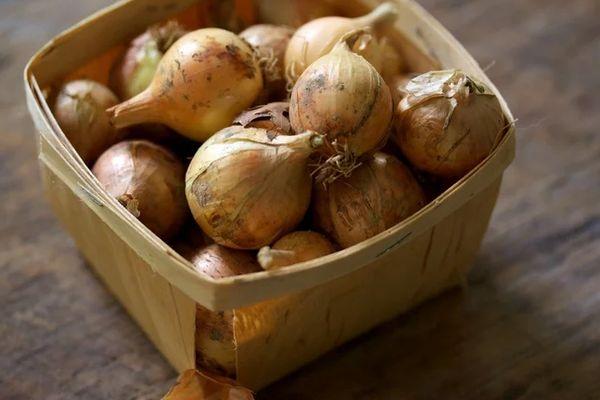
Harvest times vary significantly by region. They are also heavily dependent on weather conditions. Generally, the harvest period begins in late July and continues until September. The plant's growing season lasts 60-135 days, but it's also worth paying attention to external signs of ripening:
- the growth of new feathers has stopped;
- the false stem has gone limp;
- the leaves turned yellow and began to dry out;
- the upper scales became golden (or another color typical for the variety) and dried out;
- feathers fell to the ground;
- the cervix has become thin or completely dried out.
When the harvest is approaching its end and the foliage is still green, dig up the bulbs with a shovel, expose the head slightly, and trim the roots with a sharp object. If you don't plan to braid the onions, then after digging, trim the tops of the onions and trim the roots with scissors.
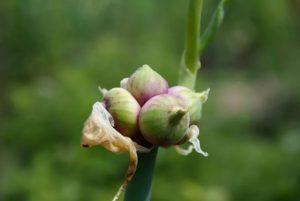
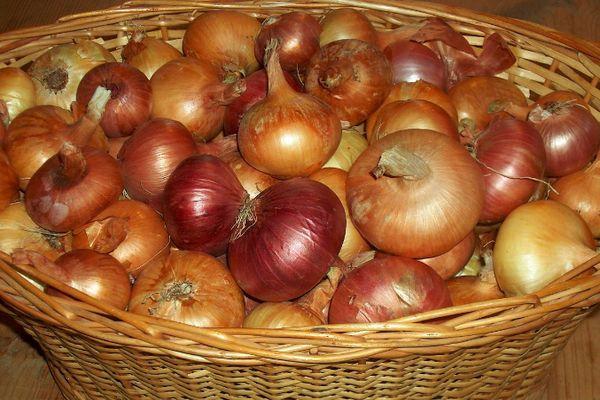
Digging and pruning
For harvesting onions, choose dry, sunny weather with no wind. Prepare a place for the harvested crop to dry (for example, a well-ventilated shed). After harvesting, remove any remaining soil. Completely dry leaves are immediately plucked or trimmed with scissors, leaving a stalk about 4 cm long. The roots also need to be trimmed to the very bottom.
If the base of the head is thick, trim the tops so that a 10 cm-long tail remains. Such specimens should be used primarily for culinary purposes and for making preserves. For weaving wreaths and braids, leave the tops untrimmed, or trim off any feathers that are too long.
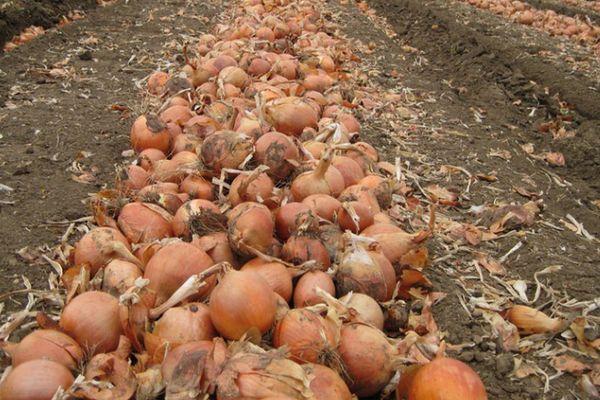
Harvesting onions during the rain
Growing and storing onions is a very laborious process, with its own nuances. In rainy weather, it's difficult to determine whether the crop is fully ripe. There's a risk that unripe onions will be mixed in with the good ones. Drying the harvest is essential in a dry, well-ventilated, and warm area. They are laid out in a single layer and turned several times a day.
If you have grown a large amount of onions and the space is small, then it is better to dry and harvest them in parts, with a short interval of time.
Clean the onions of any dirt only when they are dry and begin to fall off. If the bulbs begin to rot during drying, remove them immediately and use them for food or canning. Drying onions should take at least one week.
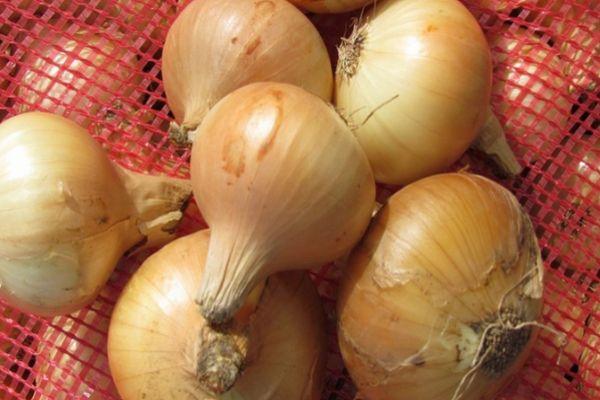
How to dry onions properly
After harvesting onions, they need to be dried to prevent neck rot and other diseases, as well as to improve shelf life. This process takes one to two weeks, depending on the initial condition of the crop. One gardener offers this advice: "After peeling the onions, I immediately lay them out on boards in the garden bed and leave them for a couple of days."
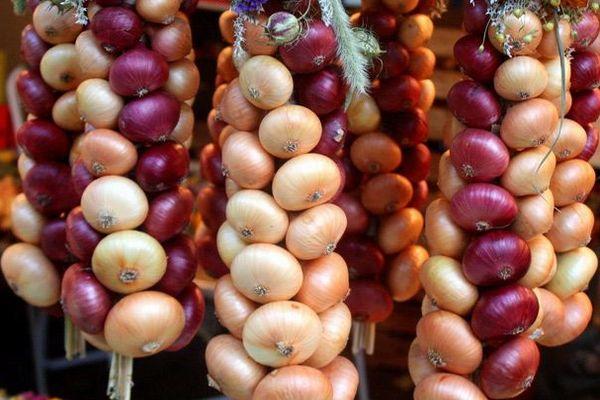
The harvested onions are placed in a well-ventilated area or under a canopy for further drying to protect them from possible precipitation. The onions should be cleaned of dirt and laid out in a single layer on a net or cloth, or hung braided. They are turned daily to ensure that all sides dry. Dry necks and roots, as well as dry scales, indicate that the harvest is completely dry and ready for storage. The peeled onions are placed in wooden boxes and stored.
How to store onions
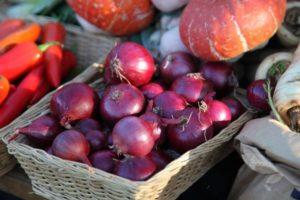
Green onions and onions with defects cannot be stored for long, so they should be used immediately for canning or other dishes. However, vegetables that have undergone all processing stages and are properly dried should be stored in good conditions for the winter to prevent spoilage and maintain their quality for as long as possible. It's best to store vegetables in a basement or brick shed, which is common in every private garden. But what if this is not possible?
In the cellar
For winter storage of onions in the basement, not only wooden crates but also wicker baskets, nets, and canvas bags are suitable. You can line shelves or racks with paper or straw, then place the onions directly on them. Keep in mind that onions require good air circulation, so don't pile them more than 50 cm thick. Otherwise, the bottom layer will rot. The bottom of the crate should never touch the floor; it should be placed on a shelf or stand.
The canvas bags should be small. The bulbs are packaged in prepared containers weighing several kilograms. Plastic bags should not be used, as they severely restrict airflow. Egg crates are also suitable as containers, but only if sufficient quantities are available.
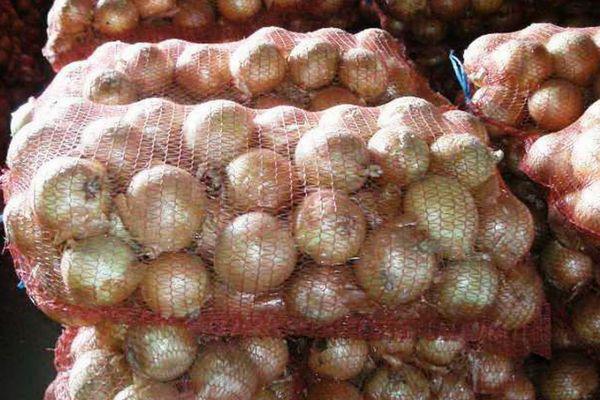
The onion storage cellar should be dry and well-ventilated. Humidity should be maintained at 80%, and the air temperature should be between 0 and 3°C. You cannot put onions in a damp basement that can be flooded. The heads will quickly begin to sprout, making them unfit for consumption. High humidity encourages fungi and rotting processes, rendering the harvest unusable.
In the apartment
It's important to not only create optimal conditions but also select the right storage containers. Airtight bags prevent air circulation, so onions quickly become damp and spoil. Even when dormant, onions breathe and release moisture. Any perforated boxes, vegetable crates, baskets, storage nets, and even women's nylon tights will do. The harvested crop is placed in boxes in a layer no thicker than 35 cm.
Take a look Also

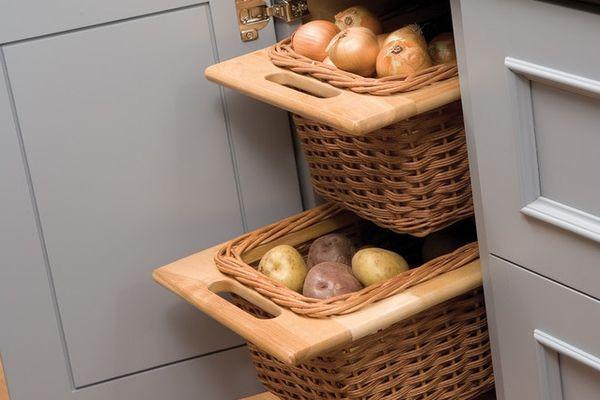
It's best to store onions near a balcony or in an unheated pantry to prevent sprouting. You can store them in a cabinet, a kitchen cupboard, or on a loft. The room temperature should not exceed 22°C. Braids of onions can be hung as interior decoration and used as needed. Sprouted onions can be grown for their leaves even in an apartment.
In the entrance and on the balcony
If the temperature is above freezing, onions can be stored in the entryway or on the balcony. They are a frost-hardy crop and can easily survive even at freezing temperatures. If there is no risk of frost, the bulbs do not require additional insulation.
When cold weather sets in, the harvest can be stored on the balcony in a special insulated vegetable box. It can be made from regular thick cardboard or a simple wooden crate. The inside is lined with insulation, such as an old coat or unwanted warm fabric. An insulated lid is placed on top. A layer of foam plastic provides additional insulation.
Iterating and saving
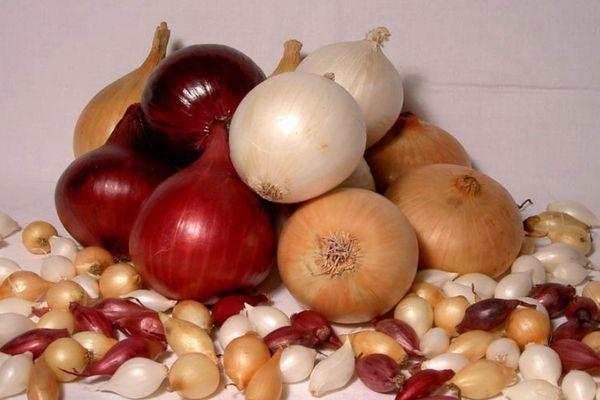
The shelf life of onions after harvest is significantly increased by regularly sorting them. This is especially important for those onions that haven't been stored in a cellar. Darkened onions are clearly beginning to rot and should be discarded immediately. Damaged onions also don't store well and are primarily eaten.
Those specimens that have begun to sprout are not suitable for further storage. They can be placed in a special container for growing greens and used for feathers.
The shelf life of onions depends not only on the varietal qualities, but also on the conditions in which the plant was grown. The heads do not lose their commercial qualities for a long time, not only if proper storage conditions are provided, but also if agricultural practices are followed.
Related posts:
 50 types and varieties of perennial onions with descriptions, cultivation, and care
 When to harvest leeks from the garden for storage, ripening times
 Description of the best varieties of onions, planting and care in open ground
 How and when to plant onions to get large bulbs
 Description of the Exhibition onion variety, growing from seedlings, planting and care
 The beneficial properties of white onions, description of varieties, cultivation and care
 Description of varieties and cultivars of wild onions, the subtleties of cultivation
 Description of Welsh onion varieties, planting, growing, and care in open ground
Onions should be stored in a dry place, otherwise they will quickly sprout and rot. I also recommend covering them with a dark cloth to keep them out of direct sunlight. This will significantly increase their shelf life.