
- General characteristics
- Description
- Taste qualities
- Composition and properties
- Culinary uses
- Use in medicine and cosmetology
- Burns
- Corns, abscesses, boils
- Lichens
- Insect bites
- Cough
- Otitis
- Joint diseases
- Contraindications
- Origin
- Varieties
- Alba
- Comet F1
- Nevada
- Toluca F1
- Stardust
- Snowball
- Southern
- Growing
- Using seeds
- Planting dates
- Site selection and preparation
- Planting diagram
- Onion sets
- Deadlines
- Warm-up
- Disinfection
- Growth stimulation
- Care
- Weeding and loosening
- Watering
- Top dressing
- Collection and storage
White onions are virtually indistinguishable from regular onions. There aren't many varieties, but they include spicy and sweet varieties, those used in salads and for canning. This color of onion originated in Asia. It's used to enhance the flavor of vegetable and meat dishes, and it's also very healthy. It's rich in vitamins and microelements essential for human health.
General characteristics
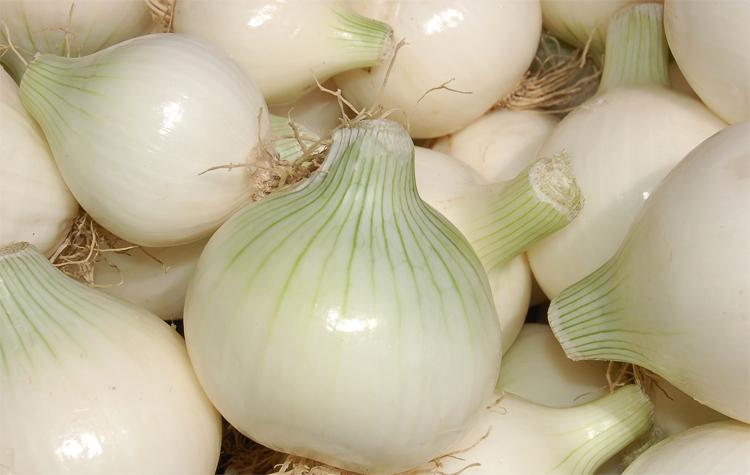
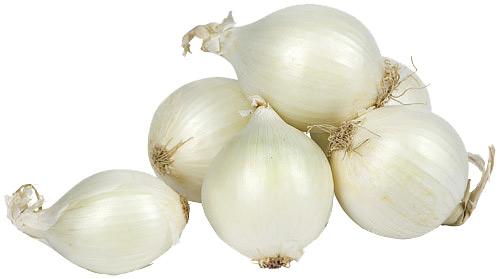
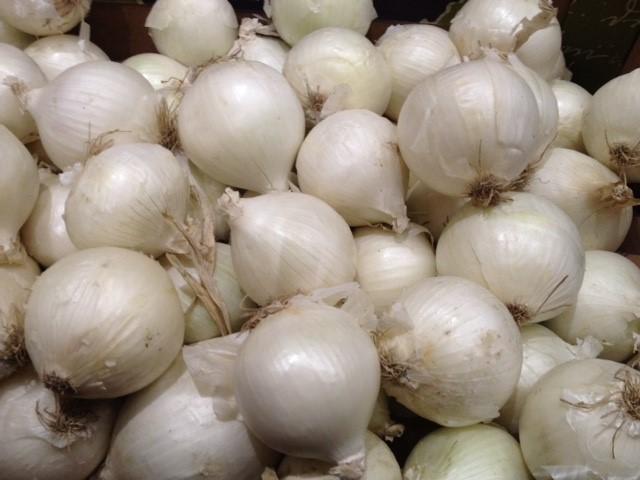
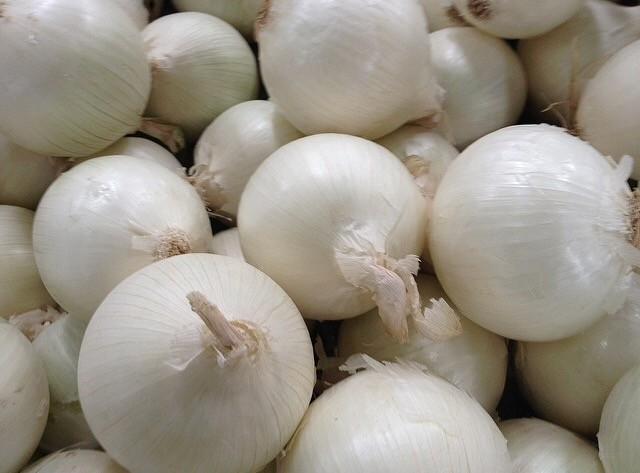
Onions have been cultivated by humans for over 5,000 years. There are three types: white, yellow, and purple or red. The other known varieties are merely subspecies and cultivars of existing ones. White onions differ from their relatives in their short shelf life, sweet flavor, and smooth shape. They are slightly heavier, more aromatic, and lack the pungent bitterness of turnips. These are the differences between white onions and other colored onions.
Description
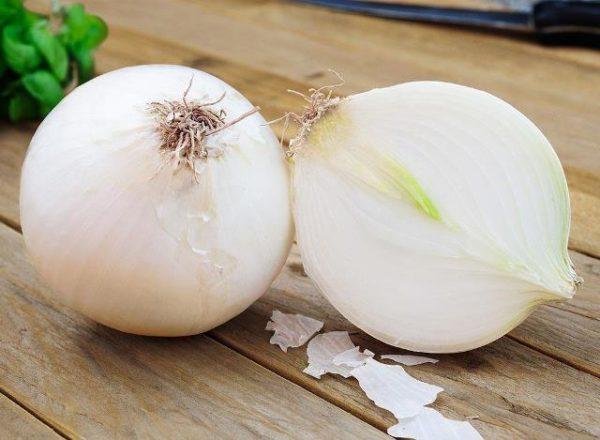
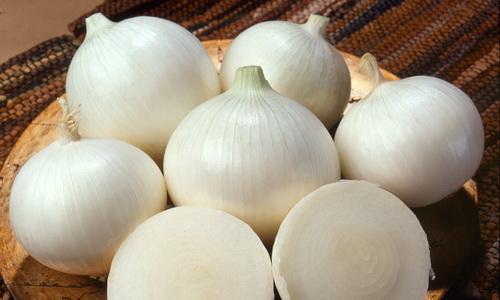
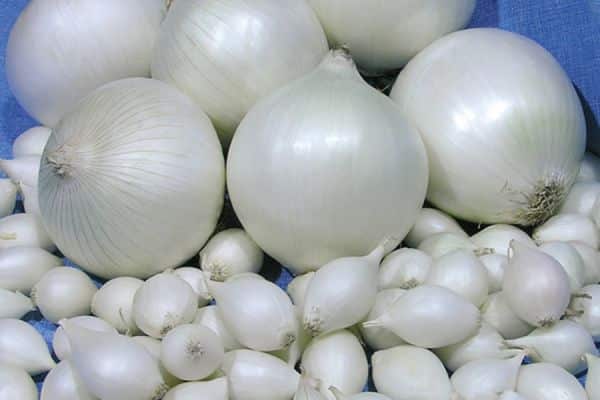
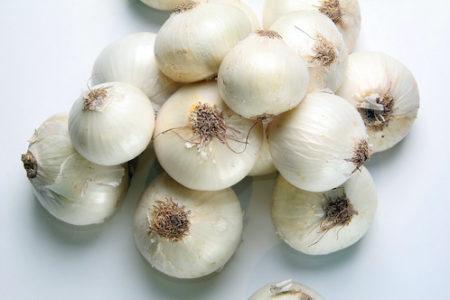
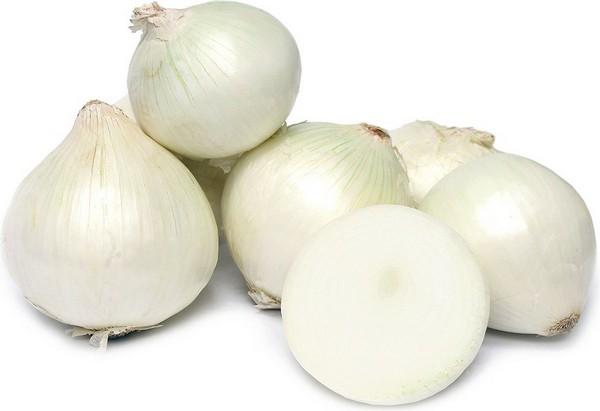
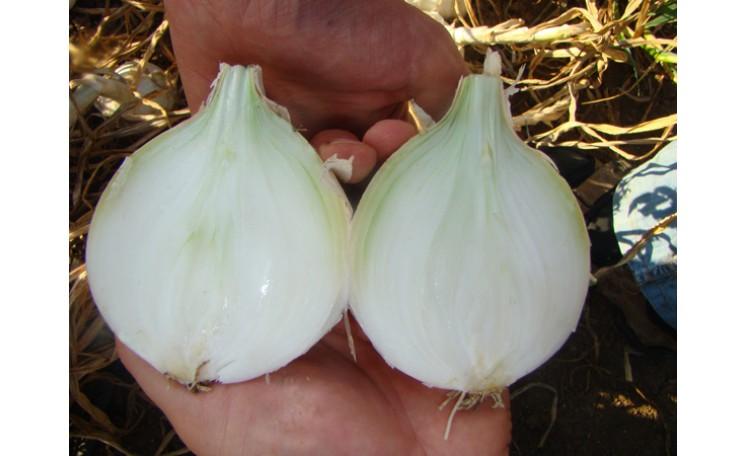
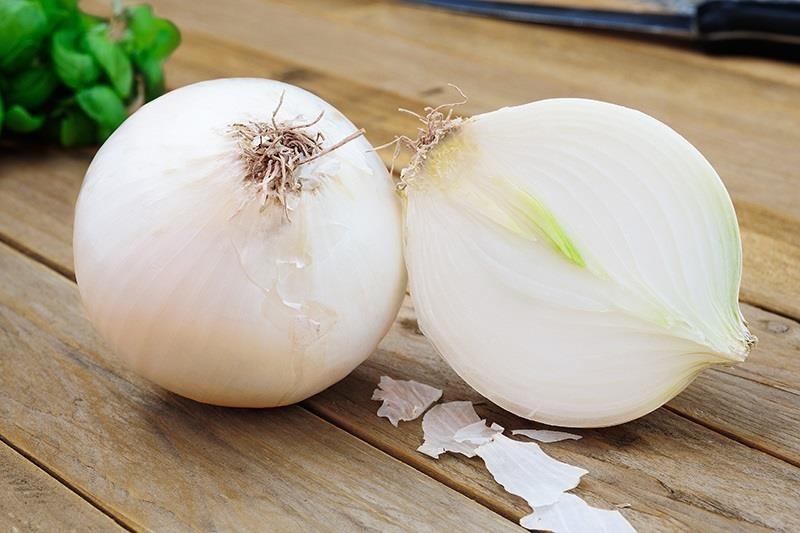
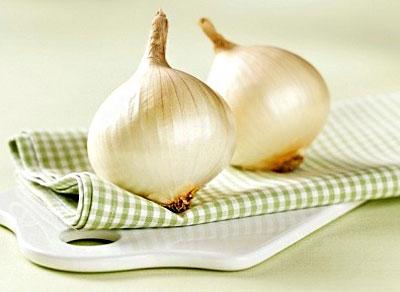
The white heads are uniform in shape, with a flat base and roots at one end and a slightly elongated tail at the other. Other, more elongated shapes exist, but there are no flat, turnip-like varieties.
This shape makes it easy to peel the onion; you just need to grasp it with your hand, as, for example, a flat one is difficult to peel.
Dried scales or onion skins are almost invisible against the flesh, revealing distinct veins. White onion varieties are considered salad onions and are not suitable for storage or canning.
Taste qualities
The flavor is excellent, with little or no bitterness, making it considered a salad vegetable. This is the reason it is grown for fresh consumption.
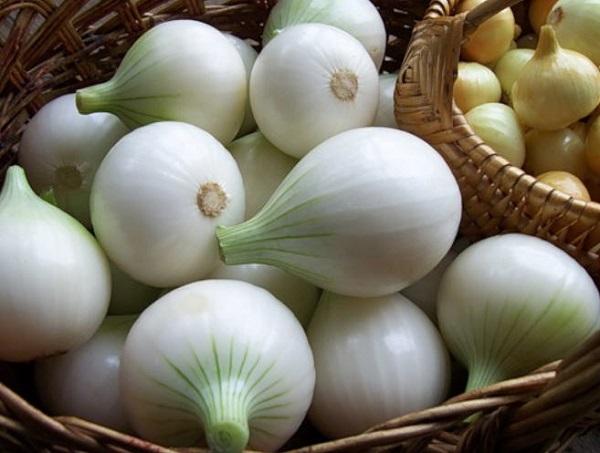
White onions are still little known in Russia, but some farmers have already begun growing them. The vegetable crop reaches the shelves from Asia, Mexico, and Spain, where its cultivation is established for industrial purposes.
Composition and properties
In this case, white onions are no different from other types. Their nutritional value per 100 g is 42 kcal. Their carbohydrate content is 9.87 g, while their protein content is 1.43 g. Their chemical composition is as follows:
- Thiamine (vitamin B1) - 0.046 mg.
- Riboflavin (vitamin B2) - 0.027 mg.
- Pantothenic acid (vitamin B5) - 0.123 mg.
- Pyridoxine (vitamin B6) - 0.12 mg.
- Folate (vitamin B9) - 19 mcg.
- Ascorbic acid (vitamin C) - 7.4 mg.
- Tocopherol (vitamin E) - 0.2 mg.
- Biotin (vitamin H) - 0.9 mcg.
- Vitamin PP - 0.2 mg.
Besides being rich in vitamins, onion pulp contains a rich array of macronutrients: calcium, magnesium, potassium, and phosphorus. Micronutrients include iron, manganese, and zinc.
This composition determines the beneficial properties of onions, including:
- A natural antiseptic, thanks to the presence of phytoncides (essential oils), it helps destroy pathogenic microbes and bacteria. For this reason, in folk medicine, it is used for sore throats, stomatitis, flu, and acute respiratory infections.
- The presence of free iron elements helps with anemia and increases hemoglobin levels.
- Improves digestion.
- Strengthens joints and makes them elastic.
- Normalizes blood sugar levels.
- It is used to destroy cancer cells.
In addition to treating certain diseases, the vegetable is actively used in cosmetology for hair and facial skin.
Culinary uses
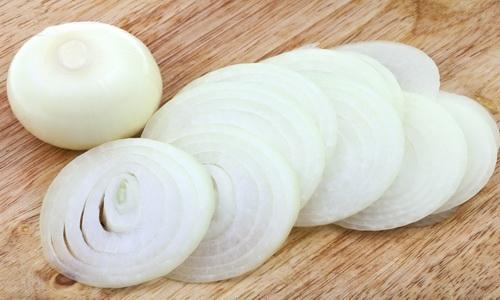
Firstly, it's a dietary product, so it's often found in various diets. Its main use is eating fresh and in salads. It perfectly complements the flavors of other vegetables and meat. There's a salad with sliced white onion that's a real treat. It doesn't emit an unpleasant odor and is sweet in taste.
In cooking, it's often used as a substitute for yellow or red onions. It cooks beautifully in soups and purees, but doesn't fall apart when fried, instead acquiring a golden color.
Use in medicine and cosmetology
White onion is used in folk medicine along with other types.
Burns
Here, the bactericidal properties of white onion are utilized. A paste is applied to the affected area of skin. The antiseptic kills pathogenic microflora and promotes rapid healing and scar closure.
Corns, abscesses, boils
If your new shoes are rubbing your feet, don't despair. Make an onion-vinegar infusion. Place the onion skins in a glass jar and cover with vinegar. Leave the jar in a tightly sealed container overnight at room temperature. In the morning, remove the skin, rinse under water, and apply to the callus. Apply a rich cream to the surrounding skin, wrap it in a bandage, and leave it overnight. The next morning, remove the steamed callus from the skin.
This same paste can help clear abscesses or boils. Simply hold a bandage soaked in the juice from the head of the head or a green compress on it for a while. The antiseptic properties will also work here.
Lichens
Apply white onion juice to the skin affected by ringworm and allow it to dry. Repeat the procedure after a couple of hours. Continue this process until the ringworm has completely disappeared.
Insect bites
Soak cotton wool in onion skin juice and apply to the bite, leaving it on for 15 minutes. Repeat the procedure several times until the itching subsides and the redness subsides. You can also simply rub the affected area with a slice of white onion.
Cough
This vegetable has long been used to treat upper respiratory infections. For enhanced results, the paste is mixed with honey and drunk. This combination helps expel mucus more quickly and has a soothing effect on dry coughs.
Otitis
White onion juice is applied to the inflamed ear. This helps kill bacteria, particularly Pseudomonas aeruginosa, staphylococci, and streptococci. These bacteria originate in the nasopharynx, from where they enter the Eustachian tube and begin their life cycle, but the onion prevents the bacteria from multiplying and is detrimental to them.
Joint diseases
Here, the onion is thoroughly ground with sugar and applied topically to the affected areas.
Contraindications
There are certain categories of people for whom this vegetable is contraindicated. It may cause some harm to them:
- Children under 1.5 years of age. Fresh onion juice can burn the mucous membranes of the mouth and throat.
- People suffering from gastritis and ulcerative diseases of the gastrointestinal tract.
- Should be used with caution in cases of nervous system diseases, migraines and hypertension.
Since onions cause gas, it is best to exclude onions from your diet if flatulence occurs. If you are overweight, eating white onions is prohibited. It can increase appetite.
Origin
The birthplace of all onions is considered to be Asia, today's Afghanistan and Iran. As a vegetable crop, onions were grown in India, Egypt, and Greece. They were primarily cultivated by commoners. They ate them like potatoes today, which kept them energetic and strong.
Onions appeared in Russia in the 17th and 18th centuries. Since then, they have been actively cultivated. Breeders study the characteristics of wild onions and improve them, developing new varieties, including white onions, which attract no less attention and have become the most fashionable today due to their flavor.
Varieties
There are only a few varieties of white onion, the descriptions of which you can take note of.
Alba
This is a mid-season variety. It differs from other white onion varieties by its long shelf life. The fruits have a mild bitterness and are versatile (both fresh and canned). The bulbs average 90g when planted as an annual crop. When planted as sets, bulbs can grow up to 200g in weight.
Comet F1
The hybrid is most widespread in the regions of Russia, as it is adapted to many climatic growing conditions, namely low winter temperatures, pests and diseases, strong temperature fluctuations, and drought.
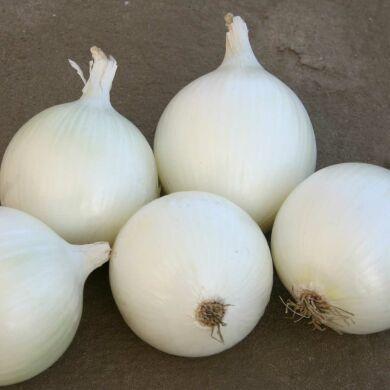
A mid-late hybrid. The bulbs are small, weighing only up to 70 g, but sweet, which is unusual for onions. The shape is smooth and round. The shelf life is six months. It is used primarily in salads.
Nevada
The earliest of the white varieties. Ripening time is 95 days, so it is primarily grown as a one-year variety. Fruits weigh up to 70 g and have a shelf life of 7 months from harvest.
Toluca F1
A Dutch hybrid. This mid-early variety ripens evenly. Disease-resistant. Grown in Ukraine and Moldova, it is cultivated outdoors. The white bulbs are round and have juicy, sweet flesh. They are eaten fresh.
Take a look Also

Stardust
Winter onion Stardust is used in many Russian regions for winter planting. This white fruit is suitable for cutting, as it has a multi-germ structure reminiscent of shallots.
Snowball
The White Ball has won the hearts of gardeners. Its bulbs weigh up to 160 g, making them the largest of the white varieties. Because they are very sweet and juicy, they have a short shelf life of up to three months. They are easy to grow and mature in 105 days from planting.
Southern
Onions are intended for cultivation in warm Russian regions. Unfavorable weather conditions reduce yield and product quality.
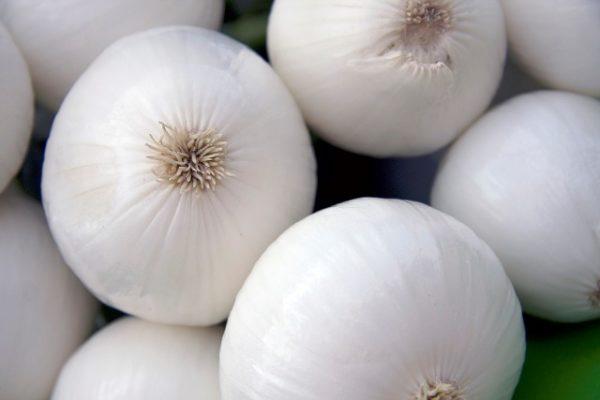
In addition to the varieties presented, there are other, lesser-known ones that are grown in Russia and abroad: Sierra Blanca, White Jumbo, Ala, Orizaba, White, Barletta.
Growing
Until recently, white onions were grown from sets; today, breeders have developed varieties that are designed for annual sowing, namely, through seedlings.
Using seeds
Selecting the right variety is crucial. The seed packet should always indicate "annual crop" or "planting from seedlings." With this method, the primary goal is to obtain high-quality seedlings. To achieve this, it's essential to follow all the recommendations for sowing seeds for seedlings.
Planting dates
The timing directly depends on growing conditions, the gardener's capabilities, and the varietal characteristics of the onion. Seeds need two months to fully develop into seedlings, so consider the sowing time. It's best to sow in the second ten days of February and continue until the end of the month. In this case, you can begin planting outdoors in the second half of April.
The period can be extended until mid-March, in which case you may encounter the onion fly, which peaks in May.
If you delay sowing, the seedlings will be small and will become diseased when transplanted. The same will happen if you sow too early. If you have a greenhouse, you can get strong planting material by placing the onion containers inside.
Site selection and preparation
A well-lit area of the garden is ideal for growing white onions. It's best to plant the beds on soil previously used for melons or potatoes. The soil for onions should be loose and fertile. Sandy loam or loamy soil with a neutral pH is ideal.
The bed for white onion seedlings should be prepared in the fall. To do this, thoroughly till the soil in the designated area with phosphorus and potassium fertilizer. In the spring, the soil can be left unturned. Spread humus or ash over the bed and lightly mix it with a rake. Make furrows along the entire bed. Water each hole thoroughly with settled water.
Planting diagram
Leave 30 cm between rows. This will make it easier to cultivate the crops, including loosening, weeding, and watering. Leave 5 to 10 cm between adjacent bulbs. This figure depends on the size of the onion.
Plant the seedlings in warm weather, preferably in the evening, when the young onions won't be exposed to direct sunlight. Before planting, prune the seedlings. If the roots are long, trim them by half, and trim the tops of the onions, leaving two-thirds of the tops. There's no need to remove them completely, as they contain nutrients needed for the onion's initial development.
Onion sets
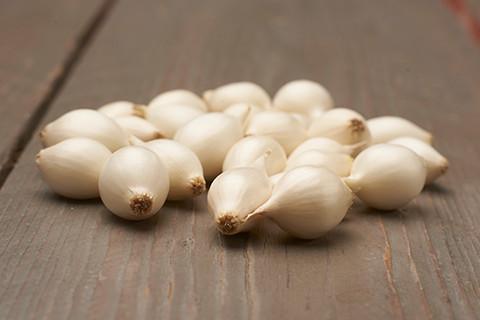
Planting white onions using sets — a completely different agricultural technique. It's also important to ensure the correct planting timing and proper preparation of the planting material.
Deadlines
This method produces a full-sized head of seed in the second year. In the first year, the seed onions are grown. The optimal time for planting seed onions depends on the variety, each of which has its own ripening period.
It is best to plant from the end of March to the end of April, if this is possible, that is, the bed has been prepared in the fall, there is no need to wait for the garden to be ploughed, and the weather conditions allow for planting.
Warm-up
The bulbs selected for planting are warmed up. This is done at a temperature of +45 degrees Celsius for 7 hours. This warming is used to prevent the bulbs from sprouting later.
Disinfection
Just before planting, soak the seedlings in a 1% potassium permanganate solution to kill pathogens. Potassium permanganate can be replaced with a solution of Fitosporin or regular baking soda. A water-salt solution is used against pests.
Take a look Also
![When to store onions in [year] according to the lunar calendar](https://harvesthub.decorexpro.com/wp-content/uploads/2018/07/kogda-ubirat-luk-1-300x200.jpg)
Growth stimulation
The day before the main planting, place the onion sets in a plastic bag and lightly spray with water. This will revive the small bulbs that have been dormant over the winter. Roots will begin to swell at the base, which will quickly begin to grow upon contact with the soil.
Care
White onions are a low-maintenance crop. You don't have to break your back and spend all your time in the onion beds, but you still need to devote some attention.
Weeding and loosening
White onions do not like being near weeds, which inhibit the growth of the feathers and the full development of the root system, as they draw out all the nutrients. Therefore, weeds are removed as they appear. Initially, the beds can be weeded with a hoe with a narrow blade, one that can easily pass between the rows without damaging the plants. Once the tops of the bulbs have grown strong and matured, the hoe is no longer used. Weeds are removed by hand.
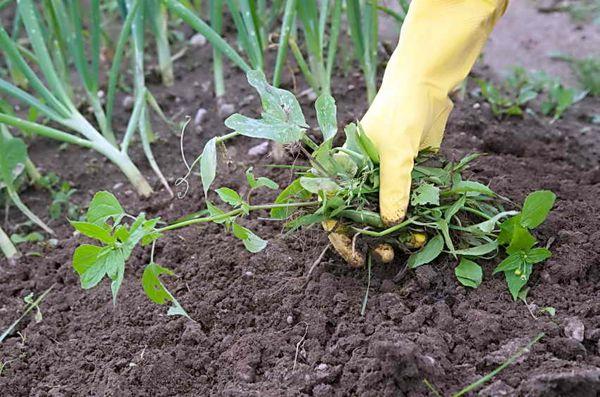
White onions don't like a crust on the soil surface; they require constant access to air, so the beds are frequently loosened to a depth of 5 cm. This loosening is usually combined with weeding or watering. Today, a variety of tools are available that make it easy to get between onion rows without disturbing the roots: hoes, flat-cutters, and pointed cultivators.
Watering
All varieties of white onions are moisture-loving vegetables. Frequent watering is required during the leaf-forming and bulb-growing phases. Water the soil until there is standing water in the beds.
The rest of the time, moisturize as it dries completely, about once a week.
After germination, the soil should be moistened to a depth of 10 cm, and during root development to a depth of 25 cm. Watering should be stopped before harvesting.

Top dressing
During the entire growing season, white onions are fertilized several times:
- Two weeks after planting, apply an aqueous urea solution (25 g per 10 l) under the roots. This fertilizer can be combined with nitroammophoska, applied in the same way.
- The second feeding is done in the second half of June or two weeks after the first. Phosphorus-potassium fertilizers are added: superphosphate and potassium salt.
If the soil is clayey, the second feeding can be repeated after a couple of weeks. It's best to avoid applying nitrogen fertilizers.
If fertilizers are applied correctly and in the right amount in the fall, then there is no need to feed the onions during their growth.
Collection and storage
Harvesting begins in late August or early September. If the plume withers and dries out, the fruit is ripe. Before harvesting, the beds are no longer watered, and the green shoots that have not fallen are bent to the ground to prevent the supply of nutrients to the root bulb.
Dry, sunny weather is chosen for harvesting. The bulbs are pulled out and left in the garden bed for several hours, spread out in a single layer, to allow the remaining soil to dry and then be thoroughly cleaned. A covering material or rag can be placed under the onions to prevent bacteria from the soil from contaminating the bulbs.
The harvest is then collected in wooden or paper boxes and stored in a ventilated area, with the bulbs regularly turned. Drying should take at least a week. The harvest is then sorted, and the dried stems are trimmed, leaving a 5-centimeter stump. Store in a dry place at room temperature.
Onions have been around for over 4,000 years. During this time, people have exploited all the onions' potential, particularly their medicinal properties. In folk medicine, white onions, like other onion varieties, became one of the first useful foods. Growing them is easy, using seeds or sets, especially since white onions are low-maintenance.
Related posts:
 50 types and varieties of perennial onions with descriptions, cultivation, and care
 When to harvest leeks from the garden for storage, ripening times
 Description of the best varieties of onions, planting and care in open ground
 How and when to plant onions to get large bulbs
 Description of the Exhibition onion variety, growing from seedlings, planting and care
 Description of varieties and cultivars of wild onions, the subtleties of cultivation
 Types of onion varieties with names and descriptions, their differences and cultivation
 Description of Welsh onion varieties, planting, growing, and care in open ground